

China’s Sea Mines Are Even Better and More Plentiful Than Iran’s
Sea mines are a fact of life in the Strait of Hormuz. The strait was mined before—in 1988, the USS Samuel B. Roberts hit an Iranian sea mine in the Persian Gulf.
The mine created a 15-to-21-foot gash in the warship. The detonation also damaged the keel. It wounded 10 sailors, but the ship remained afloat.
This mine explosion sparked Operation Praying Mantis, a retaliatory effort during which there was surface-to-surface missile fire between the Americans and the Iranians.
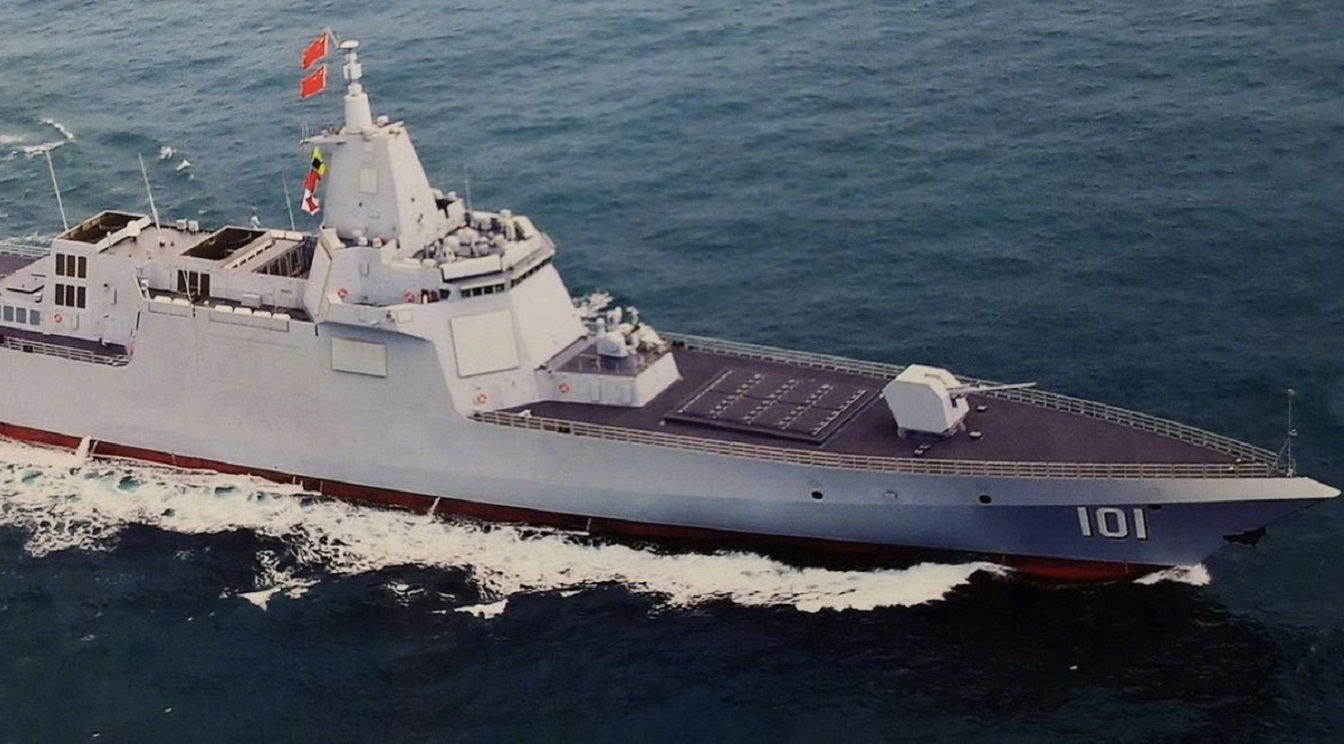
China Navy Destroyer. Image Credit: Creative Commons.
China Is a Giant Killer With Its Sea Mine Supply
The sea mines Iran deploys remain a concern during Operation Epic Fury. But it is China that is the world leader in the deployment of sea mines, and theirs make the Iranians look like they are playing with children’s toys.
China has between 50,000 and 100,000 naval mines it is able to deploy in various parts of the Indo-Pacific. This gives Beijing the ability to create “no-go” areas of the sea, a tactic that is key to China’s anti-access/area denial strategy.
A Mine Collision Could Spark a Larger War
One collision with a Chinese sea mine could be disastrous. President Donald Trump would assuredly command his ships to conduct another Operation Praying Mantis, and that could spark a wide conflict in the East or South China Seas.
The ‘Assassin’s Mace’ Is a Tough Bludgeon
Many of China’s sea mines are “smart,” or autonomous, and they can also be remotely exploded. They are also low-cost asymmetric weapons. The mines are part of the Chinese “Assassin’s Mace” strategy of warfare. China wants to maintain a “David versus Goliath” posture against the United States. It could do this by using less expensive means to destroy stronger adversaries such as U.S. platforms.
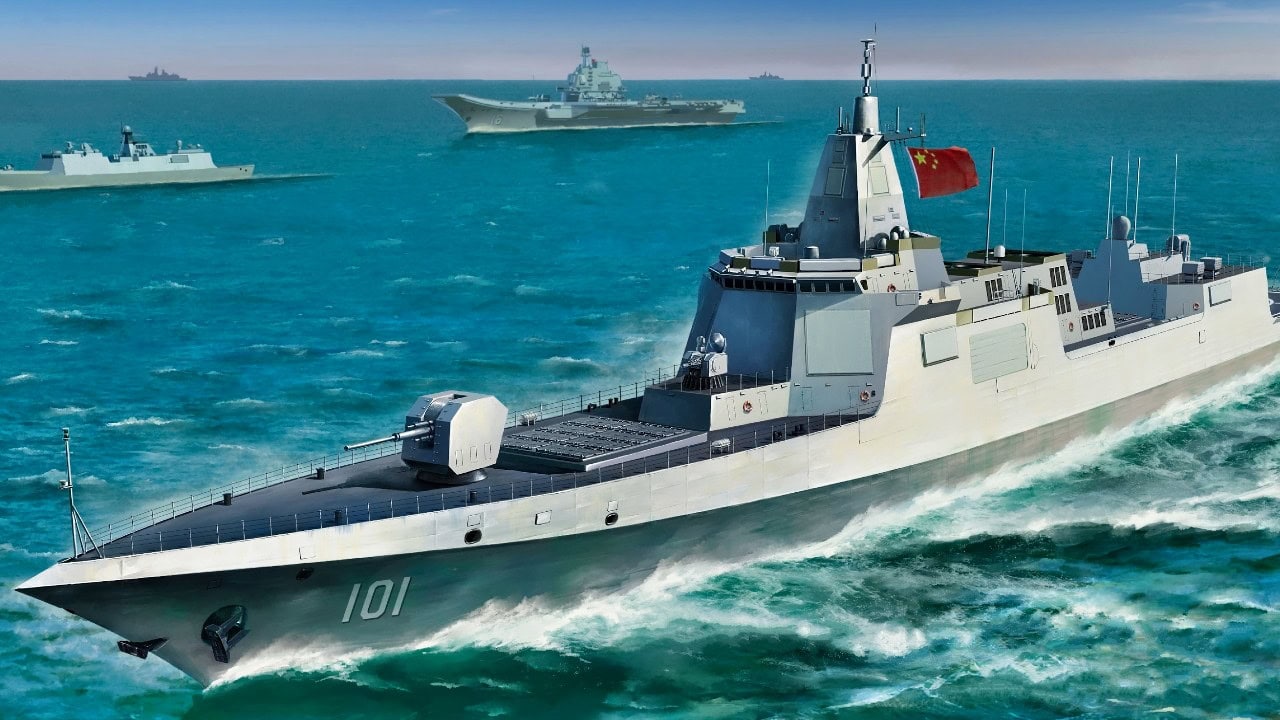
Chinese Navy Warship Created by Artist. Image Credit: Creative Commons.
Even Chinese Civilian Vessels Get In On the Fun
The Chinese deploy submarines and warships, as well as civilian vessels, to lay mines. With this kind of teamwork, it is difficult to keep the number of Chinese naval mines down to a minimum.
These Mines Are Smarter Than You Think
There are at least 30 types of mines in China’s arsenal. These include “contact, magnetic, acoustic, pressure-influence, and remotely-activated mines. These range from relatively simple, gravity-laid mines to much more sophisticated ’smart’ mines that can discern between hostile and friendly forces and receive remote activation commands,” as my colleague Andrew Latham has written.
Denial of Freedom of Navigation
Most of these mines are placed close to shore in the Taiwan Strait and the East and South China Seas. They are so numerous that, in the event of a conflict, the U.S. Navy would need to update its charts and assume that there are some waters their ships should not enter.
The U.S. Risks Sailing Into Kill Zones
In a potential war, China could lay even more mines and force U.S. ships to sail into naval kill zones that focus on Chinese President Xi Jinping’s anti-ship missiles and carrier-killing projectiles. U.S. carrier strike groups would have to be aware of the waters that they cannot transit without sailing into a Chinese trap. Since mines cost much less than ballistic or cruise missiles, and are relatively simple to produce, the Chinese might plentifully mine different areas of the sea, and the United States and its allies could not stop their deployment.
The LCS Is In Danger Too
U.S. Littoral Combat Ships, which currently have the mine countermeasures mission, would have a difficult time clearing out China’s naval mines.
China is also developing another strategy that combines its 60 mine countermeasures vessels with underwater drones. Not only does this help China to surveil the sea, but it also introduces an additional example of the Assassin’s Mace strategy.
The U.S. Marine Corps Could Be Negatively Affected
Another issue for the United States relates to amphibious warfare against China’s militarized artificial islands in the South China Sea. China has undoubtedly mined the rocks and reefs leading to these islands, and the U.S. Marine Corps would have difficulty attacking them. The Marine Corps has already given up its M1A2 Abrams tanks, which reduces the number of armored vehicles that could encounter mines on shore.
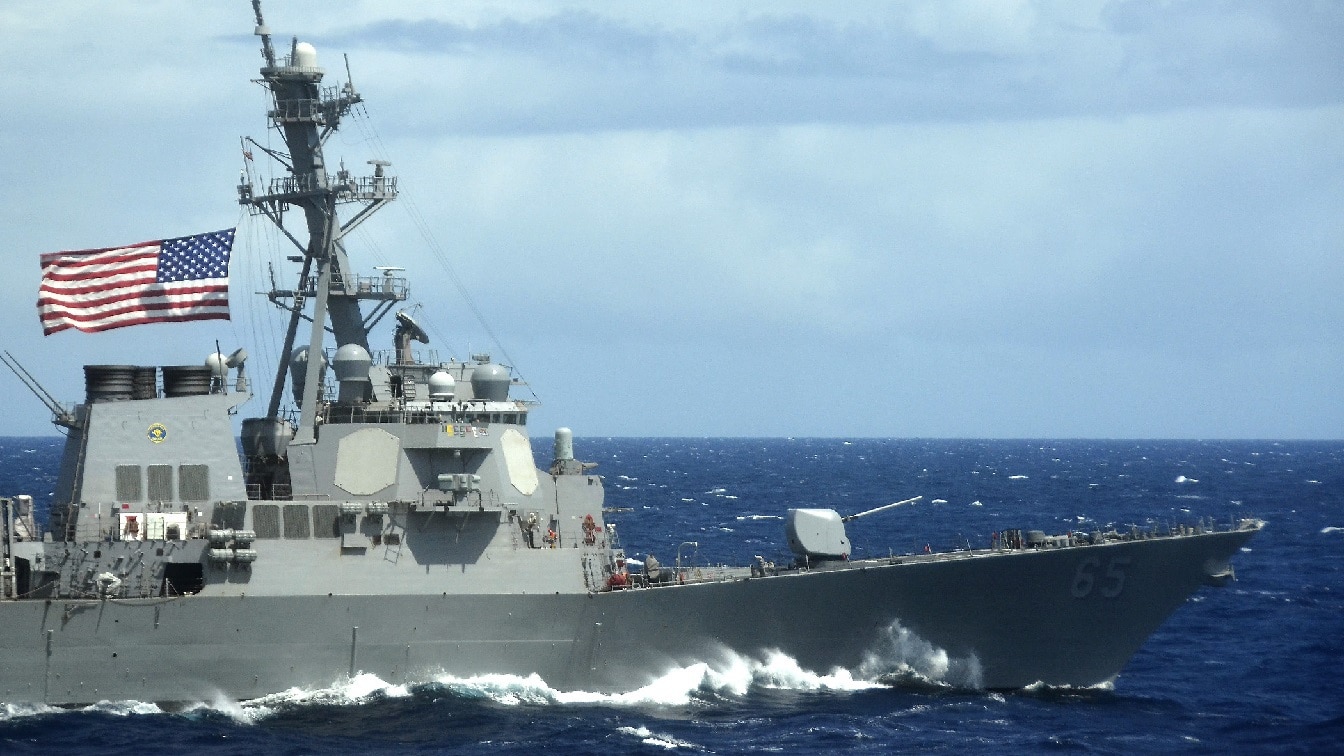
120406-N-RI884-012
PACIFIC OCEAN (April 6, 2012) The guided-missile destroyer USS Benfold (DDG 65) flies the battle ensign during maneuvers off the coast of Kauai as part of maritime exercise Koa Kai 12-2. Koa Kai is a semiannual exercise in the waters around Hawaii designed to prepare independent deployers in multiple warfare areas and provide training in a multi-ship environment. This is the first year San Diego-based ships are also participating. (U.S. Navy photo by Mass Communication Specialist 2nd Class Daniel Barker/Released)
What If Naval Replenishment Is In Danger?
The final issue is logistical. The U.S. Navy depends on oilers, supply ships, and other replenishment vessels to operate smoothly. What if one of these ships were hit by a mine? This could disrupt resupply efforts for a carrier strike group and decrease the availability of fuel, munitions, and interceptor missiles.
China is fond of deploying numerous mines underwater. They prevent the U.S. Navy from operating as it plans. Some mines are highly advanced, while others are very simple, and all of them serve as powerful tools for disruption.

SOUTH CHINA SEA (Oct. 19, 2021) The Arleigh Burke-class guided-missile destroyer USS Milius (DDG 69), rear, and the Japan Maritime Self-Defense Force (JMSDF) Akizuki-class destroyer JS Akizuki (DD 115) transit the South China Sea in formation. Milius is assigned to Commander, Task Force (CTF) 71/Destroyer Squadron (DESRON) 15, the Navy’s largest forward-deployed DESRON and the U.S. 7th Fleet’s principal surface force. (U.S. Navy photo by Mass Communication Specialist 3rd Class Christine Montgomery) 211019-N-TC847-1020
The anti-access/area denial strategy is stronger than ever, thanks to sea mines. Mines are a cheap, asymmetric, and easy way to alter U.S. strategy—China might lay more of them in the Indo-Pacific in the future.
MORE – The B-1B Lancer Is Sitting In A Museum You Can Visit
About the Author: Brent M. Eastwood
Author of now over 3,000 articles on defense issues, Brent M. Eastwood, PhD is the author of Don’t Turn Your Back On the World: a Conservative Foreign Policy and Humans, Machines, and Data: Future Trends in Warfare plus two other books. Brent was the founder and CEO of a tech firm that predicted world events using artificial intelligence. He served as a legislative fellow for US Senator Tim Scott and advised the senator on defense and foreign policy issues. He has taught at American University, George Washington University, and George Mason University. Brent is a former US Army Infantry officer. He can be followed on X @BMEastwood.