
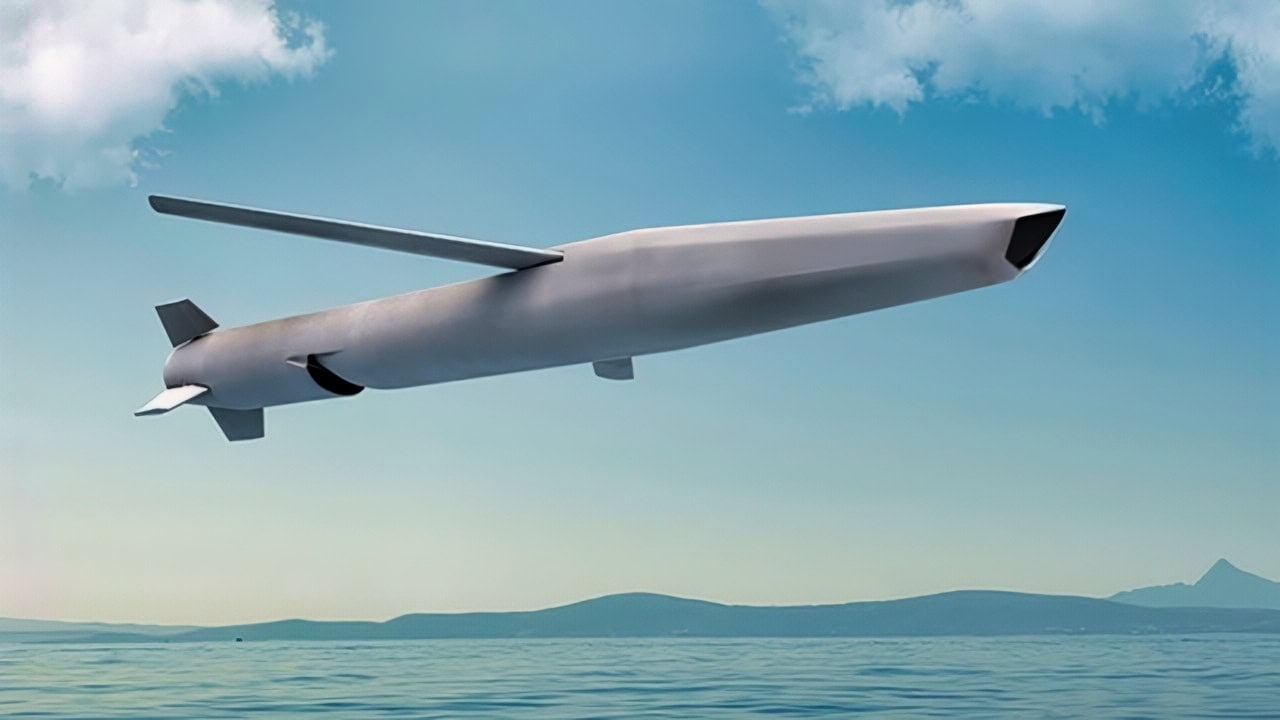
The U.S. Marine Corps is not known for its missile capability. The Devil Dogs are all riflemen as a basic rule. The Corps is also returning to its roots as amphibious beach-storming leathernecks, hearkening back to World War Two in the Pacific. That’s why this latest development is so fascinating. The Marines are receiving their own cruise missile to menace the enemy near islands and other terrain features. The Marines are getting in on the fun with the Bullseye cruise missile, and Congress is a big backer. The Senate Armed Services Committee has set aside $40 million to integrate the Bullseye into Marine Corps tactics, techniques, and procedures.
Bullseye: This Missile Is Just What the Doctor Ordered
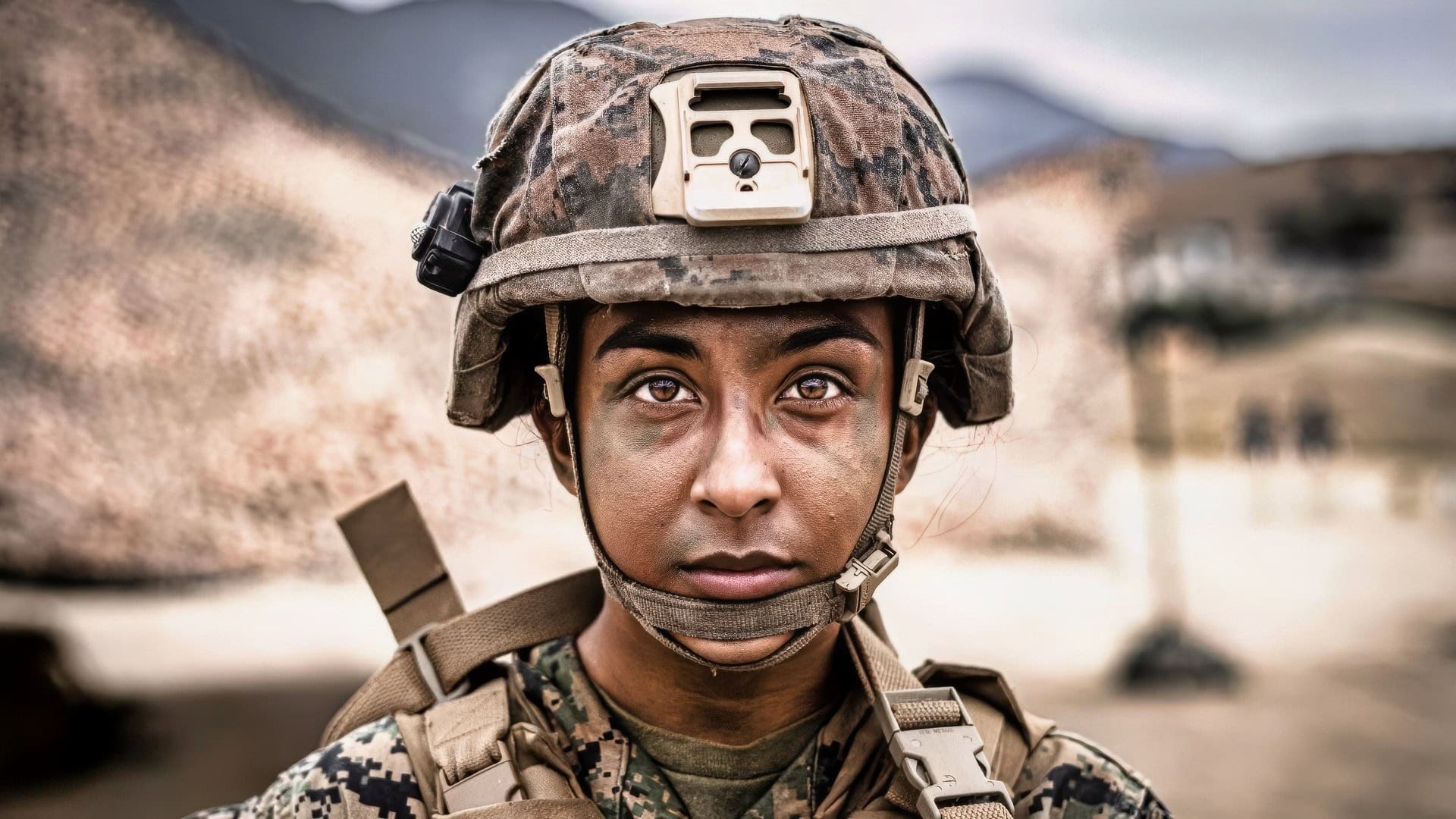
U.S. Marine Pfc. Emily Zamudio with Alpha Company, Infantry Training Battalion, School of Infantry (SOI) West, prepares for a shooting drill at Marine Corps Base Camp Pendleton on Sept. 1, 2021. Zamudio graduated recruit training from the first female platoon to become Marines at Marine Corps Recruit Depot San Diego, May 2021. She then progressed to SOI West where she completed the Infantry Marine Course and earned the military occupational specialty of 0311, infantry Marine. (U.S. Marine Corps photo by Sgt. Tessa D. Watts)
The Bullseye is a curious piece of military hardware. It originated in Israel with Rafael’s Ice Breaker projectile, and the Bullseye will be the next-generation missile manufactured by General Atomics.
The Bullseye can hit targets on land and at sea, giving Marines a dual capability that could change how they fight in the Indo-Pacific.
More Specs on the Bullseye
The Bullseye can be launched by fighter jets and from the surface. It has a range of 186 miles.
The missile has automatic terrain avoidance with autonomous control. It is meant to pierce enemy anti-access/area-denial tactics while punishing their ships and other military targets before the Marines order an amphibious mission.
The missile also has an imaging infrared seeker that works well in all types of weather.
It is known for its adept automatic target recognition system. The Bullseye is more affordable than the Tomahawk cruise missile.
‘Bullseye in a Box’
The Bullseye is 13 feet long and weighs 890 pounds. The warhead ranges from 250 to 500 pounds.
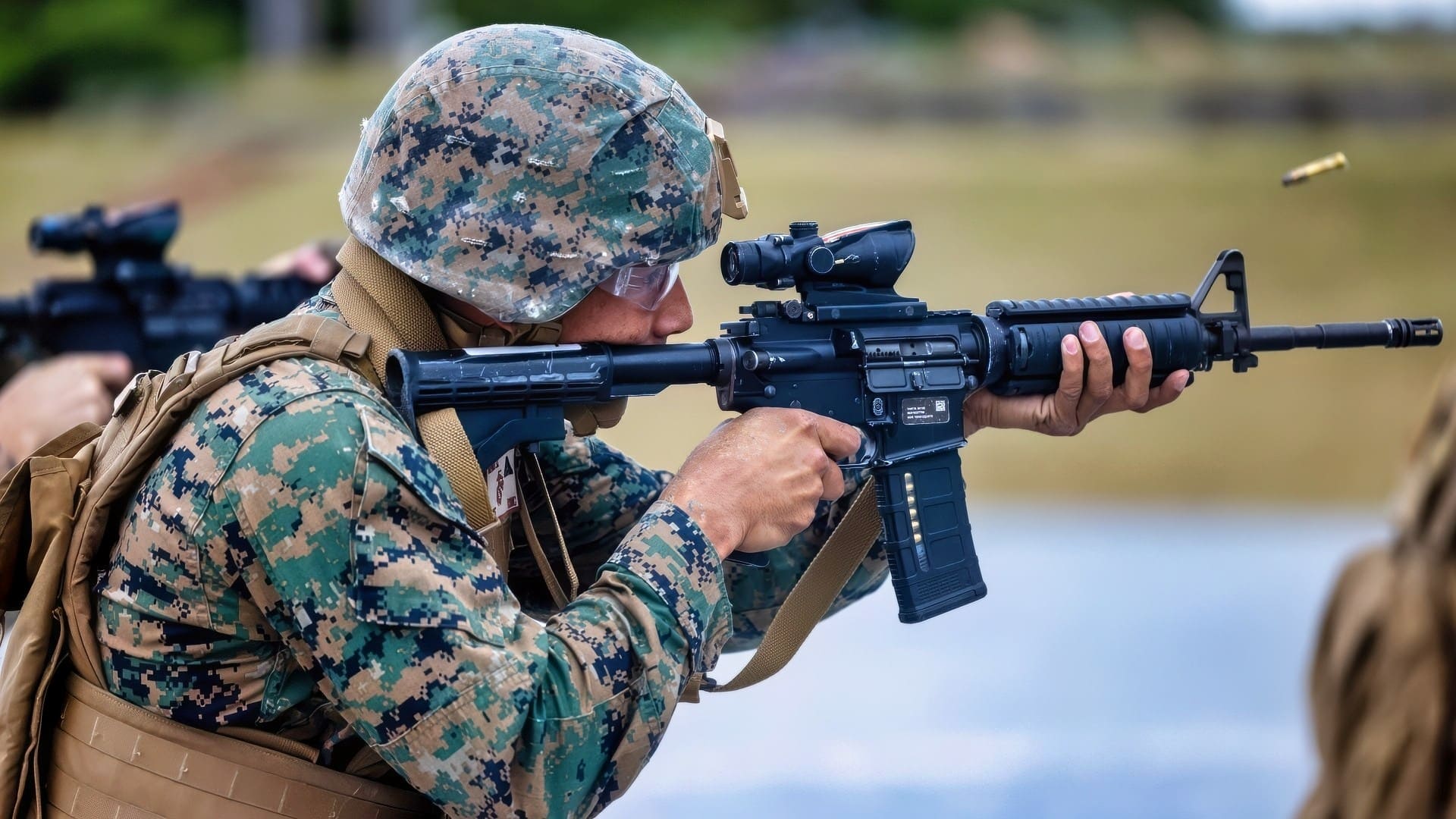
U.S. Marine Corps Lance Cpl. Elijah Geiwitz fires an M4 carbine in the short bay during a live-fire rifle range for the combat marksmanship course on Camp Hansen, Okinawa, Japan, March 13, 2025. CMC refines Marines marksmanship fundamentals and enhances their lethality through advanced marksmanship training. Geiwitz, a native of Wisconsin, is an automotive maintenance technician with 3rd Landing Support Battalion, 3rd Marine Logistics Group. (U.S. Marine Corps photo by Cpl. Michael Taggart)
It can be launched from ground systems, airplanes such as the F/A-18 E/F Super Hornet, and ships. The launcher can be moved via standard-sized shipping containers for easy deployment and transport.
This is known as “Bullseye in a box.” The Marines plan on integrating the Bullseye to fire from a HIMARS mobile launcher.
Advantageous Use Case
The cruise missile is being adapted by the Marines for service inside the First Island Chain, where China has militarized islands that could someday be the target of a U.S. amphibious operation.
The Marines need a weapon that is highly transportable, long-range, and easy to launch.
Marines in the Philippines have rehearsed using cruise missiles in their training activities. The Leathernecks in Japan have also integrated these types of projectiles, such as the Naval Strike Missile.
The Navy Is Also Ready to Use the Bullseye
General Atomics has high hopes for the Bullseye. The company believes it has the economies of scale and high-end technology to produce the cruise missile in large numbers at an affordable cost.
Chief of Naval Operations Admiral Daryl Caudle also thinks the Navy can integrate the Bullseye to support the Marines’ land-attack mission. He loves the “Bullseye in a box” transportability that would give the Marines more options in warfare.
Excellent Addition to the Kinetic Missile Fight
The Bullseye will be instrumental in executing what I call the Kinetic Missile Fight in East Asia.
The idea is to saturate the air with projectiles to overwhelm Chinese air defenses and pave the way for other strike aircraft from the Air Force, such as the new B-21 Raider stealth bomber.
With this kind of close air support, the Marines can operate in ground operations much more effectively.
The idea is for them to bring in an artillery-like system to bolster their numbers in attack scenarios that can attrit the Chinese and force them to relinquish territory.
Adding to the Missile Magazine Depth
One problem the Bullseye will address is the need to replenish missile stocks expended in combat. Operation Epic Fury in Iran showed that the United States fired so many Tomahawks that it ran low on them.
The Bullseye can be manufactured more quickly and more cheaply than that missile, and Marines can be trained to fire it effectively.
The Bullseye missile “will meet U.S. military specifications and will provide multi-platform launch capabilities from air, ground, and sea for strike mass at an affordable price point,” according to a General Atomics news release as noted by the War Zone.
“Bullseye will be built in the U.S. for delivery to U.S. military customers to support a variety of critical Department of Defense and coalition partners’ precision-fires missions.” Scott Forney, president of General Atomics, said.
“By leveraging Rafael’s extensive investment in the design, maturation and testing of a unique, modular missile, we can reduce risk and development costs and provide production-scale delivery of a highly capable, high-performance precision-guided missile at significant per-unit cost savings.”
The Marines Now Have a Strong Strategic Outlook
This missile is thus intriguing for the Marines. This will give them the littoral punch needed for future operations that the Chinese will fear.
The option to send the launcher via shipping containers is irresistible to a Navy that must support the Marine Corps in its quest to take more territory in the Indo-Pacific, especially when addressing the militarized islands in the region.
Look out for the Marines’ entry into the Kinetic Missile Fight.
The Corps is ready for 21st-century warfare, capable of protecting its movements and sending a message to the enemy that it is prepared for littoral strikes.
The Chinese will have to create a situation in which they can successfully counter the Bullseye and mitigate the difficulty of sustaining their anti-access/area-denial defenses.
About the Author: Brent M. Eastwood, PhD
Author of now over 3,500 articles on defense issues, Brent M. Eastwood, PhD, is the author of Don’t Turn Your Back On the World: A Conservative Foreign Policy and Humans, Machines, and Data: Future Trends in Warfare, plus two other books. Brent was the founder and CEO of a tech firm that predicted world events using artificial intelligence. He served as a legislative fellow for US Senator Tim Scott and advised the senator on defense and foreign policy issues. He has taught at American University, George Washington University, and George Mason University. Brent is a former US Army Infantry officer. He can be followed on X @BMEastwood.