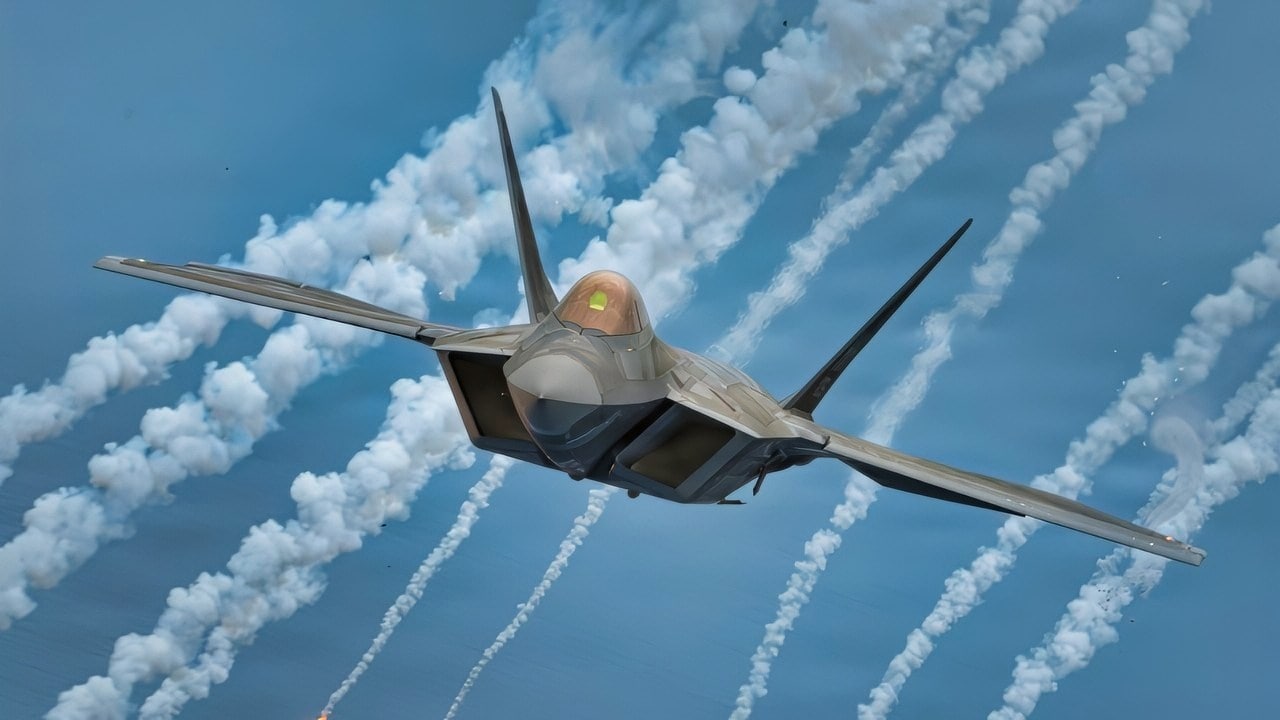
An Air Force pilot once said to me that “The worst thing you could do to one of our pilots was to put him in a fair fight.” And the F-22 Raptor, a fifth-generation stealth fighter, embodies the US Air Force’s commitment never to fight a peer again. It aims to achieve what military circles call overmatch.
For a time, the US Air Force possessed such overmatch.
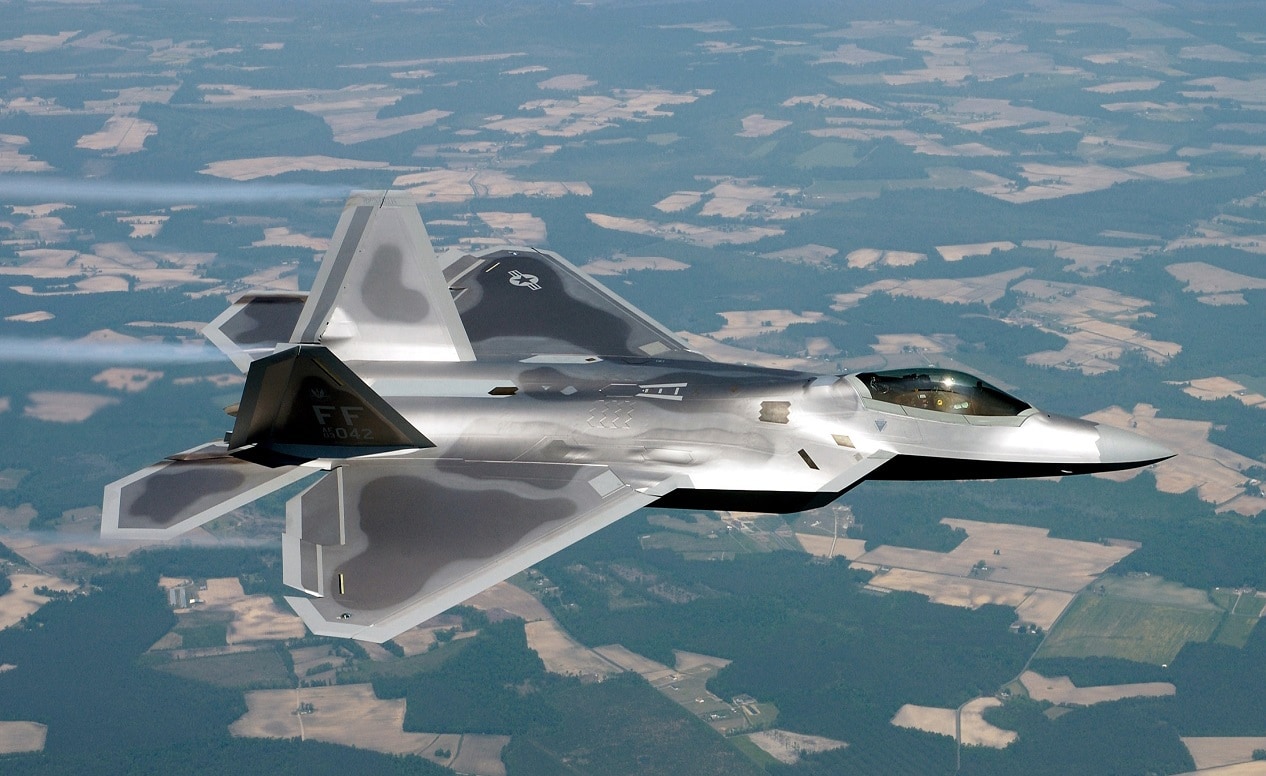
F-22 Raptor. Image: Creative Commons.
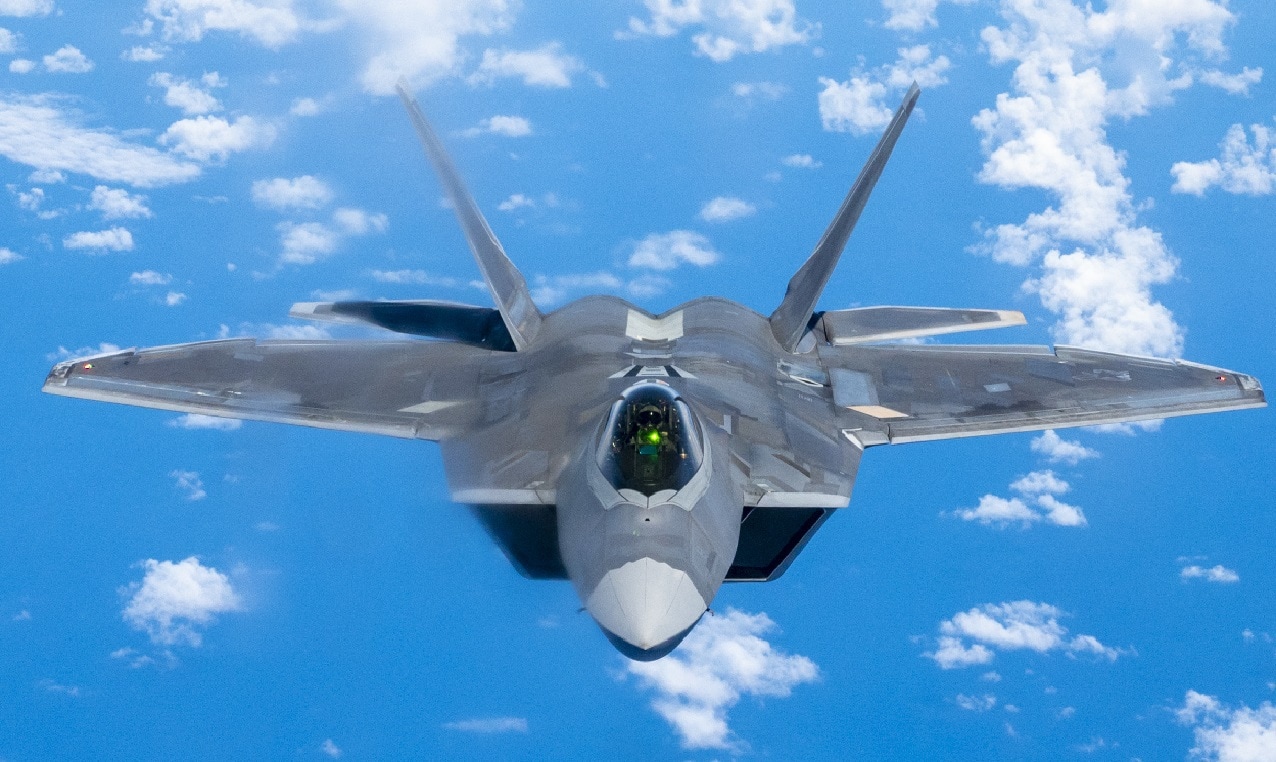
A Hawaii Air National Guard F-22 Raptor flies in formation with a French Air and Space Force F3-R Rafale June 30, 2021, near Oahu, Hawaii. FASF aircraft, maintenance, and support personnel traveled to Hawaii for exercise Wakea as part of the bilateral cooperation in the Pacific between the United States and France. During Wakea, Hawaii ANG F-22 Raptors trained with FASF aircraft to enhance air-combat expertise and interoperability between the two countries’ aircraft. In a unique association, the F-22s and the air defense mission at Joint Base Pearl Harbor-Hickam are assigned to the 154th Wing, Hawaii Air National Guard. Collectively known as the Hawaiian Raptors, the Hawaii ANG 199th Fighter Squadron and active duty 19th Fighter Squadron serve together under the Air National Guard-led active-associate construct to execute their mission sets. (U.S. Air National Guard photo by Staff Sgt. Orlando Corpuz)
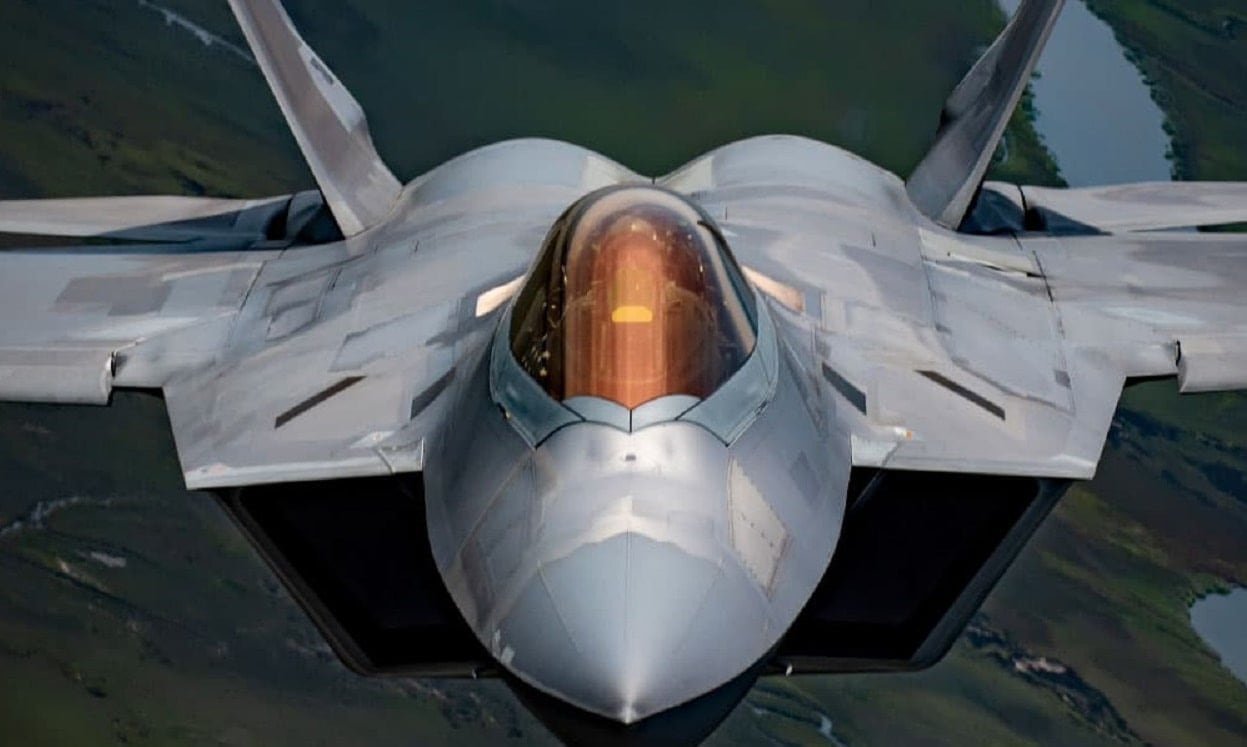
F-22 Raptor. Image Credit: Creative Commons.
No Advantage Can Last Forever
But that kind of advantage could not last forever. And the world is rapidly approaching an era in which the United States Armed Forces will be challenged by peer rivals in ways not seen in decades.
While the Raptor gives Air Force pilots who take these impressive birds into combat great advantages, it is not invincible.
Multiple examples exist of how enemy planes–even planes that are of older generations–can pierce the protective shield of the F-22’s stealth.
The F-22 is primarily designed to prevent an opponent from ever getting into a fair fight with it. Its radar signature is greatly reduced.
That makes it hard for enemy systems to detect the plane.
That reduced radar signature also makes weapons-quality tracking difficult.
Meanwhile, it has impressive offensive capability, combining beyond-visual-range (BVR) attacks with the AN/APG-77 radar and other powerful electronic warfare (EW) capabilities.
These advantages have been proven in training and limited combat experiences.
True Threats
Yet, the risks to the F-22 are real.
Relying only on stealth to keep the plane safe is a truly irresponsible tactic. Luckily, the Air Force has worked to keep this dynamic plane competitive in an increasingly contested threat environment.
Newer, longer-range weapons, combined with better shorter-range missiles, have ensured that if an enemy pierces the veil of stealth around an F-22, it is not the end of the line for the pilot of the F-22.
Still, once stealth is penetrated and the advantages of waging war from beyond visual range are negated, the F-22 must then rely upon its superior engineering to get it out of a jam.
For instance, the F-22 employs two Pratt & Whitney F119 engines with thrust vectoring. These engines are key to the plane in a dogfight.
Nevertheless, extreme maneuvers consume energy.
So, an F-22 that dramatically changes direction to obtain a firing solution loses airspeed, potentially giving an opponent its own opportunity to damage or destroy the F-22 in a dogfight.
In a simulated dogfight with an EA-18G Growler, the F-22 did not do so well.
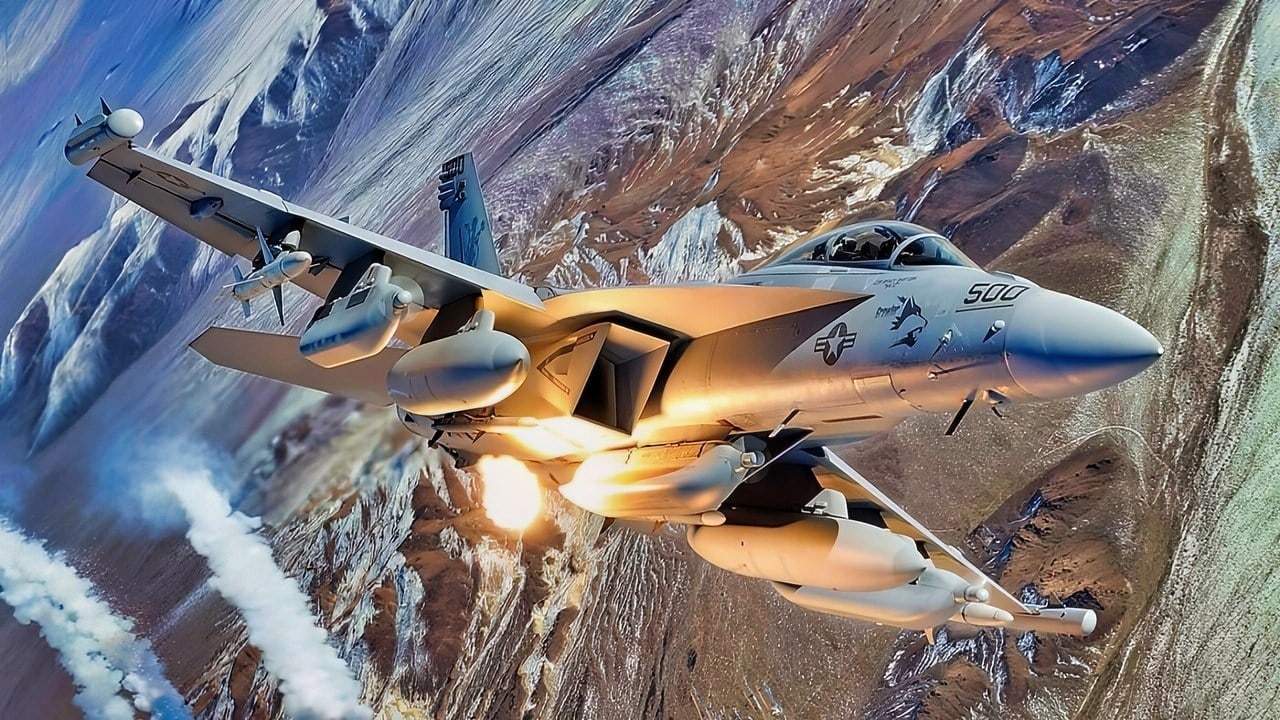
EA-18G Growler Firing Weapons. Image Credit: Creative Commons.
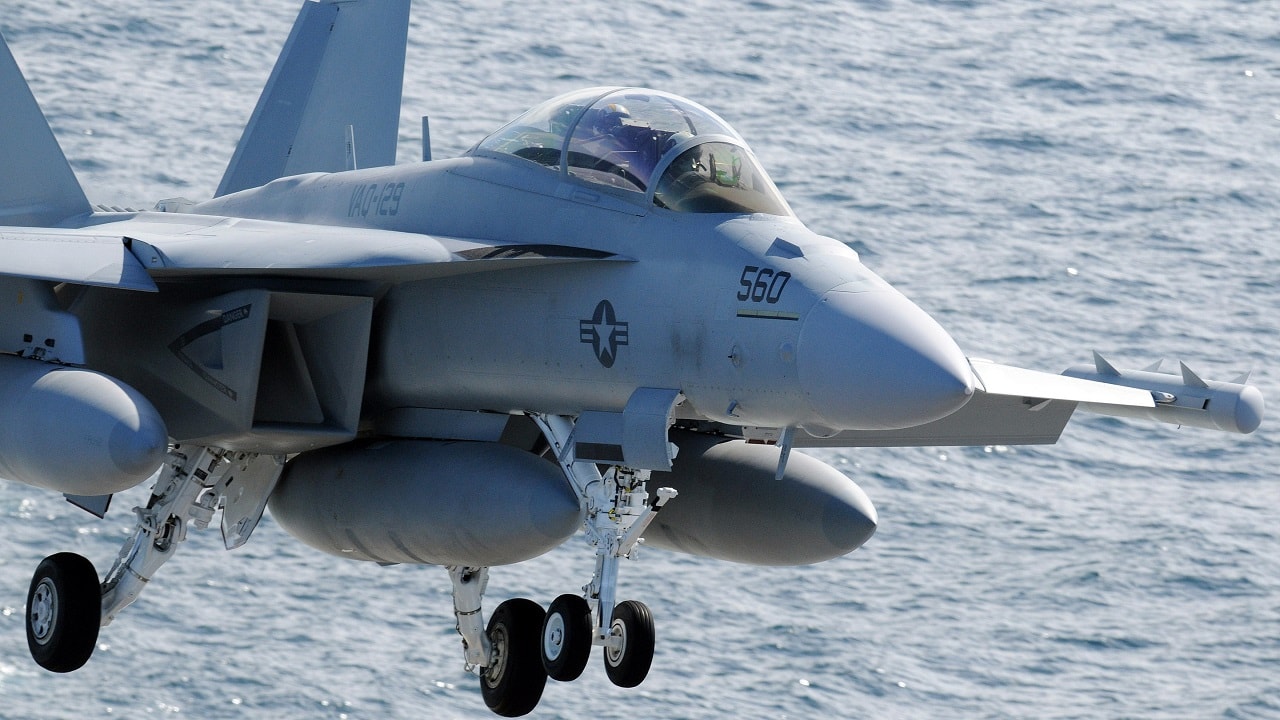
(Feb. 17, 2009) An EA-18G Growler assigned to the “Vikings” of Tactical Electronic Warfare Squadron (VAQ) 129 aligns itself for an at sea landing aboard the Nimitz-class aircraft carrier USS Ronald Reagan (CVN 76). The Growler is the replacement for the EA-6B Prowler, which will be replaced in the 2010 timeframe. Ronald Reagan is underway performing Fleet Replacement Squadron Carrier Qualifications in the Pacific. (U.S. Navy photo by Mass Communication Specialist 3rd Class Torrey W. Lee/Released).
That’s because the Growler employed advanced electronic warfare to stymie the defenses of the F-22, allowing the Growler to get a simulated hit with the AMRAAM.
At the same time, though, the F-22 is more than capable of defending itself at close ranges–even against EW-specific planes, like the Growler.
It possesses a powerful array of weapons, including AIM-9X Sidewinder missiles and a potent 20mm cannon for true close-quarters combat.
During Northern Edge exercises in Alaska in 2006, F-22s operating alongside F-15s and F/A-18 Super Hornets produced a reported 144-to-zero air-to-air kill ratio during the first week.
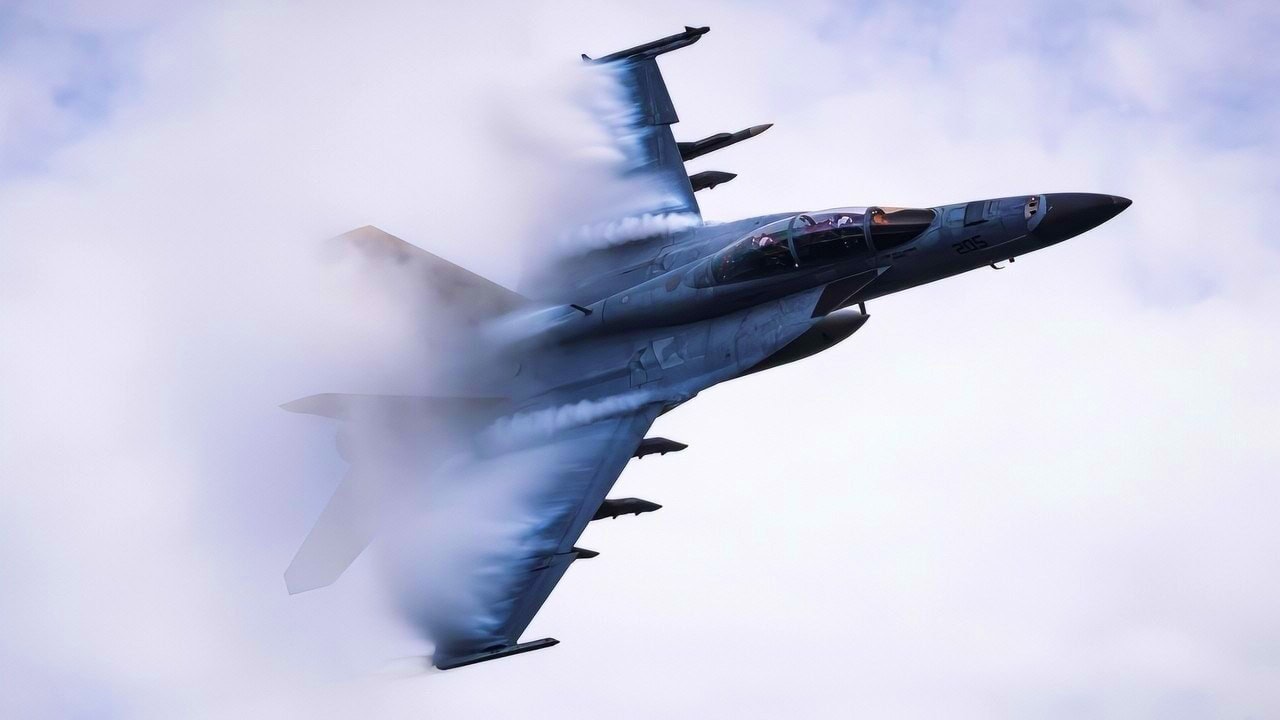
USS George Washington Aircraft Carrier Super Hornet. Image Credit: Creative Commons.
At the Raptor’s first Red Flag the following year, Air Force aggressor pilots reported an overwhelmingly lopsided advantage for the F-22 Raptor.
In fact, one exchange pilot flying an F-15 complained that even when he could see the Raptor, his systems could not obtain a weapons track.
Still a Deadly Plane
So, the Raptor offers many advantages beyond stealth.
It has advanced maneuvering capabilities that many other planes lack.
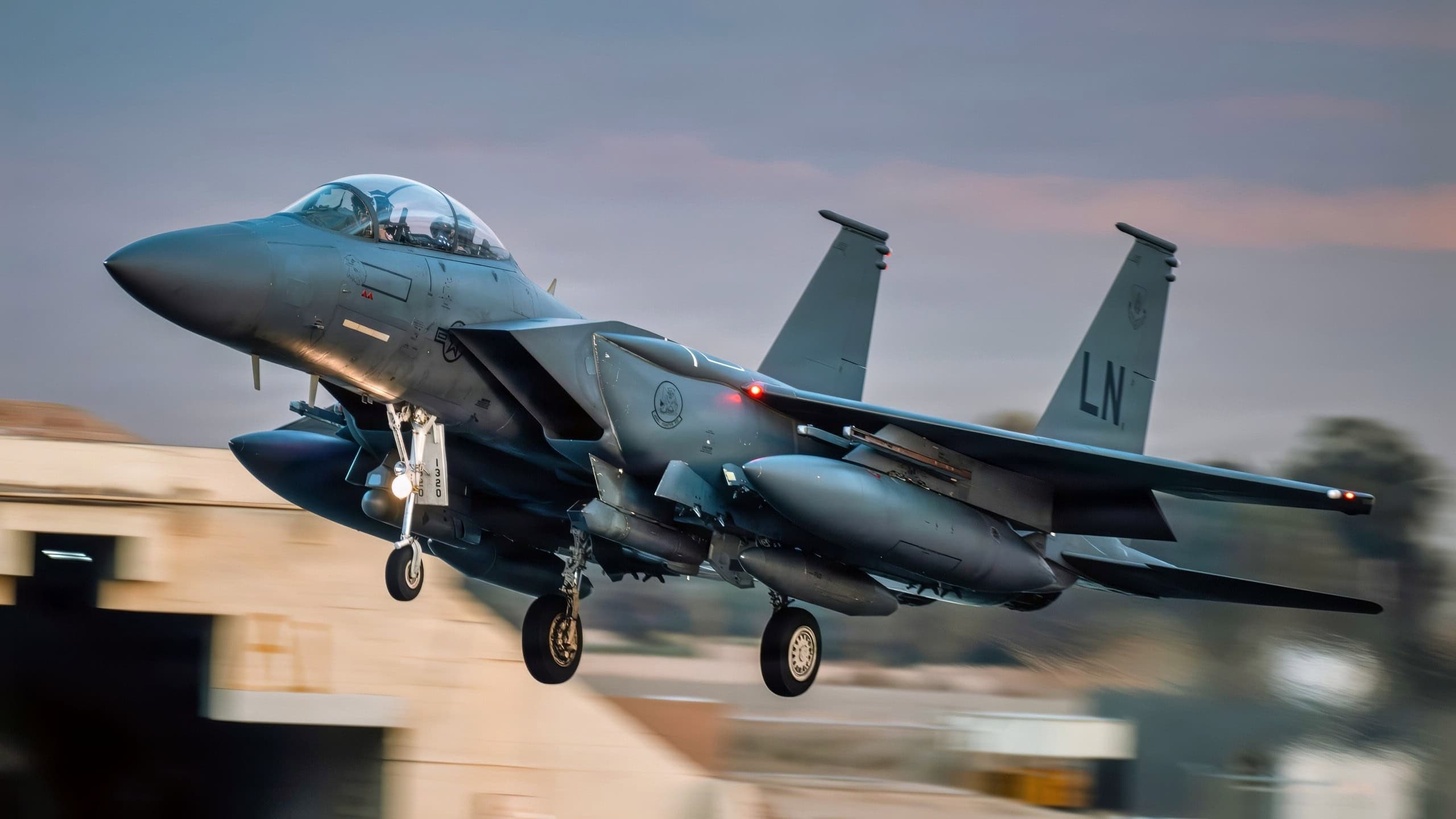
A U.S. Air Force F-15E Strike Eagle aircraft prepares to land at a base in the Middle East, Jan. 18, 2026. The U.S. maintains a highly agile fighting force, leveraging the most advanced capabilities to support the long-term security and stability of the region. (U.S. Air Force photo by Senior Airman Jonah Bliss)
Sure, it uses up energy and fuel, but the thrust-vectoring of the F-22 in combat could prove decisive for the F-22 surviving an attack.
Then there’s the added BVR capacity that the F-22 possesses — meaning the F-22 can track and kill enemies long before they ever get within visual range, irrespective of whether the F-22’s stealth is penetrated.
And the Air Force is adding even longer-range air-to-air missiles to the F-22’s repertoire.
In a perfect setting for an enemy, the F-22 can indeed be downed, as any plane can be downed in a perfect setting for an attacker.
But multiple other settings show how hard it is to both see the F-22 and attack it effectively.
The F-22 is going to face increasingly sophisticated and capable rivals–it will face a fairer fight than it ever has before–but its many advantages beyond stealth mean it will remain highly competitive.
About the author: Brandon J. Weichert
Brandon J. Weichert is the Senior National Security Editor at 19FortyFive.com. He also manages The Weichert Brief on Substack. Weichert also hosts “National Security Talk” on Rumble. He is the author of four bestselling national security books, the most recent of which is A Disaster of Our Own Making: How the West Lost Ukraine (Encounter Books). Follow him via Twitter/X @WeTheBrandon.