
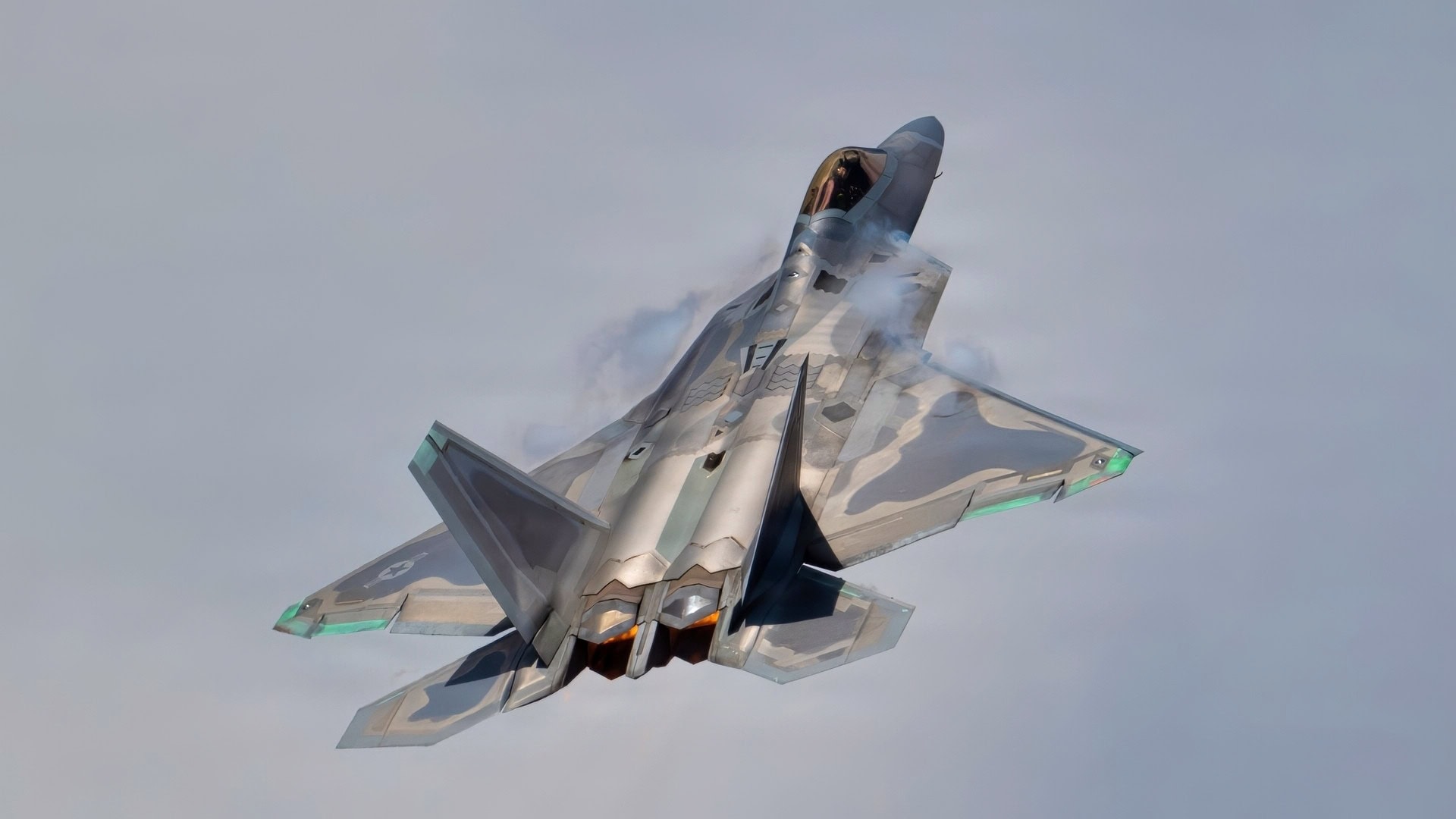
Summary and Key Points: The last F-22 Raptor left Marietta on May 2, 2012, and nothing since has matched the combination: supercruise near Mach 1.8 without afterburner, thrust vectoring, and stealth married to sensor fusion.
-The J-20 chases the standard, the Su-57 barely exists, the F-35 was built for a different fight — and the Air Force is answering the question with its budget, pouring billions into stealthy tanks, infrared hunting pods, and a new missile for a jet it capped at 187 and now refuses to retire.
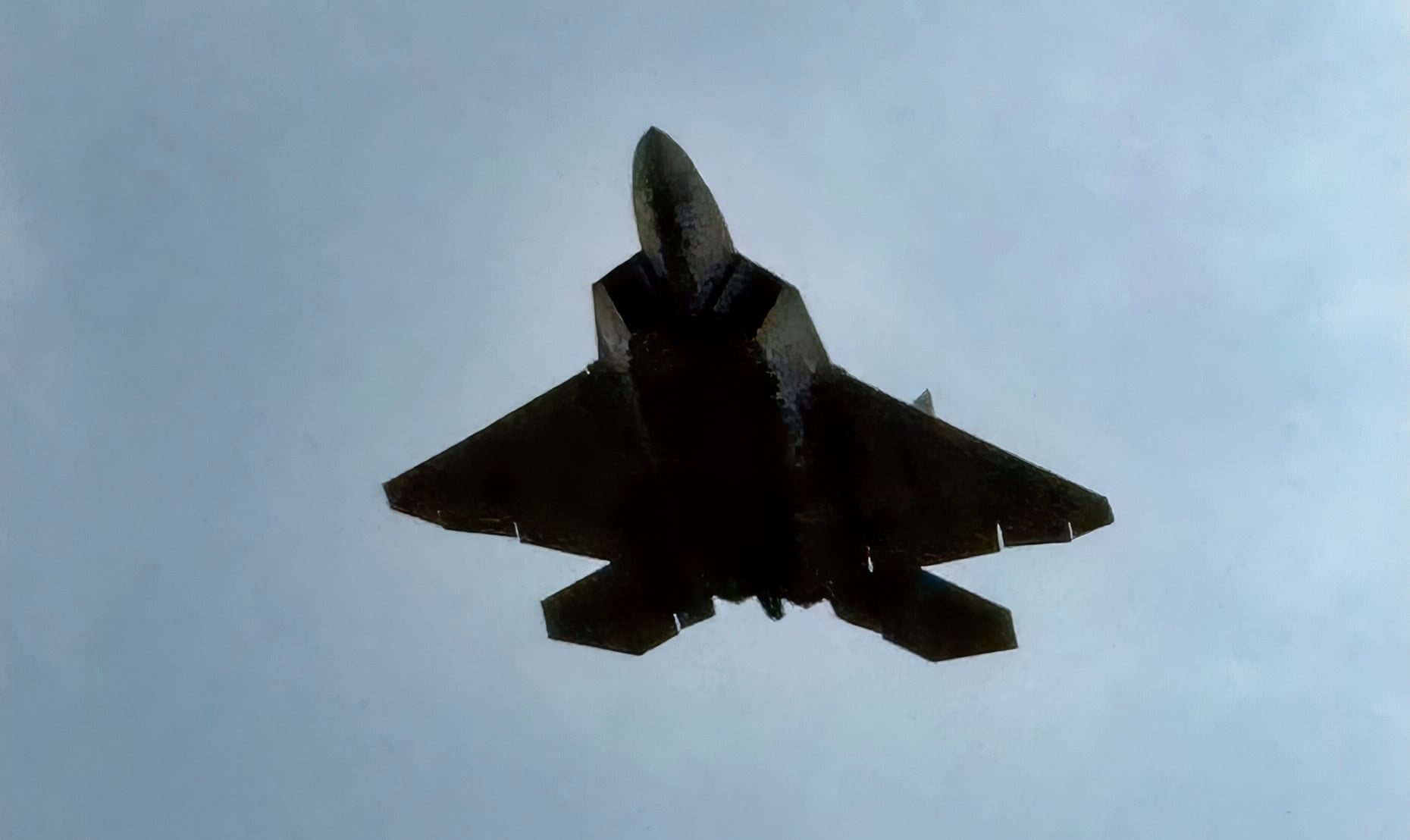
F-22 at Lakeland Air Show 2026. Taken on March 19, 2026 by 19FortyFive.com
The F-22 Raptor Is Simply the Best
The last F-22 Raptor rolled out of Lockheed Martin’s Marietta plant and was delivered to the Air Force on May 2, 2012.
Fourteen years later, no air force on Earth, including our own, fields a better air superiority fighter.
That is not nostalgia. It is a claim that can be defended on specifics, so here they are.
How the F-22 Dominates
I have many reasons for my argument, but I will let physics prove it first.
The Raptor’s two F119 engines let it supercruise, holding roughly Mach 1.8 without touching afterburner, while thrust-vectoring nozzles let it point its nose where aerodynamics alone say it cannot go, and it does all of this above 60,000 feet, higher than its rivals fight. No other operational fighter combines these things.
And back in April, not far from where I live in Lakeland, Florida, I felt the power of the F-22’s engines at a recent air show. There was nothing like it.
A missile fired from a supercruising jet at that altitude inherits enormous free energy, which means the Raptor’s weapons reach farther than the same weapons on anything slower and lower. The F-35 is a brilliant strike-and-sensor aircraft, and it does not do this.
China’s J-20 spent years waiting for engines worthy of its airframe. Russia’s Su-57 does not exist in numbers that matter, and its radar cross-section is estimated to be thousands of times that of the Raptor.
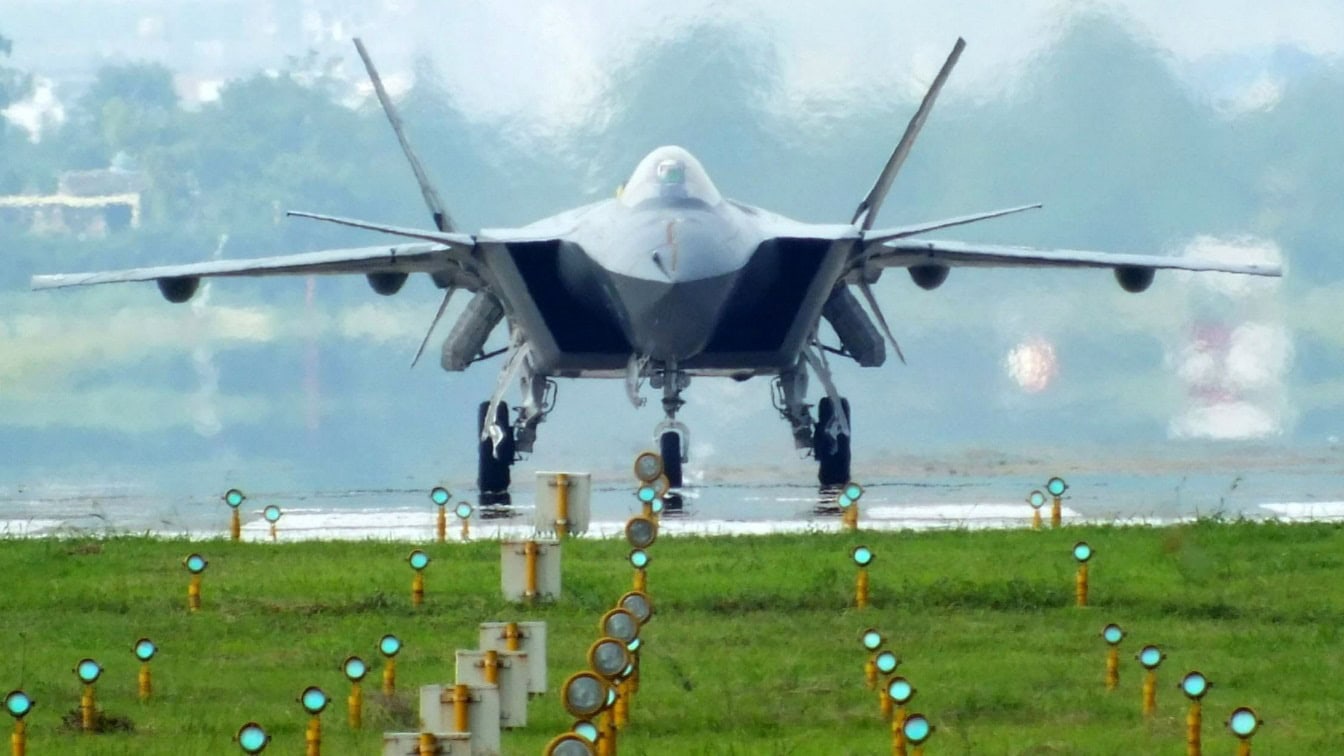
J-20 stealth fighter. Image Credit: Creative Commons.
The Technology
Second, the stealth-and-sensors package that defined the fifth generation still sits at the top.
The F-22 married a near-invisible airframe to the APG-77 radar and fused sensors so pilots see, decide, and shoot before being detected, the first-kill doctrine the Air Force built the jet around.
When the type finally recorded its first air-to-air kill, on February 4, 2023, it was an assignment no other fighter wanted: a Chinese surveillance balloon loitering near 60,000 feet, an altitude that strains most interceptors, dispatched with a single Sidewinder off the South Carolina coast in what was likely the highest air-to-air kill ever made.
The Record Matters
Third, the record. In its debut large-force exercises, the Raptor posted simulated kill tallies against America’s own best fourth-generation fighters that ran past one hundred to zero.
In the Middle East, it flew as the quarterback of coalition air, escorting strike packages and herding Syrian and Russian jets out of the way without firing. And the record is current: Raptors escorted the strike packages over Iran in the recent air campaign, a dozen of them flying from Ovda in Israel, and this summer they stood alongside B-2s in Hawaii while China watched.
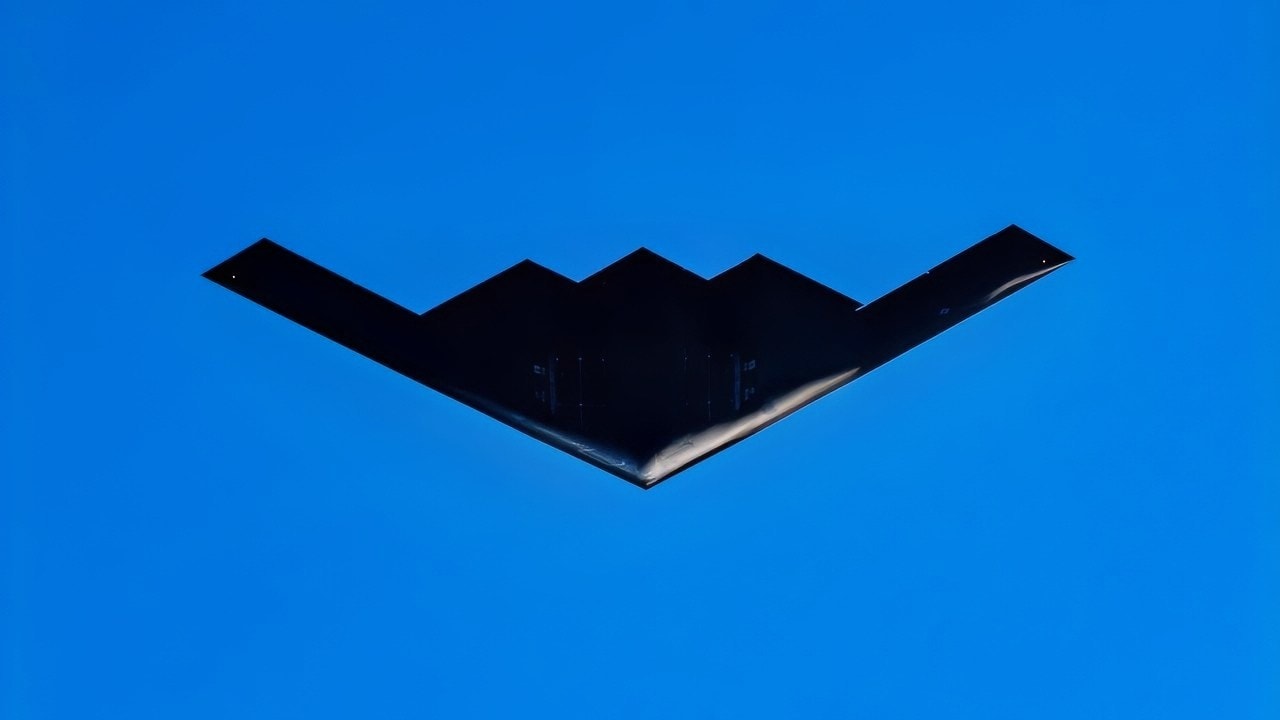
The B-2 Spirit flies over the Rose Parade at Pasadena Ca., Jan. 1, 2024. The Rose Parade is a parade of flower covered floats, marching band, and equestrian units that is produced by the Tournament of Roses. (U.S. Air Force photo by Airman 1st Class Bryce Moore)
Twenty years after entering service, the jet is not a museum piece guarding a reputation. It is the aircraft commander’s reach for when the airspace is genuinely dangerous.
Nothing Can Touch It
Fourth, look at what the rivals prove. Beijing builds J-20s in impressive numbers precisely because volume is the axis where it can compete; on the axes that decide a first merge, kinematics, signature, and sensor fusion, the American jet designed in the 1990s still sets the standard the J-20 chases. Moscow’s Su-57 program has produced more press releases than squadrons.
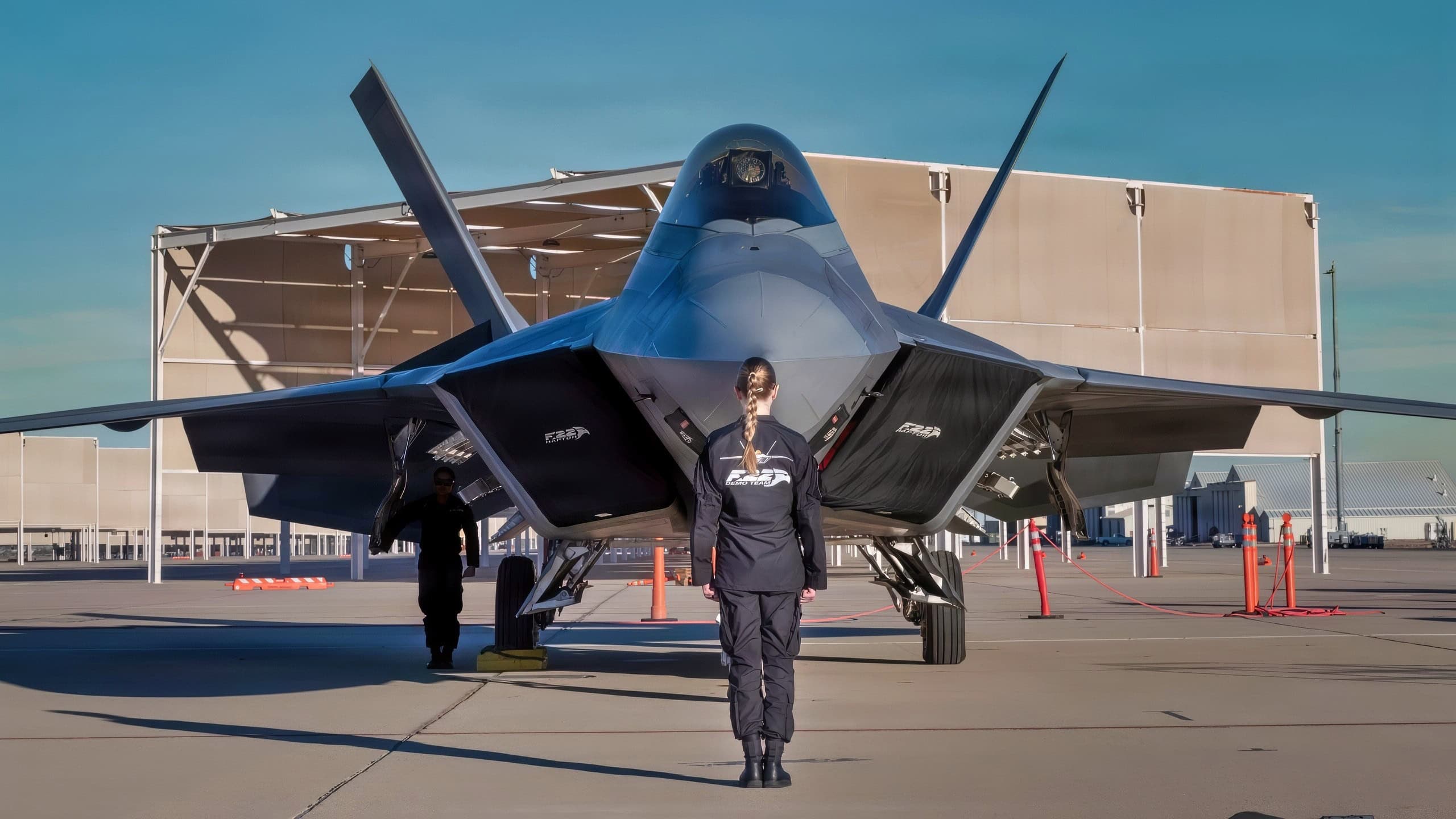
Maintainers assigned to the U.S. Air Force F-22 Raptor Demonstration Team perform preflight inspections on an F-22 during the Heritage Flight Training Course at Davis-Monthan Air Force Base, Arizona, Feb. 26, 2026. The team consists of 14 specialized Airmen who maintain and support the Raptor’s mission of providing undisputed air superiority. (U.S. Air Force Photo by Senior Airman Jhade Herrera)
Every allied air force buying fifth-generation capability buys the F-35, a superb aircraft that was never designed to win the pure air-dominance fight, because the jet that was designed for it was never offered for export and stopped being built at all.
The Money
Fifth, and most telling: watch where the money goes. The Air Force is not managing the Raptor into retirement; it is pouring billions into a Viability program meant to carry the jet toward mid-century, stealthy low-drag fuel tanks to fix the jet’s Pacific range problem, underwing infrared search-and-track pods to hunt other stealth fighters without radiating, an infrared defensive system, a helmet-mounted display, and the AIM-260 missile announced in 2025 to restore the reach advantage.
The February AFA symposium showed the “Raptor 2.0” configuration in the open, and a March photograph over the Mojave caught the new tanks and pods flying already.
Air forces do not rebuild has-beens. They rebuild irreplaceables.
Too Bad We Didn’t Have More F-22 Raptors
The Air Force wanted 750 Raptors; the Cold War’s end and a fateful 2009 decision capped production at 187, and roughly 184 remain, which is why the jet’s excellence coexists with a permanent scarcity problem and why Congress keeps refusing to let any be retired.
The best air superiority fighter ever built is also one of the rarest, and every upgrade dollar is partly an apology for the production line America closed.
The F-47 NGAD Will Make the F-22 Proud
The F-47 is coming, with Raptors serving as flying testbeds for its technology, and someday it will take the crown, honestly, by outflying the champion. Until that day arrives, the title rests where it has rested since 2005: on a gray jet with vectored nozzles that no rival has ever beaten in the fight it was built for, and whose last copy left the factory fourteen years ago this spring.
About the Author: Harry J. Kazianis
Harry J. Kazianis (@Grecianformula) was the former Senior Director of National Security Affairs at the Center for the National Interest (CFTNI), a foreign policy think tank founded by Richard Nixon based in Washington, DC. Harry has over a decade of experience in think tanks and national security publishing. His ideas have been published in the NY Times, The Washington Post, The Wall Street Journal, CNN, and many other outlets. He has held positions at CSIS, the Heritage Foundation, the University of Nottingham, and several other institutions related to national security research and studies. He is the former Executive Editor of the National Interest and the Diplomat. He holds a Master’s degree focusing on international affairs from Harvard University.

