
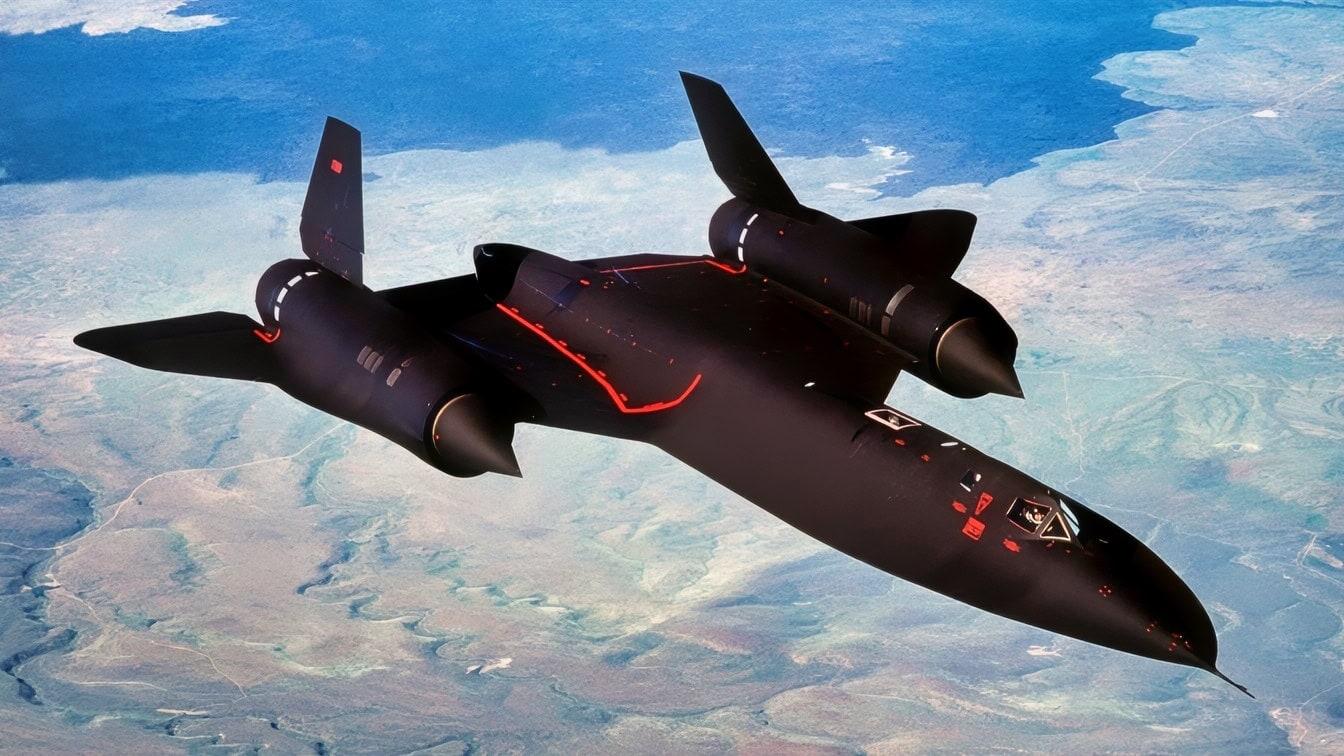
You love the SR-71 Blackbird spy plane, and we’re here to give you your daily fix on the ultra-rapid MACH 3 intelligence-collecting force of nature.
You may know that this airplane could outfox enemy missiles, and it outran more than 4,000 of them during its reign. It could fly at over 80,000 feet, and it was made with 90 percent titanium.
SR-71 Blackbird: She Sprung a Leak
But there is one little-known fact that the SR-71 had to deal with on every flight. The Blackbird leaked fuel – on purpose. That’s right. Oodles of JP-7 jet fuel sprang out on the tarmac and runway during each sortie.
What Was the Mitigating Factor?
But what would happen to alleviate this issue? The Blackbird was made with loosely fitting panels that would seal at high temperatures and prevent fuel leaks when it reached MACH 3. The titanium coating on the SR-71 would hit 400 degrees Fahrenheit during high-speed flight. Then the JP-7 fuel would go over 300 degrees.
Sequence of Events
There were six main fuel tanks throughout the Blackbird, and the hydrocarbons would not ignite even if you lit them with a cigarette lighter. Then the panels would heat up and keep fuel from springing out. The airplane could later refuel from an aerial tanker when its fuel got low.
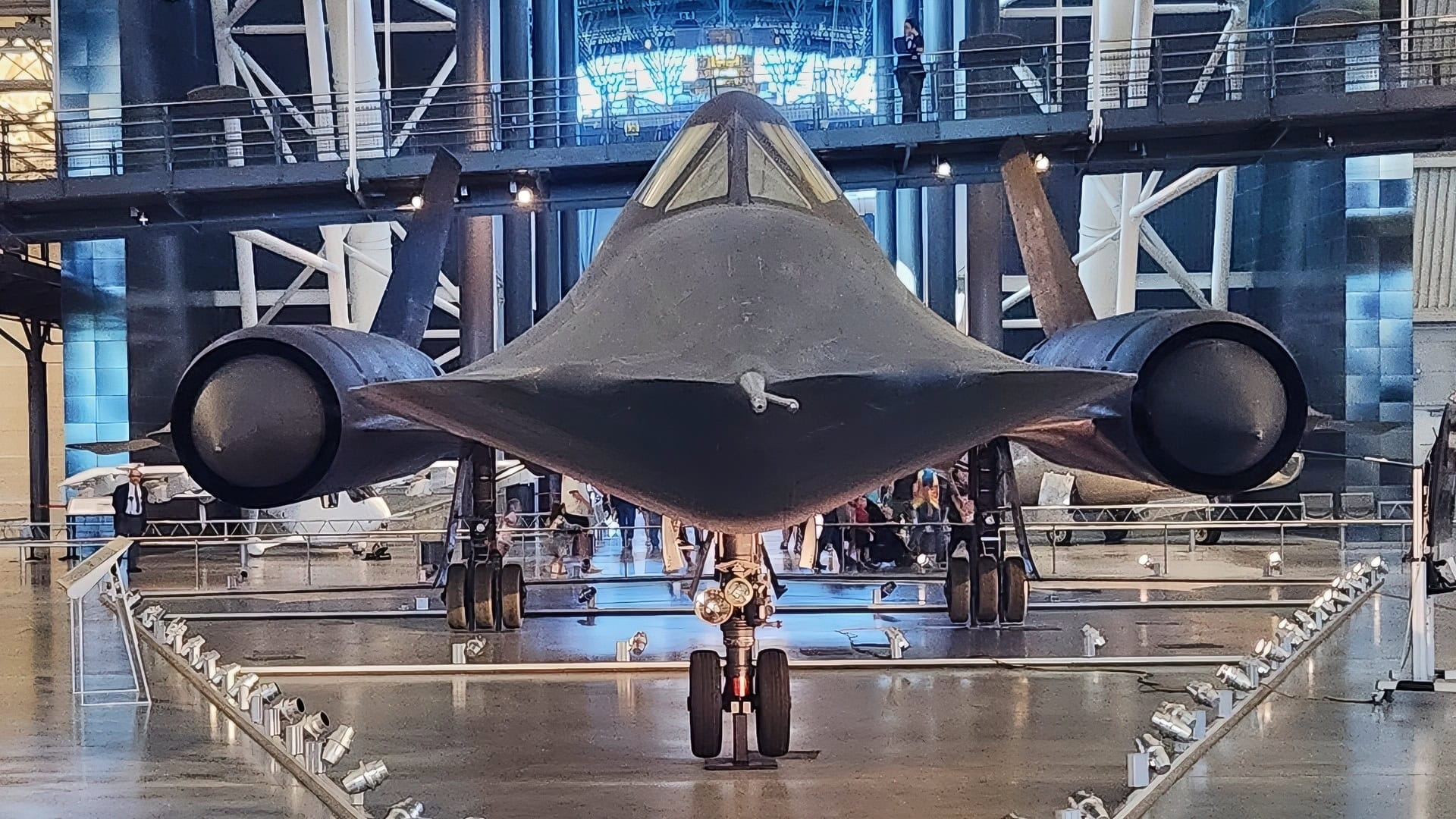
SR-71 At the Smithsonian. Image Credit: Creative Commons.
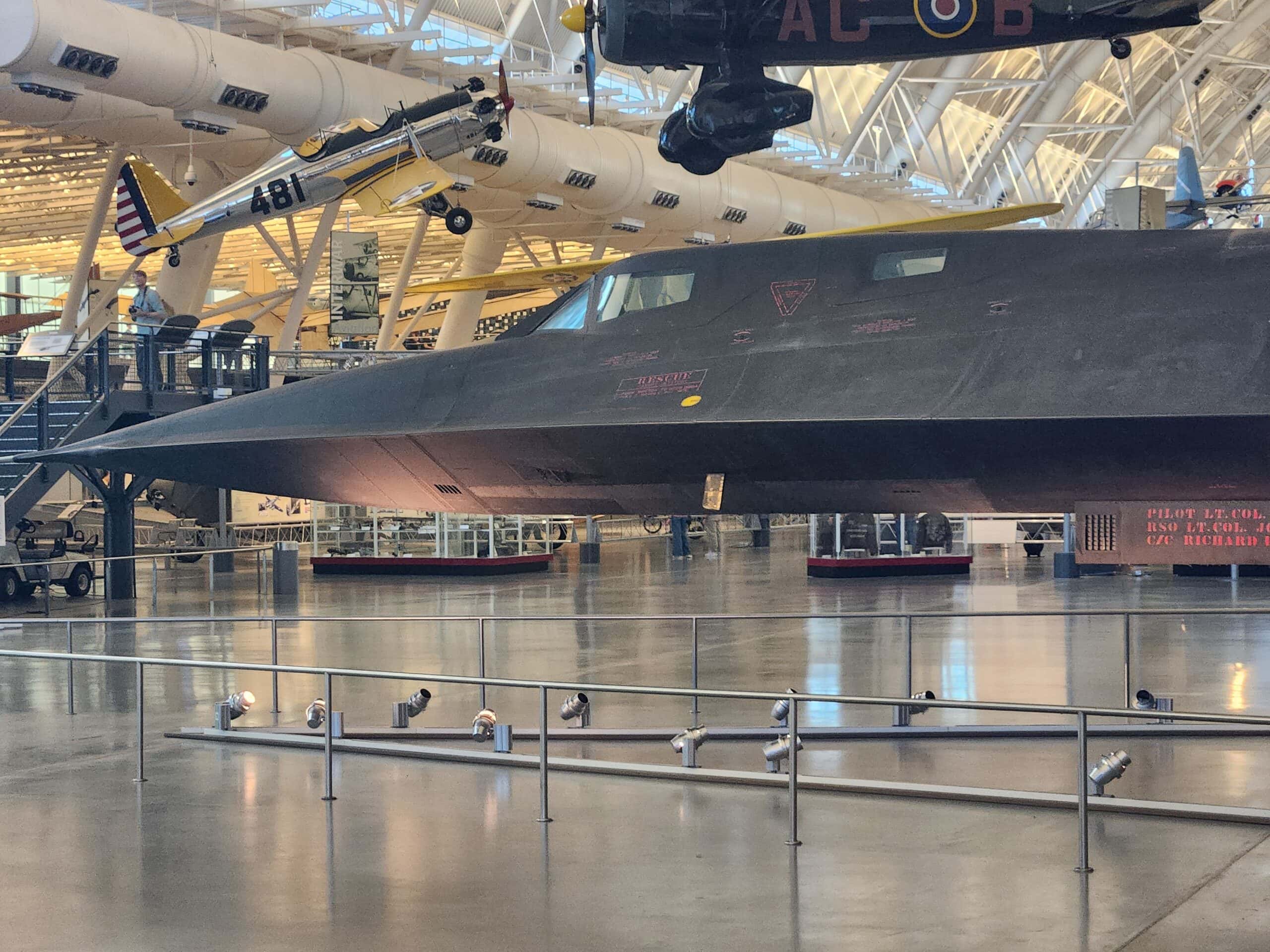
SR-71 Blackbird. 19FortyFive.com Image from the Smithsonian.
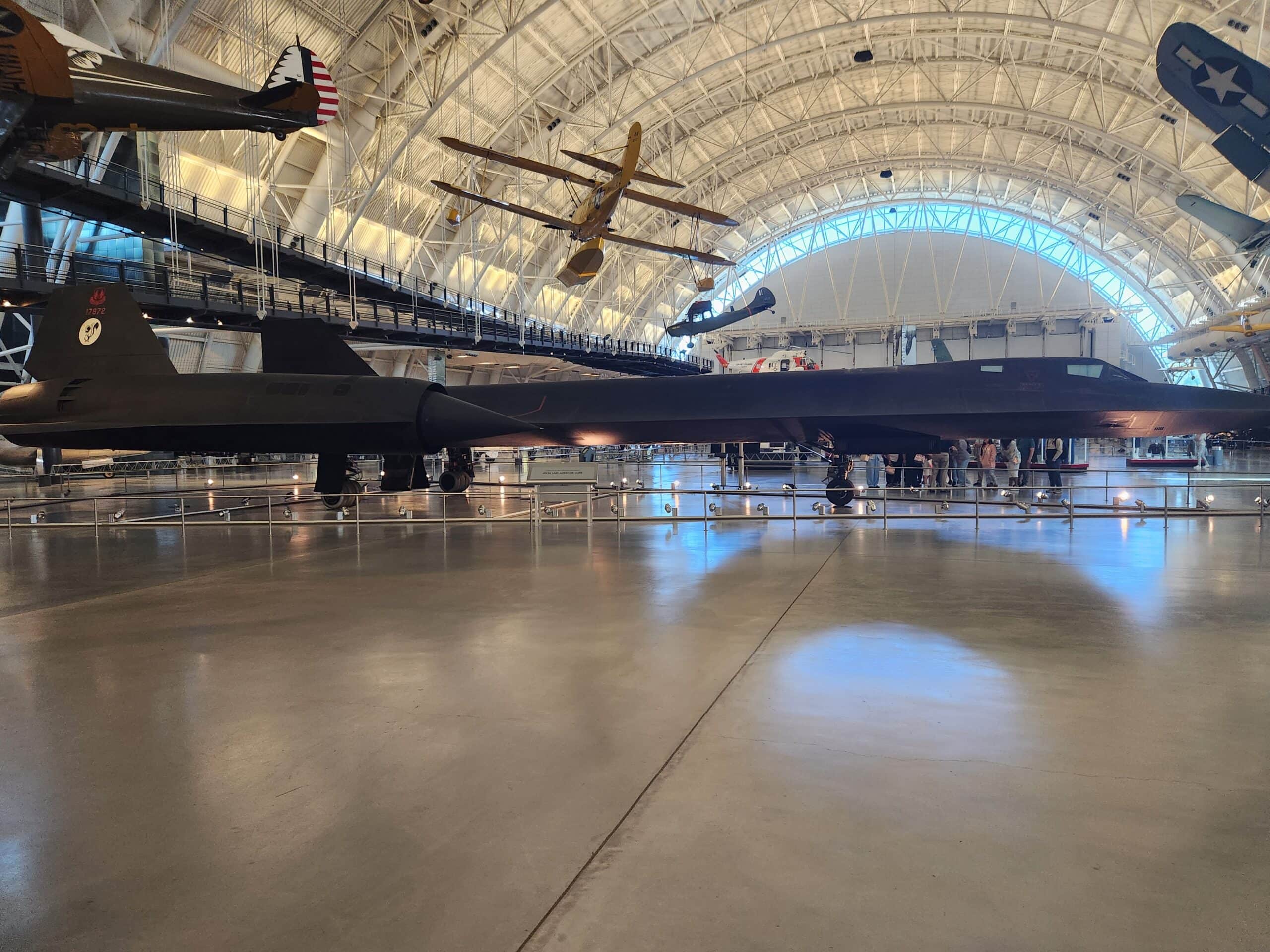
SR-71 Blackbird. 19FortyFive.com Image from the Smithsonian.
Taking Clean Imagery Home to the Brainiac Intel Analysts
Then the cameras took over on target and covered 100,000 square miles of land in 60 minutes.
That gave it its considerable reputation for reconnaissance and surveillance.
This was great for strategic battle planners in the Air Force.
Intelligence analysts usually had a treasure trove of data after each flight, and the SR-71 was integral to capturing enemy movements and helping prepare the battlefield for offensive and defensive purposes.
We have visited the Smithsonian Air and Space Museum’s Steven F. Udvar-Hazy Center in Chantilly, Virginia. There is an SR-71 on display, and if it could ever creep back onto the flight line for a mission, it would still sip fuel.
How to Account for the Lost Fuel
This sounds like a big problem, but due to the intense heat on the airframe, the panels could not withstand the pressure at such a high ceiling. The designers and engineers knew that the SR-71 would suck up the fuel, so they took precautions.
TMachACH 3-speed created substantial friction, so the pan was intentionally fitted loosely to account for changes in the titanium during flight. Panels would adapt and then fit perfectly at three times the speed of sound.
As SR-71 expert Linda Sheffield Miller explained, “The aircraft did not have a traditional fuel bladder. JP-7 would dissolve the tank liners then available. The six main fuel tanks formed their exterior skin with room for expansion.”
Then the fuel would leak on the runway. Since it was not combustible by flame, the technicians and the pilot were safe from fire or explosion, but it still needed to be fueled in the air.
Other Factors Pilots Noticed
“Many people believe we refueled after takeoff because the aircraft leaked fuel so profusely that we needed to fuel up quickly,” Colonel Richard H. Graham, a Blackbird pilot, said to Blackbird.com.
“We had to refuel right after takeoff for only one reason, and it wasn’t because we leaked JP-7 fuel on the ground. Yes, the plane does leak fuel, but not enough to require refueling after takeoff.”
Pressurized Nitrogen Gas Was a Concern
Graham recalled that “once full of fuel, gaseous nitrogen would now dominate each fuel tank’s empty space above as it burned off JP-7. The nitrogen gas pressurized each fuel tank to 1.5 psi above ambient pressure and inerted the space above the heated fuel to prevent autogenous ignition. This is why we refueled after takeoff.”
Sounds complicated, but the process worked well over the years. The airplane could easily reach 80,000 ft and even Mach 3.55 on certain missions. That’s when it eclipsed over 95 percent of the Earth’s atmosphere with enough velocity to outrun thousands of enemy projectiles fired at it.
Near Space’s Amazing Views
Some pilots said they could see trillions of stars on a clear night. That must have been awe-inspiring, knowing that this airplane had such a unique ability to amaze even the most grizzled aviators. The SR-71’s astro-inertial navigation system.
“Doing the Korean DMZ out of Kadena on a moonless, clear night, we could see 3.5 trillion more stars at 80,000 feet than you can on the ground. That’s according to Palomar Mountain Observatory in California,” former SR-71 pilot David Peters said.
The Blackbird flew its successful missions and became one of the most famous airplanes of all time. We will continue to give you some of the best stories about this vaunted spycraft. This is the home of all things SR-71, and after reading our accounts, you won’t leave disappointed.
About the Author: Brent M. Eastwood, PhD
Author of now over 3,600 articles on defense issues, Brent M. Eastwood, PhD, is the author of Don’t Turn Your Back On the World: A Conservative Foreign Policy and Humans, Machines, and Data: Future Trends in Warfare, plus two other books. Brent was the founder and CEO of a tech firm that predicted world events using artificial intelligence. He served as a legislative fellow for US Senator Tim Scott and advised the senator on defense and foreign policy issues. He has taught at American University, George Washington University, and George Mason University. Brent is a former US Army Infantry officer. He can be followed on X @BMEastwood.