
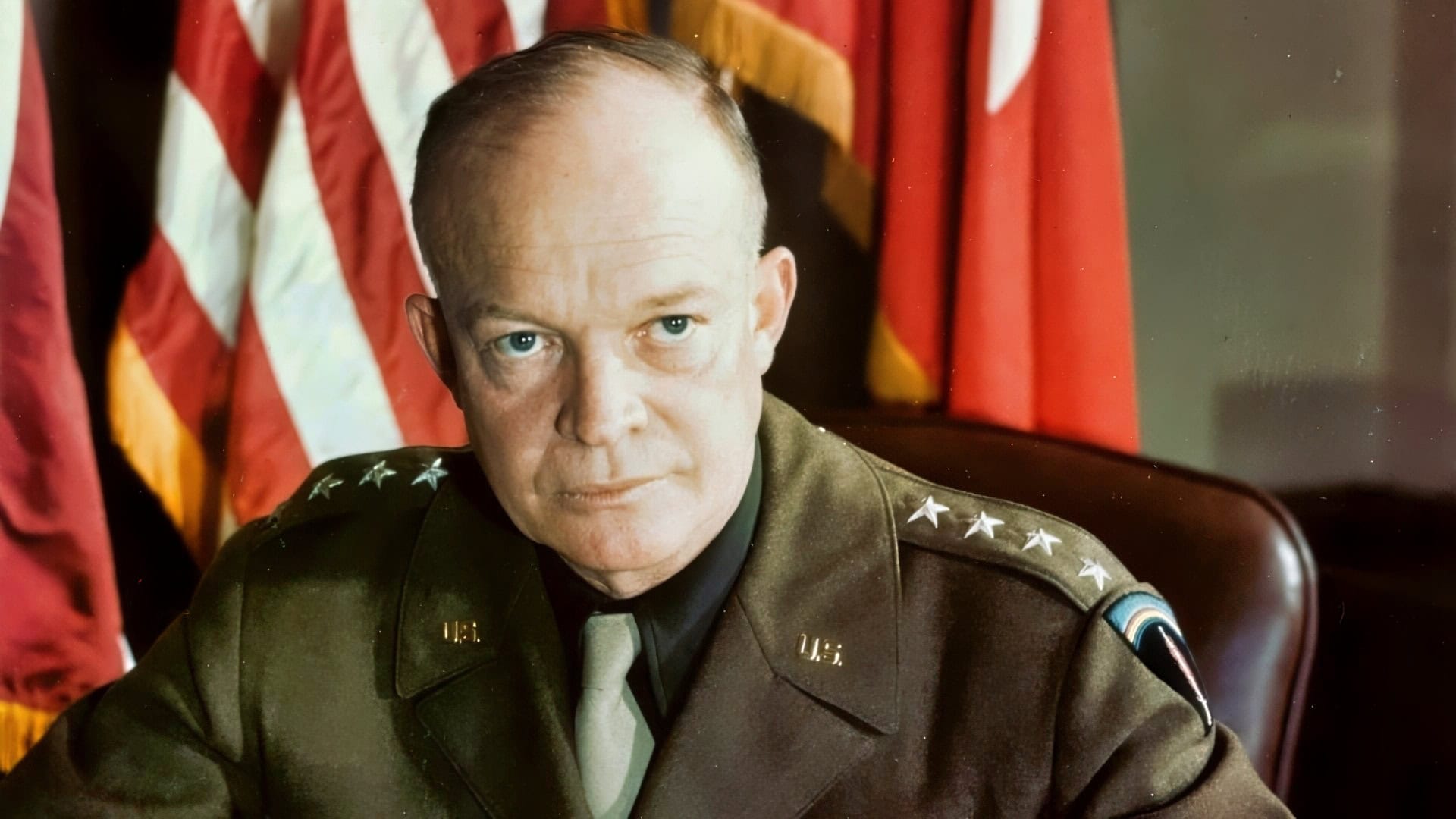
Summary and Key Points: “Learn as much as you can from those who know more than you, who do better than you, who see more clearly than you.” US Army General and US President Dwight D. Eisenhower wrote that in his memoir At Ease, published in 1967, and his own career is the argument for it. The Naval Academy was his first choice and he did not get there. He went to West Point in 1911 instead. When the First World War came, he repeatedly applied for a combat command and was refused every time, spending the war training tank crews in the United States. He finally received orders to mobilize in 1918 and the war ended the following month. He never heard a shot fired in anger.
Quote of the by Day by Dwight D. Eisenhower
“Learn as much as you can from those who know more than you, who do better than you, who see more clearly than you.”
Like few people in American history, Dwight Eisenhower was known for his prowess as both a military leader and political one. The commander of U.S. forces in Europe in World War II, Eisenhower was elected president in 1952 and served two terms.
The man known as Ike, according to the White House Historical Association’s bio, was born in Texas in 1890 and raised in Abilene, Kansas. After graduating from high school, he was appointed to West Point and arrived in 1911, although he had been rejected from the Naval Academy, his top choice.
While stationed at Fort Sam Houston in Texas, he met future First Lady Mamie Geneva Doud, whom he married in 1916.
“His ability to understand military strategy was noticed by high-ranking officials,” the Eisenhower biography by the National Museum of the United States Army said.
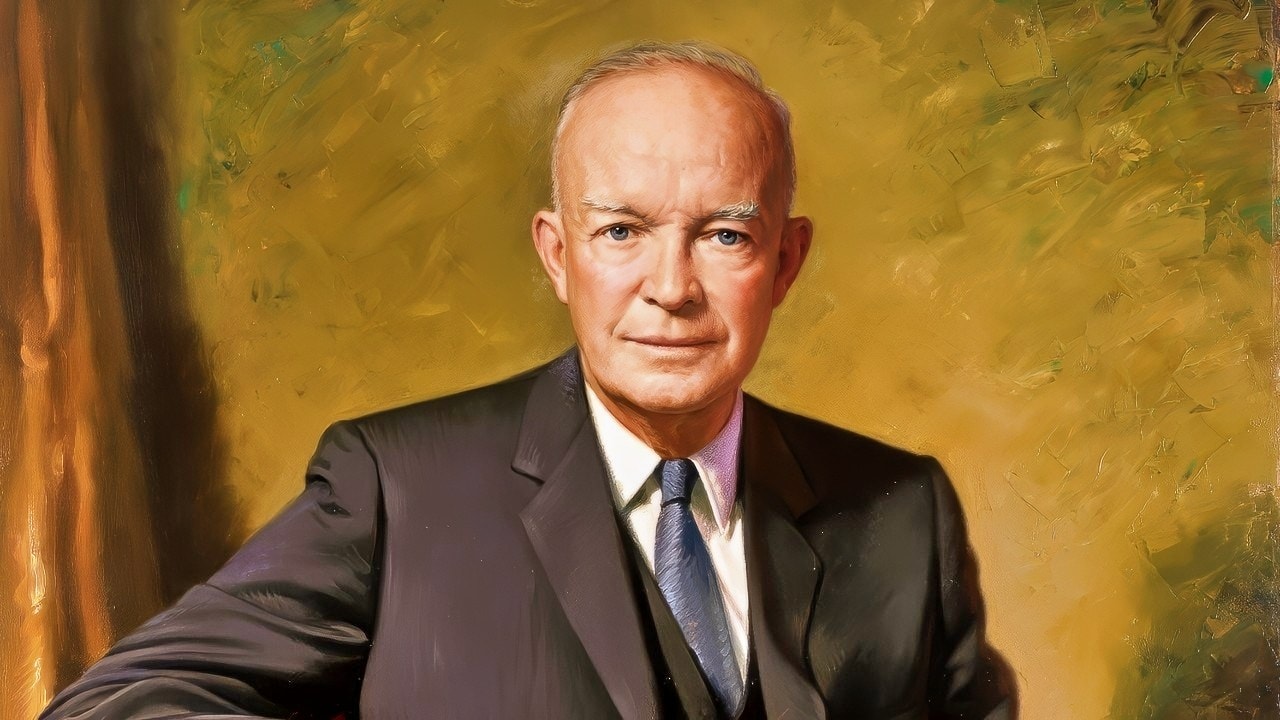
Former General Dwight D. Eisenhower. Image Credit: Creative Commons.
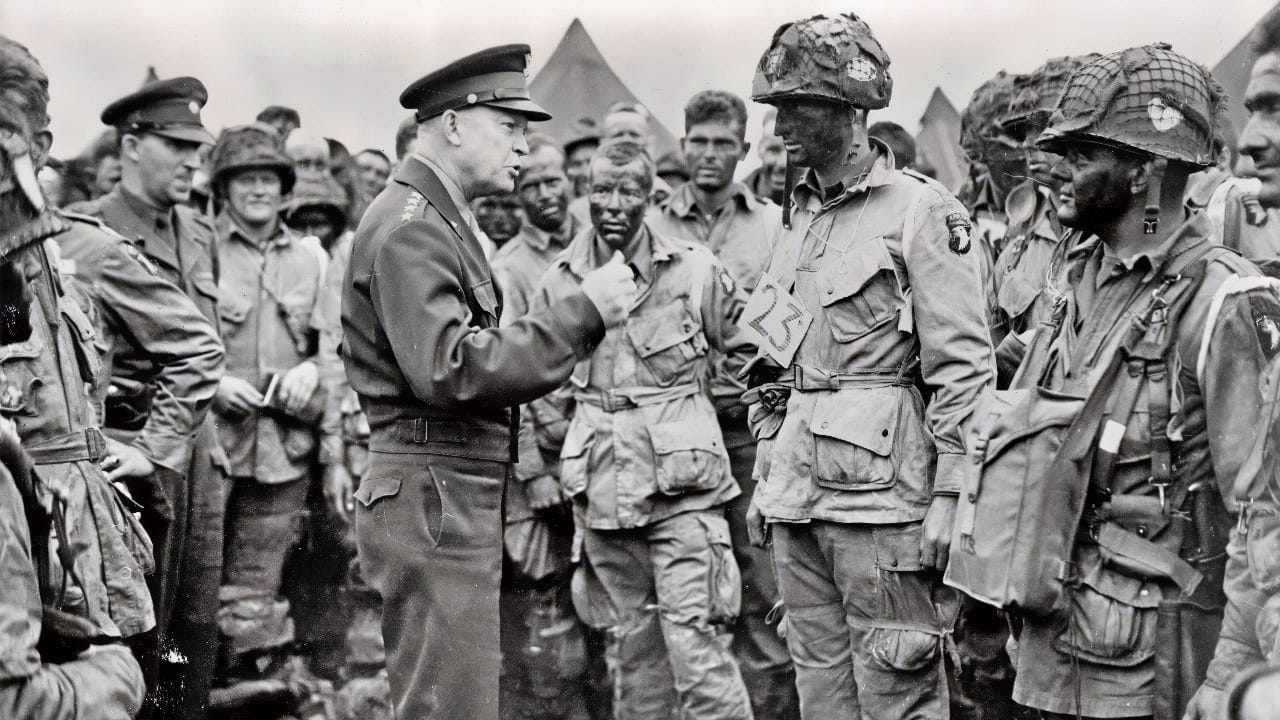
Dwight D. Eisenhower D-Day 1944. Image Credit: Creative Commons.
During World War I, Eisenhower applied to join combat units but was denied and was instead sent to a tank battalion at Fort George G. Meade, where he got to know Capt. George S. Patton, Jr. In 2018, Eisenhower received orders to mobilize, but the war ended the following month.
Between World Wars
Per the National Museum of the United States Army bio, Eisenhower, the year after the war, “embarked on a cross-country convoy to gauge the Army’s transportation and logistical capabilities.” In the early 1920s, he headed to the Panama Canal Zone, where he served under Brig. Gen. Fox Conner, who convinced Eisenhower that Europe would be at war again before long.
Later in the 1920s, Eisenhower did stints at the Command and General Staff College and Army War College. After that, the future president took an assignment in France, where he could “study the World War I battlefields,” which helped prepare him for another war to come in that country.
Eisenhower in World War II
Once World War II began, General George C. Marshall brought Eisenhower to Washington to “work on war plans.” Before long, Eisenhower was sent to Europe.
He planned “Operation Torch,” the Allied invasion of North Africa in late 1942, and, per the National Museum biography, even refused the Medal of Honor from President Roosevelt. In late 1943, Eisenhower was named Supreme Commander of the Allied Expeditionary Forces, when the Germans still occupied Western Europe.
Then came D-Day in June 1944, when, according to that bio, Eisenhower’s cross-country convoy in 1919 and later study of the French battlefields proved invaluable in delivering an American victory.
After the War, and the White House Years
A popular figure following the U.S. victory in World War II, Eisenhower became president of Columbia University in 1948, serving for four years. Eisenhower and Woodrow Wilson are the only former university presidents to be elected president of the United States.
In 1952, Eisenhower ran for president and was elected the 34th president of the United States; he was re-elected in 1956, defeating Adlai Stevenson both times. During his eight years in office, Eisenhower presided over the armistice in the Korean War, and later declined a French request for assistance in Vietnam.
Domestically, Eisenhower signed the Federal Aid Highway Act, which helped establish the Interstate highway system. He also signed the law that created NASA and oversaw the admission of Alaska and Hawaii as states.
A C-SPAN survey of historians ranked Eisenhower the fifth-best U.S. president, behind only Abraham Lincoln, George Washington, and the two Roosevelts, and ahead of his immediate predecessor in the White House, Harry S. Truman. Earlier versions of the survey had Eisenhower in the bottom half of the top ten.
The Quote
One of Eisenhower’s well-known quotes: “Learn as much as you can from those who know more than you, who do better than you, who see more clearly than you,” comes from Eisenhower’s memoir, “At Ease: Stories I Tell to Friends,” the memoir that Eisenhower published in 1967.
The great general clearly learned from the well-known generals who taught him, and the experiences he had early in life later served him well.
Dwight Eisenhower died on March 28, 1969, two years after the memoir was published.
About the Author: Stephen Silver
Stephen Silver is an award-winning journalist, essayist, and film critic, and contributor to the Philadelphia Inquirer, the Jewish Telegraphic Agency, Broad Street Review, and Splice Today. The co-founder of the Philadelphia Film Critics Circle, Stephen lives in suburban Philadelphia with his wife and two sons. For over a decade, Stephen has authored thousands of articles that focus on politics, national security, technology, and the economy. Follow him on X (formerly Twitter) at @StephenSilver, and subscribe to his Substack newsletter.