
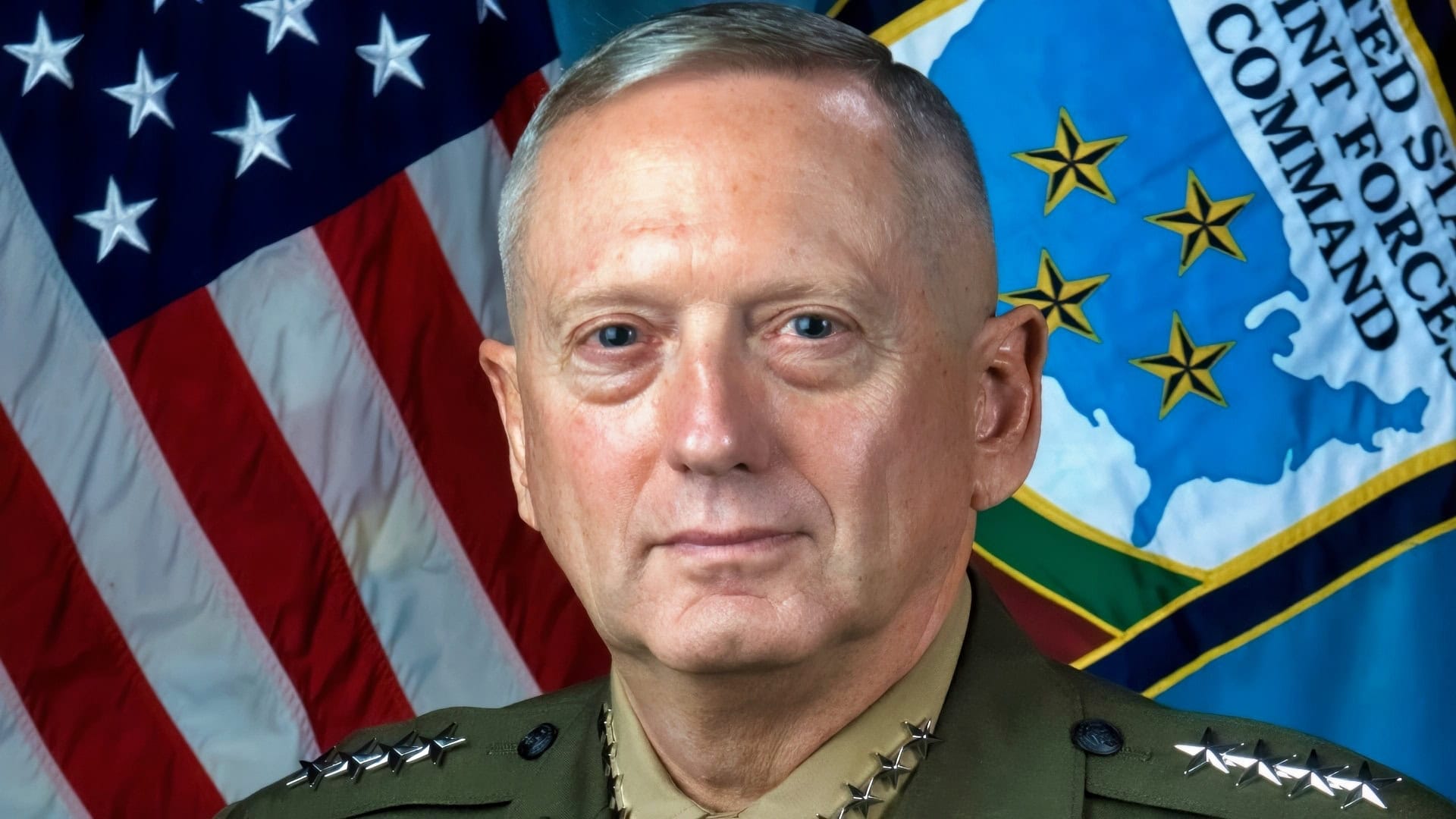
Summary and Key Points: “If you don’t like problems, stay out of leadership.” James Mattis wrote that in “Call Sign Chaos,” published in 2019, months after he resigned as Secretary of Defense over the withdrawal of American forces from Syria. He had earned the right to the sentence. Mattis joined the Marine Corps in 1972 and spent more than four decades in it: commanding the 1st Marine Division and its 24,000 Marines north from Kuwait in the spring of 2003, through Basra, Nasiriyah, Diwaniyah and Kut and into Baghdad by 9 April; then I Marine Expeditionary Force; then Joint Forces Command and NATO’s Supreme Allied Commander Transformation; then US Central Command from 2010 until his retirement in 2013. He returned as the 26th Secretary of Defense in 2017 and lasted two years.
James Mattis Knows All About Leadership
Military Quote of the Day: “If you don’t like problems, stay out of leadership.” -Gen. James Mattis
James Mattis served in a wide variety of positions throughout his military career, which spanned more than 40 years.
After joining the Marines in 1972, Mattis graduated from the Marine Corps Amphibious Warfare School and the Marine Corps Command and Staff College, then earned an M.A. in international security affairs from the Naval War College, according to his Department of Defense biography.
Mattis is often associated with his time in the Iraq War. According to the Department of Defense bio, he commanded the 1st Marine Division from 2002 to 2004 as a Major General.
After that, in 2005 and 2006, he served in Quantico as Commander of Marine Corps Combat Development.
From 2006 to 2007, he was Commanding General, I Marine Expeditionary Force, and later the Commander of U.S. Marine Forces Central Command in the Middle East.
From 2007 to 2010, he was Commander of U.S. Joint Forces Command and NATO’s Supreme Allied Commander Transformation.
Mattis then commanded U.S. Central Command between 2010 and 2013, a stint that ended with his retirement.
Mattis in Iraq
In September 2003, about six months after the war in Iraq began, Mattis gave an interview to PBS’ NewsHour about the war’s early stages.
“His 24,000 troops charged north from Kuwait, clashing with Iraqi forces and Fedayeen irregulars around Basra, Nasiriyah, Diwaniyah, and Kut, before entering Baghdad April 9.
That day, with the help of local Iraqis, Mattis’s troops toppled the statue of Saddam Hussein,” the introduction of the PBS interview said.
After the end of “major combat operations,” as the initial invasion was called at the time, Mattis’ division was assigned to occupy seven provinces in Iraq, with Mattis holding a combat post in the “ancient city of Babylon,” the report said. It added that his division was handed off to Polish and Spanish troops that September.
“We went into the attack with the motto, ‘no better friend, no worse enemy. ‘” So if you want to be our friend, we’ll be the best friends you ever had. If you want to fight us, you’re going to regret it,” Mattis said in the PBS interview.
“When we were up there in the stability operations, we added to it: first, do no harm. In other words, if the enemy tried to provoke us into a fight and that fight would cause innocent people to die, then we would forgo the fight. We would try to find a way to get them another day.”
Later, in 2004, Mattis led the mission into Fallujah.
Of course, things didn’t go smoothly in the Iraq War. And by 2015, Mattis admitted in a conference speech Q&A that “we will probably look back on the invasion of Iraq as a mistake — as a strategic mistake.”
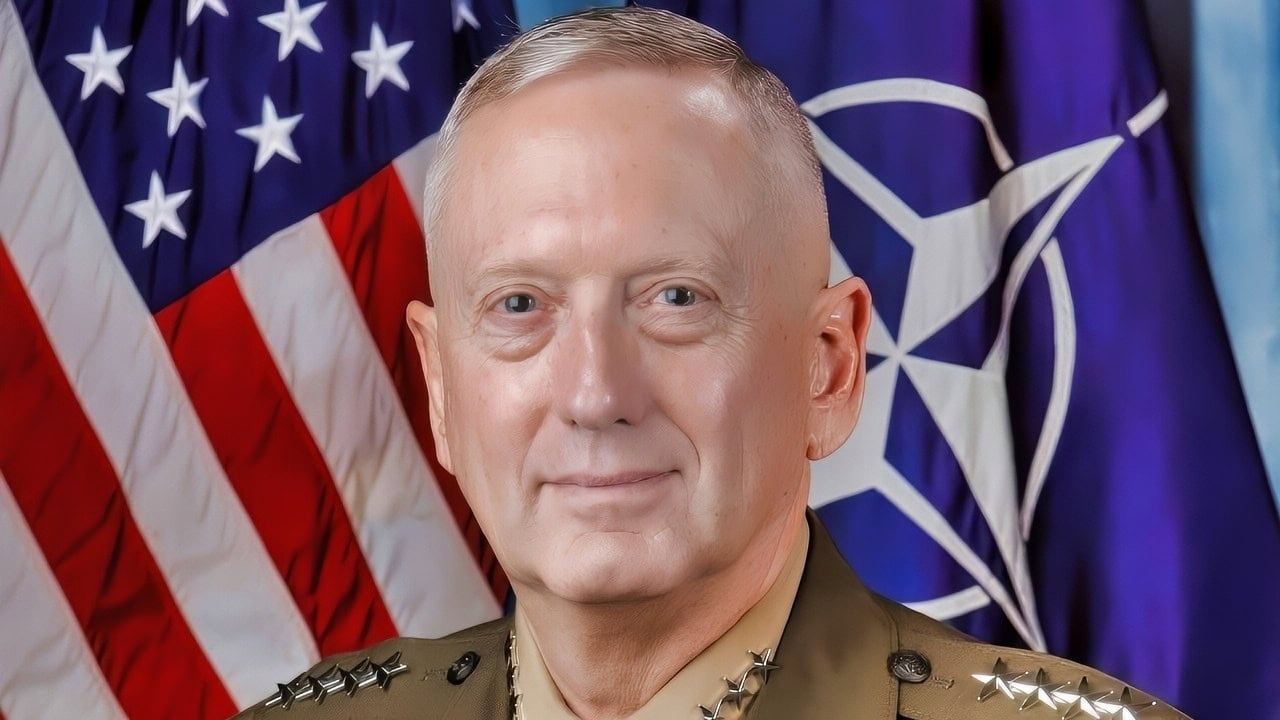
Jim Mattis Creative Commons Photo
“People were pretty much aware that the U.S. military didn’t think it was a very wise idea.
But we give a cheery ‘Aye aye, sir,’” Mattis said at the ASIS International conference in 2015, in comments that came to light the following year when President-Elect Donald Trump nominated Mattis to serve as Defense Secretary.
Mattis, The Intercept reported, seemed aware that the remarks could be controversial, and asked whether any media was in the room. The media outlet received a recording in late 2016.
Mattis at the Pentagon
The comments did not cause any great controversy, and he was confirmed as the 26th Secretary of Defense. Mattis would depart the Pentagon in 2019, in protest over Trump’s decision to pull U.S. forces from Syria.
Mattis discussed his decision in another interview with PBS, though he didn’t directly criticize the president.
“I was clear in my letter of resignation that I believed in having alliances and staying true to alliances. And I think that, as we look at the importance of alliances, it is critical that we work with our allies,” he told PBS.
The Quote
Mattis’ quote, “If you don’t like problems, stay out of leadership,” comes from his memoir, “Call Sign Chaos: Learning to Lead,” which was published in 2019, shortly after he left Trump’s cabinet.
That book, an NPR review said, included some implied criticisms of the president, although it was far from a tell-all of his time at the Pentagon.
About the Author: Stephen Silver
Stephen Silver is an award-winning journalist, essayist, and film critic, and contributor to the Philadelphia Inquirer, the Jewish Telegraphic Agency, Broad Street Review, and Splice Today. The co-founder of the Philadelphia Film Critics Circle, Stephen lives in suburban Philadelphia with his wife and two sons. For over a decade, Stephen has authored thousands of articles that focus on politics, national security, technology, and the economy. Follow him on X (formerly Twitter) at @StephenSilver, and subscribe to his Substack newsletter.