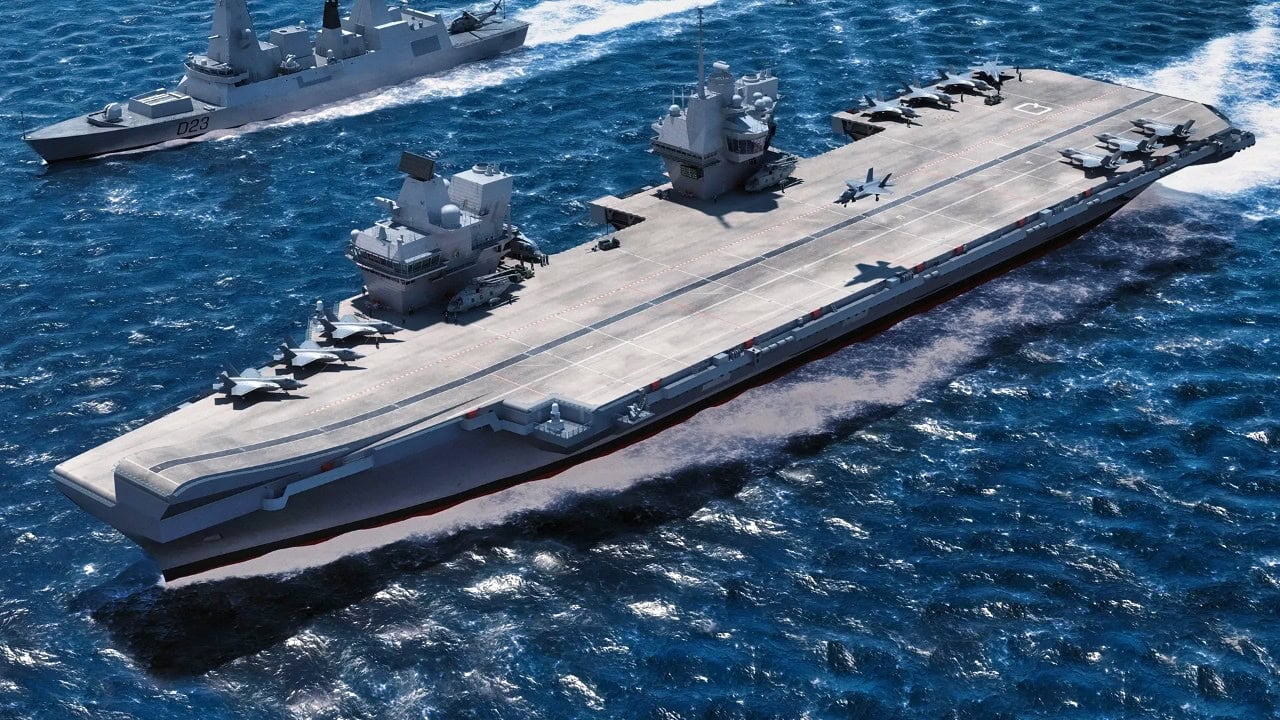
Summary and Key Points: The Royal Navy budgeted £3,900,000,000 for two aircraft carriers and spent £7,600,000,000. HMS Queen Elizabeth entered service in 2017, two years late, taking on roughly 200 liters of seawater an hour through a faulty propeller shaft seal. In August 2022, HMS Prince of Wales broke down two days out of Portsmouth when a coupling failed and wrecked her starboard shaft and her 22-ton propeller: nine months out of service and an estimated £25,000,000 to repair. In February 2024, HMS Queen Elizabeth withdrew from a NATO exercise at the last minute with a coupling problem of her own.
The Queen Elizabeth-Class Challenge Isn’t Sailing Away
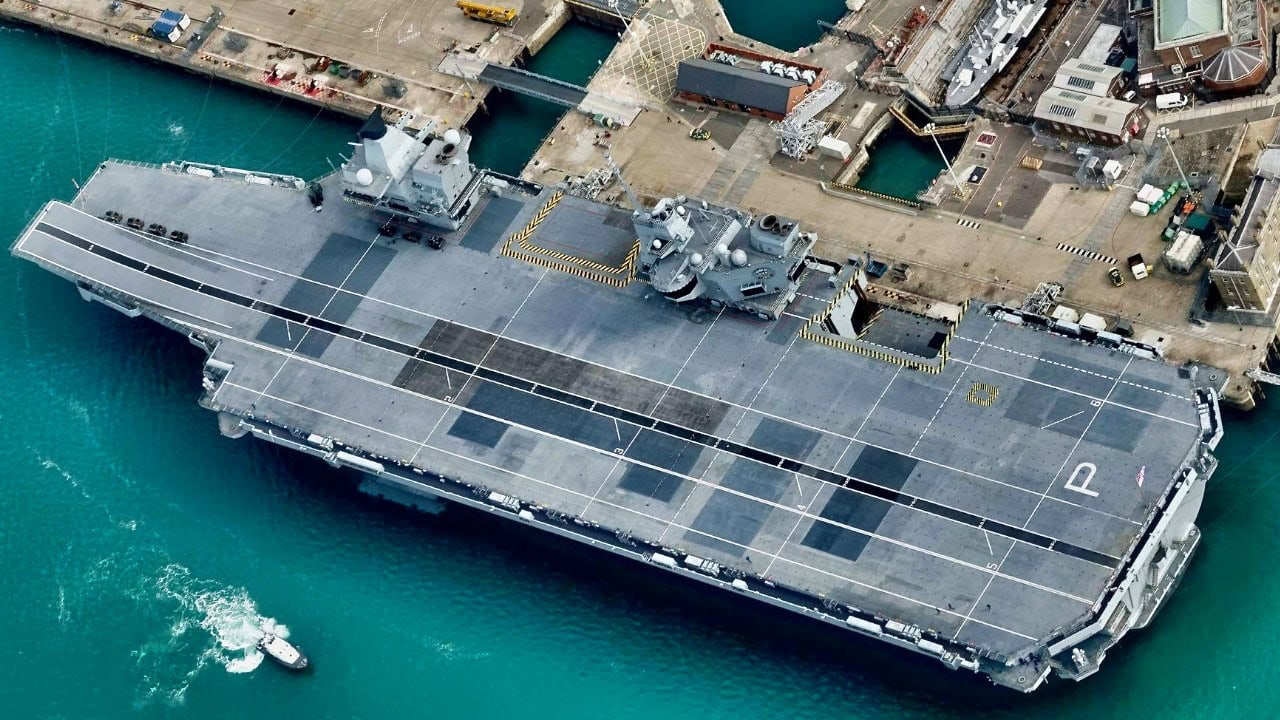
Royal Navy HMS Prince of Wales Aircraft Carrier. Image Credit: Creative Commons.
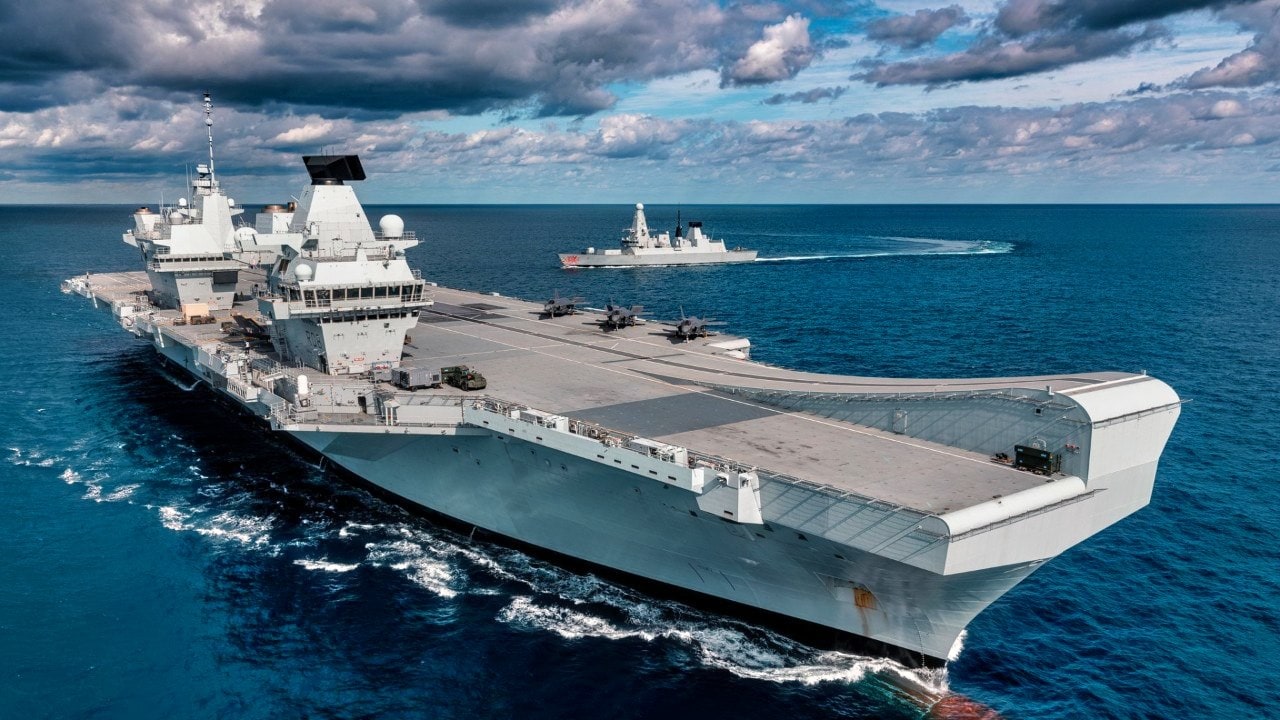
Queen Elizabeth-Class Royal Navy Aircraft Carrier. Image Credit: Creative Commons.
The Royal Navy’s two Queen Elizabeth-class aircraft carriers have formidable capabilities on paper, but their operational record has been marred by repeated mechanical failures, maintenance backlogs, and readiness concerns that have severely limited their capabilities as well as the ability of the United Kingdom to project power far from the home island’s shores.
Build, Cost, and Delay
The Queen Elizabeth-class program began life with an attractive £3.9 billion budget allocation for the two flattops.
But by 2019, the official cost had risen significantly to £7.6 billion, almost double the initial cost estimate.
In 2008, the decision was made to slow construction in response to the then-ongoing financial crisis, which added around £1.56 billion to the ships’ costs.
Later, a switch from a catapult-equipped second aircraft carrier back to a short take-off and vertical landing design led to further cost overruns and construction delays.
The HMS Queen Elizabeth would ultimately enter service in 2017, two years after the initial service entry target date, and her initial sea trials were delayed by several technical issues, pushing her first voyage back by several months.
Propulsion Troubles: Shafts, Couplings, and Leaks
Even after commissioning, the carrier suffered recurring propulsion problems. Shortly after entering service, HMS Queen Elizabeth was found to be taking on roughly 200 liters of seawater an hour due to a faulty seal around one of its stern propeller shafts. The Royal Navy described this as not serious enough to halt trials, but it did require time in Portsmouth to repair.
More serious issues emerged with the carrier’s propeller shaft couplings.
In August 2022, the HMS Prince of Wales broke down just two days after leaving Portsmouth when an external coupling connecting the outer propeller shaft to the drive shaft from the propulsion motors failed, causing significant damage to the shaft and 22-ton propeller and superficial rudder damage.
An official investigation concluded that the ship’s starboard shaft had been misaligned during construction and that several crucial components were incorrectly installed, a significant build-quality defect.
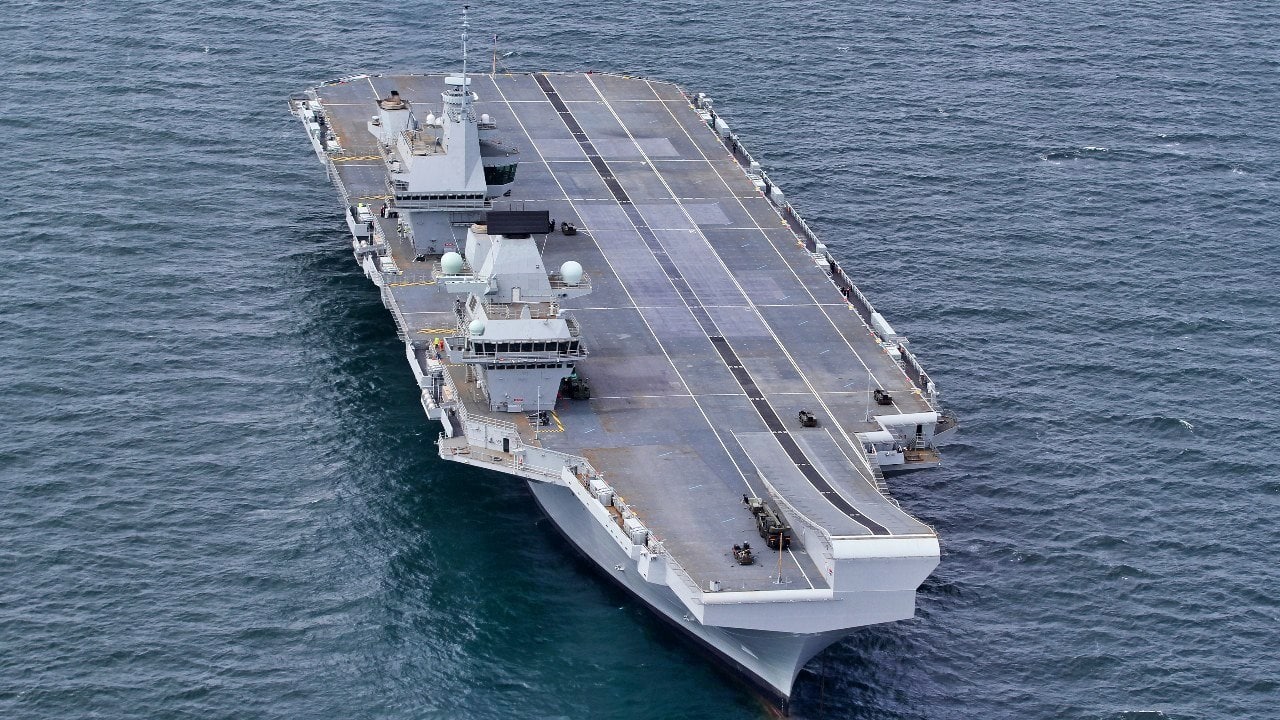
Queen Elizabeth-Class Aircraft Carrier Royal Navy. Image Credit: Creative Commons.
Repairs, though ultimately successful, took the ship out of service for around nine months and cost an estimated £25 million.
In February of 2024, a routine pre-sailing check identified an issue with a coupling on the HMS Queen Elizabeth’s starboard propeller shaft, forcing the ship to withdraw from NATO’s Exercise Steadfast Defender at the very last minute.
The United Kingdom’s Ministry of Defence repeatedly insisted that it was a separate problem from the 2022 HMS Prince of Wales failure and not a systematic, class-wide defect.
The ministry attributed the issue to wear and tear on the hydraulic clamp coupling that joins sections of the shaft. But even if the issue was, in fact, unrelated, it was at the very least a significant and decidedly negative coincidence.
Showergate and Maintenance Backlog
Propulsion issues aside, the carrier has faced less glamorous but still significant maintenance issues.
In 2023 and 2024, reports surfaced of a backlog of defects, dubbed “showergate,” and in the media, centered on faulty showers and plumbing defects throughout the carrier’s living spaces.
The scandal raised concerns about habitability aboard the ship and drew attention to the pace of repairs.
While not as serious, nor as operationally significant as the ship’s failures related to propulsion, the showergate nonetheless restricted the ship to the dockyard and reduced repair bandwidth for other warships, adversely affecting deployment time.
Fleet-wide Availability Constraints
The cumulative effect of the HMS Queen Elizabeth’s problems has been to constrain the Royal Navy’s carrier availability at a time when escort shortages and F-35B numbers already put a damper on sustained operations.
The HMS Prince of Wales has spent roughly a third of its lifetime this far at port undergoing repairs, and only about a fifth of its time has been at sea, according to British parliamentary reporting.
The HMS Queen Elizabeth has spent extended periods in dry dock, including much of last year for hull inspections and work on the ship’s shafts.
While one carrier is often in maintenance while the other is preparing for or running from deployment, the Royal Navy has repeatedly found itself with just one available carrier — and sometimes none at all.
The resulting inflexibility has at times been starkly apparent, particularly during various crises.
Earlier this year, amidst the ongoing tension in the Middle East, the Ministry of Defence reduced the HMS Prince of Wales’ notice-to-sail from 14 days to just five, but Royal Navy officials simultaneously stressed that no deployment decision had been taken and that escort availability remained tight, with only a small handful of frigates and destroyers ready.
Taken as a whole, the two aircraft carriers’ records have been significantly tarnished by cost overruns, late service entry, and a raft of mechanical and maintenance issues that have narrowed the window in which Britain can project aircraft carrier power around the globe.
About the Author: Caleb Larson
Caleb Larson is an American multiformat journalist based in Berlin, Germany. His work covers the intersection of conflict and society, focusing on American foreign policy and European security. He has reported from Germany, Russia, and the United States. Most recently, he covered the war in Ukraine, reporting extensively on the war’s shifting battle lines from Donbas and writing on the war’s civilian and humanitarian toll. Previously, he worked as a Defense Reporter for POLITICO Europe. You can follow his latest work on X.