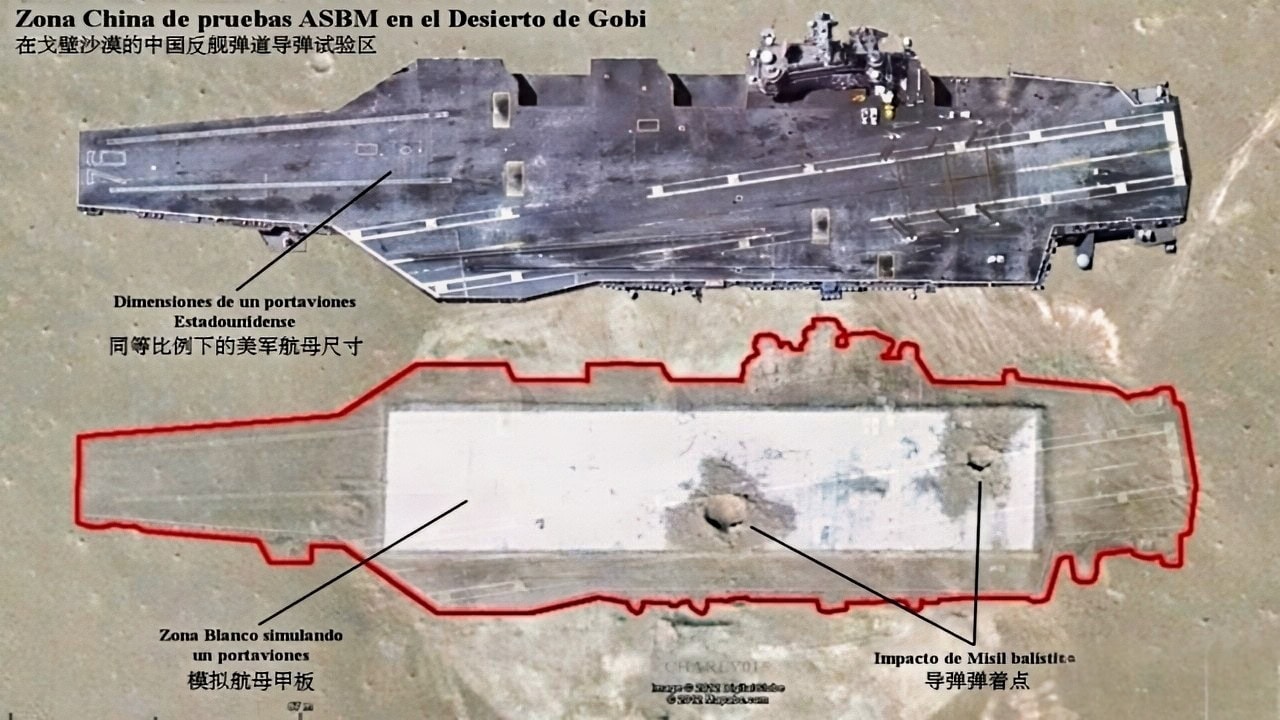
China is preparing for war. After 20 years of major military expansion and modernization, the West can no longer afford to ignore (or downplay) this rapid Chinese military expansion.
One of the surest indicators of increasing modern-warfare capability is the nature of the various readiness exercises the Chinese military conducts, as well as the specific systems Beijing has developed to hinder the United States military’s ability to project power into regions near China.
Background
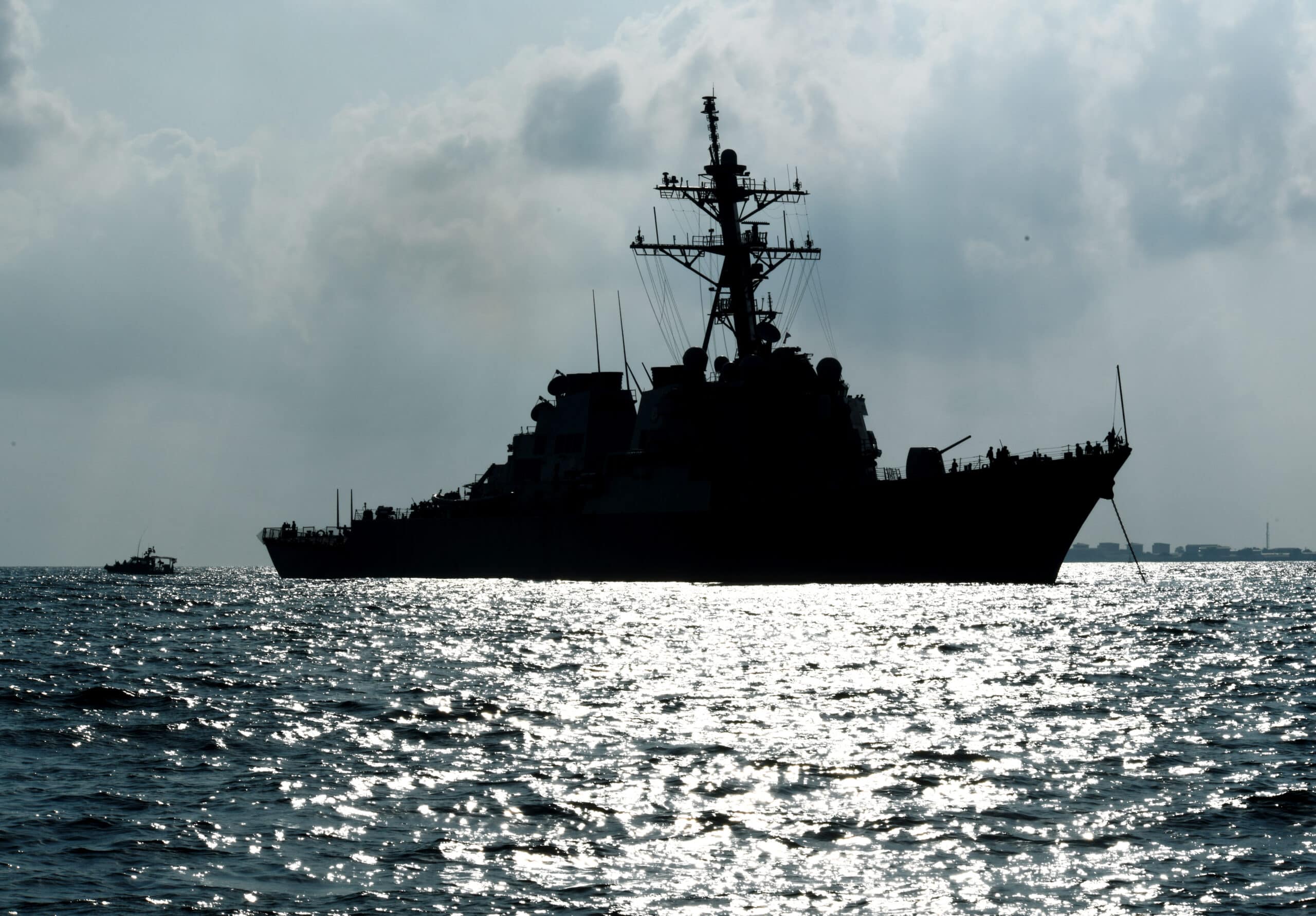
GULF OF TADJOURA (Mar. 13, 2021) USS Laboon (DDG 58), an Arleigh Burke class guided missile destroyer, is anchored in the Gulf of Tadjoura while Camp Lemonnier’s Expeditionary Medical Facility (EMF) team embarked the ship to administer COVID 19 vaccines to the crew. (U.S. Navy photo by Mass Communication Specialist 1st Class Randi Brown)
For many years, Beijing has feverishly worked to expand its footprint in the First Island Chain, specifically in the South China Sea.
China has installed a web of advanced anti-access/area-denial (A2/AD) capabilities throughout the region, all aimed at stopping American military power projection into the contested zone of the First Island Chain.
One system, in particular, is the Dongfeng DF-21D missile. This long-range ballistic missile is designed to target and destroy aircraft carriers belonging to the United States Navy.
On top of that, there has been evidence mounting over the course of many years that the Chinese military is practicing destroying replicas of American warships with their advanced A2/AD systems.
Far from the choppy waters of the South China Sea or the Taiwan Strait, in the arid Western deserts of China, the People’s Liberation Army (PLA) has been creating large-scale targets to test its newer A2/AD-related weapons.
Sea-Based Warfare…In the Desert?
In fact, the Chinese have built full-size representations of those American aircraft carriers, destroyers, and other critical US warships across a variety of missile-testing sites in Western China.
Some targets are merely outlines of the ships.
Others are more sophisticated and include structures such as radar reflectors.
Beyond US warships, the Chinese have also built replicas of key government buildings in Taiwan where it is believed they practice raiding those facilities and targeting them.
Taken together, Washington appears to have a serious problem on its hands.
Satellite imagery from 2021 revealed a sprawling target testing complex near Ruoqiang in China’s western Taklamakan Desert.
That complex contained the full-scale outline of a US aircraft carrier and other targets resembling at least two Arleigh Burke-class guided-missile destroyers (SSGNs).
Satellite imagery showed a 75-meter-long ship target mounted on a six-meter-wide rail system, potentially allowing Chinese testers to practice striking a moving warship.
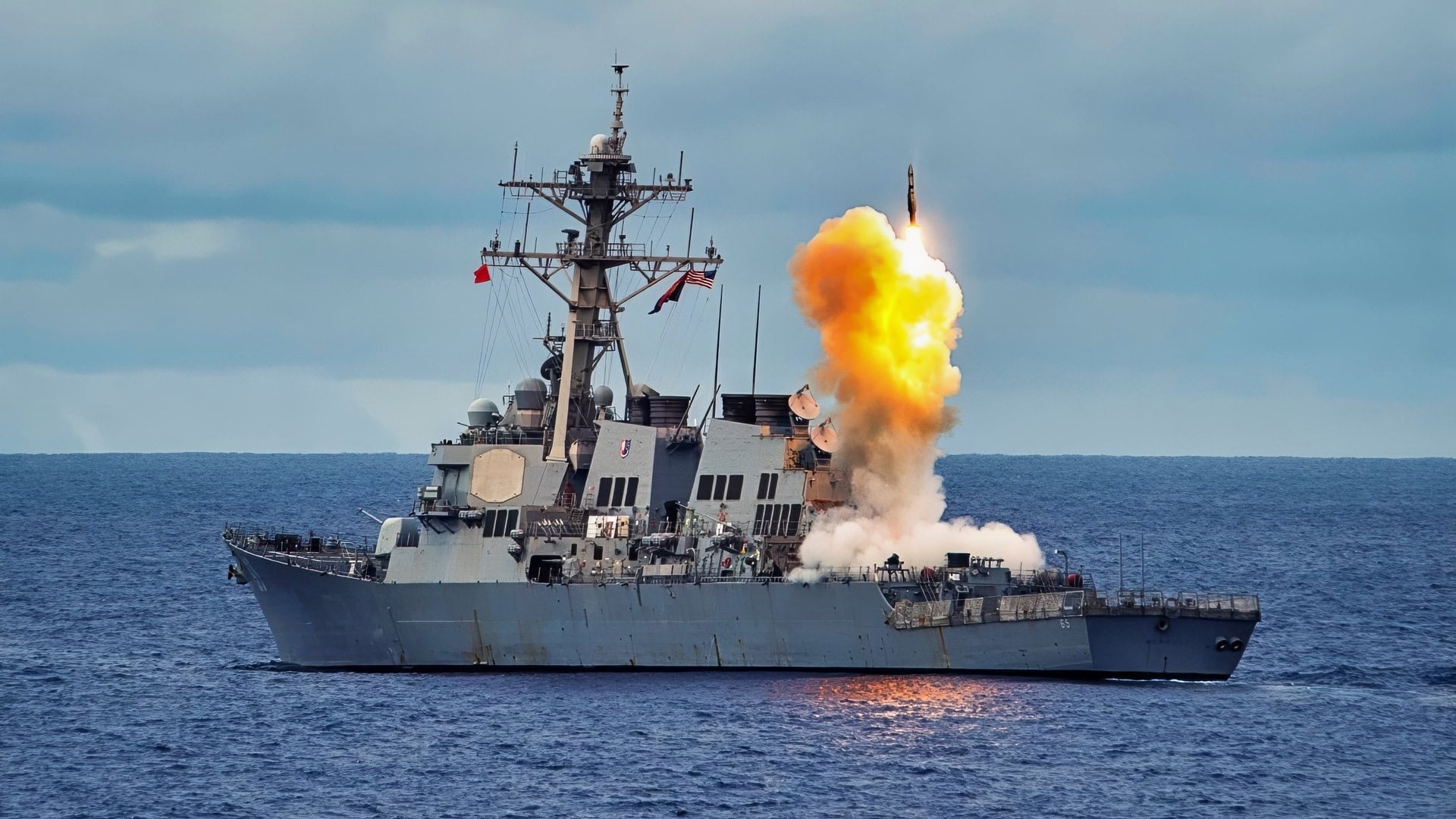
PHILIPPINE SEA (Sept. 19, 2016) The Arleigh Burke-class guided-missile destroyer USS Benfold (DDG 65) fires a standard missile (SM 2) at a target drone as part of a surface-to-air-missile exercise (SAMEX) during Valiant Shield 2016. Valiant Shield is a biennial, U.S. only, field-training exercise with a focus on integration of joint training among U.S. forces. This is the sixth exercise in the Valiant Shield series that began in 2006. Benfold is on patrol with Carrier Strike Group Five (CSG 5) in the Philippine Sea supporting security and stability in the Indo-Asia-Pacific region. (U.S. Navy photo by Mass Communication Specialist 2nd Class Andrew Schneider/Released)
Over the years, Chinese replicas of American carriers and other warships have become increasingly advanced.
For instance, the earliest renditions of US carriers in China’s proving grounds lacked an island (the tower at the top of the carrier, near the flight deck), aircraft elevators, and other important structures found on US carriers.
Yet, the radar imagery still showed the all-important outline of the carrier.
Inevitably, though, those additional structures were installed on mockups of US warships.
Indeed, one such mockup caught on satellite in 2024 was clearly a full-scale replica of the newest US Navy carrier, the Gerald R. Ford-class.
These mockups let China test increasingly advanced carrier-killing weapons in near-real-world scenarios and provide critical training for missile crews (and key insights for weapons designers).
The reason that the Chinese are doing this in the desert is that the desert, oddly enough, offers similar conditions to the sea, in that it is a flat, open area, where Chinese weapons, like the DF-21D carrier killer, can hone in on a massive carrier sitting just above the waterline.
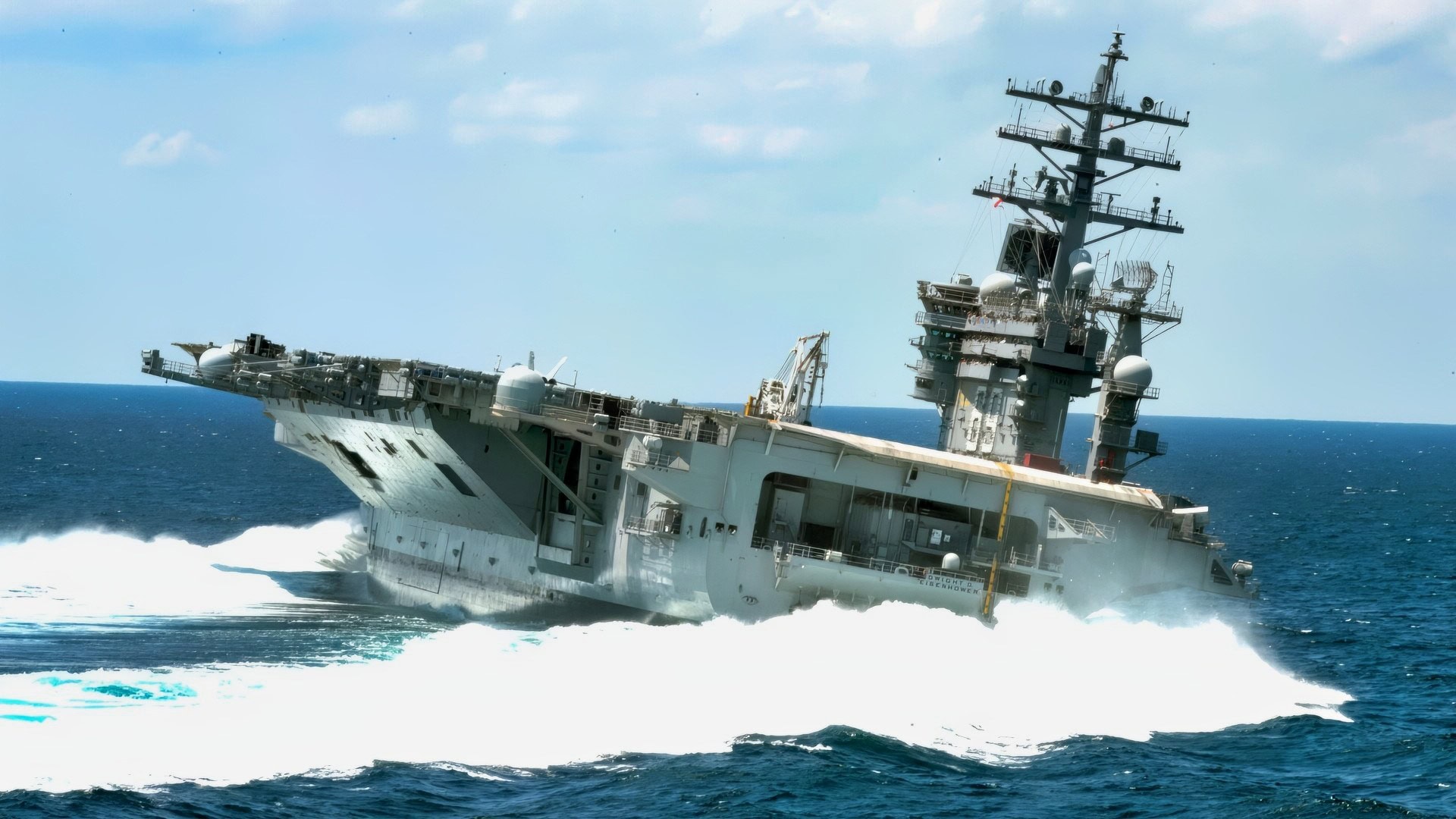
ATLANTIC OCEAN (June 14, 2011) The Nimitz-class aircraft carrier USS Dwight D. Eisenhower (CVN 69) conducts rudder turns during sea trials. Dwight D. Eisenhower completed a nine-month planned incremental availability at Norfolk Naval Ship Yard on June 10 and is scheduled to resume underway operations this summer. (U.S. Navy photo by Mass Communication Specialist 1st Class Christopher Stoltz/Released)
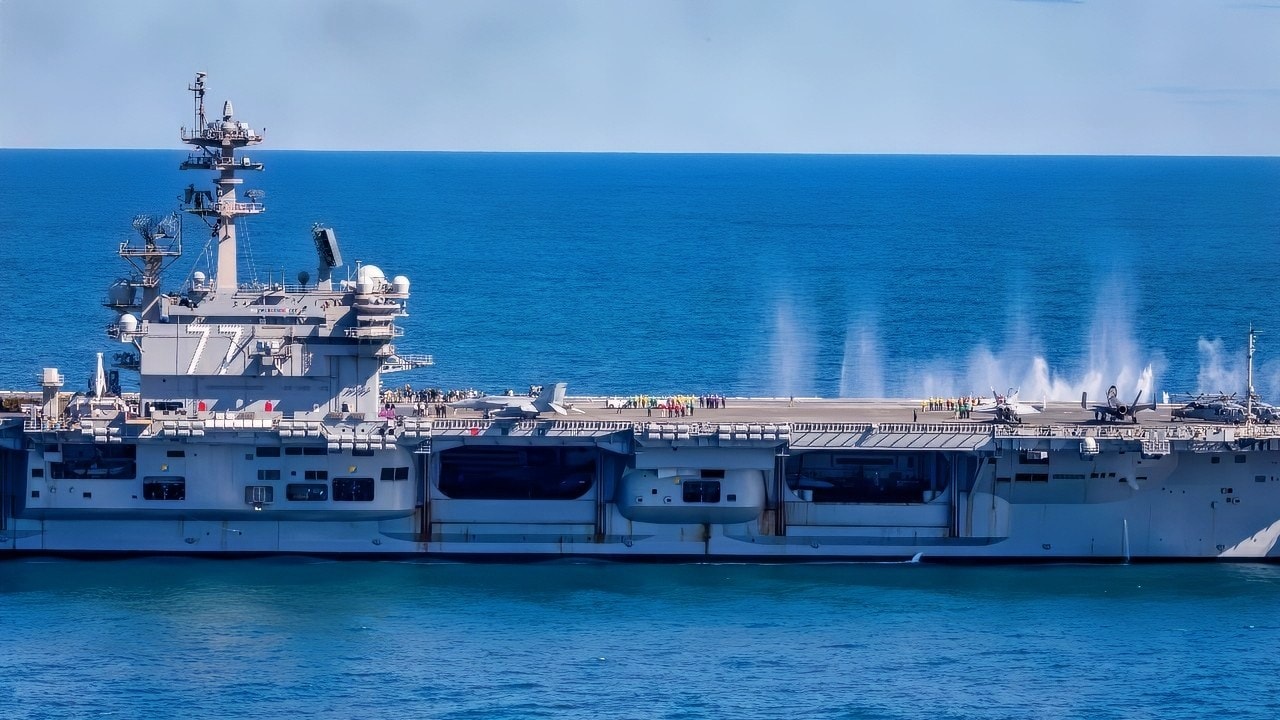
ATLANTIC OCEAN (Oct. 5, 2025) The Nimitz-class aircraft carrier USS George H.W. Bush (CVN 77) transits the Atlantic Ocean while an F/A-18E Super Hornet, attached to the “Pukin Dogs” of Strike Fighter Squadron (VFA) 143 fire rounds into ocean in support of the Titans of the Sea Presidential Review. The Titans of the Sea Presidential Review is one of many events taking place throughout the country to showcase maritime capabilities as part of the U.S Navy’s 250th birthday. America is a maritime nation. For 250 years, America’s Warfighting Navy has sailed the globe in defense of freedom. (U.S. Navy photo by Mass Communication Specialist 2nd Class Mitchell Mason)
The idea is to condition the weapons to such a degree that they can seamlessly identify, launch, track, and destroy the targeted American platform at sea. Only the desert allows similar tests.
A Growing Threat
In addition to the DF-21D, the Chinese military has developed the DF-26 intermediate-range ballistic missile. That weapon has a massive range of 2,000 nautical miles and can conduct both anti-ship and land-attack missions.
Over the last several years, though, China has expanded its arsenal beyond the DF-21D and DF-26. China has developed and tested multiple new anti-ship weapons at desert facilities.
Meanwhile, China’s H-6 bombers are known to carry large air-launched ballistic missiles capable of hitting US carriers.
At the same time, China’s Type 055 large surface combatants could also be used to conduct long-range anti-ship warfare operations.
Of course, testing these systems in the confines of China’s deserts, where the ships cannot move, is one thing.
Trying to hit moving US targets that can–and will–maneuver away from Chinese anti-ship ballistic missile attacks (if those US forces detect the Chinese attacks in time), is harder than it seems.
But the desert tests over 20 years, the level of complexity those tests have achieved, and the variety of anti-ship systems the Chinese have procured over the last 20 years show that Beijing is working out those problems.
Washington must not underestimate this threat.
About the author: Brandon J. Weichert
Brandon J. Weichert is the Senior National Security Editor at 19FortyFive.com. He also manages The Weichert Brief on Substack. Weichert also hosts “National Security Talk” on Rumble. He is the author of four bestselling national security books, the most recent of which is A Disaster of Our Own Making: How the West Lost Ukraine (Encounter Books). Follow him via Twitter/X @WeTheBrandon.