
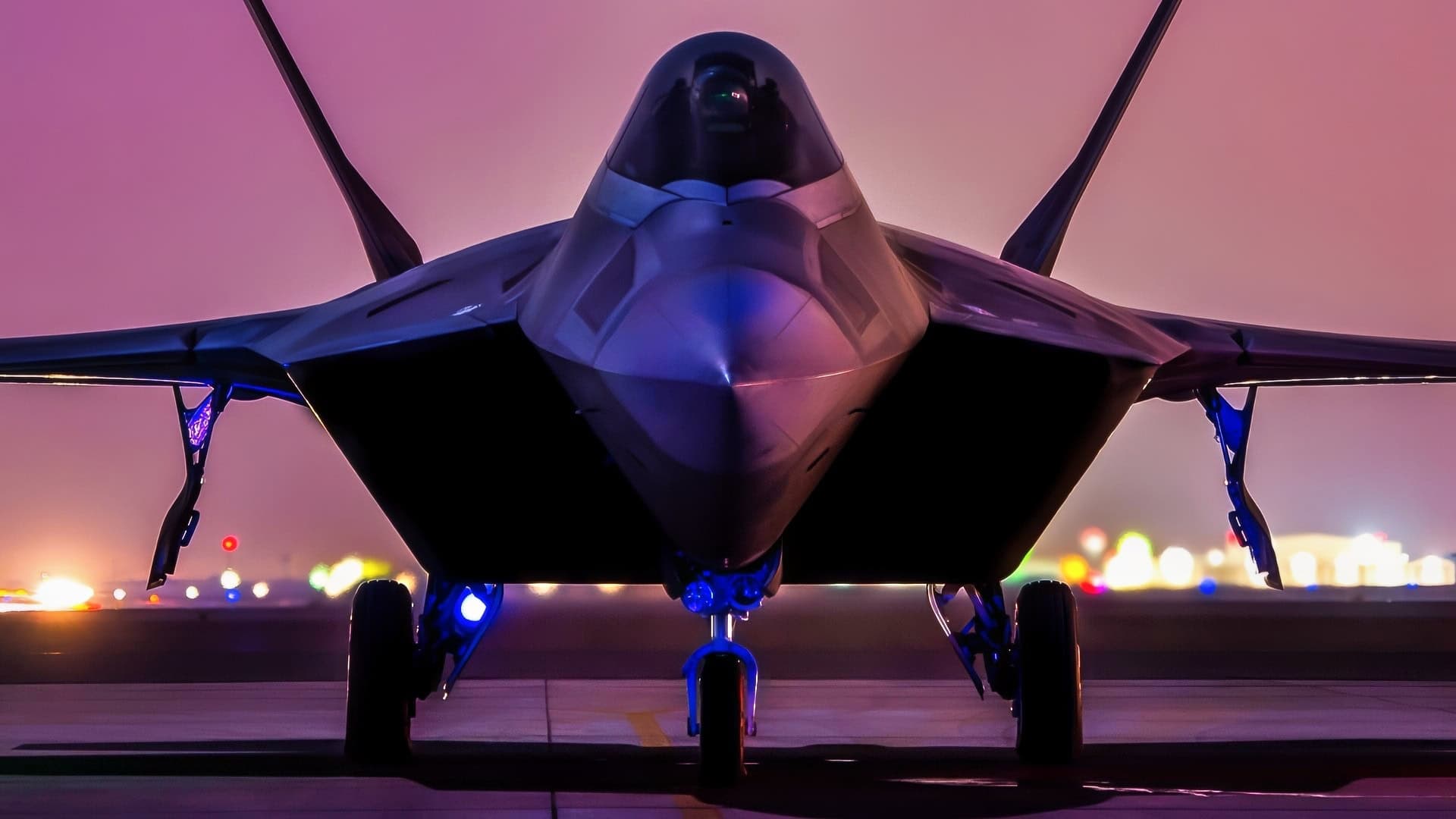
Summary and Key Points: The F-22 Raptor was designed at the end of the Cold War to defeat the Su-27 Flanker and the AWACS aircraft that threatened Western air superiority. China’s Chengdu J-20 is usually presented as the answer to it, and that is the wrong frame.
F-22 vs. J-20: Well, Not Exactly?
The F-22 Raptor needs no introduction at this point. Originally designed during the Cold War, the F-22 became one of the U.S.’ most powerful aircraft thanks to its stealth and sensor-fusion capabilities.
When it was first introduced, the aircraft had no equal, not until the F-35 was introduced. For many years, no other nation could hope to match the F-22.
However, that all changed with China’s introduction of the Chengdu J-20 Mighty Dragon.
The J-20 was the first non-American stealth fighter to enter service and was interpreted as a direct challenge to the F-22. So, how well does the J-20 compare to the Raptor?
Is it really a credible challenger, or is the F-22 still king of the skies?d
Development of the First Stealth Fighters
The F-22 was developed under the Advanced Tactical Fighter (ATF) program at the tail end of the Cold War.
At the time, the U.S. was concerned about the Soviet Union’s air defenses and developing aerospace industry.
The introduction of the Sukhoi Su-27 Flanker and AWACS aircraft threatened to close the airpower gap between the USSR and the West.
As a result, the USAF launched the ATF program to develop a new air superiority fighter capable of defeating the USSR’s most advanced aircraft.
The YF-22 was Lockheed Martin’s submission for the competition.
The aircraft competed against and beat Northrop’s YF-23 in a controversial decision that remains the subject of heated debate on various forums today.
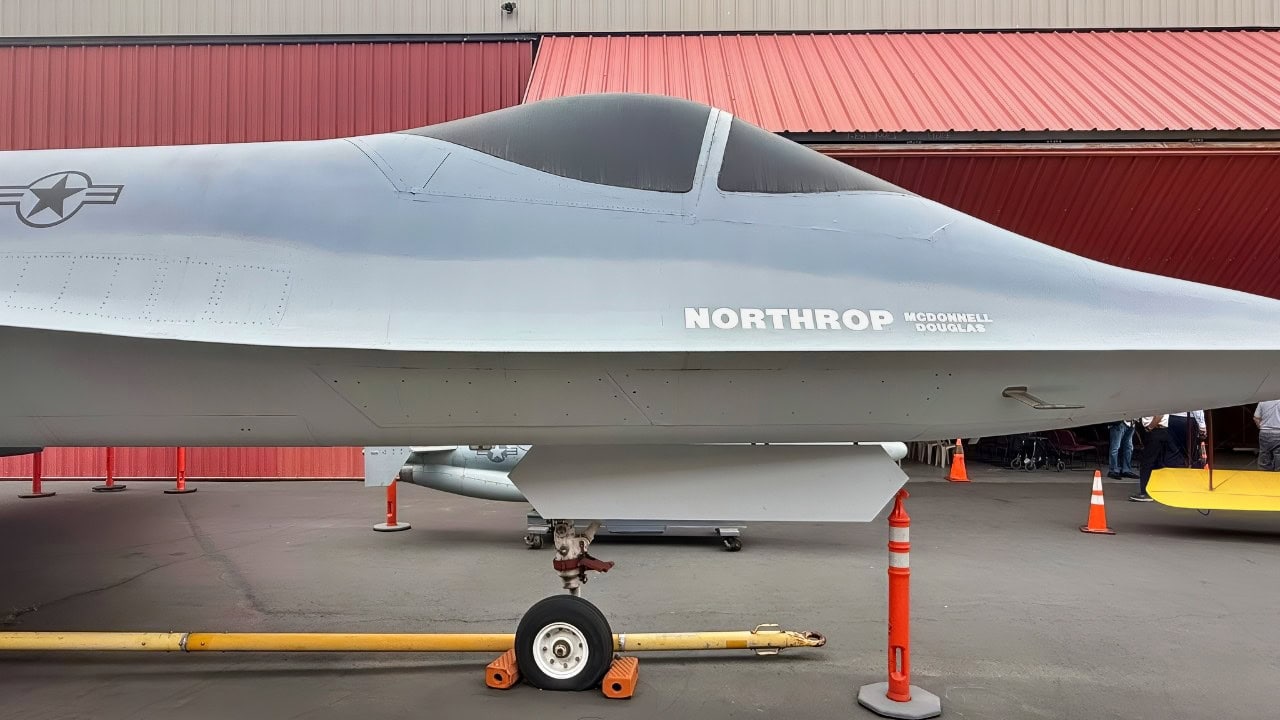
YF-23A Black Widow II 19FortyFive Image Taken by Harry J. Kazianis.
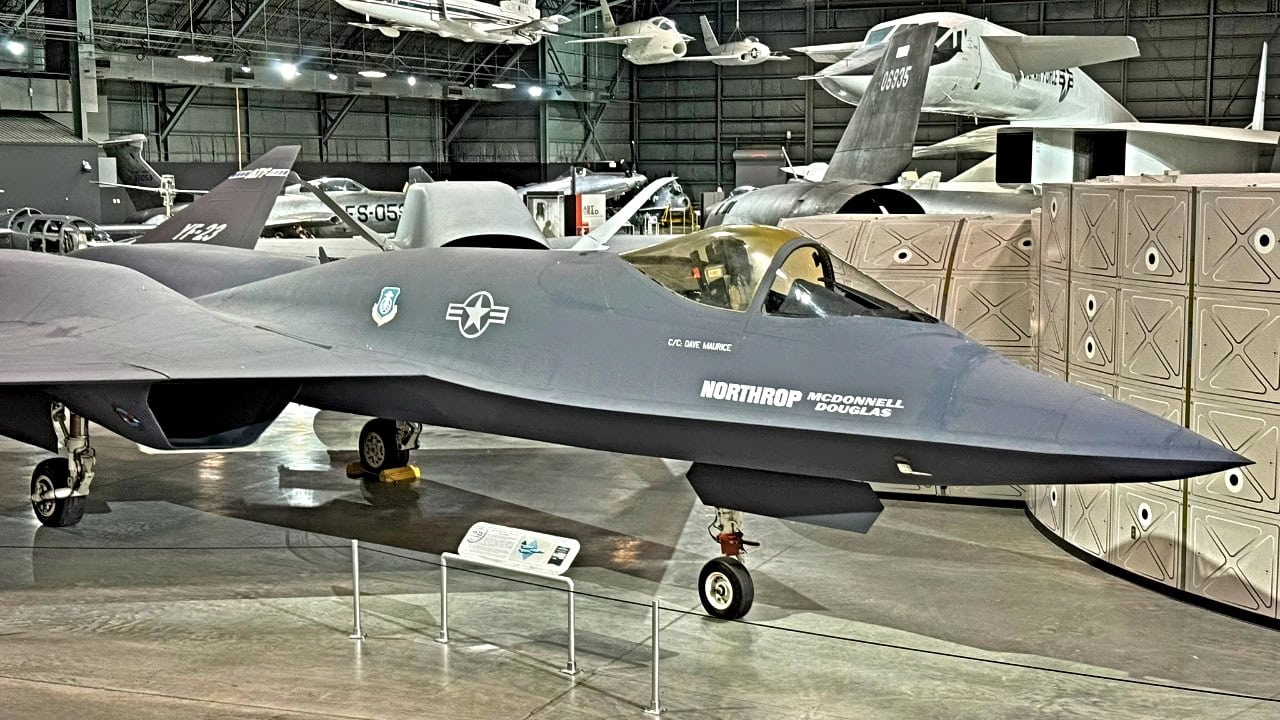
YF-23 Stealth Fighter. Image taken by Harry J. Kazianis for 19FortyFive.
The F-22 continued development after the Cold War and entered Service in 2005.
The development of the J-20, by contrast, is much murkier due to a lack of reliable English-language sources.
The aircraft began development in the 1990s under the J-XX program (note that this term was coined by Western Intelligence).
Shenyang Aircraft Corporation reportedly proposed several designs, and the Chengdu Aircraft Corporation’s design was selected for continued development.
While the J-20 is marketed as an air superiority fighter, it is not a Chinese F-22.
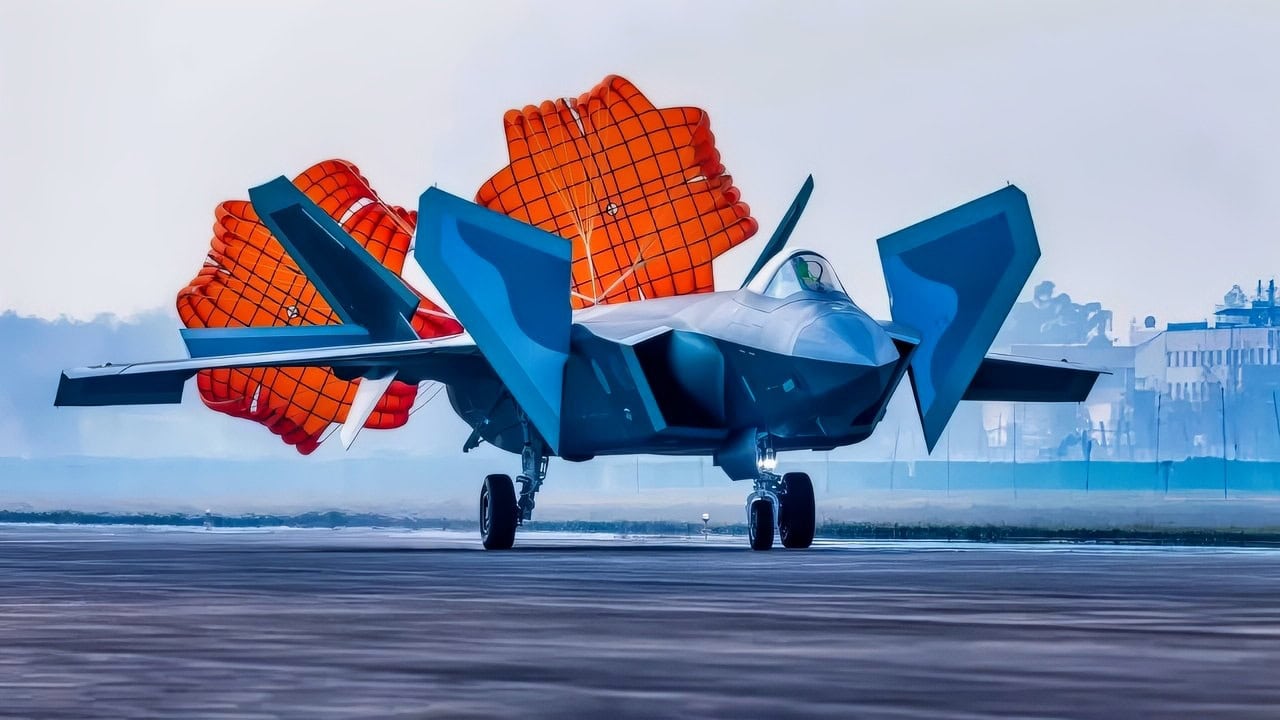
J-20S Fighter from China. Image Credit: Creative Commons.
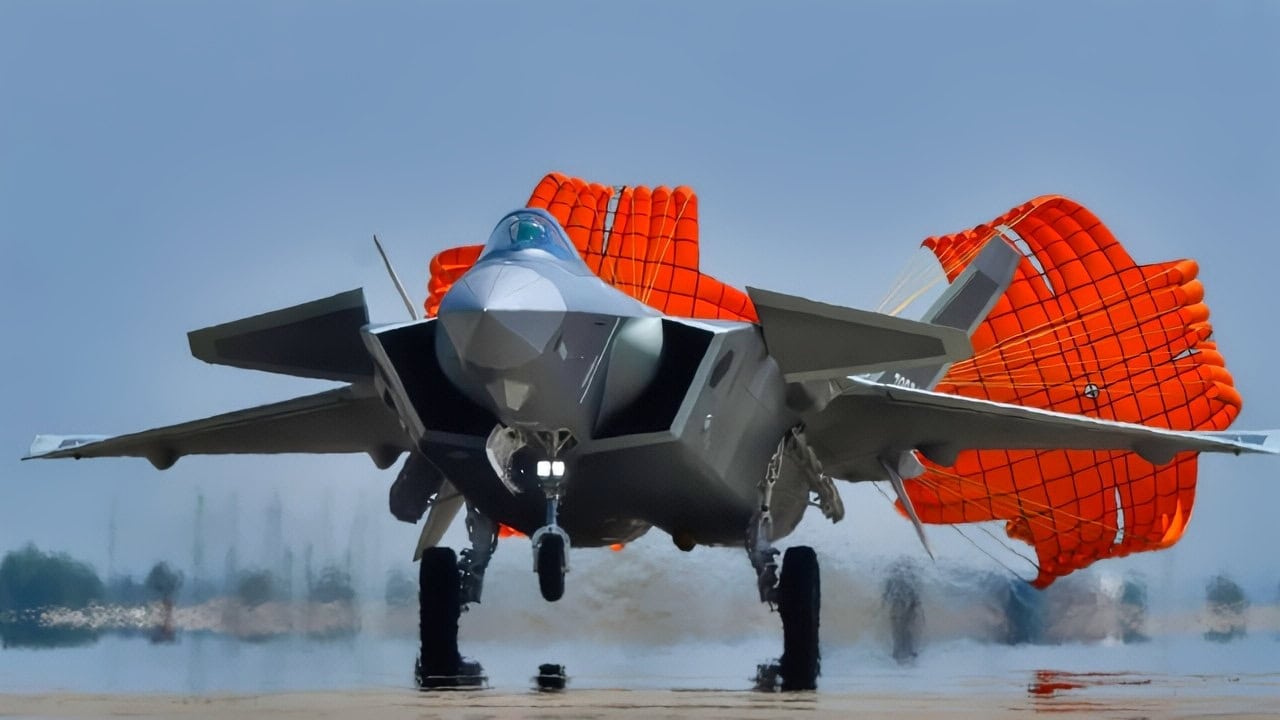
J-20 Stealth Fighter Landing. Image Credit: Creative Commons.
The J-20 was designed primarily for long-range BVR combat, with its main mission to engage strategic aircraft such as AWACS and aerial refuelers.
The aircraft was also designed for limited air-to-ground missions against U.S. bases and installations in the Pacific.
The Raptor vs. the Mighty Dragon
The F-22 sports a conventional-looking clipped diamond delta wing configuration, a blended fuselage, and canted vertical stabilizers.
It was designed to perform well at supersonic speeds, with the airframe purpose-built to reduce drag at higher flight envelopes.
As a stealth fighter, the F-22 incorporates several measures to reduce its radar cross-section (RCS).
The aircraft utilizes careful stealth shaping, along with special caret intakes, to hide the engine fan blades from radar.
The F-22 uses radar-absorbent materials (RAM) to lower its RCS, although these coatings are notoriously expensive and maintenance-heavy.
According to Lockheed Martin, the F-22 has an average frontal RCS of 0.0001 square meters, though its true stealth characteristics are heavily classified.
The J-20 features a larger, blended fuselage, which allows for a larger internal weapons bay.
The aircraft features a delta-wing configuration that is seamlessly blended into its leading-edge extensions.
The J-20 is the only fifth-generation aircraft to make use of canards, which some experts originally suspected would compromise its stealth profile.
However, some radar simulations suggest that the swept canards are blended sufficiently into the aircraft to maintain a strong frontal RCS.
Like the F-22, the J-20 uses RAM coatings and serrated patterns to reflect radar waves.
By most estimates, the J-20’s stealth RCS is higher than that of the F-35 or F-22, but as a first attempt at a stealth fighter, the aircraft is competently made.
Cutting Edge Capabilities
The F-22’s avionics were ahead of their time.
Sensor fusion was a central goal of the ATF program, meaning the aircraft’s computers can receive constant information from its many sensors and synthesize it into a complete, manageable battlefield picture.
As a result, the F-22 has better situational awareness and a lower workload for the pilot than fourth-generation aircraft. Central to its sensor suite is the AN/APG-77
AESA radar along with numerous electronic warfare systems, radar warning receivers, laser warning systems, and advanced communications systems.
Meanwhile, the J-20 is equipped with an AESA radar (some sources claim a KLJ-5) along with Infrared Search and Track (IRST) capabilities and Electro-Optical Targeting systems.
The onboard computers are also reportedly capable of sensor fusion, although because so little is known about its avionics, it’s hard to say for sure.
Anyone who has seen footage of either plane at an airshow knows how maneuverable both of them are.
The F-22 is powered by two Pratt & Whitney F119-PW-11 engines, which enable a top speed of Mach 2.25 and a supercruise speed of Mach 1.76.
Its combat range is limited to 460 nautical miles, though it can be extended to 750 nautical miles with external drop tanks.
The J-20, meanwhile, has gone through several engine changes, with the most recent models using domestic WS-15 engines.
The J-20 is slightly slower than the F-22, with a top speed of Mach 2 but a reported supercruise speed of Mach 1.8.
The aircraft also has a longer range than the F-22, with an estimated combat range of 1,100 (frustratingly, sources never specify whether this is with external fuel tanks).
Don’t Dismiss the J-20
The J-20 often receives unfair treatment from Western commentators.
While it may have a worse overall stealth profile than the F-22 and F-35, and there are still plenty of questions about its avionics, the J-20 is no pushover.

A U.S. Air Force F-35A Lightning II flies over the 56th Fighter Wing during Luke Days 2026, March 22, 2026, at Luke Air Force Base, Arizona. Luke Days 2026 highlights the precision and professionalism required to generate combat airpower and sustain the nation’s defense. Currently in operational service, the F-35A integrates stealth technology and advanced sensors to detect and defeat threats while maintaining air dominance. Opportunities for the public to see military aviation up close helps build appreciation for the readiness of the joint force. (U.S. Air Force photo by Senior Airman Belinda Guachun-Chichay)
Thanks to years of refinement, the aircraft has improved significantly since its first flight in 2011.
Despite being the PLAAF’s first stealth fighter, the J-20 shows that China has a keen understanding of stealth technology and can produce fifth-generation fighters at astonishingly high rates.
While the F-22 is still arguably the better jet, the J-20 is close behind, and if China continues to improve it, it may one day surpass the Raptor.
About the Author: Isaac Seitz
Isaac Seitz, a Defense Columnist, graduated from Patrick Henry College’s Strategic Intelligence and National Security program. He has also studied Russian at Middlebury Language Schools and has worked as an intelligence Analyst in the private sector.