
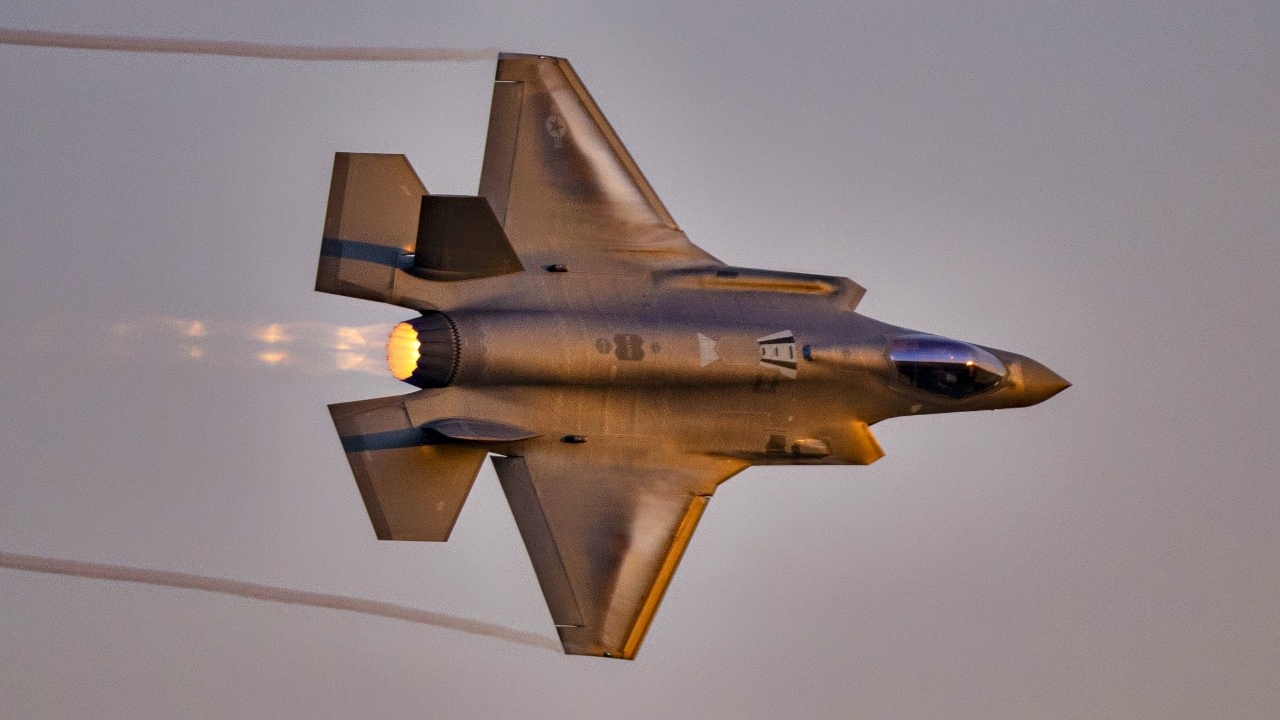
Summary and Key Points: Isaac Seitz offers a fair analysis of Russia’s S-400 Triumph, something Western analysts rarely do. The 91N6E Big Bird radar tracks 300 targets out to 600 km and resists jamming, the 92N6E guides the missiles, a battery runs up to 12 launchers with 4 missiles each, and the 40N6E reaches 400 km; a full battery can engage 80 targets and guide 160 missiles at once.
S-400 vs. F-22 and F-35
The war in Ukraine has highlighted many strengths and weaknesses in Russia’s layered air defense strategy.
While several attacks have managed to penetrate Russia’s airspace, over time, the Russians have improved their anti-drone air defenses, even amid heavy UAV attacks from Ukraine.
However, one system remains largely untested: the S-400 Triumph.
The S-400 is the centerpiece of Russia’s air-defense strategy.
The system was designed to intercept manned aircraft, ballistic missiles, cruise missiles, and stealth fighters.
Russian news outlets generated a lot of hype around the system, claiming the S-400 could intercept fifth-generation stealth fighters like the Lockheed Martin F-22 and F-35. But how does the system stack up against America’s best stealth fighters?
How the S-400 Operates
Most Western analysts are, somewhat understandably, quick to dismiss the S-400.
However, let us give the system a fair review to see how it really stacks up against America’s best fighters.
At the heart of the S-400 is the 30K63 administration system.
This central command post manages up to eight divisions simultaneously and coordinates the S-400 with other systems, including the S-300, Tor-M1, Pantsir-S1, and others.
The system also uses the 55K6E mobile command-and-control post, which processes data from multiple radar sources to detect, prioritize, and assign targets to the missile launchers.
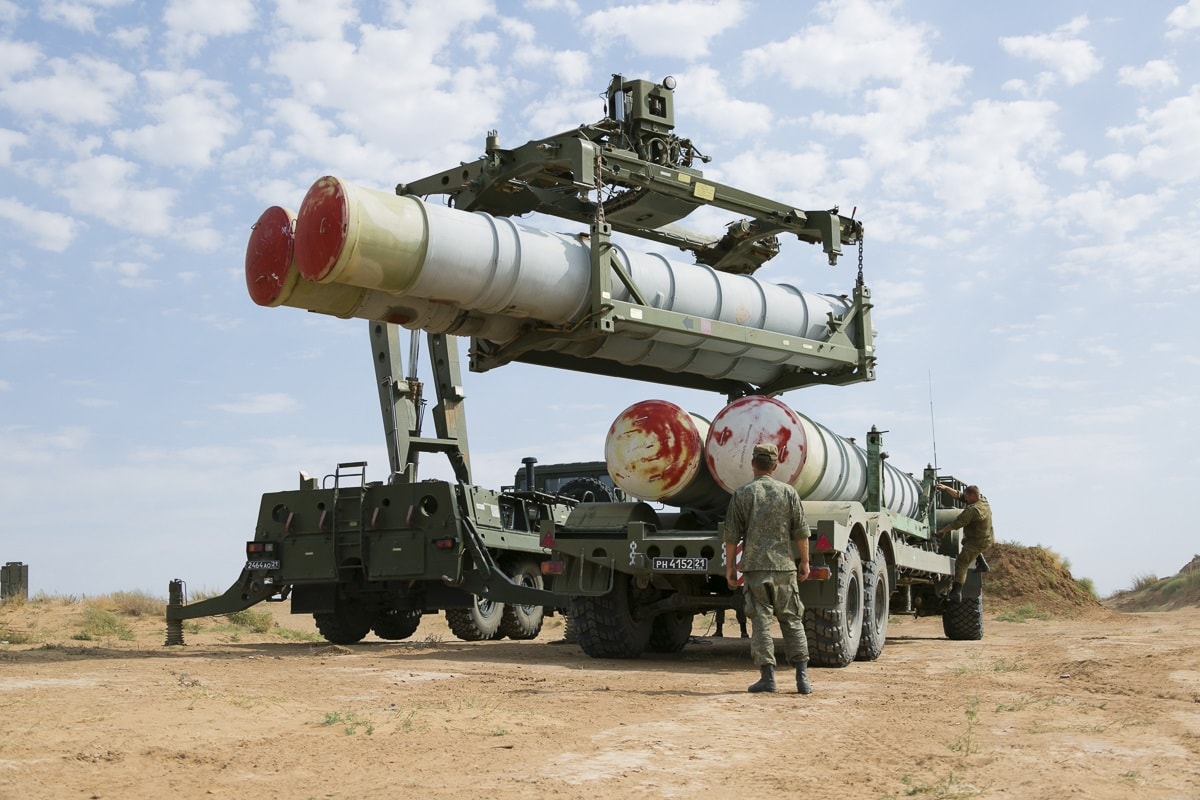
Russia’s S-400 Air Defense System. Image: Russian Military.
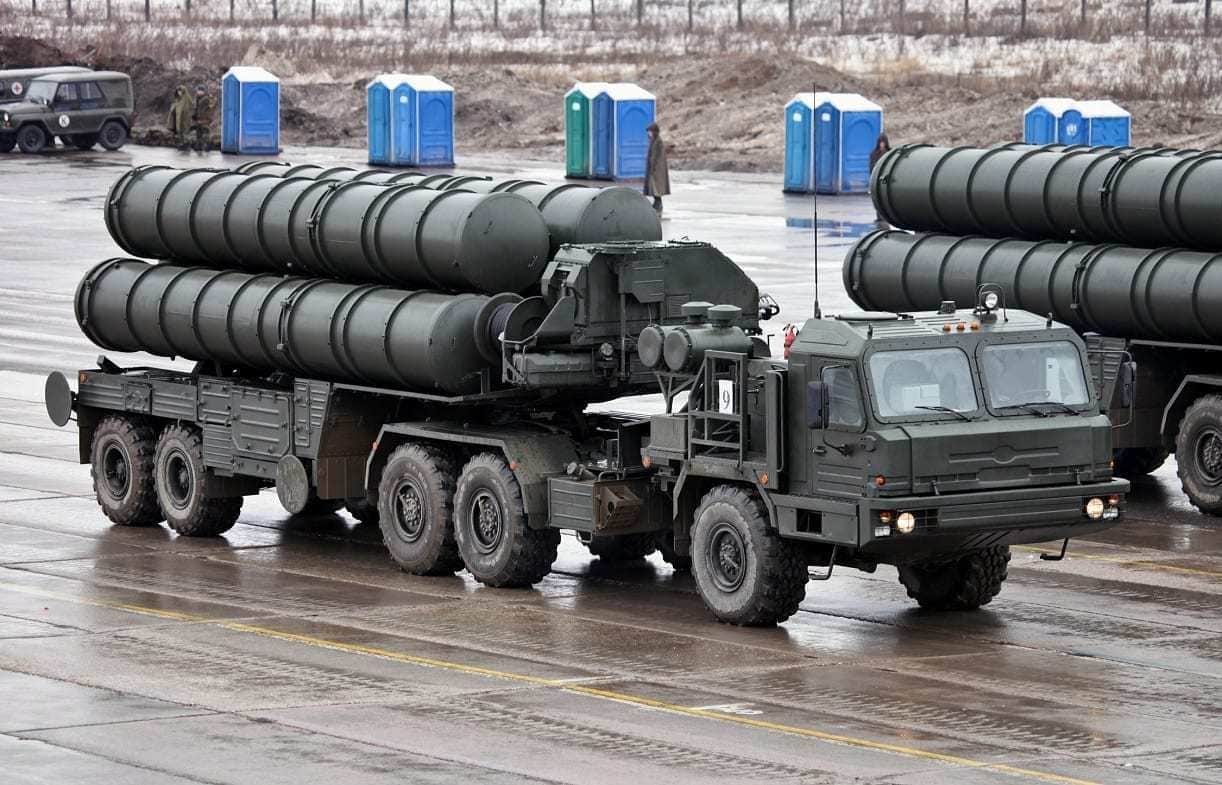
S-400. Image Credit: Creative Commons.
The S-400’s radar architecture centers on the 91N6E “Big Bird” acquisition and battle-management radar.
This large AESA radar can track up to 300 targets out to 600 km and resists jamming.
The 92N6E is the main fire-control radar, responsible for tracking targets and guiding the S-400’s missiles.
The S-400’s missiles are carried on a transporter-erector-launcher (TEL), each carrying four missiles.
A typical battery can include up to 12 launchers.
The system uses several missile types: the short-range 9M96E (range: 40 km), the medium-range 9M96E2 (range: 120 km), the long-range 48N6 (range: 250 km), and the very long-range 40N6E (range: 400 km).
These missiles allow the S-400 to engage a variety of targets, including UAVs, manned aircraft, cruise missiles, and ballistic missiles.
In a typical operation, long-range radars detect a target and transfer the data to the command-and-control center.
The command-and-control center then identifies the target and receives orders from high command on whether it should engage.
Once the order is given, the command center then orders a launcher to engage the target with the appropriate missiles.
The engagement radar guides the missile and works with the surveillance radar to gather real-time target information and determine the missile’s trajectory.
A full battery can track up to 300 targets, engage 80 at once, and guide 160 missiles simultaneously.
The S-400 VS. the F-35
Determining how the S-400 would perform against an F-22 or an F-35 is immensely difficult, as it involves almost limitless variables.
The F-35 has an estimated radar cross-section (RCS) of roughly 0.0015 to 0.005 square meters. However, this tells us little about the aircraft’s true stealth profile.
Most RCS estimates are intentionally vague.
An aircraft’s RCS changes significantly with angle and radar frequency.
For instance, the F-35 has an exceptionally low frontal RCS against higher-frequency radars.
However, some models show that beyond the 40-degree frontal arcs, its radar returns spike noticeably.
The aircraft also performed worse against lower frequencies.
The S-400’s performance depends largely on the F-35’s angle of approach.
If the Russians space their assets wisely, the system could detect the aircraft at an angle where its RCS spikes, making it much easier to detect.
Contrary to popular belief, detecting fifth-generation stealth fighters isn’t as difficult as many make it out to be.
Radar technology has advanced significantly since the 1980s, and modern “anti-stealth” radars have become widespread in the West, Russia, and China.
For an S-400 operator, the problem isn’t detecting an F-35; it’s locking onto and tracking it.
Most analysts agree that the 91N6E radar could probably detect a stealth fighter.
The bigger question is whether the 92N6E tracking and guidance radar can detect the fifth-generation aircraft before it’s too late.
The S-400 can likely detect and track the F-35 from farther away, but it is unclear whether that is enough to prevent the aircraft from launching its munitions.
Either way, the S-400 is a highly capable system and would require many munitions to suppress adequately.
The situation is also complicated by the electronic countermeasures both sides would employ.
If an EA-18G Growler joins the F-35, or if the Russians use ground-based EW and decoys, the situation’s dynamics could change.
Why Sending Stealth Fighters Into Heavily Defended Airspace is a Bad Idea
Assuming that the F-35 can evade the S-400’s radars (which is highly likely), it is important to clarify that sending F-35s into Moscow is an extremely bad idea.
The greatest threat to American stealth fighters arguably isn’t the S-400, but infrared-guided missiles.
The only time that a fifth-generation aircraft has ever sustained damage was during the ongoing war in Iran, when an F-35 got hit by an Iranian missile, likely an IR missile launched from a short-range anti-air system.
Russian/Chinese/Iranian channels have often cited this as proof of the aircraft’s vulnerability to modern anti-air systems.
However, there are still many variables to consider, like how long Iran was tracking the F-35, how many sorties the U.S. flew into Iranian airspace before then, what kind of missile the Iranians use, and so on.
Many people think of warfare like rock-paper-scissors, where one system always trumps another. However, reality is much more complicated.
The S-400, designed to shoot down stealth fighters, could fail for several reasons, including EW, poor weather, or technical failures.
Likewise, a stealth fighter designed to suppress or destroy enemy air defenses could be detected and intercepted if the enemy knows it’s coming and plans accordingly.
War is about deception.
No one can adequately plan for every unknown.
About the Author: Isaac Seitz
Isaac Seitz, a Defense Columnist, graduated from Patrick Henry College’s Strategic Intelligence and National Security program. He has also studied Russian at Middlebury Language Schools and has worked as an intelligence Analyst in the private sector.