
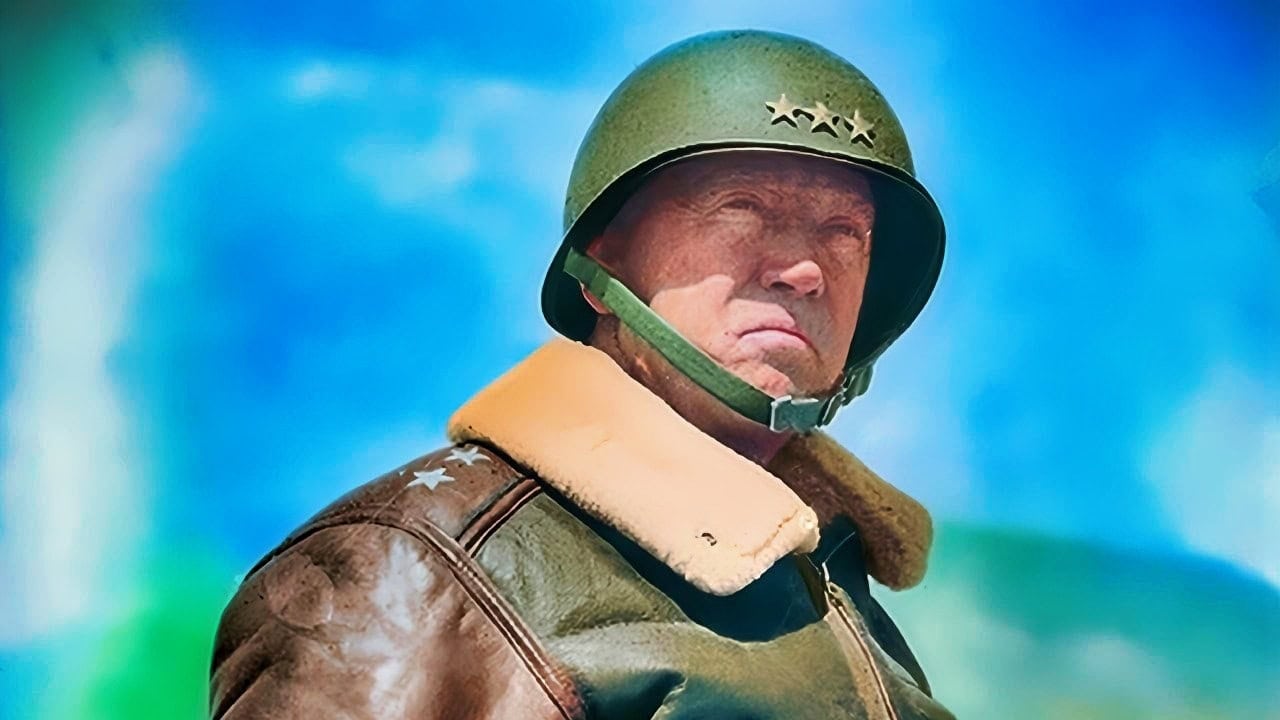
Summary and Key Points: “You’re never beaten until you admit it.” George S. Patton said that, and by the summer of 1943 he had given the US Army every reason to admit he was finished. In two Sicilian evacuation hospitals, he slapped two soldiers suffering what the Army then called battle fatigue, cursed one of them, threatened to have him shot, and wrote in his diary that men who shirked should be tried for cowardice and shot. Eisenhower ordered him to apologize. It was the lowest point of his career. Sixteen months later, on 19 December 1944, with the German Ardennes offensive tearing open the Allied line, Patton sat in a crisis meeting and told the room he could attack with 3 divisions in 48 hours. Then he pivoted an army of more than 250,000 men 90 degrees — out of an eastward attack in the Saar, north into the German flank — in the worst winter in over 50 years.
You’re Never Beaten Until You Admit It – General George Patton, U.S. Army
General George S. Patton Jr. was arguably the United States’ best combat field commander. Although highly controversial, he was highly respected by the men under his command.
Most well-known for his service in World War II in North Africa, Sicily, and later Western Europe, Patton’s first taste of combat was in Mexico during America’s Punitive Expedition against Pancho Villa, and then in World War I as the first US tank corps commander.
But he was much more than a general. He was an avid horseman, fencer, and athlete at the US Military Academy. He set the West Point record in the hurdles in his senior year.
Patton was also an Olympic Modern Pentathlete in the 1912 Games (and robbed of a medal). During the pistol competition, the judges ruled that he completely missed the target. Patton, an expert marksman, claimed his shot went through the same hole (bullseye). He finished fifth because of it and would have earned a medal.
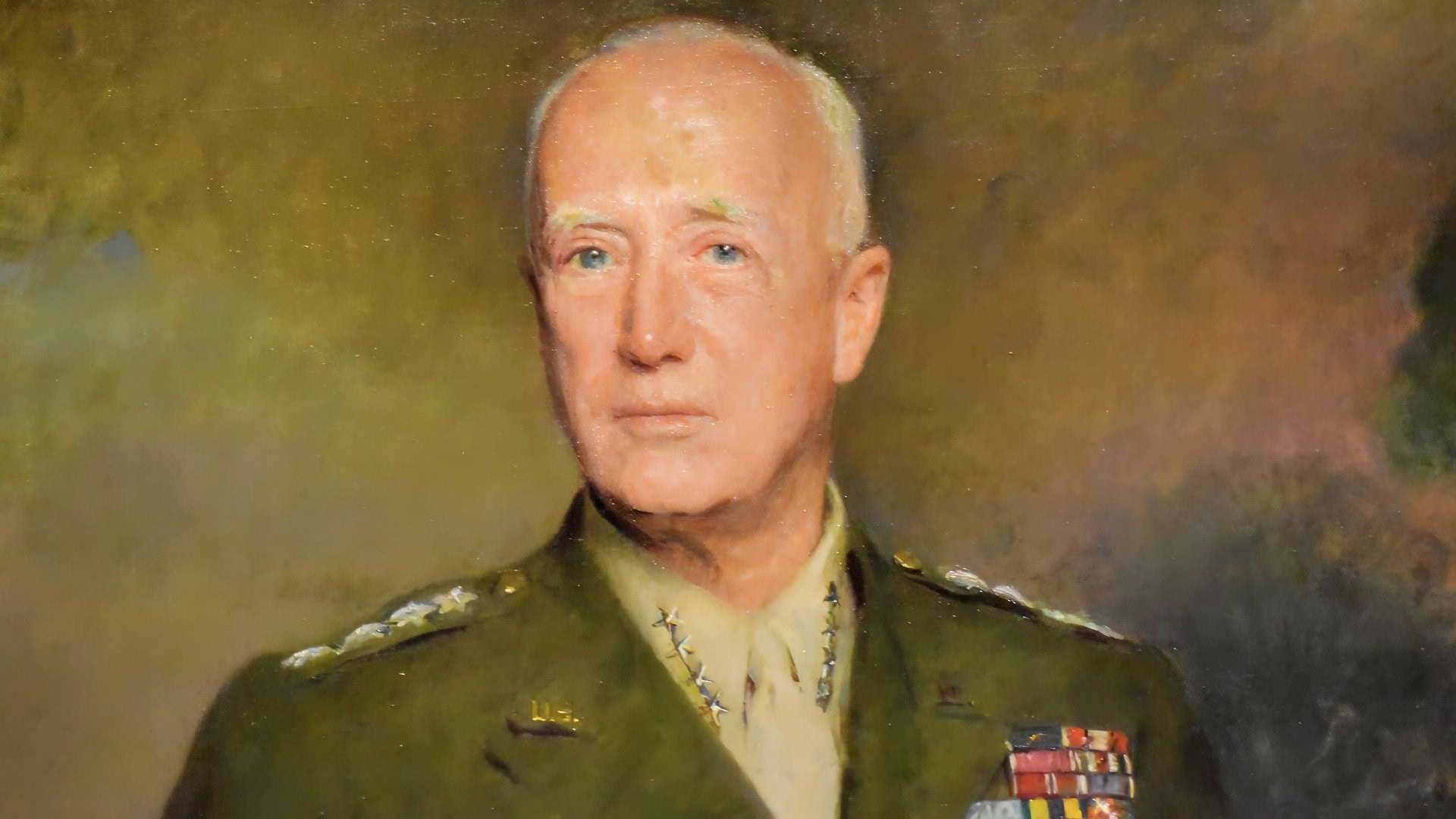
General George Patton at National Portrait Gallery. Image Taken by 19FortyFive.com in Washington, DC, 1/23/2026 by Dr. Brent M. Eastwood.
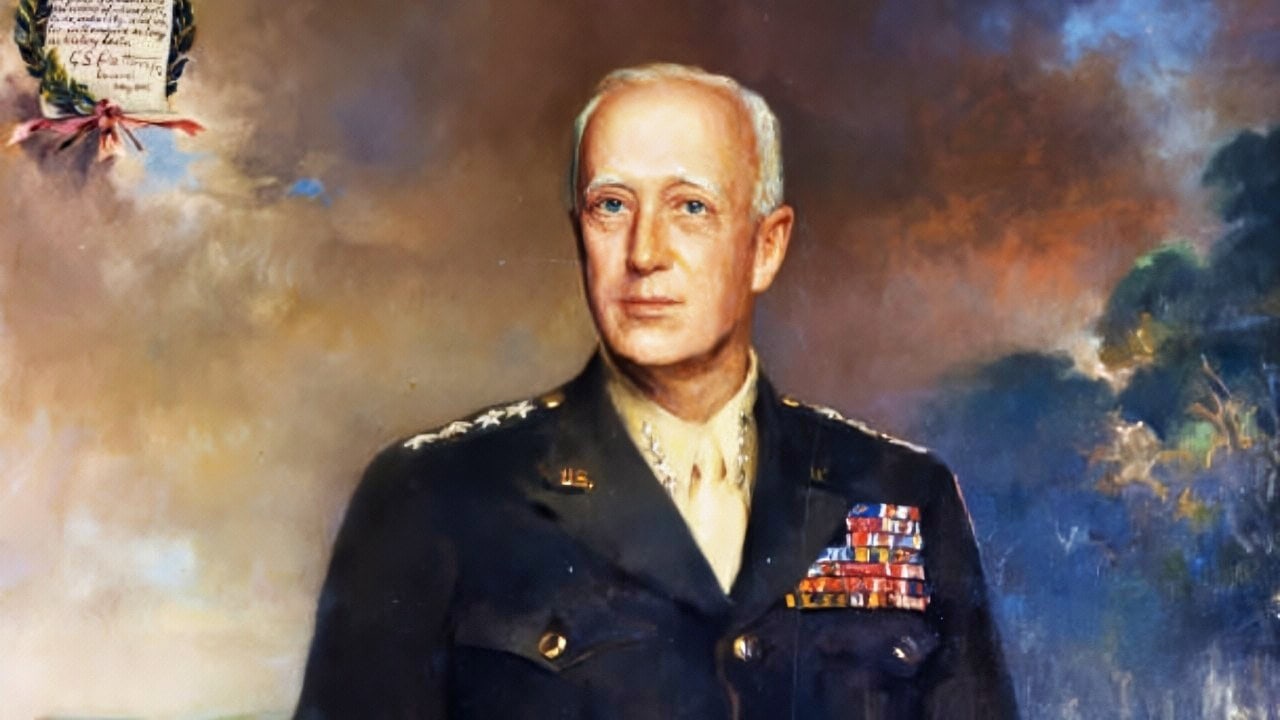
Portrait of Army General Patton. Image Credit: Creative Commons.
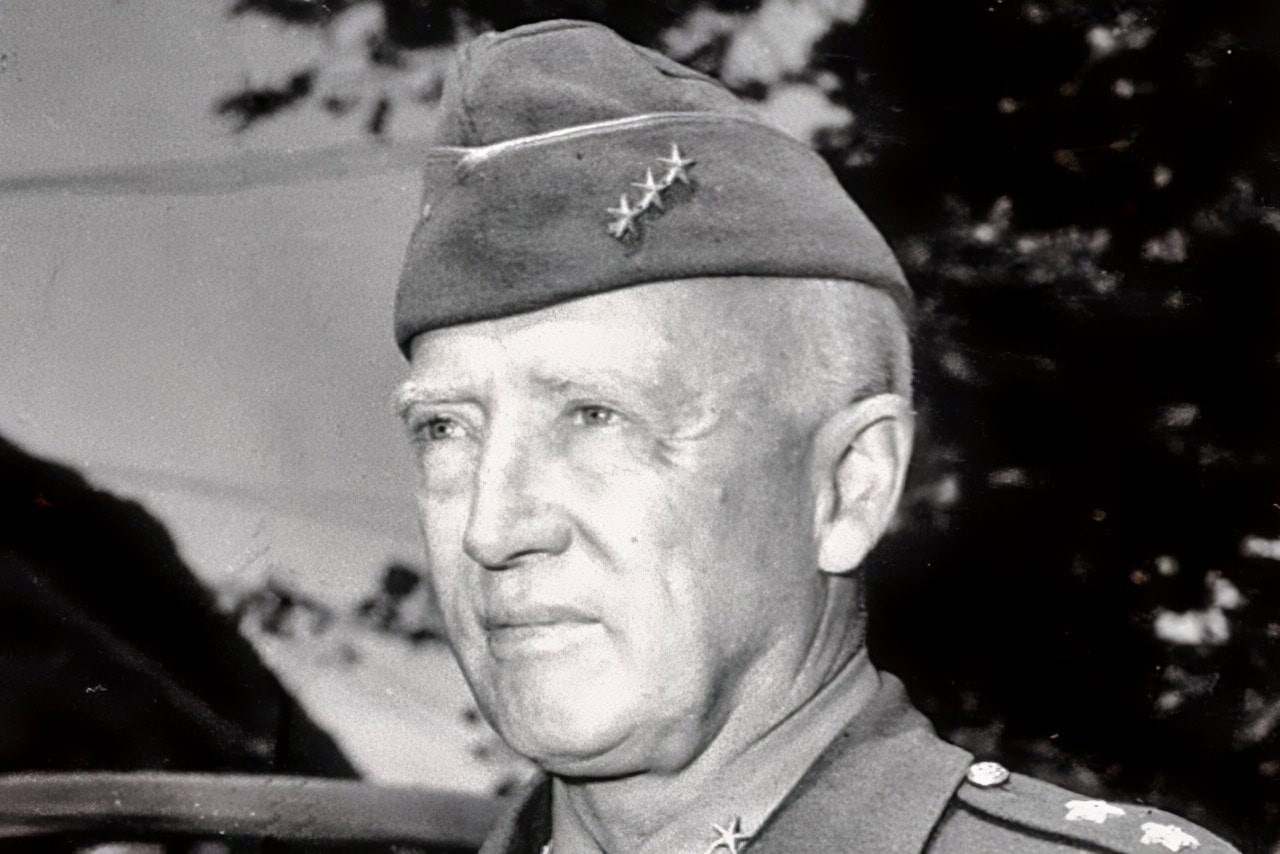
George S. Patton Quote of the Day. Creative Commons Image.
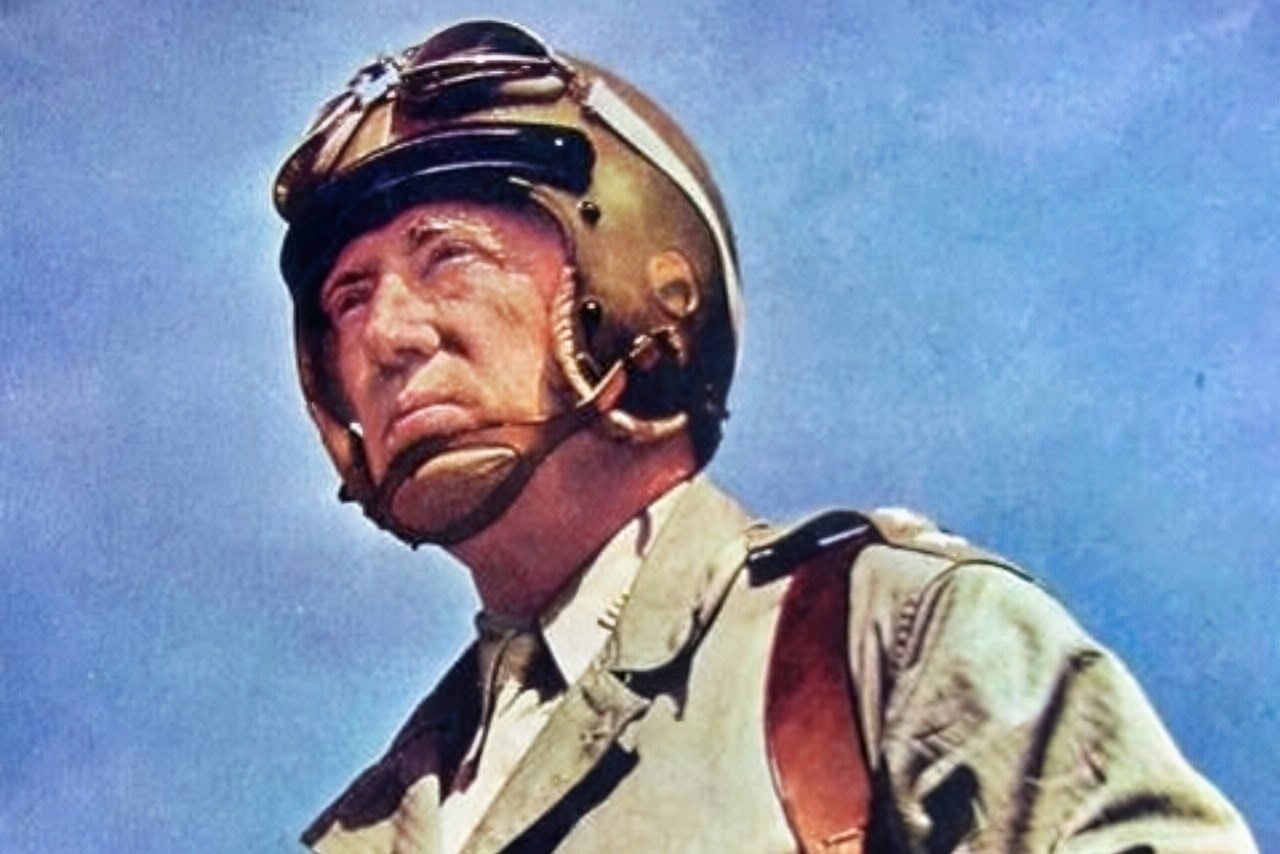
General George Patton of the U.S. Army. Image Credit: Creative Commons.
Significance Of The Quote
Patton’s quote, “You’re Never Beaten Until You Admit It, ” reflects his relentless dedication to perseverance and mental toughness, often cited as a key principle in his leadership style and military success. The phrase encourages perseverance, regardless of the challenge.
Patton’s mastery of armored warfare, unparalleled speed in offensive operations, and ability to inspire troops were legendary. He took over a demoralized and routed II Corps after the debacle at the Battle of Kasserine Pass, and led it to victory just a short time later over the 10th Panzer Division at El Guettar.
He led the Third Army to rapid victories across France and Germany, emphasizing aggressive, high-speed tactics and combined arms warfare.
But his career had its setbacks as well as great victories. Here are a few of the General’s biggest setbacks and how he persevered through them.
Task Force Baum’s Failure To Rescue POWs
Task Force Baum was a failed March 1945 U.S. mission ordered by General Patton to rescue POWs, including his son-in-law, LTC John Waters, from Oflag XIII-B in Hammelburg, Germany.
Led by Major Abraham Baum, the 300-man force was intercepted, resulting in 32 deaths and nearly all being captured, with all 57 vehicles lost. It is considered one of the most controversial, poorly planned raids of WWII.
Patton sent a small task force with only 10 M4A3 Sherman tanks. The men initially broke through into the POW Camp but were surrounded, and most were captured or killed. The prisoners were rescued again in early April, when American armor advanced far enough to take the camp.

M4 Sherman Tank from WWII Image: Creative Commons.
Patton later lamented that he hadn’t sent an entire Combat Command (Brigade) of the 4th Armored Division instead of the equivalent of two companies.
Patton’s biggest setback, however, was of his own doing and nearly cost him his military career.
Patton’s Controversial Sicily Campaign
The Allied invasion of Sicily, also known as the Battle of Sicily and Operation Husky, was a major campaign of World War II in which Allied forces invaded the Italian island of Sicily in July 1943 and took it from Axis forces defending the island, including the Italian 6th Army and the German XIV Panzer Corps.
Patton commanded the US Seventh Army, and British General Bernard Montgomery commanded the British Eighth Army.
The advance was slowed by narrow mountainous roads and flexible German defense. Patton, while supposedly protecting Montgomery’s left flank, disobeyed orders and swung westward and took the city of Palermo.
It essentially split the island in two and set up a race between the two Allied generals to Messina to cut off the retreating Germans. Patton’s troops entered the city first, followed closely by the British. However, it was during the Sicilian campaign that Patton’s action nearly cost him his career.
The Infamous Slapping Incident Was The Nadir of Patton’s Career
The Sicilian campaign was marred by controversy. Patton, while visiting wounded men in the hospital, encountered two soldiers in different incidents suffering from battle fatigue, today known as PTSD.
While visiting the wounded at the 15th Evacuation Hospital near Nicosia in Sicily. One patient Patton encountered was Private Charles H. Kuhl of the 26th Infantry Regiment, 1st Division.
Patton asked the soldier why he was in the hospital. The soldier responded that he was not wounded: “I guess I can’t take it.” Patton called Kuhl a coward and slapped his face with a glove, raised him to his feet by the collar of his shirt, and pushed him out of the tent with a final kick in the rear.
That night, Patton wrote in his diary, “Companies should deal with such men, and if they shirk their duty, they should be tried for cowardice and shot.”
Patton, a few days later at the 93rd Evacuation Hospital near San Stefano, Sicily, slapped another soldier. Pvt. Paul Bennett had been diagnosed with combat fatigue, and upon seeing Bennett cry, Patton slapped him, cursed him, and threatened to either send him to the front lines or have him killed by firing squad.
Patton then threatened to shoot him with his Ivory-handled Colt pistol. When the news broke, the reaction was divided between Congress and the Army, as, at that time, soldiers suffering from that were thought to be cowardly.
Eisenhower ordered him to apologize to the soldiers and the medical staff.
But Patton’s role in subterfuge during Operation Fortitude, sending faulty intelligence to German agents to mislead them about the D-Day invasion, and his subsequent race across France, had atoned for those incidents. But his biggest accomplishment was his foresight in turning his Army 90 degrees and attacking the German flank during the Battle of the Bulge.
The Battle Of The Bulge And Turning An Army 90 Degrees
The Germans’ Ardennes Offensive, known as the Battle of the Bulge, was Patton’s finest hour. Well before other Allied leaders recognized it for what it was (they thought it was merely a spoiling attack), Patton saw it and immediately had his staff begin planning for a pivot north.
Indeed, he was convinced the Germans would attack in the First Army area. On November 25, he wrote in his diary, “First Army is making a terrible mistake leaving the VIII Corps static; it is highly probable that the Germans are building up east of them.”
The day before the German attack on December 16th, he told his staff, “I want you, gentlemen, to start making plans for pulling the Third Army out of its eastward attack, change the direction ninety degrees, moving to Luxembourg and attacking north.”
When Allied Supreme Commander Dwight Eisenhower held a crisis meeting on December 19, 1944, Patton promised and then delivered decisive action, pivoting his entire Third Army of over 250,000 men and hundreds of tanks in terrible weather.
Patton stunned all in the room by announcing, “I can attack with three divisions in forty-eight hours.”
It was an outstanding example of operational control of an Army, pivoting Third Army from a campaign in the Saar on the German border, turning 90 degrees and attacking the German flank of the Bulge.
This attack occurred during the worst winter in over 50 years.
His troops of the 4th Armored Division broke the siege of Bastogne, allowing vital supplies to reach the 101st Airborne and allowing the evacuation of the wounded.
By January 16th, his troops took Houfalize and sealed off the Bulge.
The actions of Patton and his Third Army had atoned for the biggest gaffes of his career during the Sicilian Campaign and cemented his reputation as one of the US Army’s best combat leaders ever.
About the Author: Steve Balestrieri
Steve Balestrieri is a National Security Columnist. He served as a US Army Special Forces NCO and Warrant Officer. In addition to writing on defense, he covers the NFL for PatsFans.com and is a member of the Pro Football Writers of America (PFWA). His work was regularly featured in many military publications.