
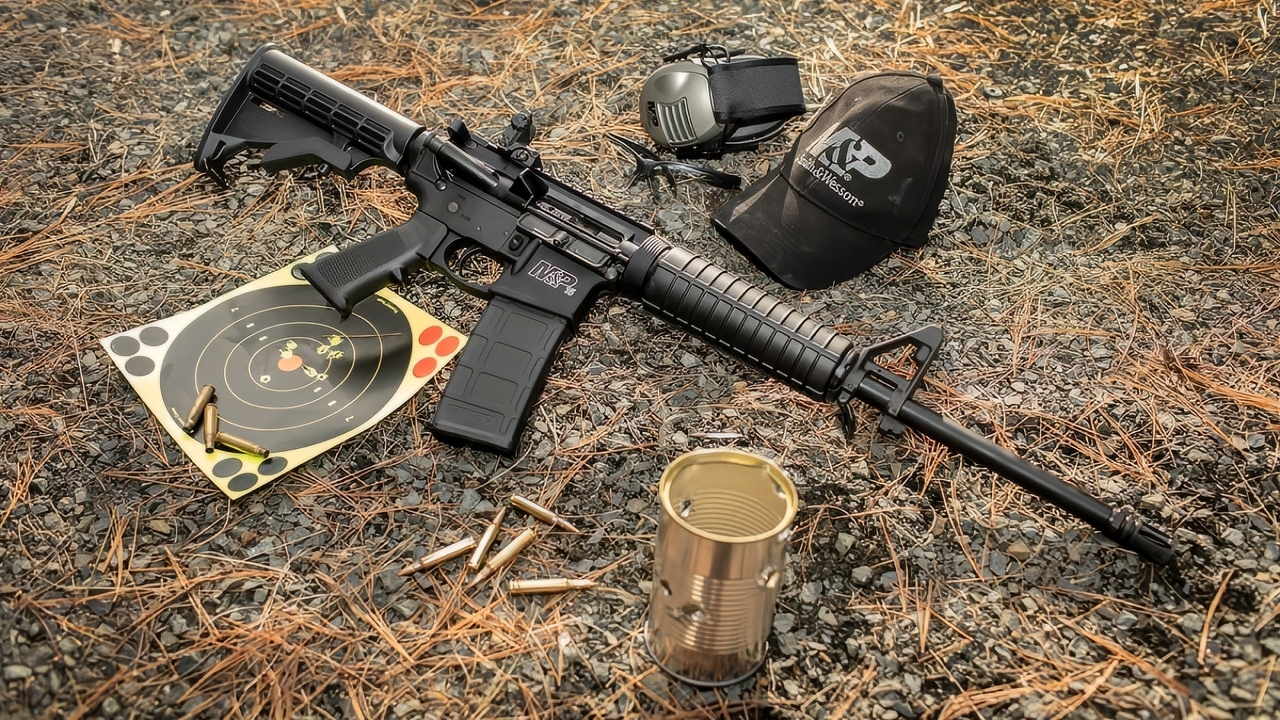
The S&W M&P15 Sport III: The Entry-Level AR Finally Grows Up – Every AR shooter has to start somewhere. For well over a decade, a lot of them started with a Smith & Wesson M&P15 Sport. The original Sport and the Sport II earned their place in gun safes across the country because they were affordable, reliable, and backed by a trusted name.
However, they were also basic rifles, and anyone who owned one spent their first paycheck after the purchase fixing that.
The M&P15 Sport III, launched in February 2024, is Smith & Wesson’s answer to those complaints. For the most part, it’s a good one.
What Changed With The Sport III
The spec sheet reads like a list of upgrades Sport II owners made themselves. The Sport III runs a 16-inch Armornite-coated barrel with 5R rifling, a 1:8 twist, and a threaded muzzle wearing an A2 flash hider.
It’s chambered in 5.56 NATO, so it’ll run .223 Remington as well. The old fixed front sight base is gone, replaced by a 15-inch free-floating aluminum handguard with M-LOK slots at the three, six, and nine o’clock positions.
Both receivers are forged; the lower has an integral trigger guard, and the rifle has a forward assist and a chromed firing pin. Smith & Wesson set the MSRP at $799, and Pew Pew Tactical listed it at $749. Empty, it weighs about 6.5 pounds.
The biggest change is one you can’t see. Smith & Wesson moved from a carbine-length gas system to a mid-length gas system. That matters. A carbine gas system on a 16-inch barrel tends to run over-gassed, resulting in more felt recoil, harder extraction, and more wear on parts.
The mid-length system gives a softer-shooting rifle, and Guns.com noted the recoil reduction compared to earlier generations was noticeable. Those of us who carried carbine-gassed M4s for a living learned to live with the extra snap. There’s no reason a civilian shooter should have to.
How Well Does It Shoot?
The accuracy results are all over the map, which is typical of an entry-level rifle fed different ammunition. GunsAmerica got 0.88-inch average groups with Hornady Varmint Express, a very good result for any rifle in this price range.
However, the same reviewer saw some loads open up past 2 inches. Pew Pew Tactical averaged around 2 to 2.5 MOA at 100 yards, with its best groups at 1.5 MOA. Guns.com shot a 2.5-inch group with 55-grain Fiocchi.
I prefer the standard 55-grain Federal FMJ or similar budget brass-cased ammunition, but that is strictly personal bias.
For those keeping score at home, that’s a rifle that will easily do what most buyers need. Find the load it likes, and it gets better.
The Honest Trade-Off With The Trigger
Smith & Wesson cut the price, and you can see where. The trigger is the biggest issue. GunsAmerica measured it at 5 pounds, 9 ounces and called it “functional but far from good,” with grit and plenty of creep. It’s a mil-spec trigger. It works. It won’t help you shoot the rifle to its potential.
There are no iron sights in the box either. The earlier Sport models came with sights, and dropping them was a strange call. You’ll need to budget for backup irons, a red dot, or an LPVO before this rifle is ready to do anything useful.
GunsAmerica also complained about a wobbly M4-style stock (it “wobbles like a drunken penguin”) and some play between the upper and lower receivers. Guns.com called the A2 grip and mil-spec stock outdated and pointed out there’s only one sling loop on the buttstock, and no QD points.
Some shooters have replaced the wobbly M4-style buttstock, which lacks QD sling attachment points, and the smallish charging handle with a Magpul MOE SL or the CTR.
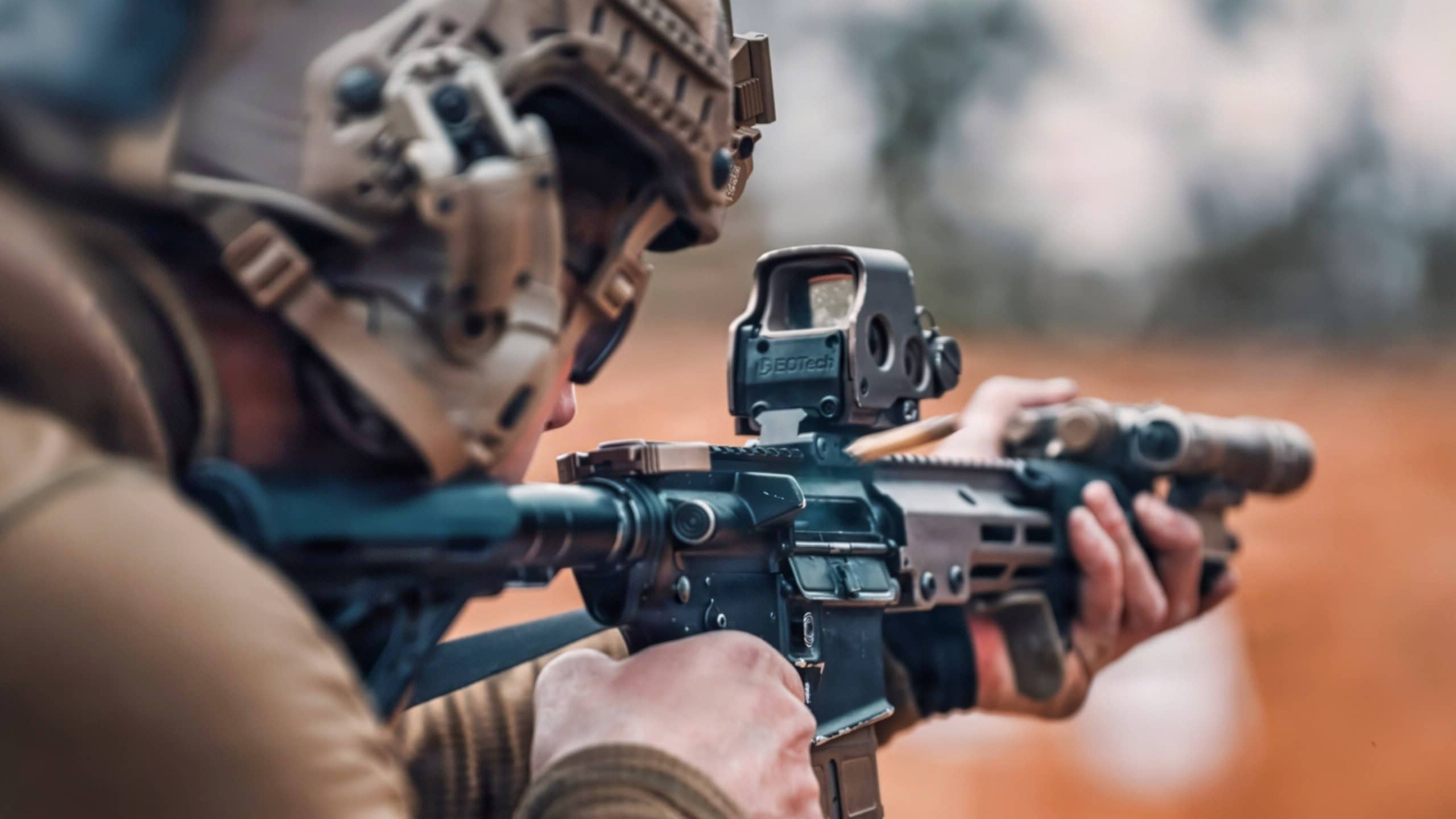
A U.S. Army Green Berets assigned to 3rd Special Forces Group (Airborne), fires his M4 carbine while conducting enhanced rifle and pistol marksmanship during the Special Forces Advance Urban Combat (SFAUC) course at Fort Bragg, North Carolina, Jan. 30, 2026. SFAUC is a three-week training exercise that covers major battle tasks and drills for Green Berets, including small-unit tactics, breaching techniques, team coordination, close quarter battle drills, enhanced marksmanship shooting drills and full mission profiles, to prepare them for a variety of real-world complex environments. (U.S. Army photo by Sgt. Edward Randolph)
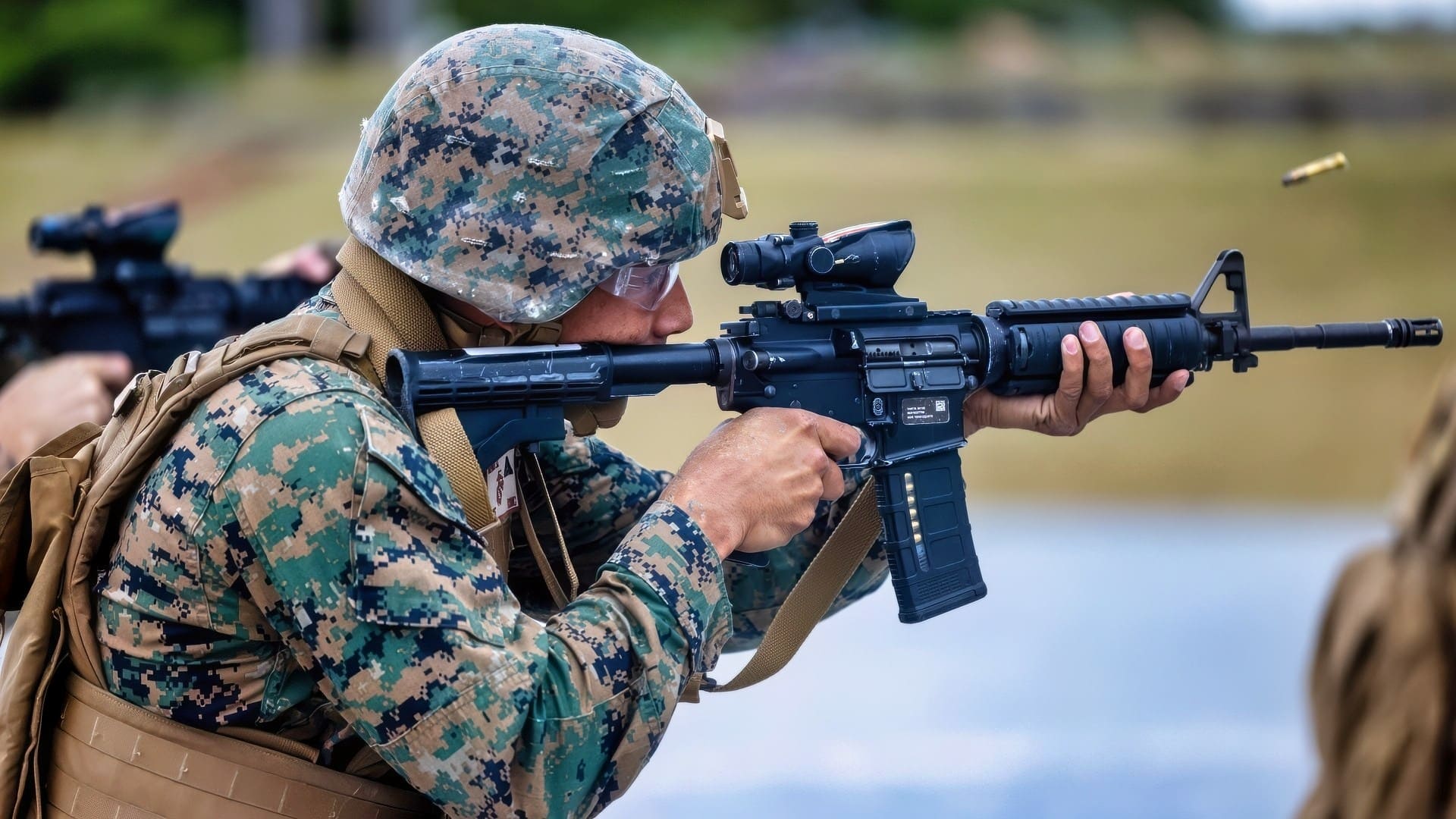
U.S. Marine Corps Lance Cpl. Elijah Geiwitz fires an M4 carbine in the short bay during a live-fire rifle range for the combat marksmanship course on Camp Hansen, Okinawa, Japan, March 13, 2025. CMC refines Marines marksmanship fundamentals and enhances their lethality through advanced marksmanship training. Geiwitz, a native of Wisconsin, is an automotive maintenance technician with 3rd Landing Support Battalion, 3rd Marine Logistics Group. (U.S. Marine Corps photo by Cpl. Michael Taggart)
Reliability deserves a mention too. Guns.com’s rifle ran flawlessly on a mix of Fiocchi, Federal, and Winchester ammunition.
Pew Pew Tactical’s first rifle had feeding problems somewhere between 150 and 200 rounds. However, the replacement “ran absolutely flawlessly” through 300 more.
GunsAmerica’s rifle didn’t always lock back on an empty magazine with certain loads. None of that is disqualifying. It’s a reminder that you should run a few hundred rounds through any rifle before you trust your life to it.
Who Should Buy It?
In my opinion, the Sport III is the right rifle for the first-time AR buyer who knows they’ll upgrade over time. The things that are expensive or difficult to fix are already done right: the mid-length gas system, the free-float handguard, the barrel, and the forged receivers.
The things that are wrong (trigger, stock, grip, sights) are cheap, simple, drop-in swaps you can make at your kitchen table over a weekend.
Personally, I’d put a quality trigger and a good red dot on it right away and leave the rest alone until I’d put a thousand rounds through it. That’s the smart way to buy any budget AR. Spend money where the rifle really needs it, not where the internet says to.
Smith & Wesson didn’t reinvent anything here. It fixed what needed fixing and kept the price within reach for new shooters. Every AR shooter has to start somewhere. The Sport III is a pretty good place to do it.
About the Author: Steve Balestrieri
Steve Balestrieri is a 19FortyFive National Security Columnist. He served as a US Army Special Forces NCO and Warrant Officer. In addition to writing for 19FortyFive, he covers the NFL for PatsFans.com and is a member of the Pro Football Writers of America (PFWA). His work was regularly featured in many military publications