
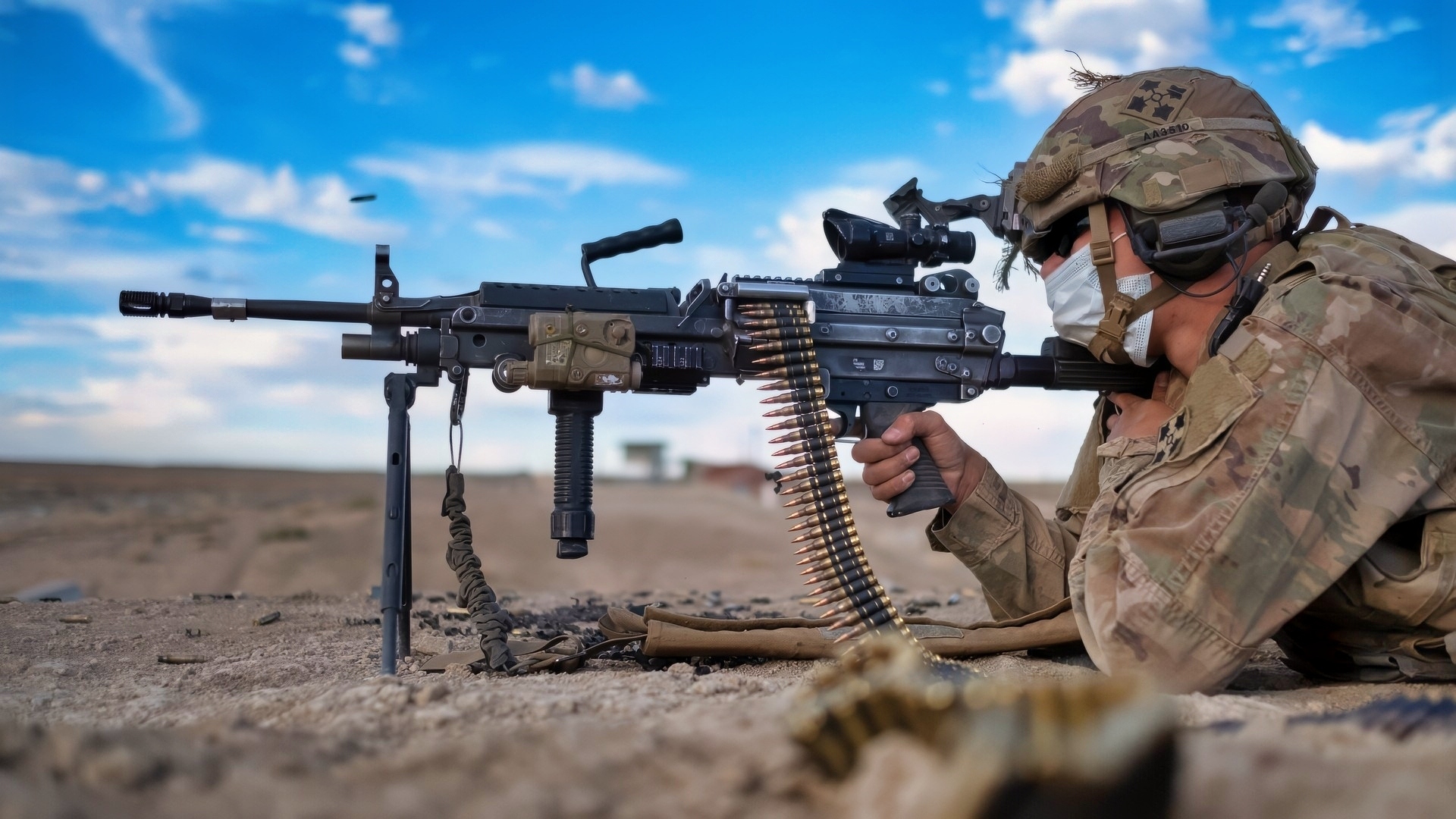
Summary and Key Points: When the Army retired the Browning Automatic Rifle in the 1950s, its squads lost their dedicated automatic weapon, and M16A1s firing on full auto from 20-round magazines never filled the gap. The answer was FN’s Minimi, adopted as the M249 Squad Automatic Weapon in 1984 and first fired in combat in Panama in 1989. It has been in every American fight since. Now a 6.8mm successor is on the way, but SAWs will stay in armories, Guard units, and allied inventories for years.
The M249 SAW: Time to Retire It?
Every infantry squad needs a gun that forces the enemy to keep his head down. For nearly four decades, that gun was the M249 Squad Automatic Weapon.
The SAW has been in every American fight since Panama.
It’s heavy, it’s loud, and it eats ammunition at a staggering rate.
However, ask anyone who walked a patrol behind one, and they’ll tell you the same thing.
When the shooting started, the SAW gunner was the most popular man in the squad.
Filling The Hole The BAR Left
The Army created the SAW because it made a mistake. When the Army retired the M1918 Browning Automatic Rifle in the 1950s, squads lost their dedicated automatic weapon.
The military then used the M60 machine gun, affectionately known as “The Pig.” However, the military needed a new weapon in the late 1970s and early 1980s.
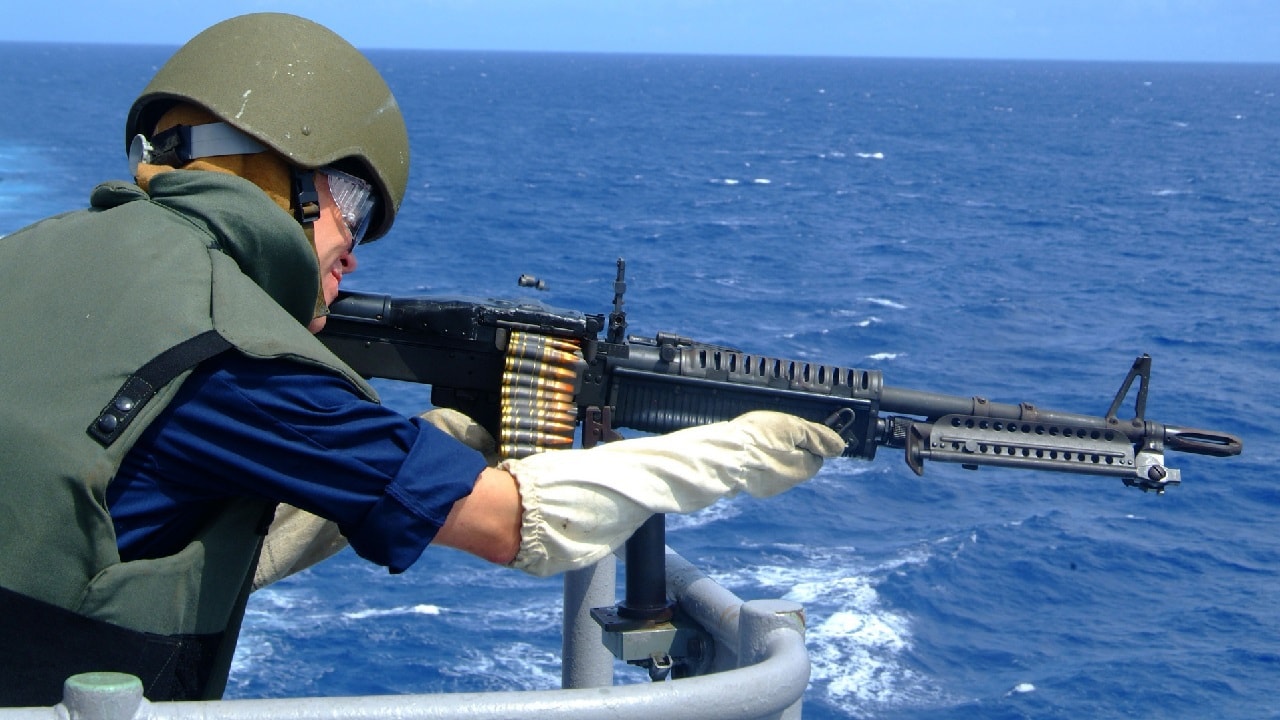
South China Sea (June 5, 2006) Midshipman 2nd Class John D. Jones gets small arms training on the bridgewing of the amphibious dock landing ship USS Harpers Ferry (LSD 49). Harpers Ferry is underway completing her Spring Patrol. U.S. Navy photo by Journalist 2nd Class Brian P. Biller (RELEASED)
According to GlobalSecurity, the M16A1 rifles pressed into that role had failed as a viable base of fire.
A rifle on full auto with a 20-round magazine is no machine gun.
Anyone who has tried to hold one on target knows that.
The SAW program kicked off in the early 1970s.
The first contenders were chambered in an experimental 6x45mm round.
After the Army switched to 5.56x45mm in 1976, the field narrowed, and Fabrique Nationale’s XM249 won.
It was a modified version of FN’s Minimi.
The Army selected the design in 1980 and adopted it as the M249 in 1984, with the Marine Corps following in 1985. It went to the squads as a one-for-one replacement for the M16A1s designated as automatic rifles.
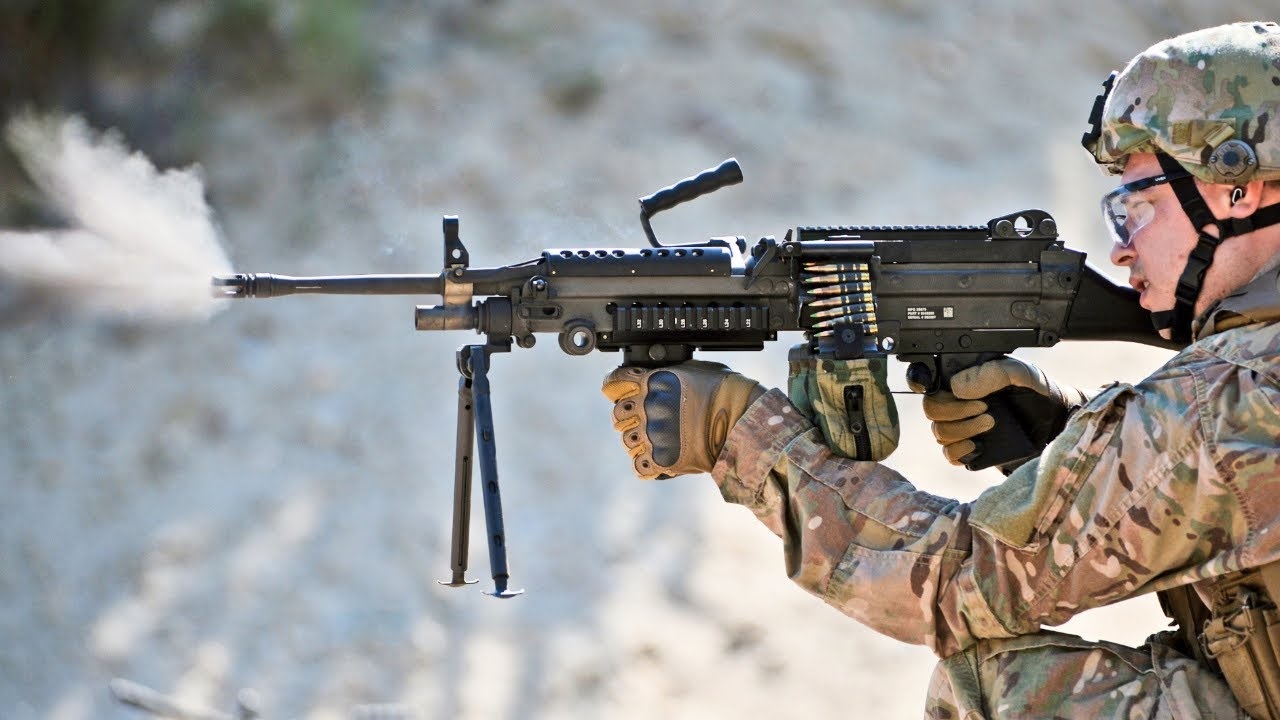
M249 Saw. Image Credit: U.S. Military.
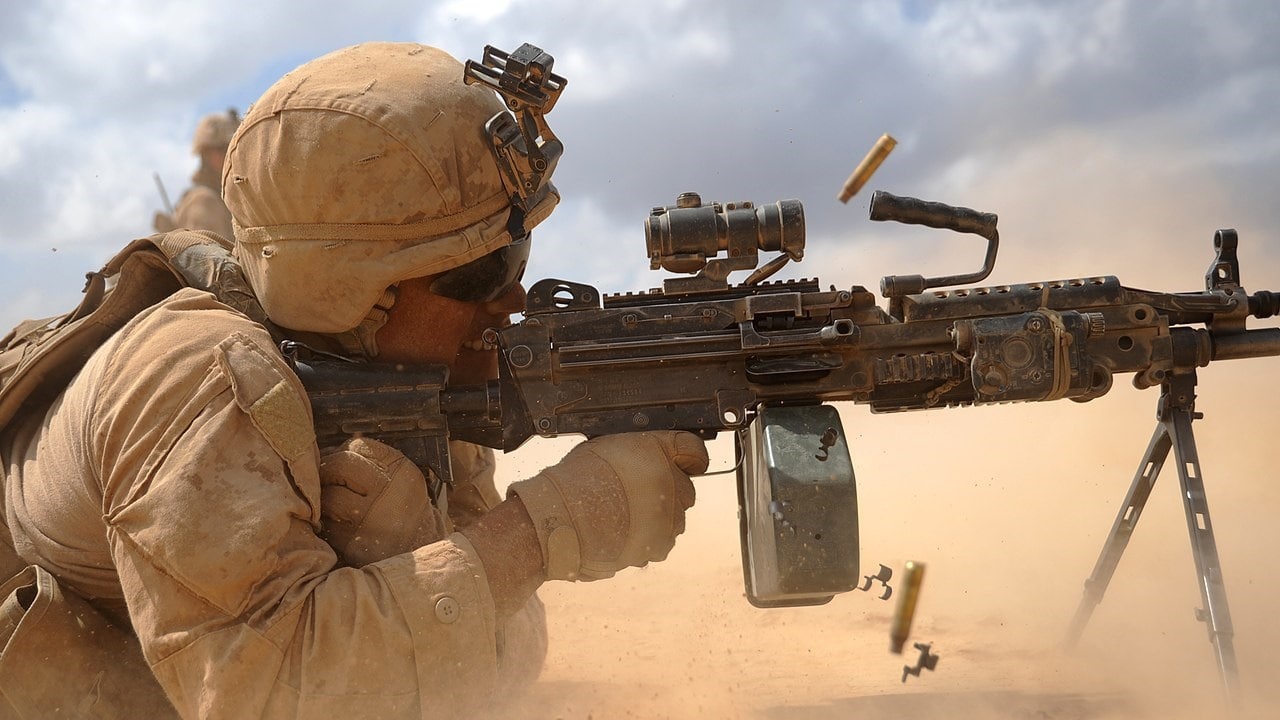
Lance Cpl. Luther Sackett, a rifleman from Rockyford, Co., engages targets during a live-fire and maneuver exercise here Jan. 29. Sackett, and other Marines with Light Armored Reconnaissance Platoon, Weapons Company, Battalion Landing Team 2/4, 11th Marine Expeditionary Unit, conducted live-fire weapons shoots and trained with the French Army Jan. 28-Feb. 5.
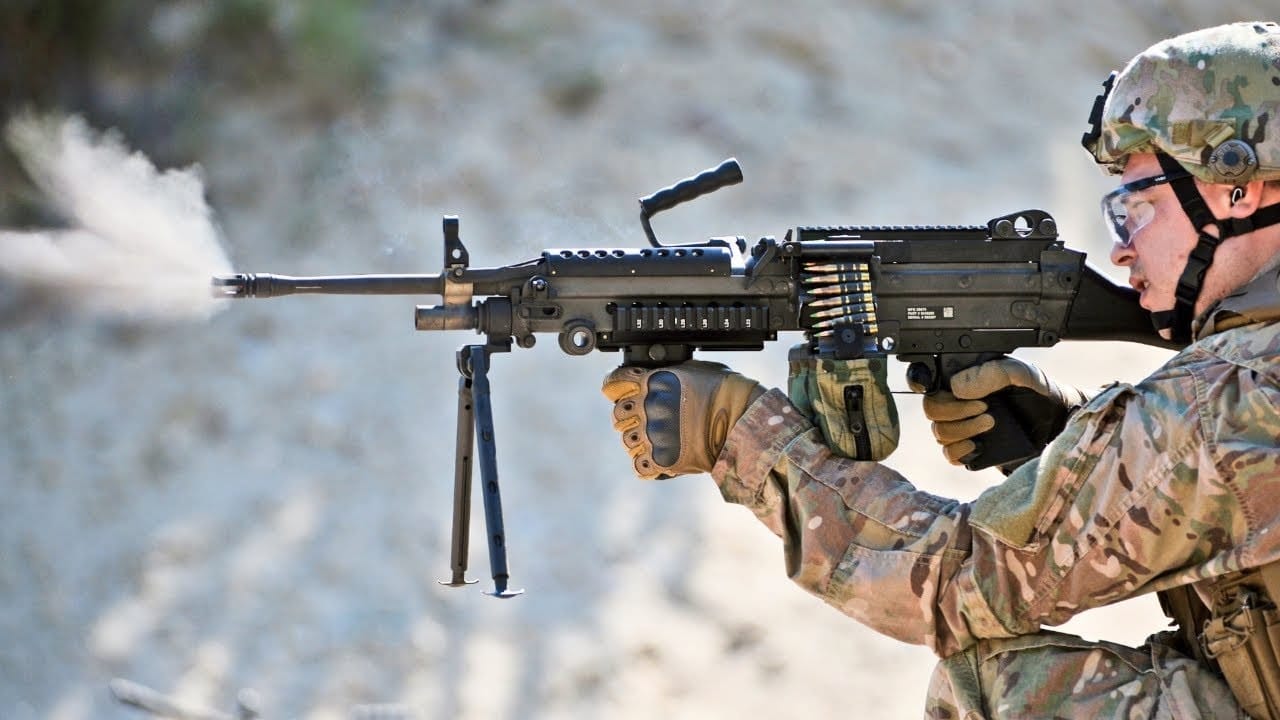
M249 SAW. Image Credit: Creative Commons.
It made its combat debut in Operation Just Cause in Panama in 1989.
It was also in the thick of it during the Gulf War, and it has been in every major fight since.
M249 LMG Specs
Caliber: 5.56×45 mm NATO.
Weight (with bipod and tools): 16.98 lbs
200 Round Box filled: 6.92 lbs
100 Round Magazine: 3.00 lbs
Spare Heat Shield, Spare Barrel.
Assembly and Barrel Bag: 7.00 lbs
Length (Complete Gun): 39.96 in
Barrel Assembly (Spare): 20.50 in
Rifling Twist (RH): 1 turn in 7 inches
Rate of Fire: 700-1,000 rpm.
Max. Effective Range: 800- 1,000 m (875-1,094 yd).
Stock Fixed
Built To Put Rounds Downrange
The specs from FN America explain why the SAW works.
It’s an open-bolt, gas-operated gun firing 5.56x45mm at a cyclic rate of 775 rounds per minute.
It weighs 17 pounds empty, measures 40.75 inches overall, and has a 20.5-inch cold-hammer-forged, chrome-lined barrel.
FN rates its effective range at 800 meters.
The open bolt matters. The chamber stays open between bursts, so air moves through it, and cook-offs are far less likely during sustained fire.
Add a quick-change barrel, and a trained gunner can swap a glowing-hot tube in seconds and keep the gun in the fight.
Then there’s the feed system.
The SAW runs on disintegrating link belts, usually from a 200-round box or soft pouch under the gun.
GUNS Magazine calls its dual feed “clever,” since the same gun will also take a standard M16 magazine through a well in the side.
Having carried one, I found the SAW much lighter than the M60; the ammo also weighed less, meaning the gunner (me) could carry more, and it was easier to carry in dense environments, where the “PIG” would get hung up.
However, the use of magazines is discouraged due to a high incidence of malfunctions.
The gunner’s basic load is 600 rounds of linked ammunition.
Personally, I had very few issues with using magazines or with the well-documented feeding problems and jams associated with them.
That said, in training with blank ammunition, those issues were much more prevalent.
With live ammunition, they were much less common.
However, in my opinion, that magazine well was always more of an emergency option than a primary feed. Still, having it beats running dry.
FN also built the shorter M249 PARA with a collapsible stock and short barrel for airborne troops and vehicle crews.
Age Is The Honest Trade-Off
None of that firepower comes cheap.
Seventeen pounds before you load a belt is a lot of weight to hump up a mountain somewhere.
Add 600 or 800 rounds of linked ammunition, and you get the idea.
And those plastic ammo boxes could get noisy, too.
Time caught up with the guns too. GUNS Magazine notes that roughly 80 percent of surveyed soldiers were satisfied with the SAW.
However, aging guns began to suffer reliability problems in prolonged dusty environments, and the stamped steel receiver offered limited service life at very high round counts.
Reliability issues in adverse conditions were a problem.
The weapon has a reputation for being finicky in sandy, dusty, or muddy environments, conditions frequently encountered in places like Iraq and Afghanistan.
Reports from those conflicts cited jamming problems that some units addressed through aftermarket modifications or by requesting entirely different systems.
The Marines moved first.
The Corps bought just over 14,000 M27 Infantry Automatic Rifles, trading belt-fed volume for accuracy and lighter weight.
The Army went bigger. Its replacement is SIG Sauer’s M250, chambered in 6.8x51mm. The goal is simple. Defeat body armor at range, something 5.56 struggles to do.
Why The SAW Still Matters
So is the M249 finished? Not yet.
It will take years to push the M250 across the entire force, and SAWs will stay in armories, Guard units, and allied inventories long after that.
The Minimi family remains one of the most widely used light machine guns on the planet.
The M249 SAW was a workhorse of squad-level firepower, valued for its sustained automatic fire and ammunition commonality, but its weight, reliability quirks in harsh environments, and aging design have driven the search for a successor.
Its long service record reflected both its genuine utility and the tradeoffs inherent in any weapon built to do one job: put a lot of rounds downrange, and it did that very well.
The M249 fulfilled a need for decades. I carried one at times and found it to be a good weapon. There were issues, but overall, it was reliable and provided good firepower. But its time has come
Every squad needs a gun that keeps the enemy’s head down. For a generation of soldiers and Marines, that gun was the SAW. It still is, for now.
About the Author: Steve Balestrieri
Steve Balestrieri is a National Security Columnist. He served as a US Army Special Forces NCO and Warrant Officer. In addition to writing on defense, he covers the NFL for PatsFans.com and is a member of the Pro Football Writers of America (PFWA). His work was regularly featured in many military publications.