
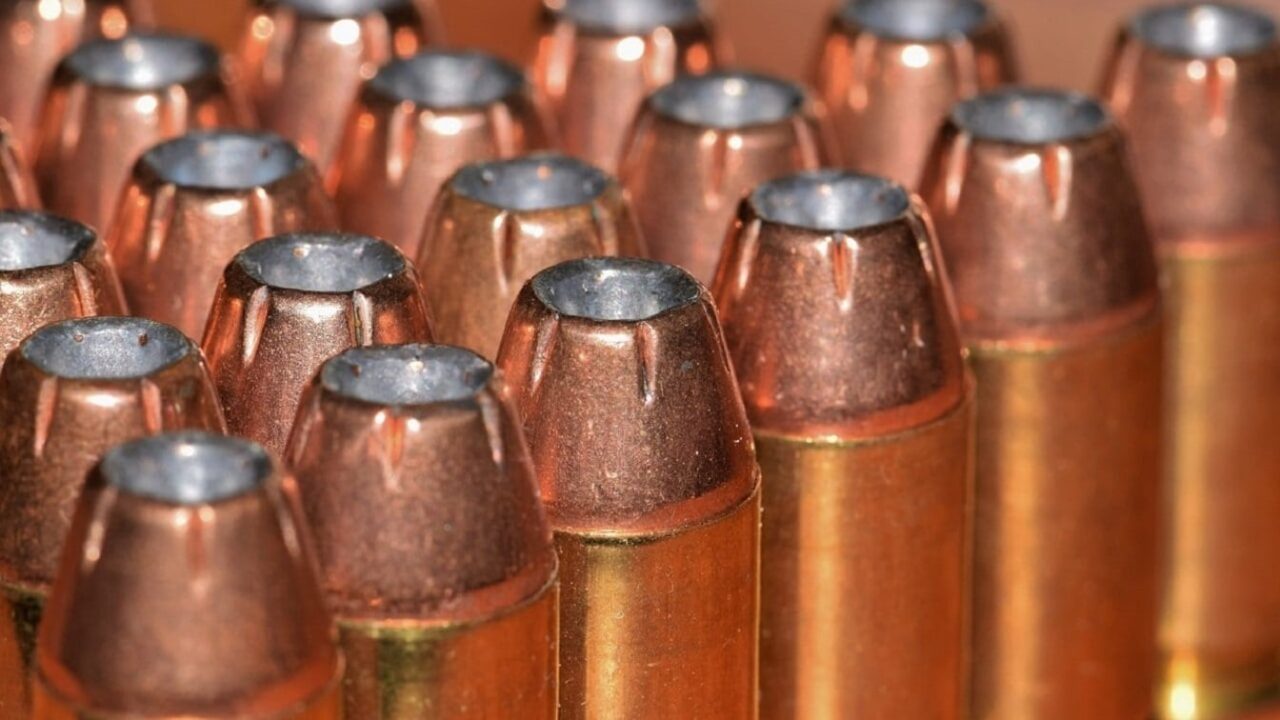
The .950 JDJ: Meet the Most Powerful Rifle on Earth – Some rifles are built to hunt. The .950 JDJ was built to answer one question: how big can a sporting rifle get? The answer is known as the “Fat Mac,” and it is almost an inch across the bore, a massive bullet that weighs more than half a pound, and more than 38,000 foot-pounds of energy at the muzzle. It’s widely billed as the most powerful rifle on earth, and among commercially built sporting rifles, nothing else really comes close.
The Man Behind The Monster
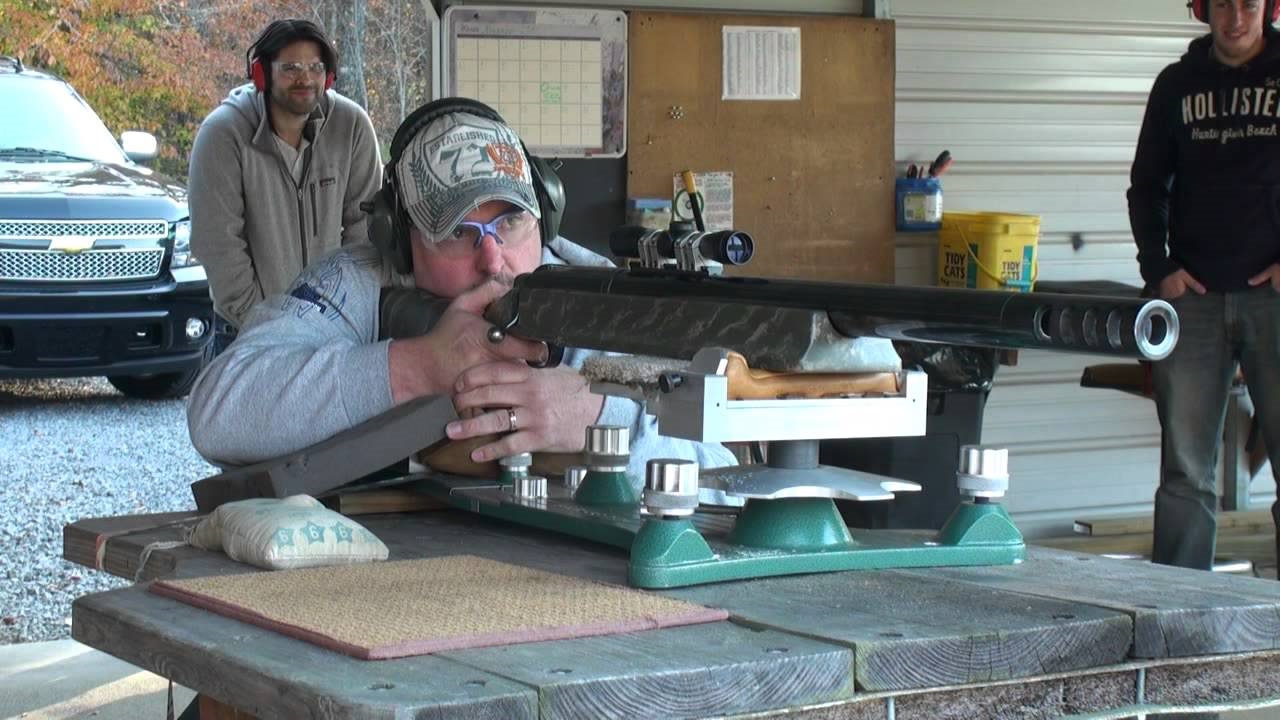
Largest Caliber Bullet .950 JDJ. Image Credit: YouTube Screenshot.
The .950 was developed by J.D. Jones, the Ohio gunsmith and cartridge designer who founded SSK Industries in 1977. Jones spent his career pushing the limits of what a firearm could do.
According to American Rifleman’s profile of SSK, he developed a long list of JDJ wildcat cartridges for the Thompson/Center Contender. He’s best known for the .300 Whisper, which later helped lead to the .300 Blackout. The .950 was his most extreme design.
Jones didn’t design the case from scratch. As Forgotten Weapons explains, the round started as the 20mm Vulcan cannon cartridge. It was shortened to 70mm and necked up to a .95-caliber (24mm) bore. The finished ammunition uses CNC-machined brass cases and .50-caliber machine gun primers.
The Numbers Are Hard To Believe
The standard load fires a 3,600-grain solid bullet at about 2,200 feet per second. According to AccurateShooter, that produces 38,685 foot-pounds of muzzle energy.
For comparison, a typical .50 BMG load produces about 12,000 to 13,000 foot-pounds. The .950 delivers roughly three times the energy of the most powerful cartridge most shooters will ever see, with a bullet more than five times heavier. AccurateShooter compared the impact to World War I-era tank rounds.
The rifle is built to match. SSK used McMillan actions and stocks, Krieger barrels, and a muzzle brake that weighs more than 18 pounds on its own and is roughly the size of a 2-liter soda bottle.
Reported rifle weights range from 61 pounds for the sold-at-example Rock Island to 80-120 pounds for others. That’s why it earned the nickname “Fat Mac.” You don’t carry this rifle. You set it up.
Even with all that weight, recoil is estimated at more than 200 foot-pounds. That’s ten times the recoil of a .30-06 hunting load that produces around 20. The scope is mounted far forward with long eye relief so the shooter doesn’t take it in the face. In slow-motion footage, the brake throws out a cloud of gas that looks more like a howitzer than a rifle.
Why It’s Legal Where A 20mm Cannon Isn’t
Under the National Firearms Act, most guns with a bore larger than half an inch are classified as destructive devices, which means registration and a federal tax stamp.
The .950 JDJ is almost twice that limit. However, Jones applied for and received a sporting purposes exemption from the ATF. That exemption lets the rifle be sold and owned like any other long gun, without NFA paperwork.
That’s not a gimmick. Getting the ATF to agree that a rifle firing a half-pound bullet has a legitimate sporting purpose was an achievement in itself.
What Is The Purpose Of This Anti-Tank Gun?
So what is it actually good for? Not much, in any practical sense. The .950 isn’t a hunting rifle. Nothing on earth needs 38,000 foot-pounds to bring it down, and no one is carrying a 100-pound rifle up a mountain.
It isn’t a military weapon either. SOFREP’s coverage called it a “range queen,” and that’s the right description. It exists to be shot from a bench, for the experience and the spectacle.
It’s also expensive and very rare. Rifles sold for about $8,000 when SSK was building them, and loaded ammunition cost around $40 a round. Only three rifles were produced, according to American Rifleman.
Rock Island Auction reports that SSK stopped making .950 ammunition after 2014. If you own one now, you’re loading your own, and the auction rifle came with dies, brass, and cast bullets for that reason.
The company has also changed. Lehigh Defense bought SSK in 2019, and Wilson Combat took over the ammunition division in early 2022. The era when J.D. Jones could build a rifle like this and ask ATF to bless it has passed.
Say what you want about the practicality of a rifle that weighs as much as a young teenager. That’s beside the point. Jones wanted to see how far a sporting cartridge could go, and he went further than anyone else.
Every big-bore shooter who talks about the .50 BMG as the top of the mountain is looking at the wrong peak.
It was never meant to be practical, and it certainly was not that. It was meant to be the biggest, a veritable cannon on a range bench. It still is.
About the Author: Steve Balestrieri
Steve Balestrieri is a National Security Columnist. He served as a US Army Special Forces NCO and Warrant Officer. In addition to writing for 19FortyFive, he covers the NFL for PatsFans.com and is a member of the Pro Football Writers of America (PFWA). His work was regularly featured in many military publications.