
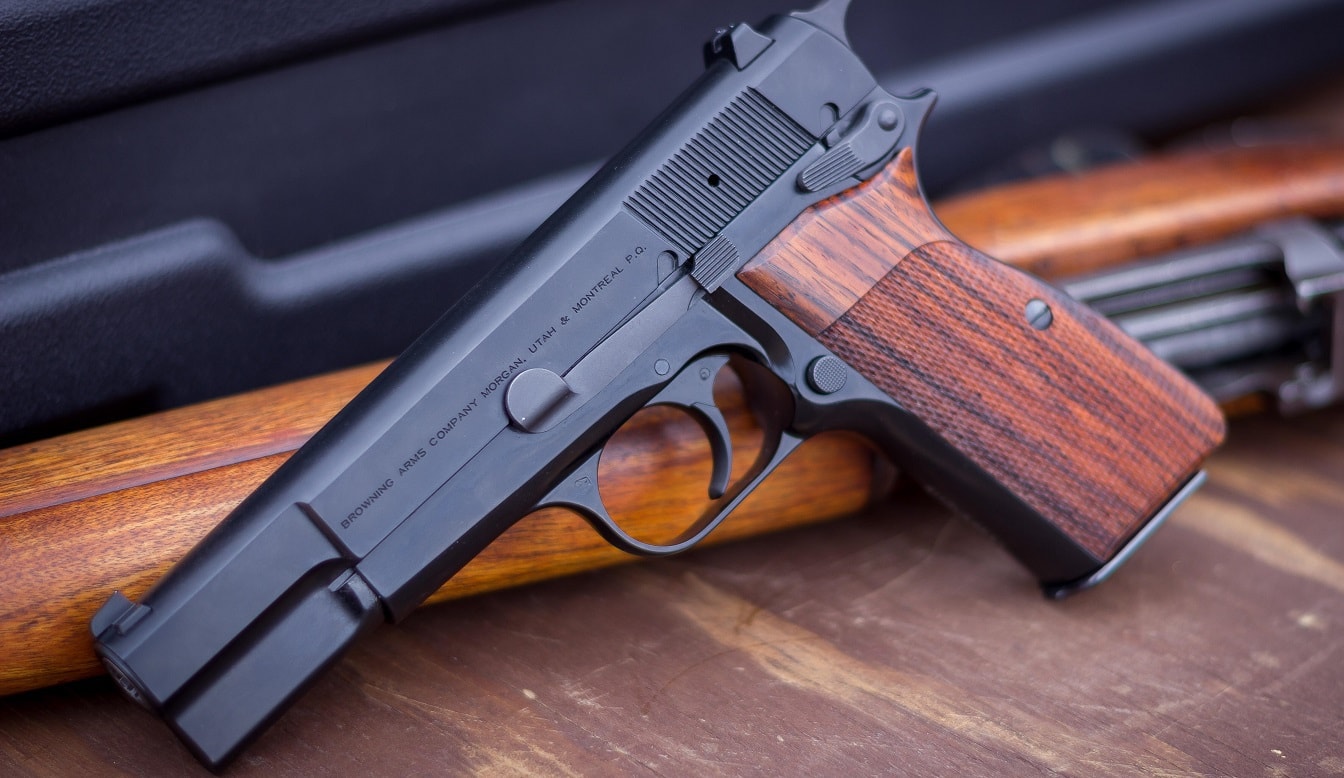
Few handguns have earned the kind of enduring reputation that the Browning Hi-Power carries.
Adopted by dozens of militaries, carried by Special Forces on every continent, and still coveted by collectors and shooters today, the Hi-Power occupies a strange place in firearms history: a design finished nearly a century ago that modern manufacturers are still racing to reproduce.
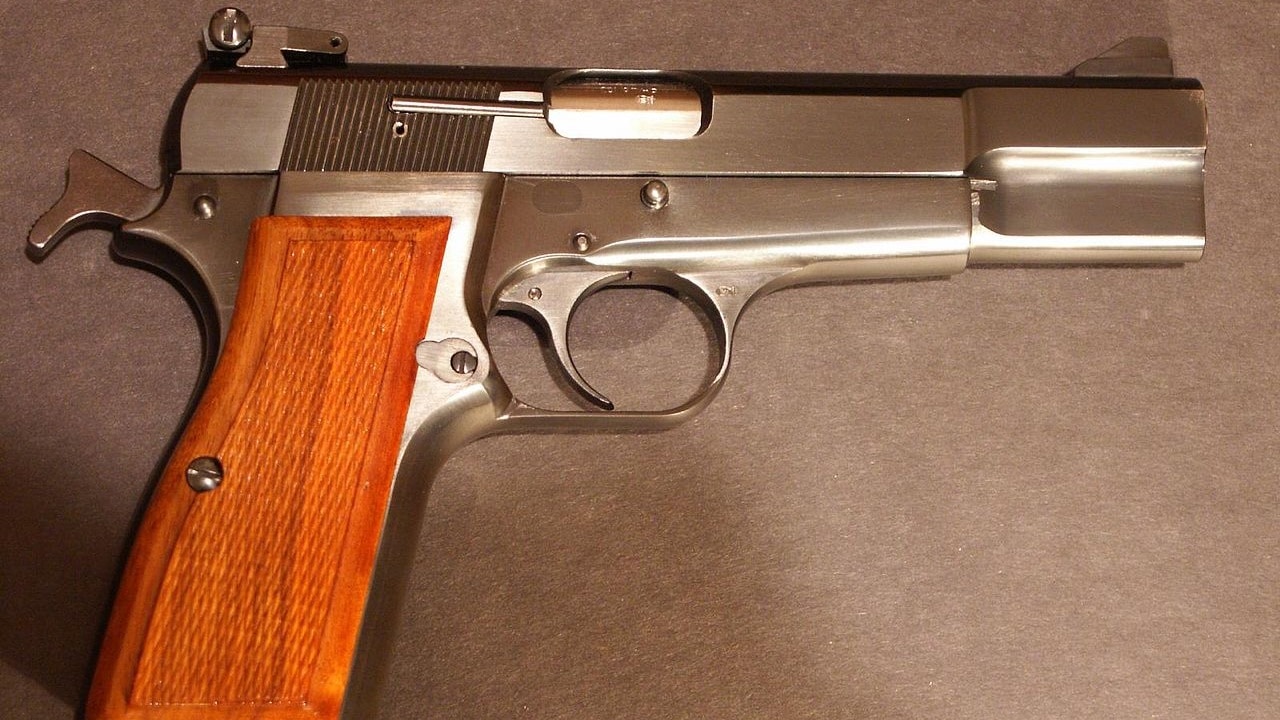
Browning P-35 Hi-Power 9mm. Image Credit: Creative Commons.
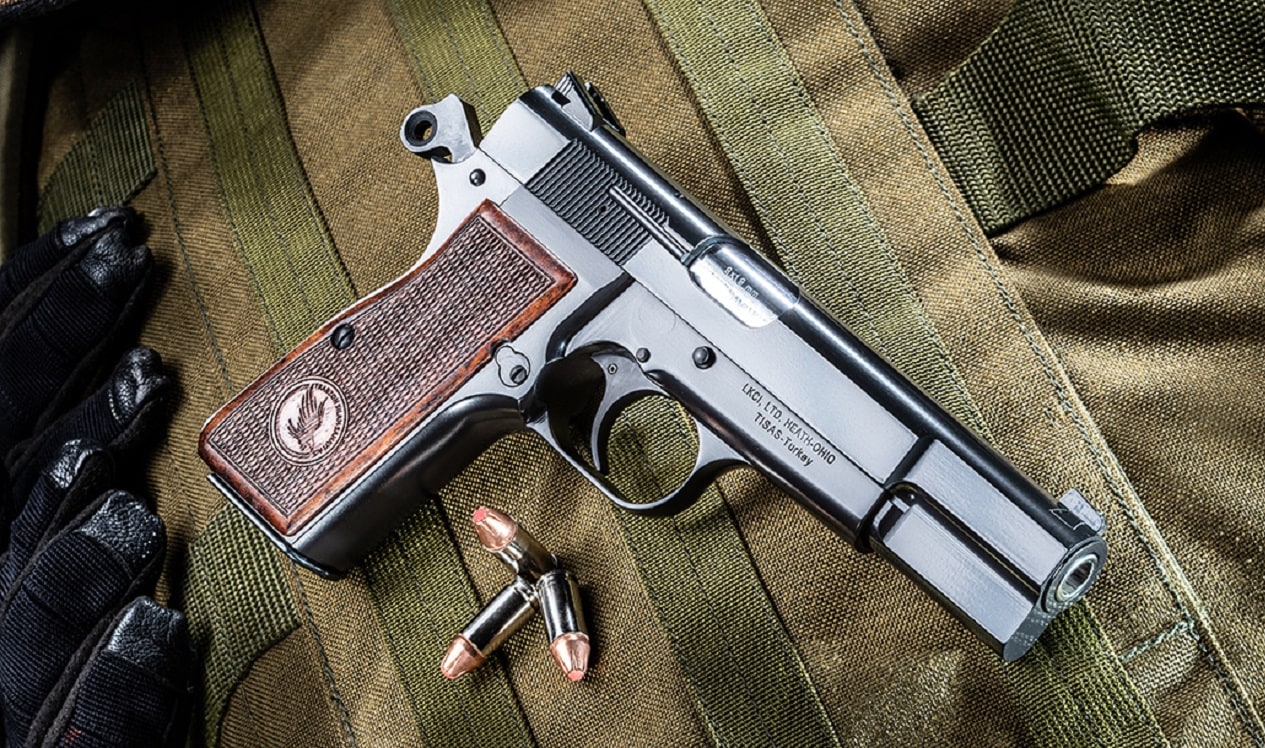
Browning Hi-Power. Image Credit: Creative Commons.
My love for the M1911A1 is well-known, as many of my previous writings have clearly shown.
Being in Special Forces, I was also a lover of the history of Special Operations forces from days of yore, and especially the British Commandos, SAS, SOE, and the American O.S.S.
The British commandos favored the Hi-Power for its 13-14 round capacity, and so…I had to have one, right? It was/is a great pistol that earned its reputation.
A Pistol Born From Necessity
The Hi-Power’s story begins with John Moses Browning, the brilliant American designer who had already designed the iconic M1911A1 and countless other iconic weapons. Browning’s M2 .50 caliber machine gun is still in use today, 100 years after his death.
In the 1920s, the French military issued a set of requirements for a new service pistol, a “Grand Rendement” (high-yield) design that called for a high-capacity magazine, a manageable size, and rugged reliability.
Browning took up the challenge for the Belgian firm Fabrique Nationale (FN), but he died in 1926 before the project was complete.
FN designer Dieudonné Saive finished the work, refining the locking system and, crucially, adding a double-column magazine that held 13 rounds of 9mm, nearly double the capacity of the Colt 1911 or the Luger pistols of the day.
The finished pistol entered production in 1935 as the FN Model 1935, though it quickly became known by another name: the Hi-Power, a nod to its then-remarkable magazine capacity rather than any claim to stopping power.
An Accidental World Traveler of Sorts
The Hi-Power’s timing gave it an unusual wartime story. When Germany invaded Belgium in 1940, FN’s factory fell under Nazi control, and German forces began issuing captured Hi-Powers to their own troops, including paratroopers.
Meanwhile, FN’s exiled engineers set up production in Canada through John Inglis and Company, supplying Hi-Powers to Allied forces, including British commandos and Chinese nationalist troops.
It’s one of the few firearms in history to have seen meaningful use on both sides of the same war, a strange distinction that only added to its mystique.
Why the Design Succeeded
The Hi-Power’s long service life wasn’t an accident of politics; the gun earned it through engineering. The brilliance of Browning’s tilting-barrel, short-recoil system became the template that nearly every modern semi-automatic pistol still uses today, including the Glock, the Beretta 92, and the SIG P-series.
The double-stack magazine solved the age-old trade-off between capacity and grip size, proving a pistol didn’t have to sacrifice one for the other.
Beyond the mechanics, the Hi-Power handled extremely well.
The single-action trigger was crisp, and it was a naturally comfortable weapon to point and aim, with exceptional feel and balance. Recoil was light. It was extremely accurate.
After the very first range day, it was an easy pistol to really like.
More than 50 countries adopted the Hi-Power as a standard-issue sidearm over the decades, including Britain, Canada, Australia, and Israel. The British used the pistol until 2013, when they replaced it with the Glock 17.
Why The Hi-Power Still Matters Today
FN finally ended production of the original Hi-Power around 2017-2018, closing the book on more than 80 years of continuous manufacture.
But rather than fading into obscurity, the pistol’s absence from the market only sharpened demand.
Prices for clean original examples climbed, and gun writers who had spent decades ranking it among the greatest handguns ever made suddenly found a new audience discovering why.
As a testament to its popularity, Springfield Armory introduced its own American-made version, the SA-35, in 2021, based on the original P-35 design but updated with improved sights, a better feed ramp, and a higher-capacity magazine, while dropping the original’s unpopular magazine-disconnect safety.
FN itself followed in 2022 with a new “High Power,” though that model departs significantly from the classic silhouette collectors love.
There was a lot to love about the Hi-Power: a steel-framed 9mm with comfortable grips, outstanding reliability, and a good trigger (once the magazine safety was removed).
It was a very dependable combat pistol. It was a fun pistol to shoot, and it was easy to see why it was so popular with the Brits.
Nearly a century after Browning first sketched its design, the Hi-Power remains a reference point other pistols are still measured against, proof that a truly well-solved design problem doesn’t really go out of style.
If you’re looking to own a piece of history, the Hi-Power, like the 1911A1, is a fantastic choice.
About the Author: Steve Balestrieri
Steve Balestrieri is a National Security Columnist. He served as a US Army Special Forces NCO and Warrant Officer. In addition to writing on defense, he covers the NFL for PatsFans.com and is a member of the Pro Football Writers of America (PFWA). His work was regularly featured in many military publications.