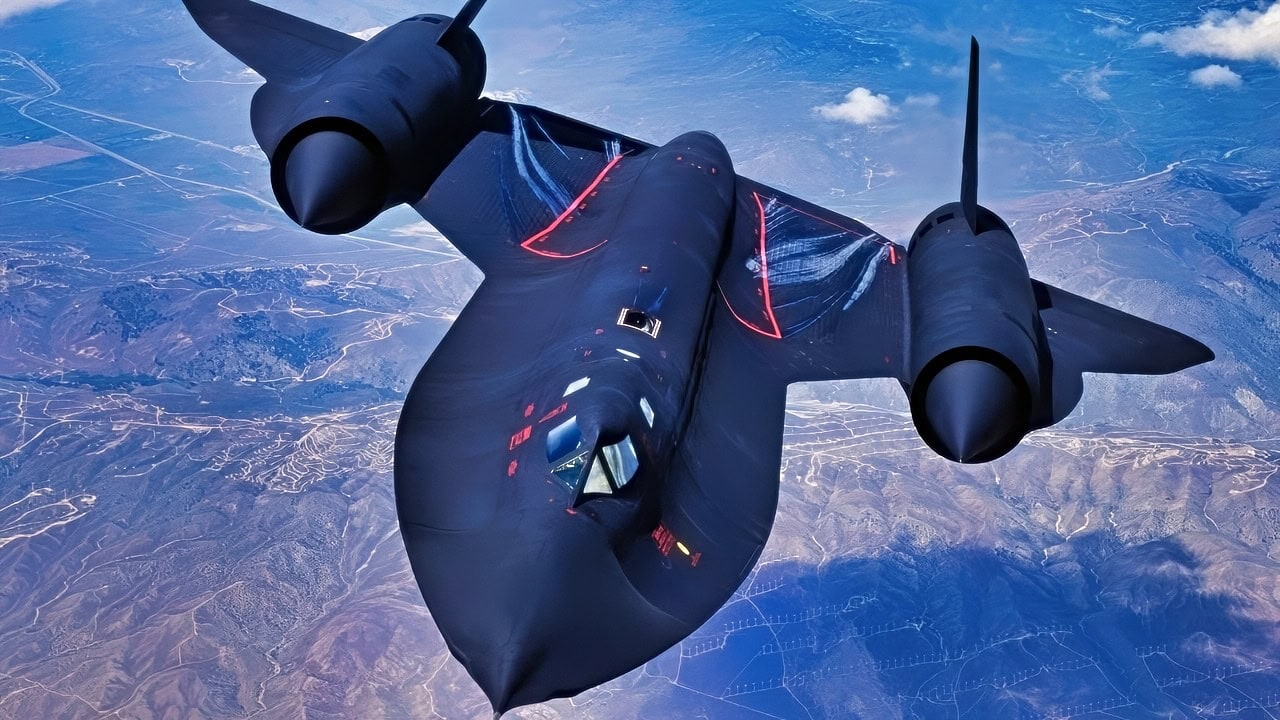
The SR-71A, famously flown by Eldon “Al” Joersz and George Morgan in 1976, remains unrivaled in many ways. The aircraft was flown at 2,193.167 mph. To mark the half-century since the SR-71A set the record, the Fédération Aéronautique Internationale (FAI) issued a statement to that effect, making it clear that “no official performance has surpassed this speed.”
As part of the “Blackbird Days” festivities at Warner Robins’ well-known Museum of Aviation in Georgia, visitors can view the cockpit of the storied 61-7958 from September 24 through the 26th.
A Mind-Blowing Record for the SR-71 Blackbird
Joersz and Morgan had privately discussed their aim to reach a speed of 2,200 mph. The 7-mph shortfall left them feeling “quietly a little disappointed,” according to Joersz.
Whatever their immediate reaction, however, there is no doubt that the pair achieved something remarkable.
Half a century may have passed since their feat, but the FAI still lists their speed of 2,193.167 mph as the “C-Absolute” for any powered airplane class.
But that doesn’t necessarily mean more recent aircraft have fallen behind the SR-71. Defense thinking has changed, and stealth is now often prioritized over speed.
The FAI has noted that at Mach 3.2 the canopy could exceed 300 degrees Celsius, the equivalent of around 572 degrees Fahrenheit.
The two Pratt & Whitney J58 engines allowed the titanium-skinned craft to soar to 85,000 feet, during which the crew donned pressure suits for safety.
Analog Cockpit
Obviously, there is an incongruity between the cockpit’s appearance at first glance and what the aircraft can do.
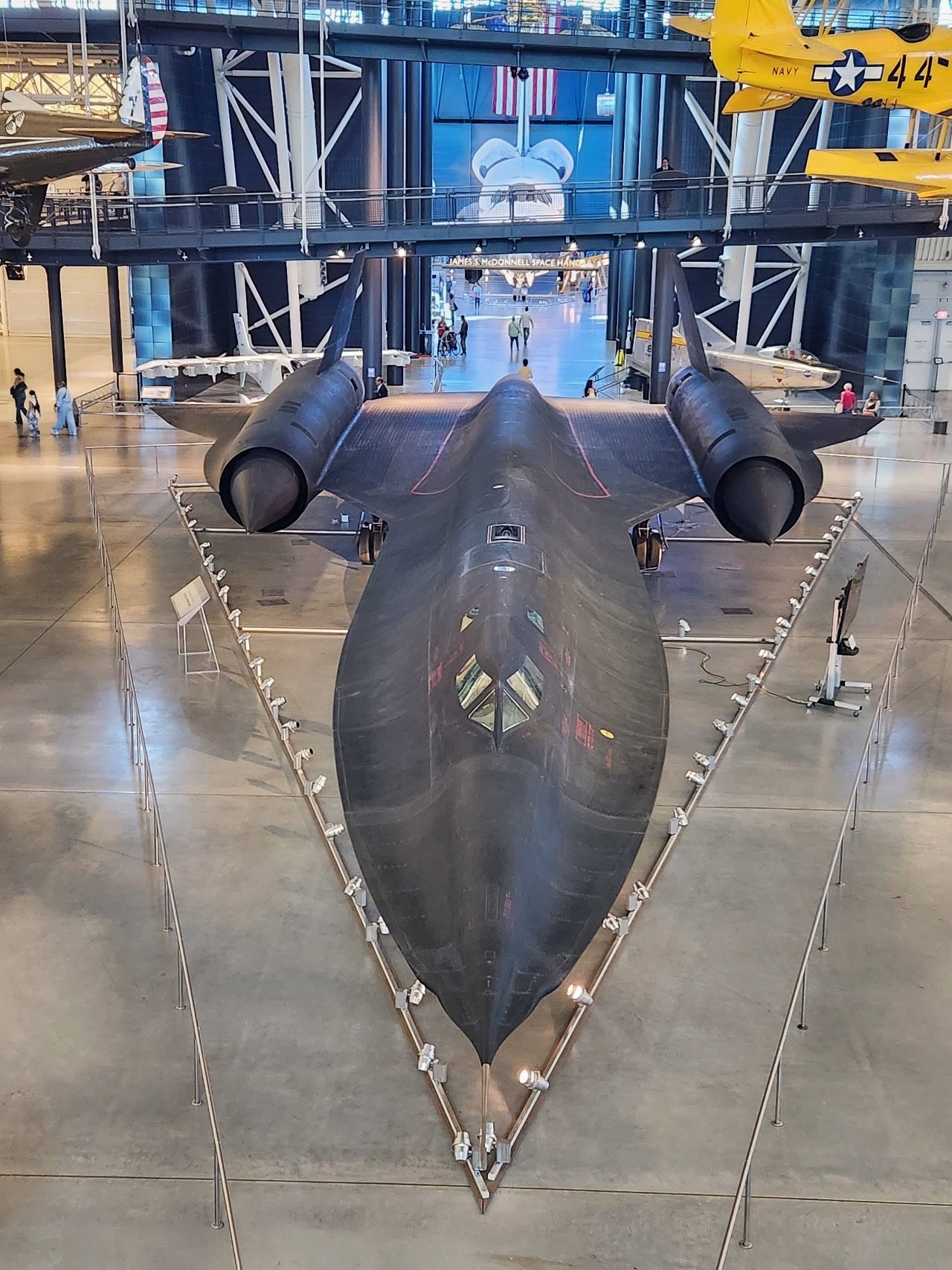
Longshot of SR-71. Image Credit: 19FortyFive.com

SR-71 Blackbird at the Smithsonian 19FortyFive.com Photo
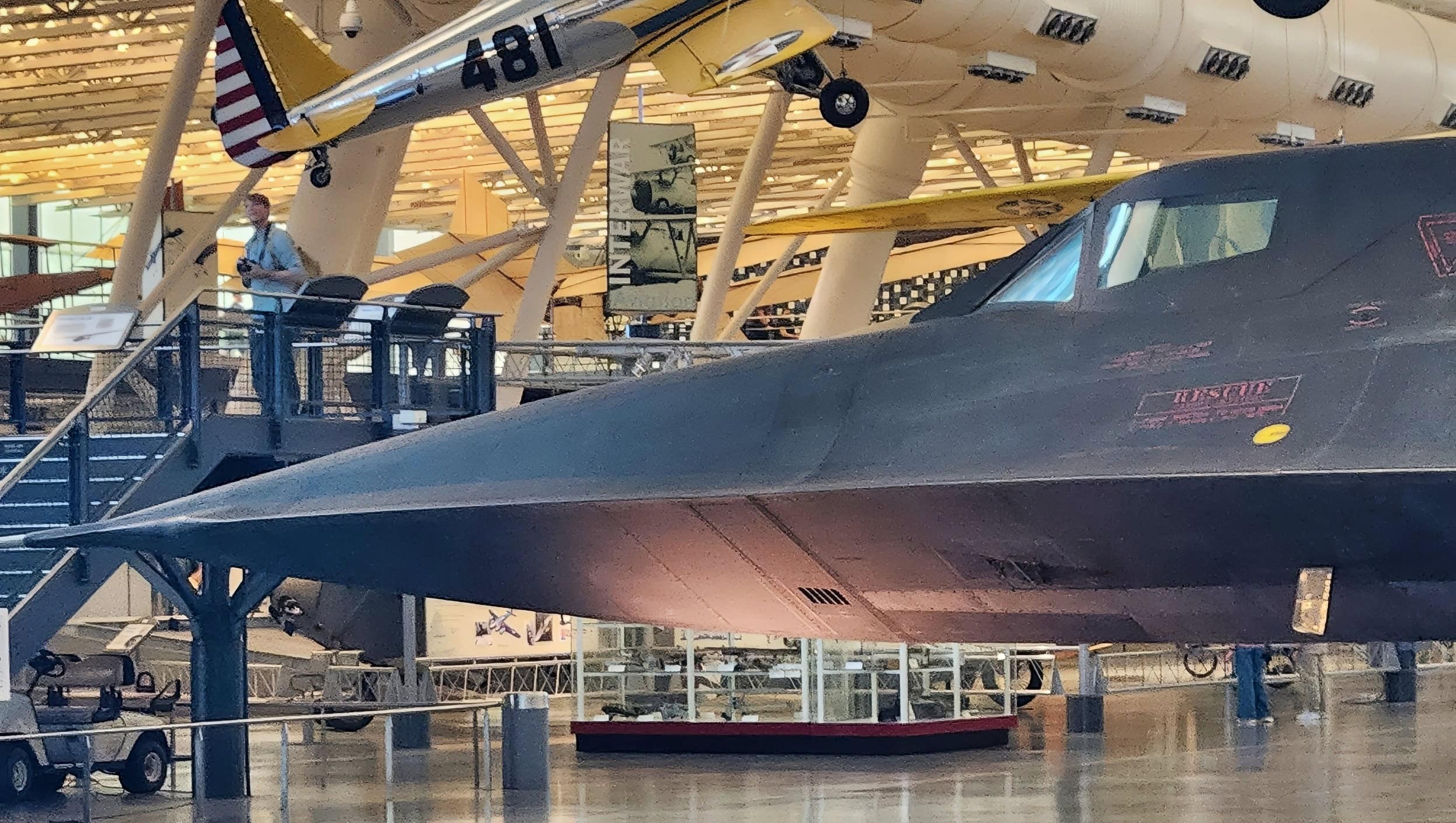
SR-71 Blackbird at Smithsonian. Image Credit: 19FortyFive.com
A Friday offering is titled “Steam Gauges and Star Wars.” Some sessions dispense with the mythology of the pilot: “Maintenance-The Key to Survival,” “Women in the SR-71 Program,” or “The Take-Sensors & Maintenance.” Saturday will see the “The Need for Stealth” event, which will include a closer inspection of the ejector, engine, and inlet.
The guests’ biographies are instructive.
Retired Master Sgt. Denise Garcia was on the maintenance team for the July 1976 record flights; she kept the ground equipment in order and used the volatile chemical to start the J58S.
Then there is retired Master Sgt. Jack Schaab, chosen for the record attempt’s maintenance side, and Mike Hull, an electronic-warfare man who worked the intelligence and defensive systems to keep the “Bad Guys” at bay, per his biography.
One had to make refueling work to plan. “I don’t think we ever missed a rendezvous with a tanker,” says former pilot Col. Buzz Carpenter of the tanker crews he considers “heroes.” Every couple of hours or so, the Blackbird needed to be topped off.
Among those taking part are Joersz, Carpenter, Lt. Col. B.C. Thomas, a high-time pilot, and Lt. Col. Ed Yeilding, who set a transcontinental record in 1990. “We represent the crew force and the airplane,” is how Joersz puts it. For Morgan, it is as plain as “Every time I flew it was my favorite memory.” Engineers, maintainers, mission, and intelligence officers and the like will round out the rest of the force.
Two Blackbirds, Three Records
What 61-7958 bears today does not tell the whole story of the July 1976 undertaking. Joersz and Morgan set the absolute speed record and the record for a straight 15/25-kilometer course.
Robert Helt and Larry Elliott were in another SR-71 when they reached 85,068.997 feet in level flight, in front of FAI observers for certification.
The sporting code has changed, and the altitude and straight-course marks have been eliminated. Not the absolute speed record.
After operational duty out of Kadena Air Base in Okinawa, 61-7958 came to Robins for display on Feb. 23, 1990. On Friday and Saturday during “Blackbird Days,” visitors will be invited to view the cockpit. Thursday will focus on defense, training, sensors, and missions; Saturday will feature World War II reenactors, STEM programs, and a tour of an AC-130.
Panel discussions will also take place during what the museum has dubbed “three unforgettable days” of honoring “one of the most legendary aircraft ever built.”
About the Author: Georgia Gilholy
Georgia Gilholy is a journalist based in the United Kingdom who has been published in Newsweek, The Times of Israel, and the Spectator. Gilholy writes about international politics, culture, and education.