Summary and Key Points: The Royal United Services Institute estimates the People’s Liberation Army Air Force to have roughly 50 J-20s in 2020, annual production near 120 airframes by 2025, and about 300 aircraft in service by the middle of that year. Justin Bronk, who wrote the paper, projects total production could reach around 1,000 by 2030. For comparison, Lockheed Martin delivered 191 F-35s in 2025, a record inflated by clearing a backlog — normal projected output is just over 150 a year.
The Chinese J-20 Fighter Problem
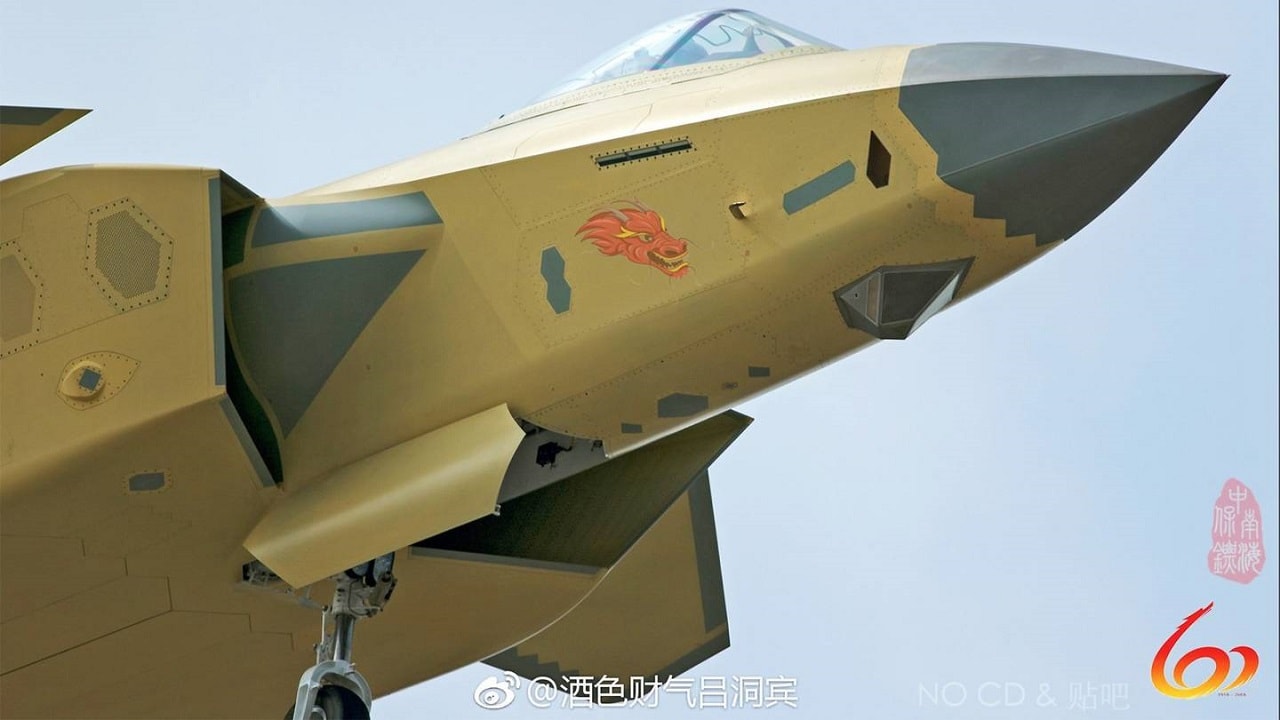
China’s first stealth fighter, the J-20, represents the country’s first foray into fifth-generation aircraft. Designed to defeat adversary radar, the J-20 has a unique distinction as the world’s first two-seater stealth aircraft.
Three main variants of the J-20 have been produced: the initial J-20 build, the improved J-20A, and the two-seater J-20S.
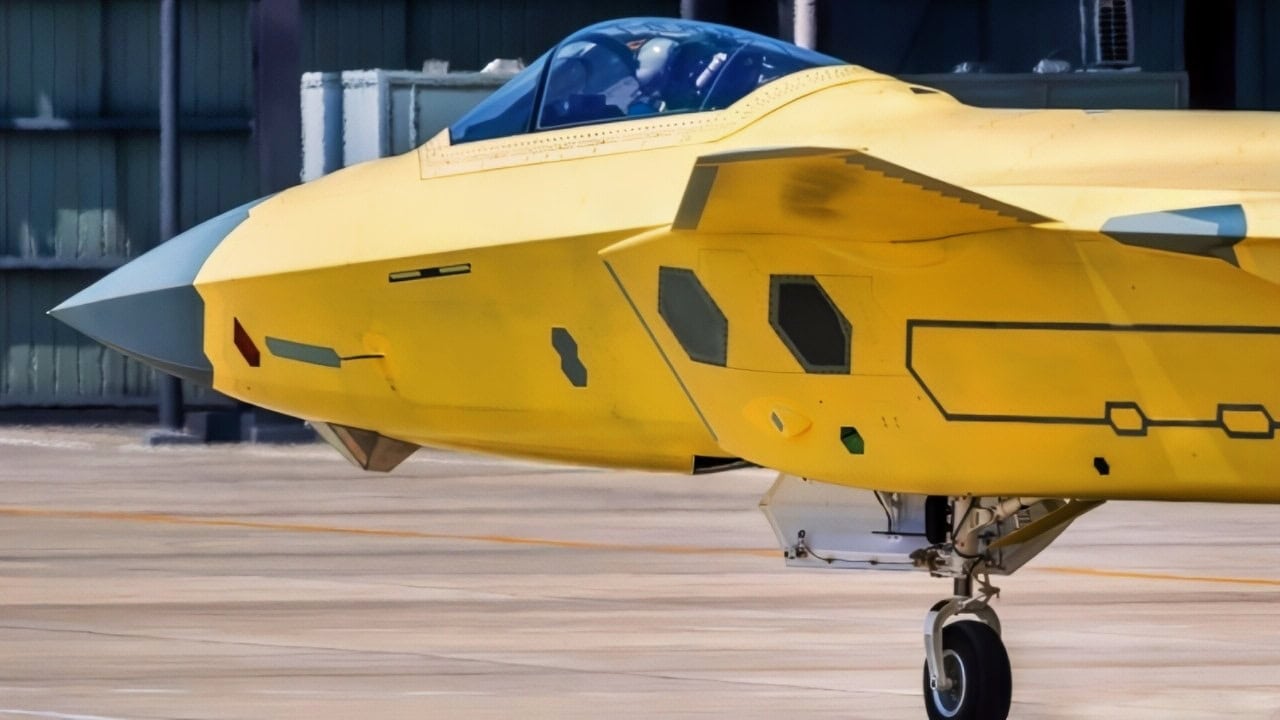
J-20 Fighter in Yellow Paint. Weibo Screenshot.
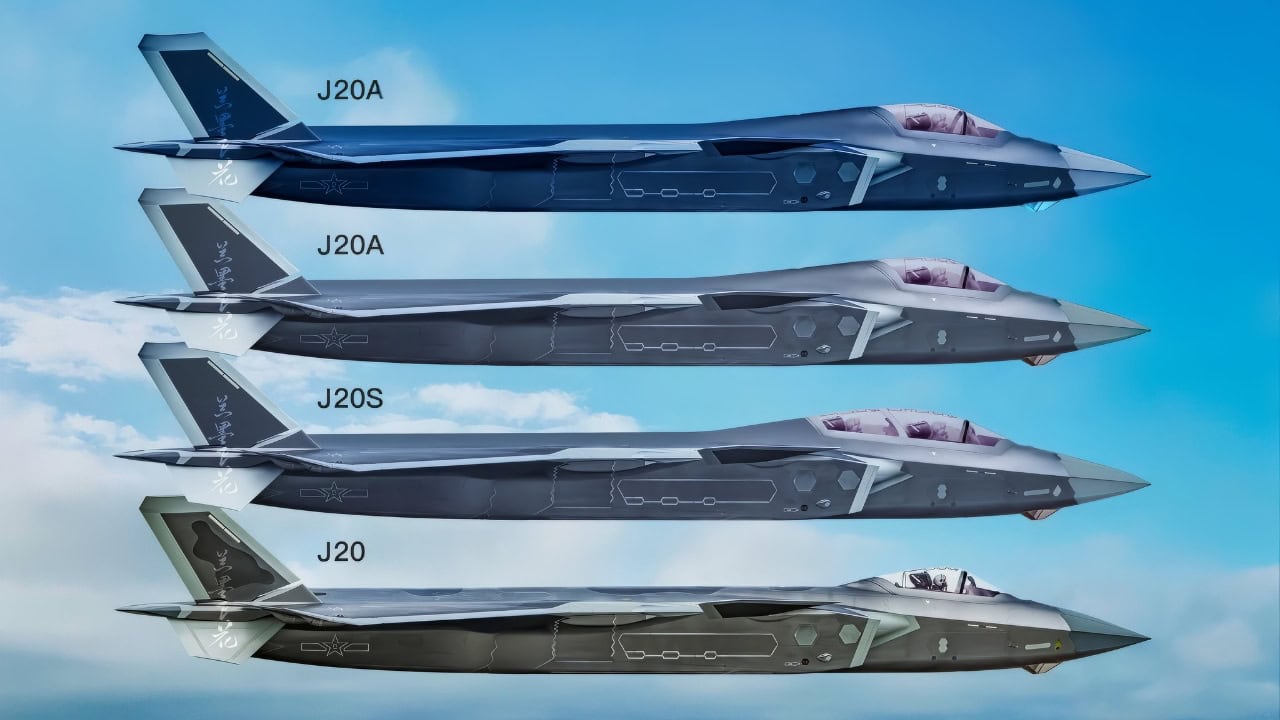
J-20 fighter diagram. Image Credit: Creative Commons.
J-20S. Image Credit: Creative Commons.
Though it is in the same generation of fighter as the F-35 and F-22 Raptor, both American-designed stealth fighters, the J-20 is larger and has led to significant speculation about its likely range and weapons capacity.
Consensus about the J-20’s exact capabilities varies somewhat. Still, a trend is clear — China is increasingly fielding more J-20s, and irrespective of the fighter’s exact qualities, quantity holds a quality of its own.
Show Me the Numbers
One report published by the Royal United Services Institute, the leading British security and defense think tank, explains that the PLAAF had about 50 J-20s in 2020, but that annual production of the J-20 increased to around 120 airframes by 2025, and that about 300 J-20s were in service by mid-2025.
According to Justin Bronk, the paper’s author, total J-20 production could number about 1,000 aircraft by 2030.
That would put China’s stealth fighter output at a level the United States does not match in fifth-generation combat jets — in 2025, Lockheed Martin delivered 191 F-35s. At the time, it was a record for the American defense prime.
Still, a portion of those numbers reflected Lockheed clearing a significant backlog of orders, and the firm’s normal projected annual production is just over 150 airframes.
The J-20’s anticipated production numbers are significant not just because PLAAF air wings will increase in number or size, but also because that fighter’s industrial base is growing more mature and more robust and building stealth fighters at an industrial, and not boutique, scale along with sufficient sensors, enablers, weapons, and other secondary systems that will make them useful in combat.
Thanks to the F-35’s much larger global presence in other countries’ militaries, the fighter still has a larger footprint.
But if you consider only new builds per year, the J-20 appears to operate at roughly the same order of magnitude as the United States’ F-35 production. It has potentially more room and flexibility to expand rapidly in the future.
The J-20’s Weapons
Like other stealth aircraft, the J-20 carries its weapons internally, shielding them from notice by enemy radar.
The aircraft’s main weapons bay can hold long-range air-to-air missiles like the PL-15.
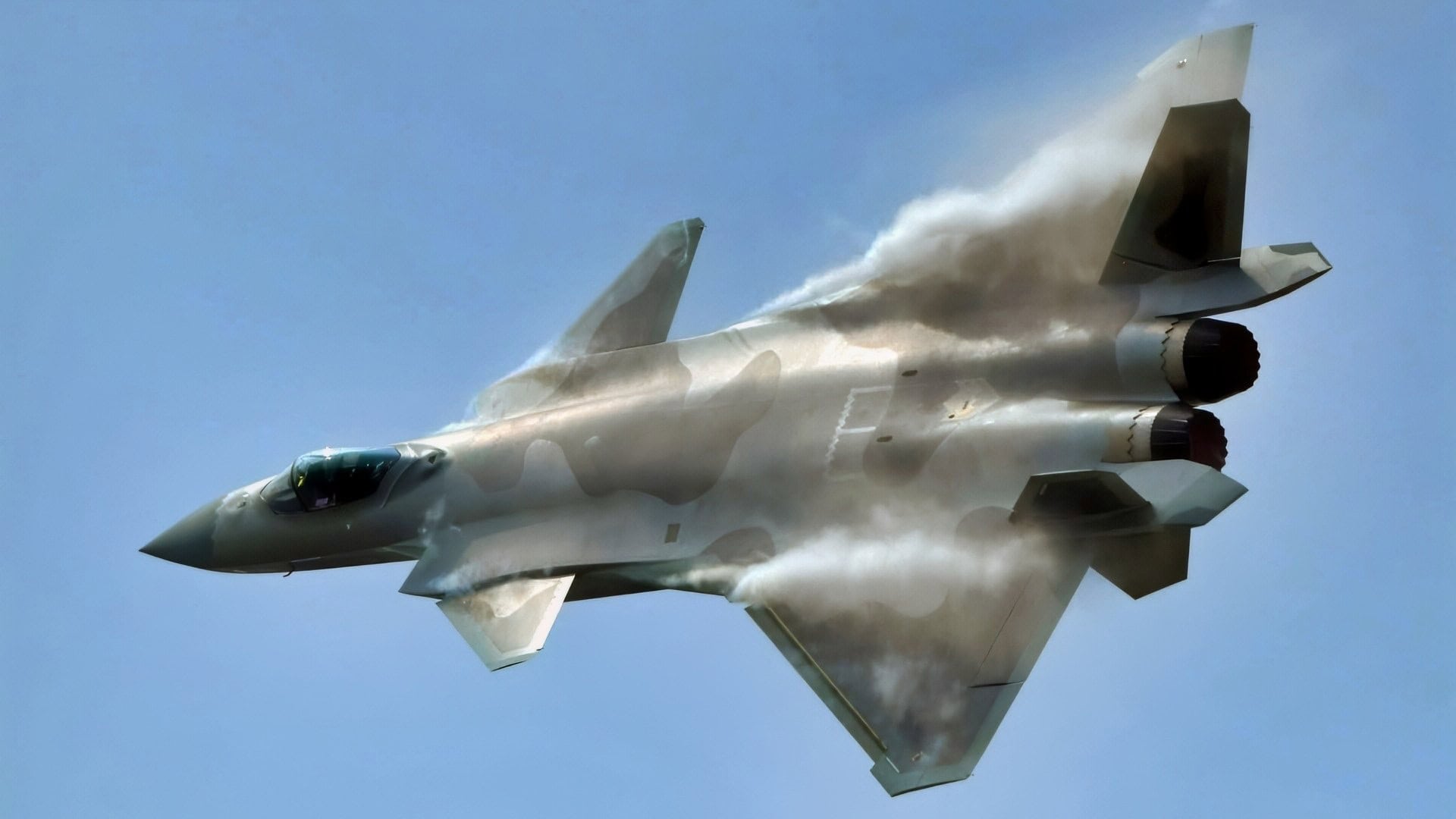
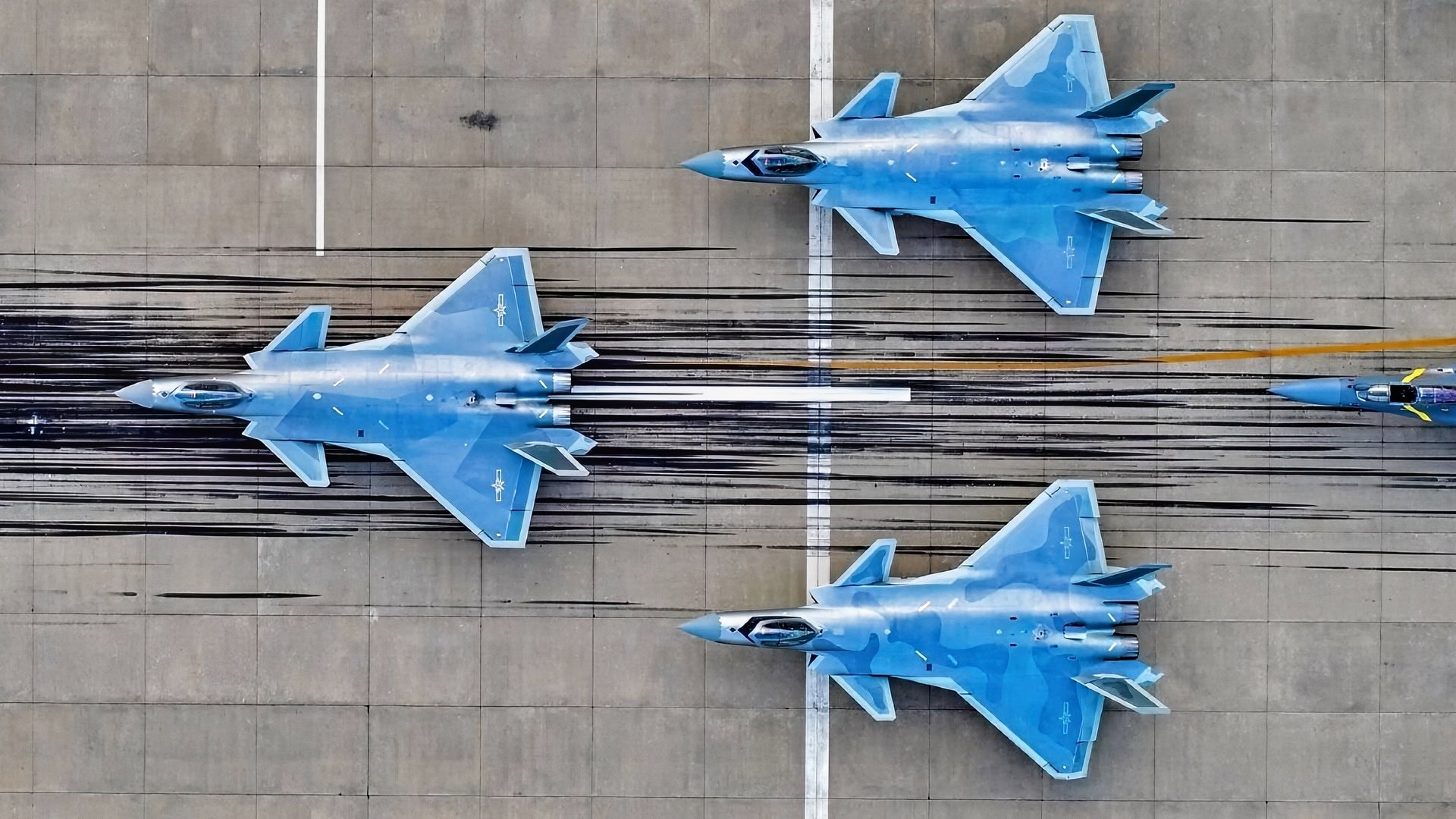
China J-20A Fighter. Image Credit: PLAAF.
Some assessments suggest that a compressed PL-16 missile is intended to allow more efficient internal loading, and the J-20’s smaller side weapon bays can carry PL-10 short-range missiles. RUSI’s Bronk also notes that the J-20 can carry the PL-17, a larger missile, externally, though at a high cost to the J-20’s stealth capability.
But some analysts have noted that the J-20’s design may favor beyond-visual-range engagements rather than aerobatic dogfights.
If that theory holds, then the J-20 is less an agile dogfighter than a kind of missile truck that attempts to engage and destroy adversary aircraft beyond their combat envelope.
The Threat Posed by the J-20’s Weapons
One of the core issues is both the range and the quality of missiles fielded by the People’s Liberation Army Air Force.
Bronk notes that the PL-15, PL-16, and PL-17 missiles all feature active radar seekers and, in the case of the PL-15, give China an absolute range advantage over other Western fighters armed with AIM-120C/D AMRAAM air-to-air weapons.
Bronk also observes that Chinese missiles likely have a time-to-target advantage due to a potentially higher peak speed.
This significant factor narrows the decision-making window for pilots and makes supporting aircraft, such as tankers and escorts, more vulnerable.
The United States: a Response
The United States is responding in several ways.
One of the more high-profile maneuvers in response to the threat posed by the PLAAF is the AIM-424 Malice, a long-range air-to-air missile unveiled by the United States Navy just last month.
Intended to arm the F/A-18, the F-35, and the upcoming F/A-XX, the missile’s anticipated range is in excess of 250 nautical miles.
In addition, there is the AIM-260 JATM, which will supplant the AIM-120, as well as the AIM-174B, a very long-range air-launched derivative of the SM-6 for external carriage on U.S. Navy fighters.
In combination, these new weapons aim to close the long-range gap with a mix of stealth-compatible missiles and extreme-range weapons.
The Broader Assessment
China is not just poised to manufacture more fighters; it also has the potential to build a denser air-combat system.
The J-20’s production run, its internal missile bays, and its pairing with long-range air-to-air weaponry like the PL-15 give the PLAAF a significant first-salvo capability.
And while the United States is adapting, the competition may not be about stealth alone, but about who can see first, shoot first, and keep firing from farther away than the adversary.
About the Author: Caleb Larson
Caleb Larson is an American multiformat journalist based in Berlin, Germany. His work covers the intersection of conflict and society, focusing on American foreign policy and European security. He has reported from Germany, Russia, and the United States. Most recently, he covered the war in Ukraine, reporting extensively on the war’s shifting battle lines from Donbas and writing on the war’s civilian and humanitarian toll. Previously, he worked as a Defense Reporter for POLITICO Europe. You can follow his latest work on X.