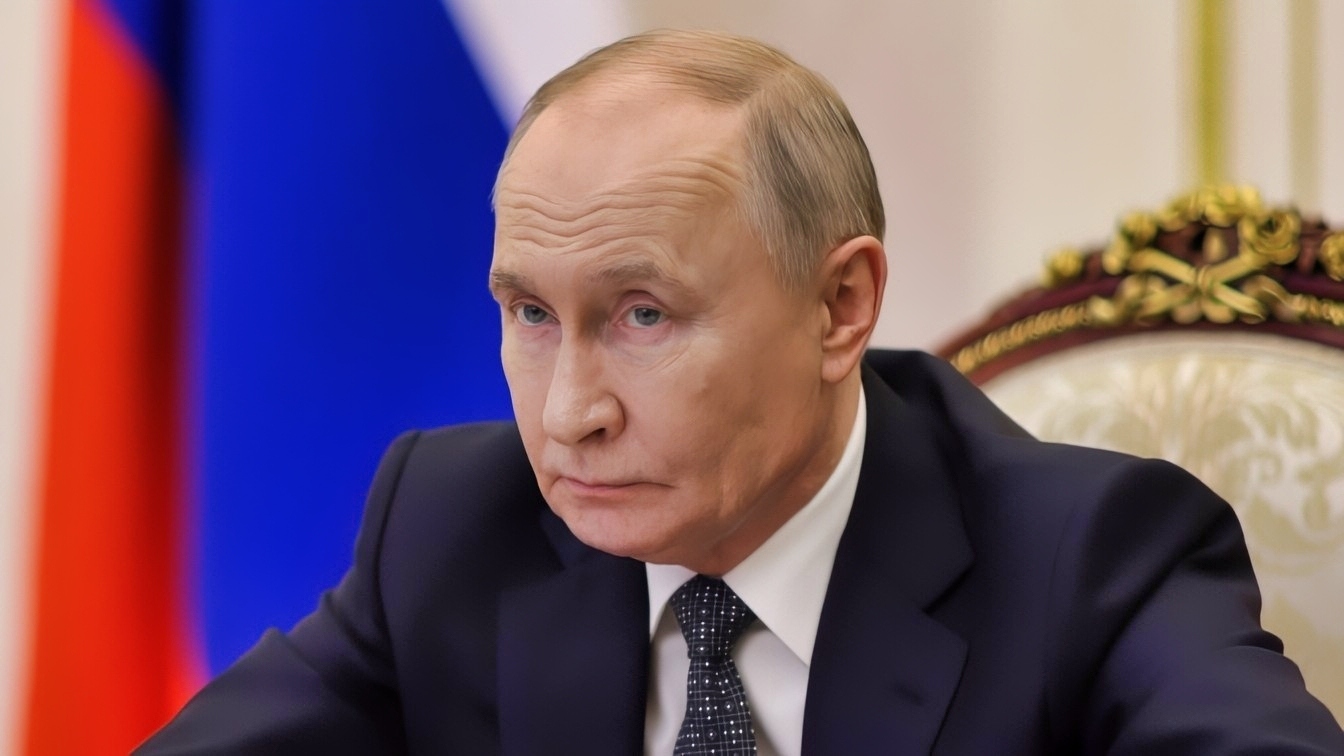
In the future, when people type the words “who was this century’s most prolific practitioner of rigged elections” into Google, the photo and bio at the top of the search results will be those of Russian President Vladimir Putin. He does not like to gamble and always eliminates any possible element of chance.
Prior to this past weekend’s parliamentary elections, Putin took the step of making sure the liberal democratic-minded and anti-war Yabloko party was removed from the voting list. Many of the party’s candidates stood for election anyway, but, predictably, the number of votes they received was negligible.
The parties that remained on the “approved” voting list of course supported Putin’s war in Ukraine. His United Russia party “officially” secured 355 out of the 450 seats in the Russian parliament’s lower house, the Duma.
As the long-time expert on Russia, Professor Emeritus of Russian History Robert Service at the University of Oxford wrote this week, it was “another triumph for the expert electoral manipulator.”
That manipulation extends into many aspects of Russian life, thanks to a tireless Kremlin propaganda machine that carefully curates and manipulates Putin’s image, and everyone is expected to join in. Even the Russian Orthodox Church gave its blessing to Putin’s war, calling it a “crusade against Western atheism and Ukrainian ‘Nazis’.”
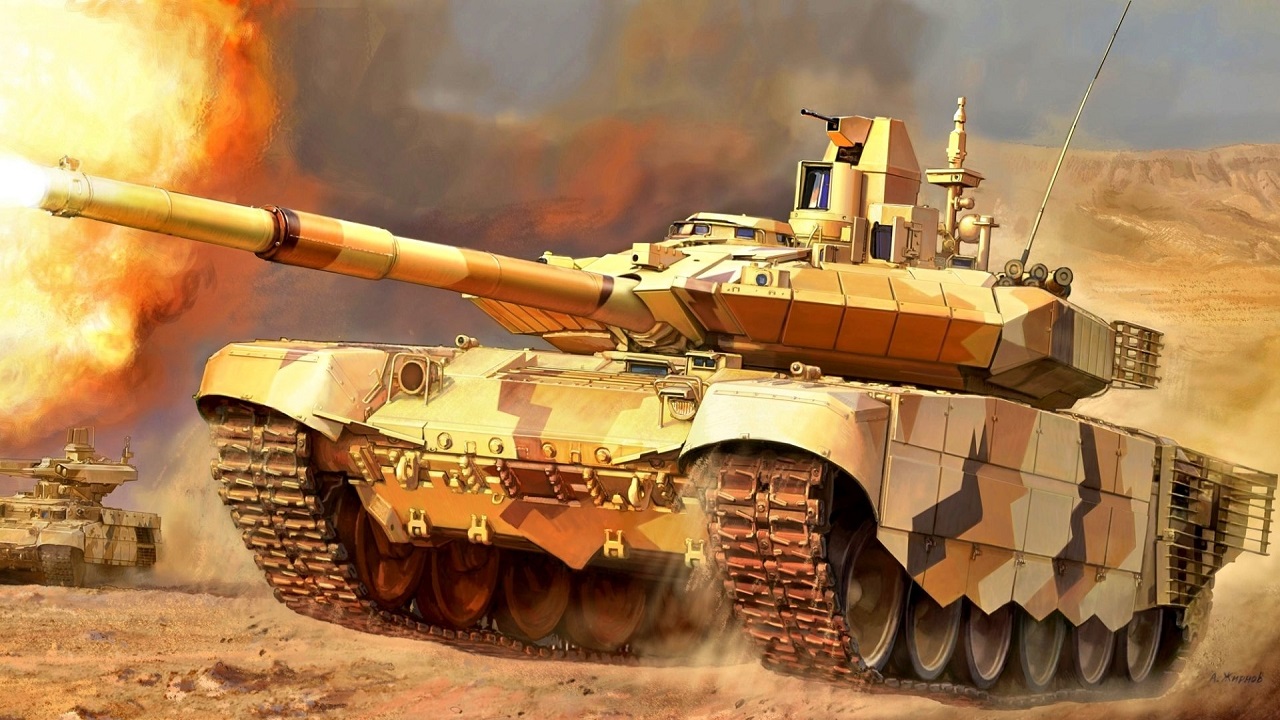
Russian T-90 Tank. Image Credit: Creative Commons.
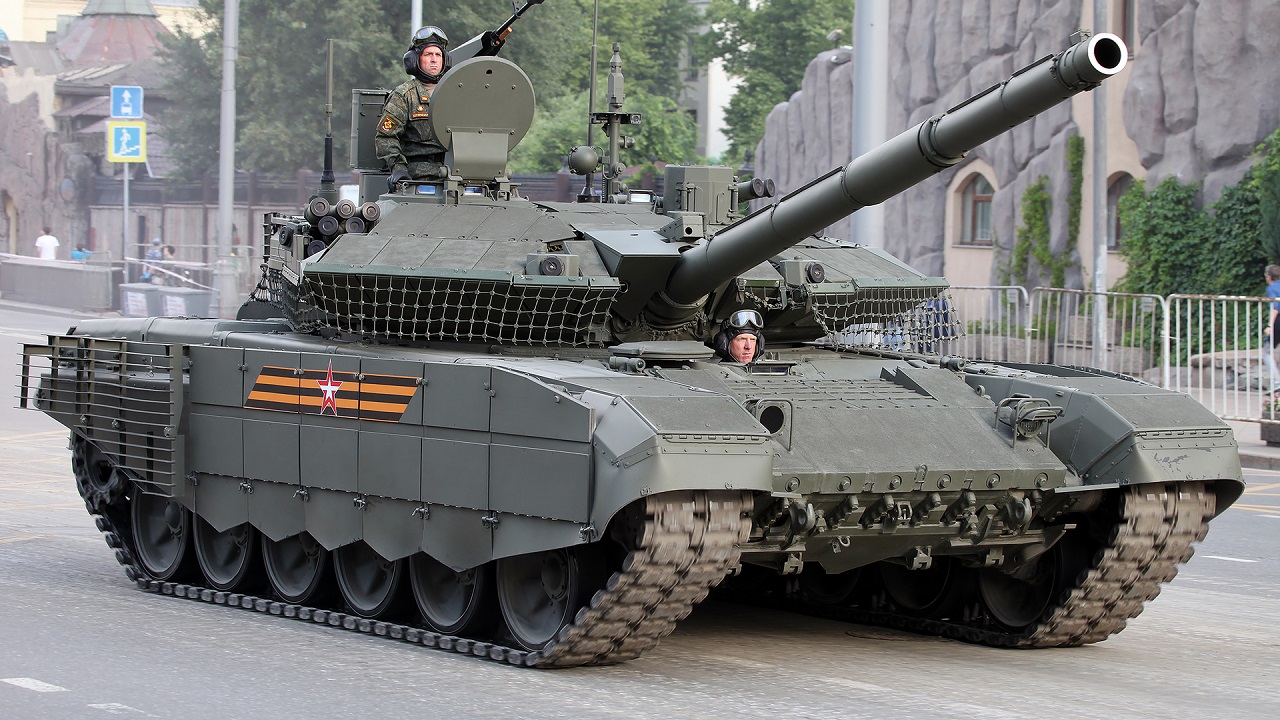
T-90M. Image Credit: Vitaly M. Kuzmin.
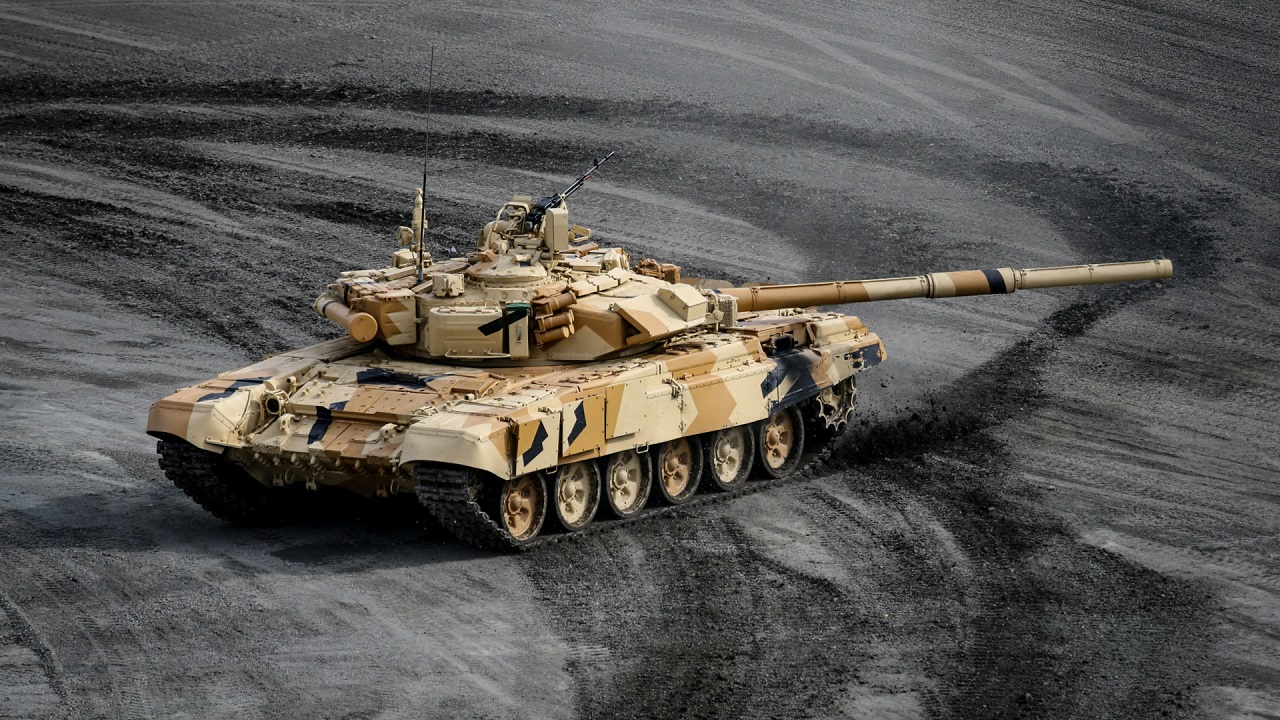
Russian T-90 Tank. Image Credit: Creative Commons.
The Veneer of Legitimacy
Unlike other regional leaders such as the Chechen warlord Ramzan Kadyrov or Belarusian President Aleksandr Lukashenko, Putin always insists that his elections do not appear blatantly stolen, but that there remains a veneer of legitimacy. It is wrong to believe that Putin cares little for the outcome of elections. He cares enough to make the results look real and not falsified.
Putin, writes Service, “presents himself as the father of the Russian nation and wishes to demonstrate in public that most Russians freely vote for him and his party.” Although few believe that these results accurately reflect his actual popularity, the most highly regarded polling agency in Russia, the Levada Center, still publishes survey findings showing his numbers above 60 percent.
Levada is an institution that is by no means friendly to Putin, but its numbers show just how effective the Kremlin’s spin machine is among the electorate. But it also does not follow that their findings are meaningless and cannot be disregarded.
Recent reports from the polling agency show an increasing percentage of the electorate who want serious peace talks to begin. War weariness is taking its toll inside of Russia.
Ukrainian drones and missiles are also causing no end of hardships as well.
Queues at petrol stations have become so long and the frustration so pervasive that there are now reports of people sabotaging fuel tanks on other vehicles and even arming themselves.
Risks of Mobilization
It is amid this increasing anger and violence in the population’s mood over the war’s effects on their lives that Putin is likely contemplating another round of military mobilization.
But there is significant reluctance among a part of the Russian population – especially those living in major cities – to see their sons dragged into active service on the Ukraine front, press-gang style.
Putin tried what he called a “partial mobilization” in September 2022, but it was a deeply unpopular move that produced rare protests across the country and led to almost 1,200 arrests.
Putin then retreated and instead called for well-paid volunteers. For men in impoverished rural areas like Buratiya, military pay was an offer too good to pass up.
But looking for volunteers to fill the ranks has now reached the limits of both available manpower and regional budgets. Ukraine’s intelligence estimates are that the Russian armed forces are experiencing 30,000 casualties a month and that they cannot replenish numbers with volunteers alone.
Russia’s armed forces high command needs more men to feed into its meat grinder. North Korea is supplying some of them, but these are not nearly enough to make the war either winnable or sustainable.
Therefore, Service and others predict it would be a major risk for Putin to order another mobilization. His carefully and rigorously maintained public image aside, he is not one to ever gamble, particularly at a time like this.
The Putin of today is a nervous ruler, and whether he is willing to take the risks that mobilization entails — even after these election results — remains to be seen.
About the Author: Reuben F. Johnson
Reuben F. Johnson has thirty-six years of experience analyzing and reporting on foreign weapons systems, defense technologies, and international arms export policy. Johnson is the Korea Fellow at the Casimir Pulaski Foundation. He is also a survivor of the Russian invasion of Ukraine in February 2022. He worked for years in the American defense industry as a foreign technology analyst and later as a consultant for the U.S. Department of Defense, the Departments of the Navy and Air Force, and the governments of the United Kingdom and Australia. In 2022-2023, he won two awards in a row for his defense reporting. He holds a bachelor’s degree from DePauw University and a master’s degree from Miami University in Ohio, specializing in Soviet and Russian studies. He lives in Warsaw.