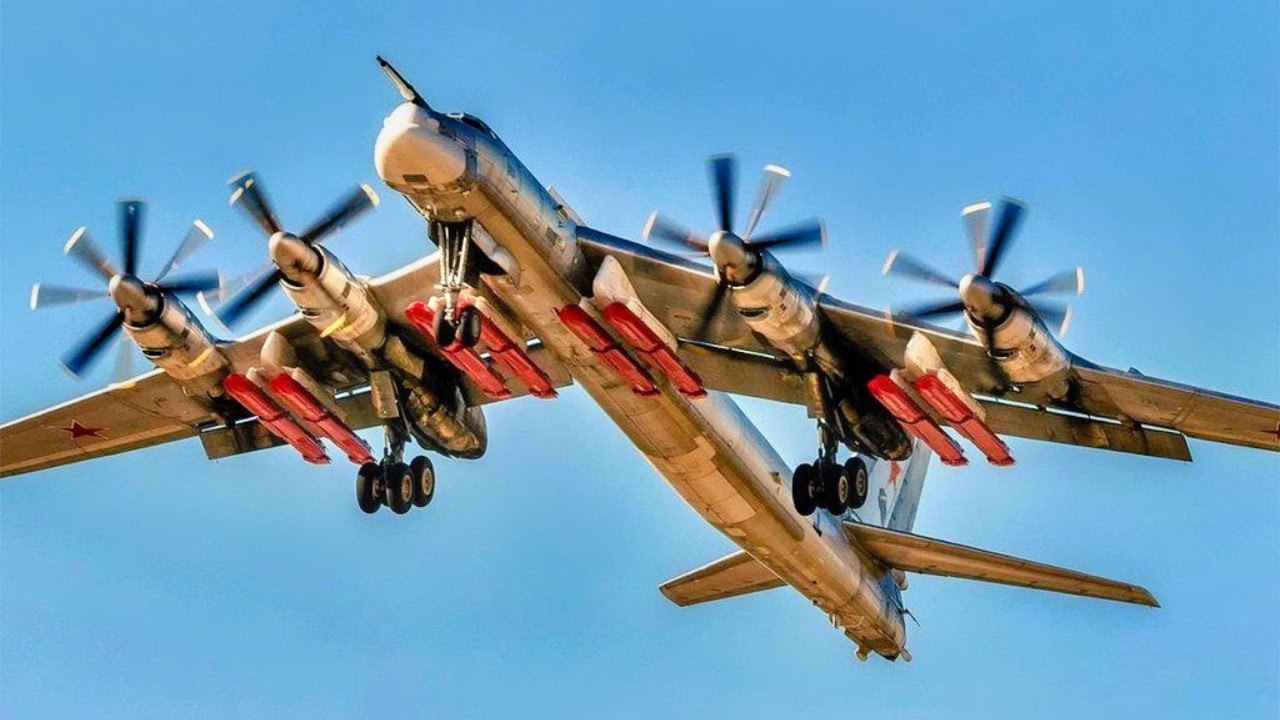
What are the odds of Russia expanding the war in Ukraine and engulfing other parts of Europe in war?
Would Russian President Vladimir Putin attempt an incursion—even a limited one—into part of NATO territory?
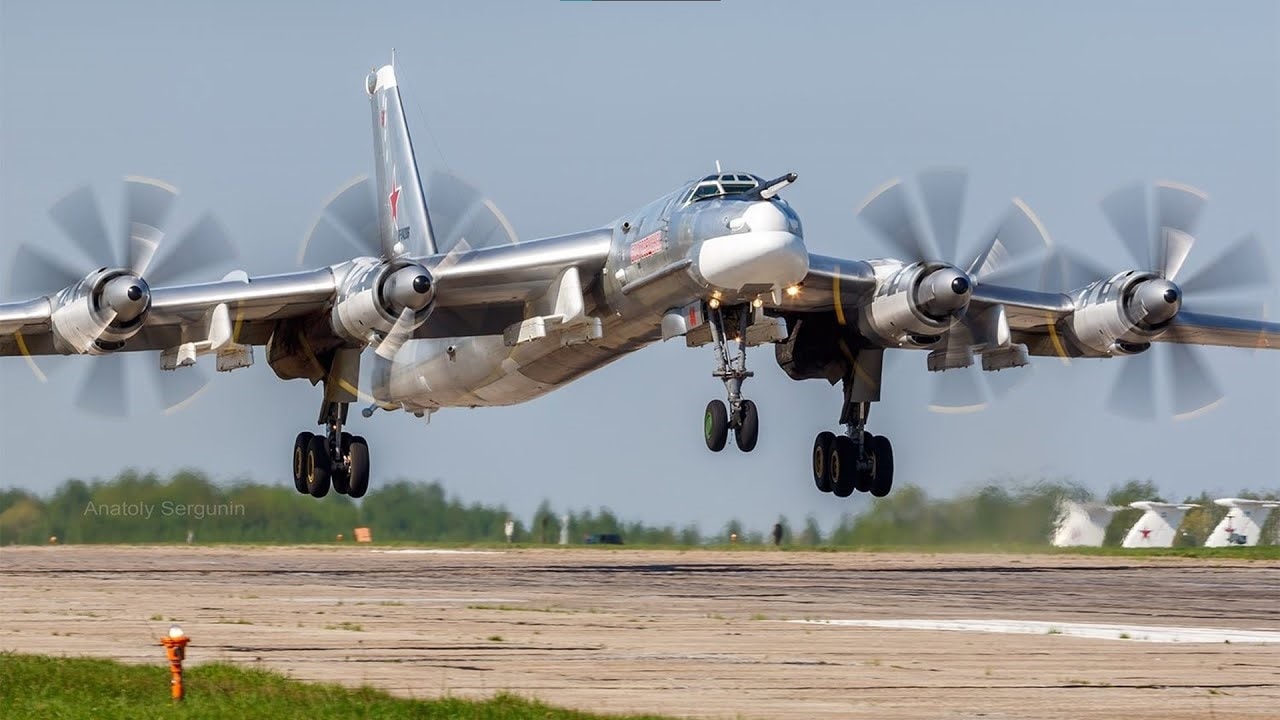
Tu-95 bomber. Image Credit: Creative Commons.
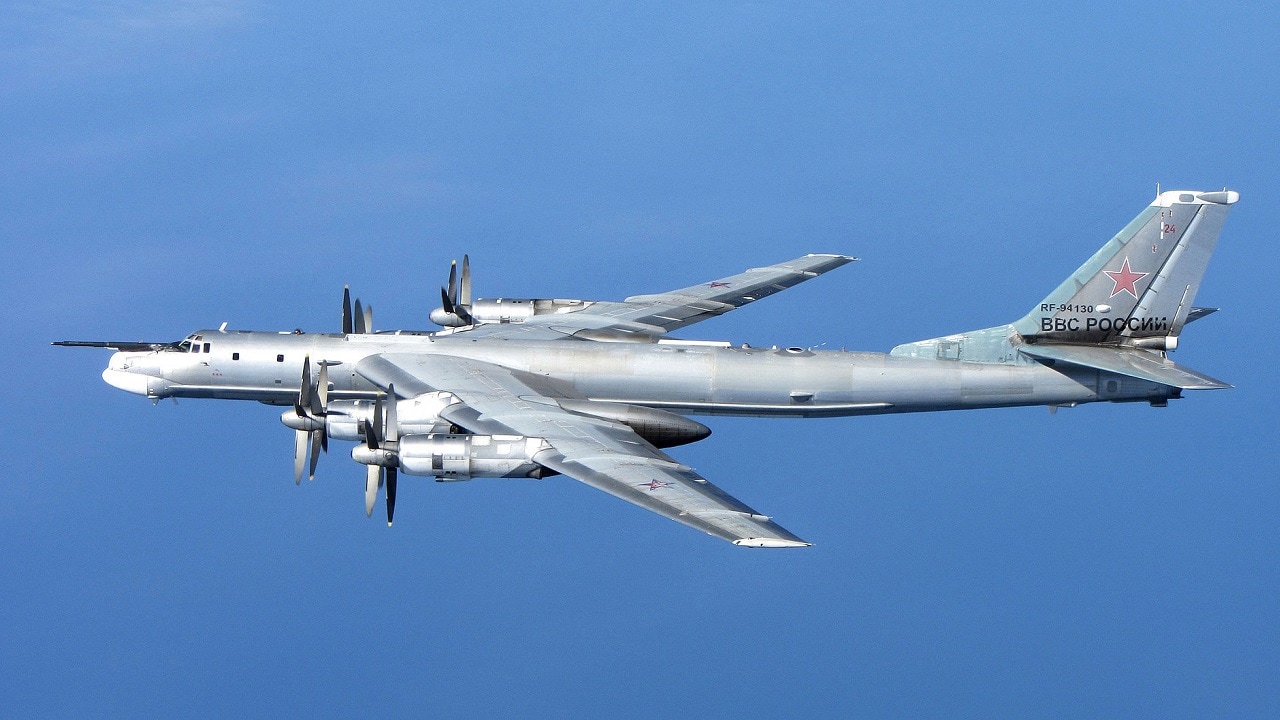
A Russian Tu-95 Bear ‘H’ photographed from a RAF Typhoon Quick Reaction Alert aircraft (QRA) with 6 Squadron from RAF Leuchars in Scotland. RAF Typhoon Quick Reaction Alert aircraft were launched from RAF Leuchars to determine the identity of unknown aircraft that approached the NATO Air Policing Area north of Scotland and could not be identified by other means. The aircraft were subsequently identified as Russian military reconnaissance (Bears). The Russian Bears aircraft remained in international airspace as they are perfectly entitled to do. Organization: RAF Object Name: LEU-OFFICIAL-20140423-0326-0015 Category: MOD Supplemental Categories: Equipment, Aircraft, Foreign Aircraft Keywords: QRA, Russia, Russian, Bear, Aircraft, Quick Reaction Alert, Intercept Country: Scotland
It’s a question that has been asked, nervously, from European capitals since nearly the beginning of Russia’s full-scale invasion of Ukraine in February 2022. But could it happen?
Among NATO members, defense spending reflects proximity to the Kremlin: countries closest to Russia tend to spend more on defense than those farther away.
As a percentage of GDP, the alliance’s largest defense spenders (excluding the United States) are those that share a border with Russia or have a history of Soviet-era occupation by Moscow.
It is therefore no surprise that the three Baltic states, Latvia, Lithuania, and Estonia, spend more on defense than most of the alliance’s other members. It also gives them unique insight into Russia’s designs near-abroad.
Rainer Saks, the former Secretary General of the Ministry of Foreign Affairs of Estonia, as well as the former head of Estonia’s Foreign Intelligence Service, is arguably one of the best-informed on the prospects of a Russian attack on NATO. He did not mince his words.
A Russian Attack on NATO
A Russian attack against NATO — even an attack that is more limited in scope than a full-scale invasion of the kind seen against Ukraine is “exaggerated speculation,” Saks said in an interview with Estonian media.
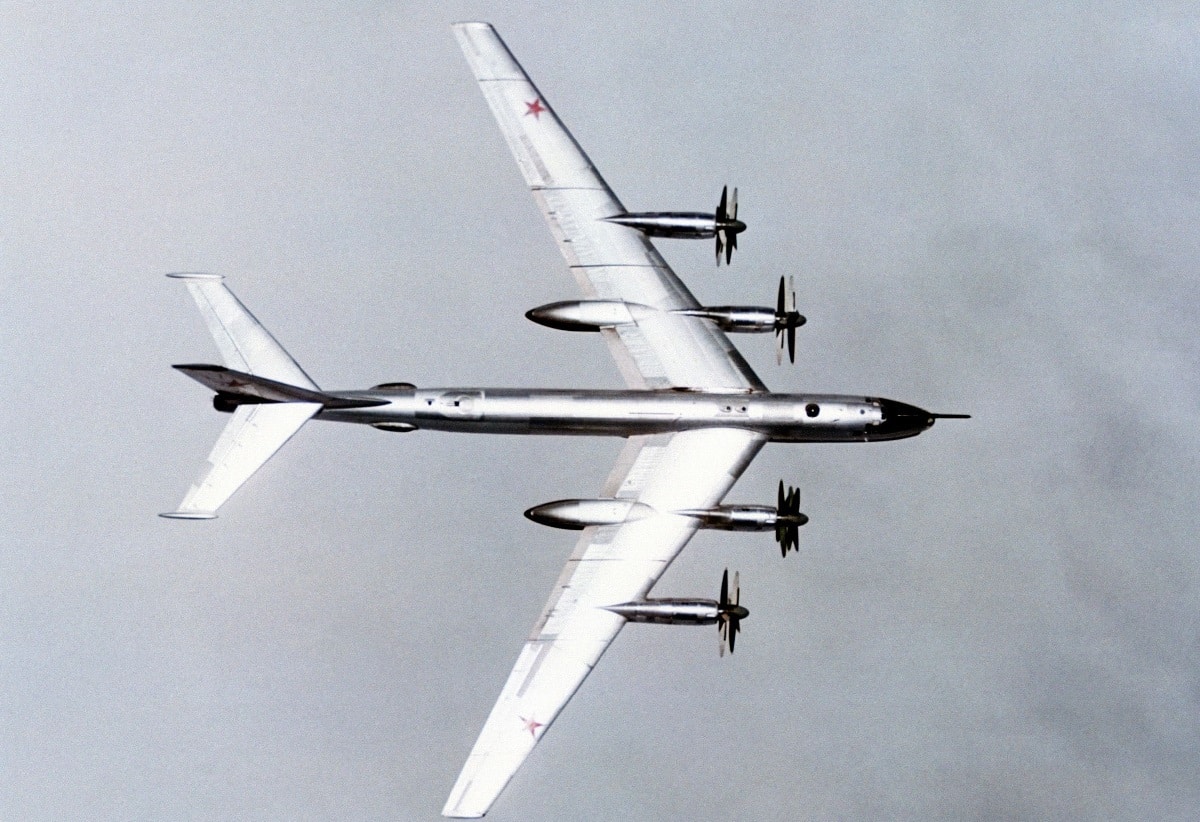
An air-to-air overhead view of a Soviet Tu-95 Bear aircraft. Date Shot: 15 May 1974 SOURCE: http://www.dodmedia.osd.mil/Assets/1985/Navy/DN-SC-85-06032.JPEG
“There are only two main scenarios under which Russia would begin testing NATO’s unity,” Mr. Saks said. “The first is that NATO has completely fallen apart internally. Although NATO’s unity has suffered in several respects recently, there is no full political unity, and there are sharp disagreements between different member states, it cannot be said that there is no unity at all. I would not yet go so far as to claim that NATO’s collective defense has therefore been called into question.”
The domestic political problems of member states and NATO’s internal weakening are, in fact, the most likely factors to lead to a military confrontation between Russia and a NATO member state.
At the moment, however, that process is clearly not advancing rapidly.
If Russia were to launch a conventional attack on NATO, the Kremlin would have to reorder its military.
Though the Kremlin’s war machine is eking out small, quiet gains in Ukraine, the costs are, in a word, staggering.
As the war there approaches the five-year mark, Russian forces have suffered more killed, wounded, and missing than they have in all the conflicts engaged in by the Soviet Union and Russia combined since the Second World War — more than a million men, and counting.
The losses it would suffer against the combined might of the NATO alliance would almost certainly be greater.
“The second theoretical possibility,” Mr. Saks said, “is that if Russia truly decides to attack NATO militarily, it would first have to reorganize its forces,” something that would be difficult to obscure and would take a significant amount of time.
“In a situation where a full-scale war is still being fought in Ukraine, launching a new war against an even stronger opponent would, in my view, require Russia to declare martial law and carry out full-scale mobilization. That is something without which I do not believe Russia would proceed with very aggressive plans.”
An Incursion of a More Limited Scale
While consensus holds that Russia is rearming and that an attack on NATO could be possible from a manpower and equipment standpoint, that likelihood is low.
What is more conceivable, however, is a limited attack, perhaps below the threshold of war. In an interview with Die Zeit, a leading German publication, Bruno Kahl, head of Germany’s Federal Intelligence Service, known by its acronym BND, concurred.
“Russia is preparing for war with the West. Military confrontation is becoming a plausible option for the Kremlin,” Mr. Kahl said. But he said it could take up to a decade for that option to be realized, and emphasized that an all-out assault on the NATO alliance — an alliance that has never, in its history, been attacked by a state actor — is unlikely.
Mr. Kahl said that the “little green men” tactics used by the Kremlin to annex Crimea, or a limited incursion of a remote, unpopulated place like Norway’s Arctic Svalbard island, would be a much more likely scenario, and less likely to trigger NATO’s Article 5 collective defense clause.
“There are currently no signs of concrete Russian intentions for war. However, if such views gain dominance within the Kremlin, the risk of military conflict will rise in the coming years,” Kahl said. But, he added, Russian President Vladimir Putin “will test the West’s red lines and escalate tensions further.”
About the Author: Caleb Larson
Caleb Larson is an American multiformat journalist based in Berlin, Germany. His work covers the intersection of conflict and society, focusing on American foreign policy and European security. He has reported from Germany, Russia, and the United States. Most recently, he covered the war in Ukraine, reporting extensively on the war’s shifting battle lines from Donbas and writing on the war’s civilian and humanitarian toll. Previously, he worked as a Defense Reporter for POLITICO Europe. You can follow his latest work on X.