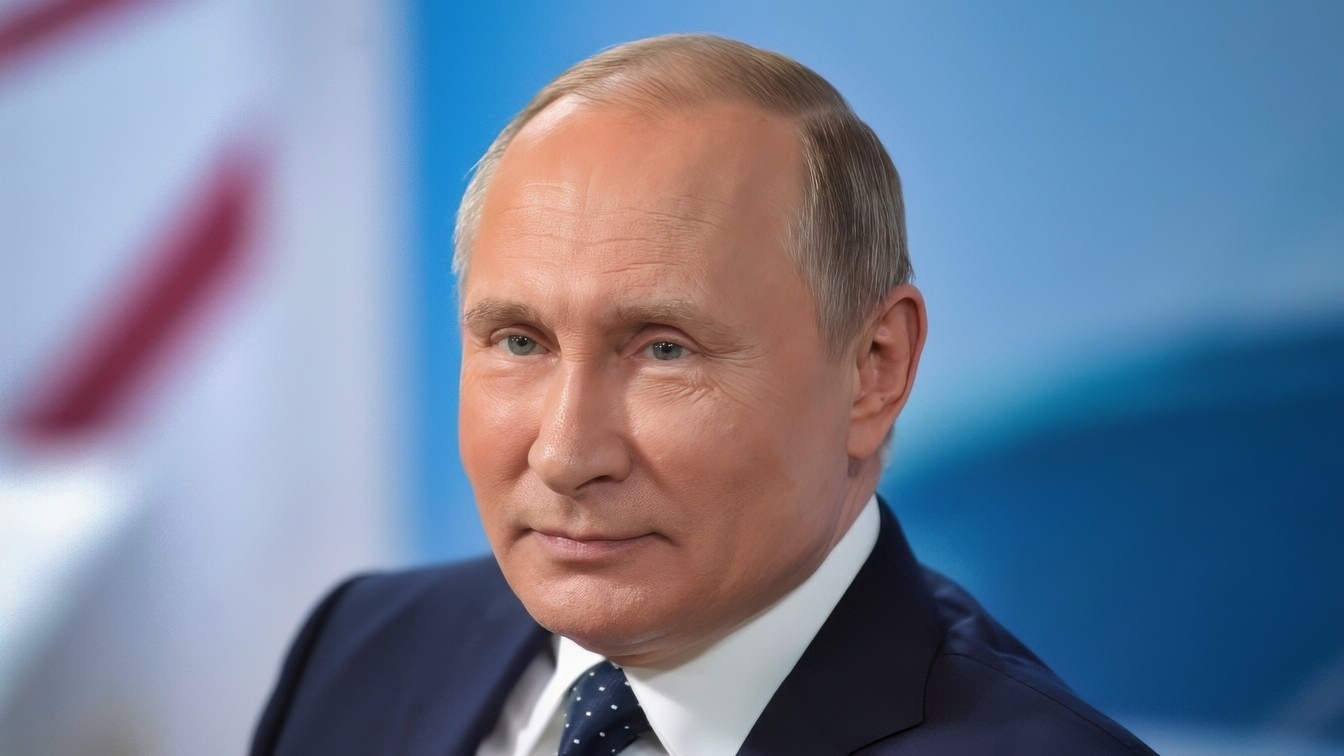
WARSAW, POLAND – Who Could Potentially Replace Russia’s Vladimir Putin? – According to a daily tally, we are 1670 days into Russian President Vladimir Putin’s ‘three-day’ Special Military Operation that began on 24 February 2022 when his armies stumbled into Ukraine.
What bears mentioning these years later is that there had been no shortage of specialists in Russia who were predicting – some even before the invasion began – that attempting to subjugate Ukraine by force would end up being Putin’s undoing.
Whether Putin’s regime will collapse tomorrow, next month, next year, or if a coup attempt could lead to his removal is a guessing game that no one knows the answers to.
But there are enough signs that his situation is not as secure as one might think.
One of the clearest of these indicators is a handicapping published this past weekend by the Washington Post that offers thumbnail sketches of the seven individuals who are currently in positions where they could succeed the former KGB Lt. Col. as Russia’s president.
They come from different corners of the current power centers in Moscow and have varied backgrounds.
All of them have different connections to Vladimir Putin and his loyal henchmen.
If one of these seven succeeds him, it will be because that person can mobilize his allies and the institutions under his control to position himself to take over.
But the fact that this article has even appeared has a dual significance.
One is that if Putin’s position were as secure as some analysts have stated in the recent past, smugly predicting that he could remain in power for another decade, no one would be talking about what would happen when he left the scene.
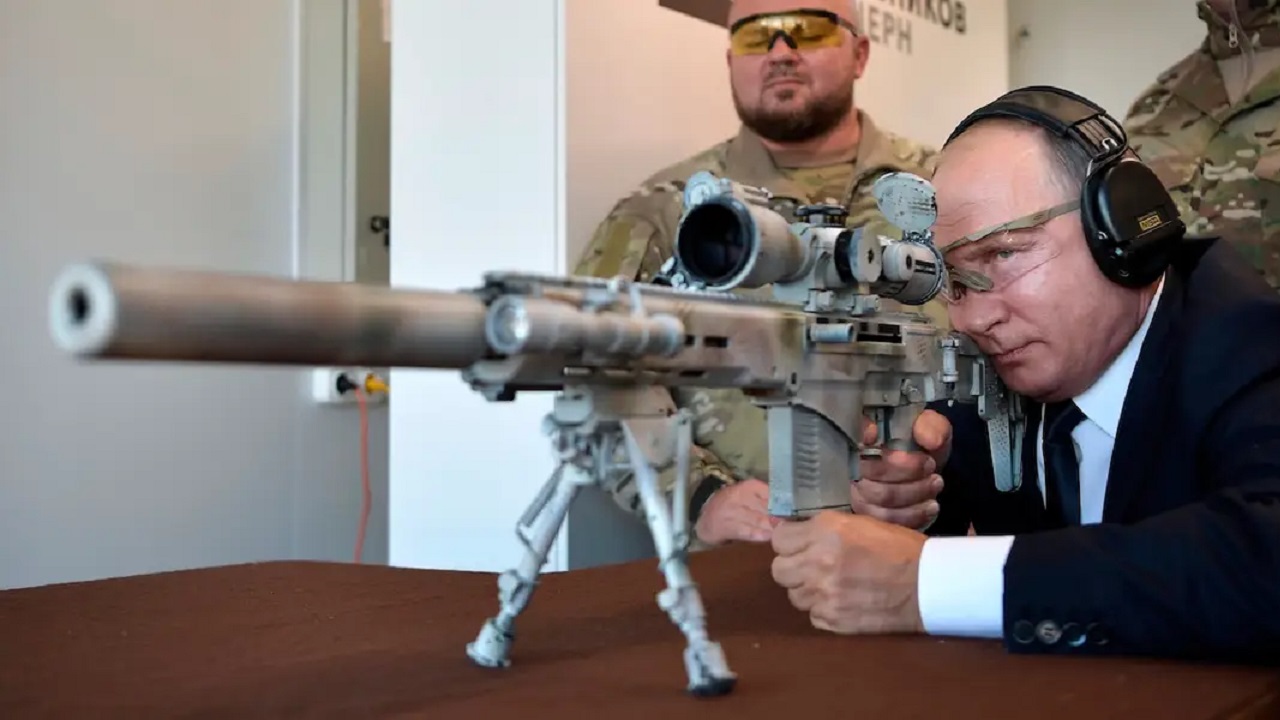
Russian President Putin. Image Credit: Russian Federation.
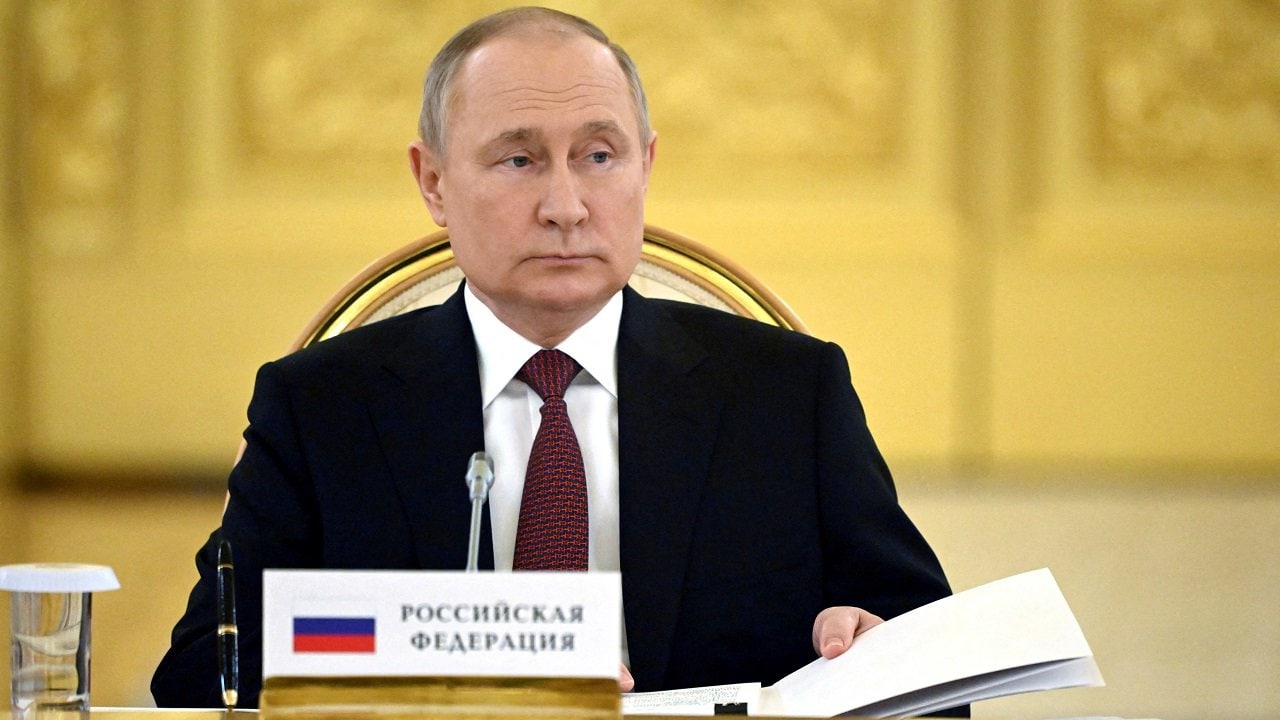
Russian President Vladimir Putin attends the Collective Security Treaty Organisation (CSTO) summit at the Kremlin in Moscow, Russia May 16, 2022. Sputnik/Sergei Guneev/Pool via REUTERS ATTENTION EDITORS – THIS IMAGE WAS PROVIDED BY A THIRD PARTY./File Photo
It would be too far in the future for anyone to be talking about — or to even contemplate.
Power Centers and Potential Fragmentation
The other is that the seven individuals called out as potentially able to sit in Putin’s place represent different constituencies and interests.
When it comes time for one of them to displace the Russian President, they will seek allies and supporters.
The one who stitches together the most effective coalition will end up running what is left of Russia when the war is over.
Will a post-Putin regime be based on an alliance of the security services that have been the constituency benefiting from his rule?
But, oddly enough, of the seven potential candidates in Post’s story, several of them have no connection to this constituency.
According to the Russian constitution, the individual who becomes acting president should the president resign, die, or be otherwise unable to carry out the duties of president is the Prime Minister. This is how PM Vladimir Putin became president in 2000, when Boris Yeltsin resigned on 31 December 1999.
In this case, this is Mikhail Mishustin, who was appointed PM in 2020.
But he carries no political weight, and despite being constitutionally the next in line, his chances of taking over from Putin for anything other than a temporary period seem slim.
Another potential heir comes indirectly from Putin’s background. Dmitry Patrushev is a
Deputy Prime Minister and the son of former FSB Director Nikolai Patrushev, one of Putin’s oldest and most trusted (if he does indeed trust anyone) former KGB associates.
Putin and the elder Patrushev have known one another since the 1970s. Insiders say that Nikolai lobbied long and hard for his son to become the PM in place Mishustin.
Instead, he was made Deputy PM, who is now known as the “FSB Prince.”
Dmitry Patrushev is described by Russian researchers as belonging to the group of sons of high-ranking veterans of Putin’s Russia. These veterans are those who managed to keep their position through decades of government reshufflings and who ascended to the top of the power structure.
But the younger Patrushev spent most of his career in the banking sector and studied at the FSB academy only at his father’s request. His father’s close relations with Putin and his security-service background put him in direct contact with the siloviki who sit at the right hand of the Russian president.
Another third possibility is Aleksei Dyumin, who is a former Putin bodyguard who joined the president’s security detail in 1999. He spent several years in the Federal Protective Service (FSO), the agency directly responsible for the President’s safety.
Dyumin moved up through the ranks, having at one point served as the deputy head of Russia’s military intelligence agency, the GRU. He also led Russia’s Special Operations Forces, where he was responsible for the illegal annexation of Crimea in 2014 and later served as a Deputy Defense Minister.
A New Generation
There is a long list of others who are equally well-positioned to ascend the throne. No small degree of influence will be played by the circumstances at the time and who is best positioned to protect Putin — if he is still alive — and his family when the time comes to replace the former KGB Lt. Col.
What almost all of them have in common is that they are from a younger generation of late-40s to mid-50s personalities. The old guard belongs to Putin’s generation, like the current FSB Director, Aleksandr Bortnikov, who has run the agency since 2008. He will be 75 in November, and despite being another one of Putin’s long-time associates, he is also judged to be of the “wrong generation.”
Analysts of the current Russian state suggest that Putin may be seeking to avoid the mistakes of the USSR’s final years. An aging Leonid Brezhnev dies and is replaced by Yuri Andropov, who himself is the Communist Party leader for only slightly more than a year.
His replacement, Konstantin Chernenko, served for about a year before dying and was succeeded by Mikhail Gorbachev – the last Soviet party leader. The conspiracy theories that Putin, the elder Patrushev, and others cling to charge that this period of infirm leaders gave the West the opportunity to weaken the USSR. By seeming to count on a younger generation, Putin appears determined to prevent history from repeating itself.
About the Author: Reuben F. Johnson
Reuben F. Johnson has thirty-six years of experience analyzing and reporting on foreign weapons systems, defense technologies, and international arms export policy. Johnson is the Korea Fellow at the Casimir Pulaski Foundation. He is also a survivor of the Russian invasion of Ukraine in February 2022. He worked for years in the American defense industry as a foreign technology analyst and later as a consultant for the U.S. Department of Defense, the Departments of the Navy and Air Force, and the governments of the United Kingdom and Australia. In 2022-2023, he won two awards in a row for his defense reporting. He holds a bachelor’s degree from DePauw University and a master’s degree from Miami University in Ohio, specializing in Soviet and Russian studies. He lives in Warsaw.