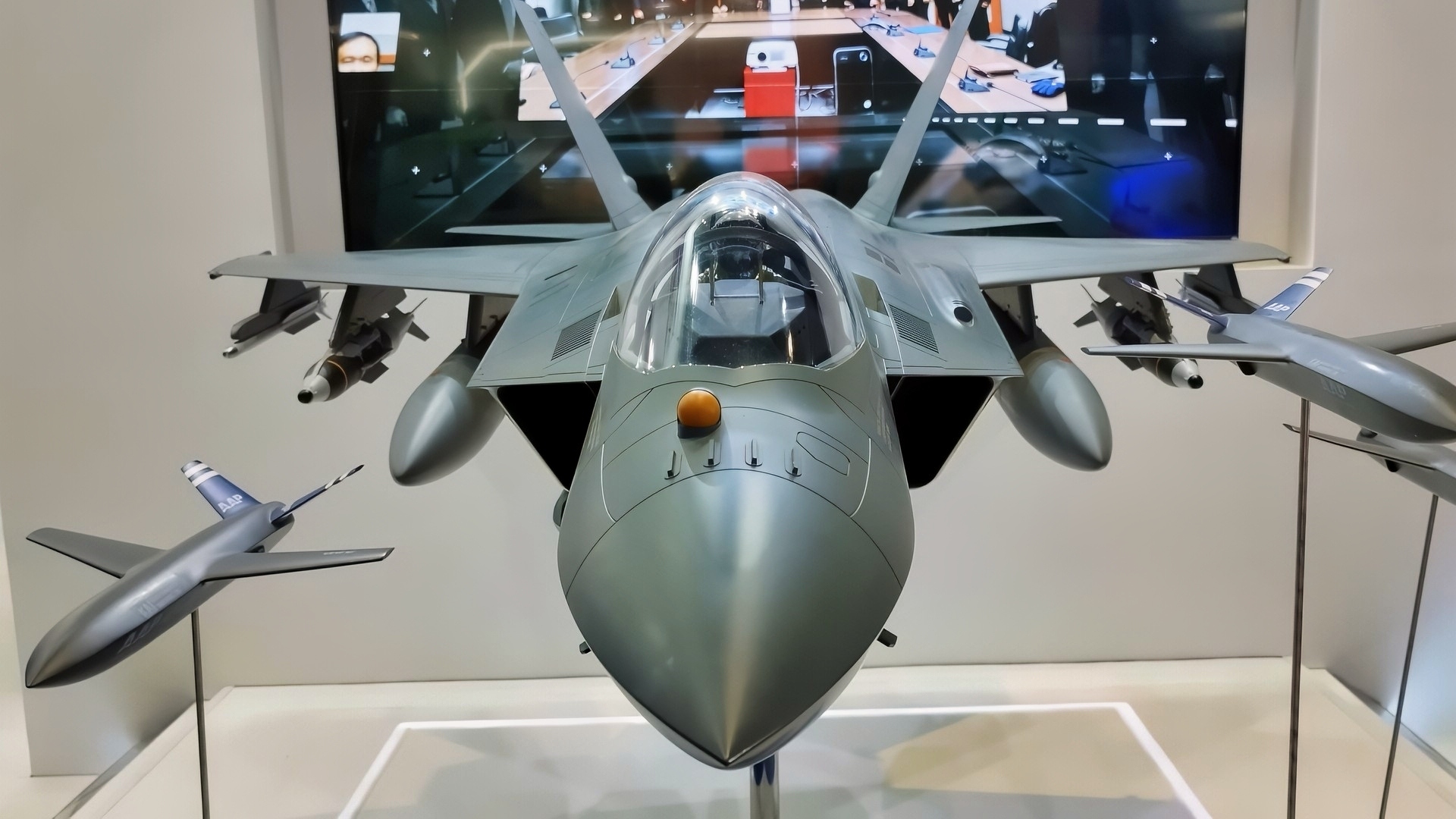
Korea’s First KF-21 Delivered to Air Force – After North Korea launched missiles last week, South Korea’s Air Force received the first KF-21 Boramae fighter.
The Boramae will likely bolster South Korea’s defense amid ongoing tensions with North Korea over its missile launches.
The first Boramae was produced by Korea Aerospace Industries and transported to the Air Force Base on September 22. An FA-50, a TA-50 and a T-50 escorted the new jet. Maj. Han, one of the first Boramae-qualified pilots, flew the Boramae to the new base. After landing, Defense Acquisition Program Administration (DAPA) and Air Force officials signed papers accepting the jet.
“Up until yesterday was the time for the Boramae project’s policymakers and developers,” said Air Force Chief of Staff Gen. Son Sug-rag. “From today onward, it is the Air Force’s time.” Air Force commanders have ordered the receiving crews to treat the aircraft with “immense pride and responsibility,” calling it the future “ultimate shield defending the Republic of Korea.”
South Korea first proposed developing its own fighter in 2001, but it would be another 14 years before the program could begin due to cost and practicality concerns. The first prototype was unveiled in April 2021 and made its first flight in 2022. It was followed by a grueling flight test campaign that included six prototypes, 1,600 flight tests, 13,000 test points spanning aerial refueling to missile launches, and no accidents, according to the DAPA. In addition, the Block I was certified as combat-ready by the agency in May of this year. Program director Noh Jiman said it was a “symbolic result [which] demonstrates the Republic of Korea’s fully autonomous capacity to develop fighter jets.”
Does this imply that these shiny, new aircraft will be on combat alert anytime soon? Probably not. It was transferred to the 156th Fighter Squadron, which previously operated the F-4E Phantom II before being deactivated in 2012 and reactivated on June 1 to operate the KF-21. The pilots assigned to the unit are qualified instructors, and the maintainers are being trained for the jet. Conversion and check flights must be done in the coming months, however. The Korean Air Force aims to achieve combat capabilities by the end of 2027.
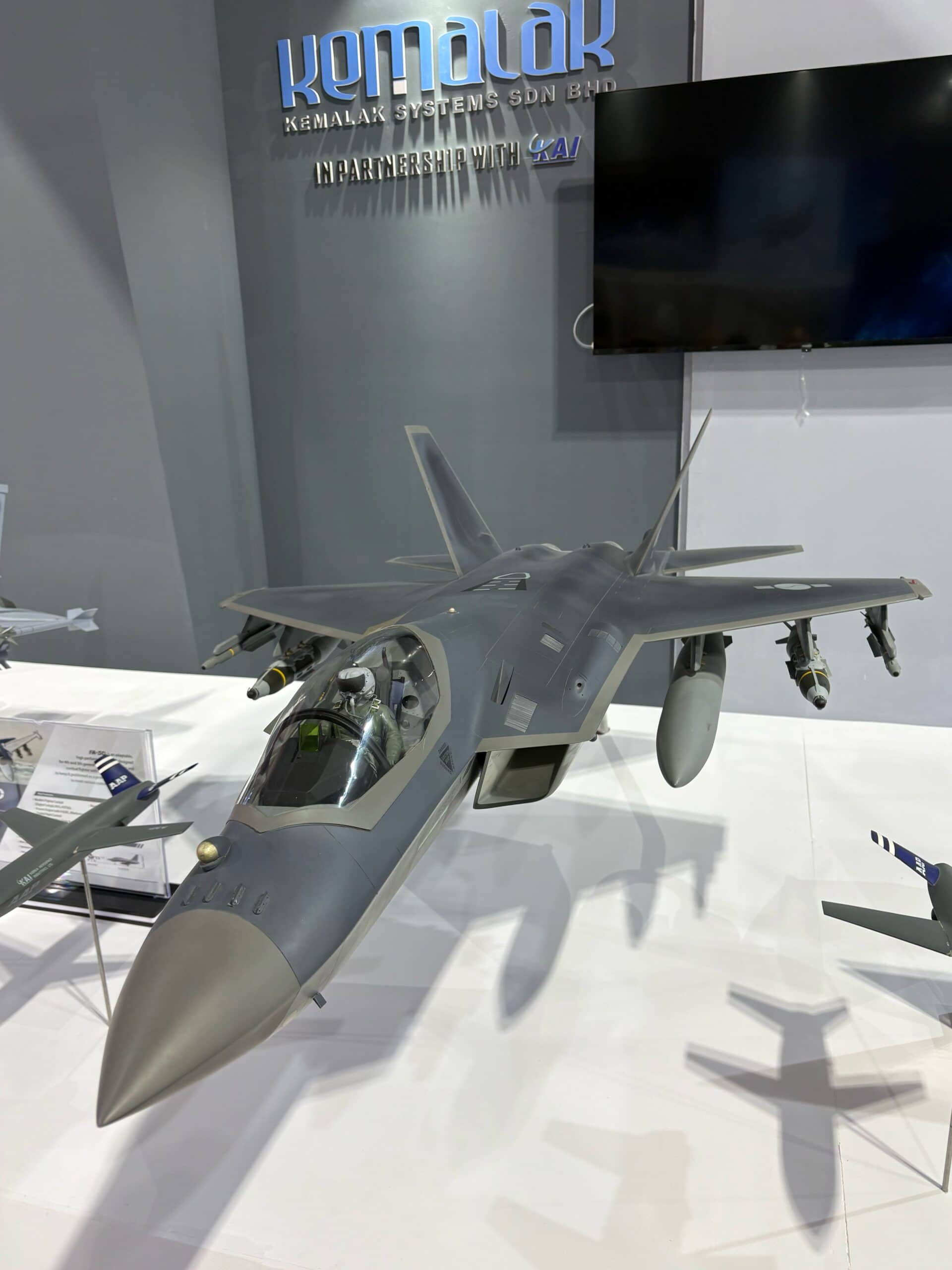
KF-21 Fighter Model. 19FortyFive Original Image.
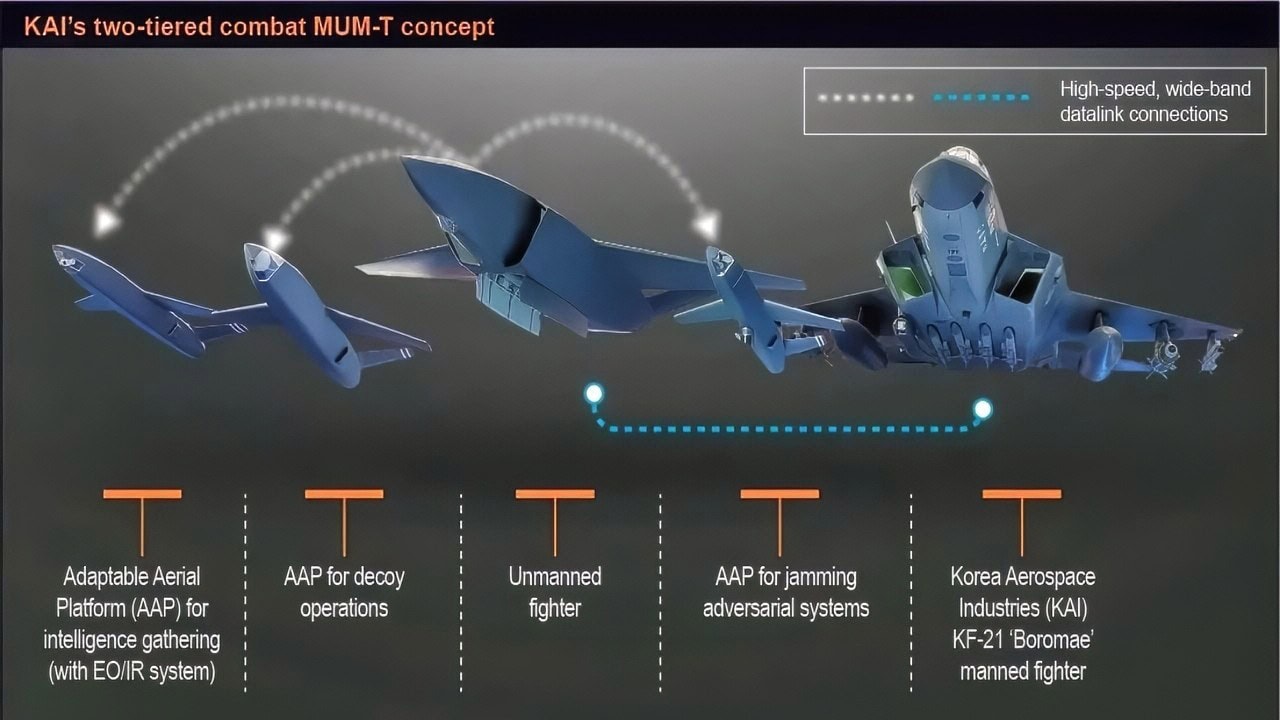
KF-21 Graphic. Image Credit: Creative Commons.
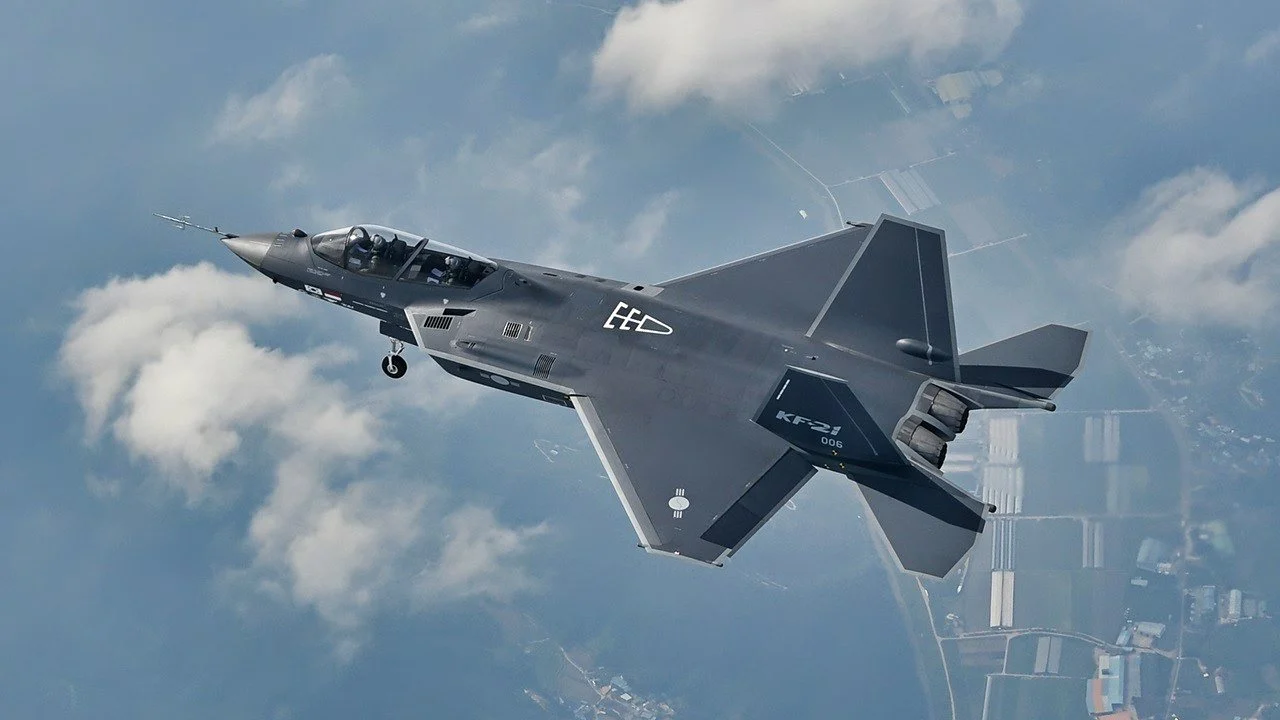
KF-21 Boramae. Image Credit: Creative Commons.
The Block I variant, which is optimized for air-to-air combat, is equipped with two GE F414 engines. The same family powers the U.S. F/A-18E/F Super Hornet and Sweden’s Saab Gripen E, each of which develops 22,000 pounds of thrust. GE has a contract to deliver 240 engines, plus spares, through 2032. The engines will be assembled in Korea, where Hanwha Aerospace Company, the engine maker, turns the parts into finished engines. Youngje Kim, General Manager of Asia Pacific Defense & Systems for GE Aerospace, described the F414 engine as a critical enabler for the jet’s performance.
In addition to the European Meteor missiles, South Korea’s jet could be a selling point for KAI, as cooperation with MBDA could promote the exploration of integrating SPEAR, ASRAAM, and Brimstone missiles for the Korean Air Force.
The radar is also indigenous to Korea as part of its technology development and localization efforts for the project, following the U.S. decision to withhold four key technologies. According to the Korea JoongAng Daily, the first production aircraft will aim to boast a 65 percent localization rate.
KAI has a contract to deliver 40 Block I fighters to South Korea through 2028 and 80 Block II variants by 2032, for a total of 120 jets for the Korean Air Force, in addition to potential sales.
Export deals for the KF-21 are more complicated since Indonesia, the first interested nation, has suspended the partnership. According to Defense News, Jakarta was the first to sign a development agreement to produce the jet domestically.
However, the deal fell through because the Indonesian government was unable to make the payments, and the terms were revised. While Indonesia appears to have scrapped the KF-21 project, Ju Hyung Kim, president of the Seoul-based Security Management Institute, believes the decision was primarily motivated by financial and commercial considerations rather than strategic ones.
“Indonesia may still want the aircraft, but not necessarily the burdens of local co-production. From Seoul’s perspective, this is probably easier to manage and potentially more attractive for the KF-21’s broader export campaign,” he outlined.
About the Author: Georgia Gilholy
Georgia Gilholy is a journalist based in the United Kingdom who has been published in Newsweek, The Times of Israel, and the Spectator. Gilholy writes about international politics, culture, and education.