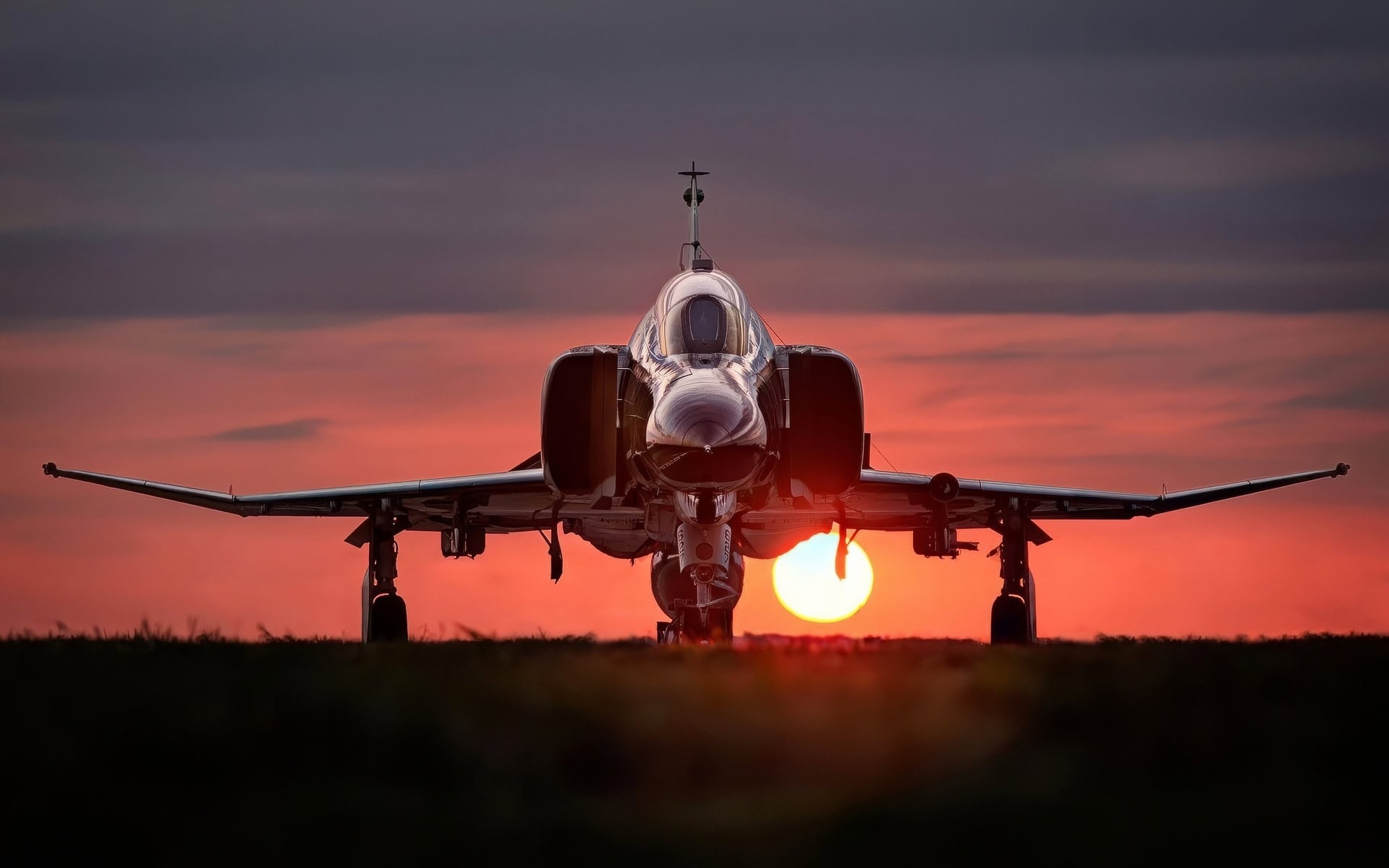
The F-4 “Super Phantom” was a late Cold War-era proposal — in fact, a pair of parallel efforts — to squeeze more performance from an aircraft that had already been in service for two decades.
The separate efforts saw American defense primes and Israel Aircraft Industries plan upgrades that, had they been realized, would have resulted in significant gains in range and thrust, as well as an updated avionics suite. But neither effort would, ultimately, enter production.
The Origin of the F-4 Phantom
The F-4 Phantom was born in the late 1950s in response to the strategic environment of the early Cold War, one dominated by nuclear deterrence and the firm belief that future air combat would be fought and decided largely at long range.
Designed as a fleet-defense interceptor and multi-role strike aircraft, the F-4 prioritized raw speed, payload capacity, and the ability to deliver nuclear weapons, eschewing the dogfighting capability that earlier jet fighters had prioritized.
Compared to its contemporaries, such as the MiG-21 or the early Dassault Mirage III, the Phantom featured a more powerful radar and greater ordnance capacity.
The Phantom was, however, not a problem-free fighter. Some of its shortcomings included poor handling at low speeds and a lack of an internal gun for the kind of close-up dogfights it never anticipated. Poor air-to-air missile reliability also hurt the F-4’s early combat performance.
Later fixes would partially address its low-speed handling, and the integration of the Vulcan cannon into later F-4 variants helped to solidify the Phantom’s reputation as a highly capable fighter.
By the 1970s, however, a new generation of fighters — the Teen Series, which included the F-15, F-16, and F/A-18 — had eclipsed the F-4 Phantom.
Those newer fighters combined more efficient turbofan engines, fly-by-wire controls, more powerful radars, and an increasingly digital sensor suite to surpass the Phantom’s performance.
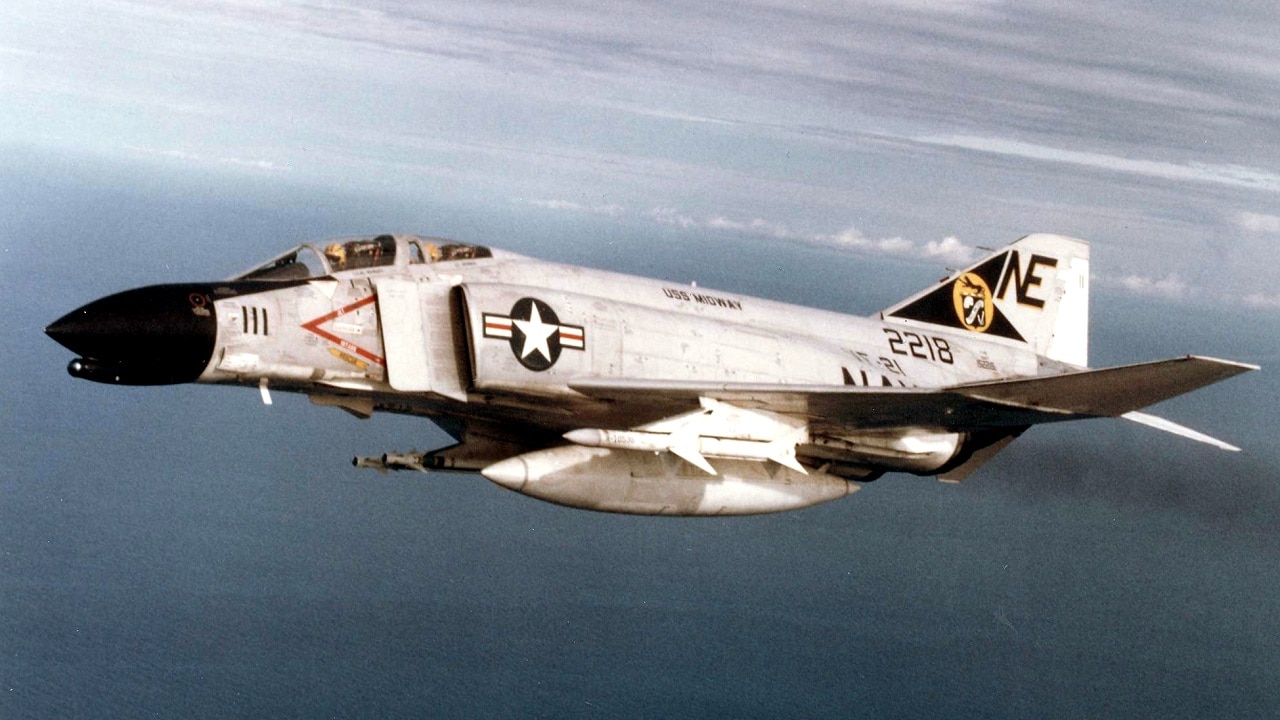
Vietnam War F-4 Phantom. Image Credit: Creative Commons.
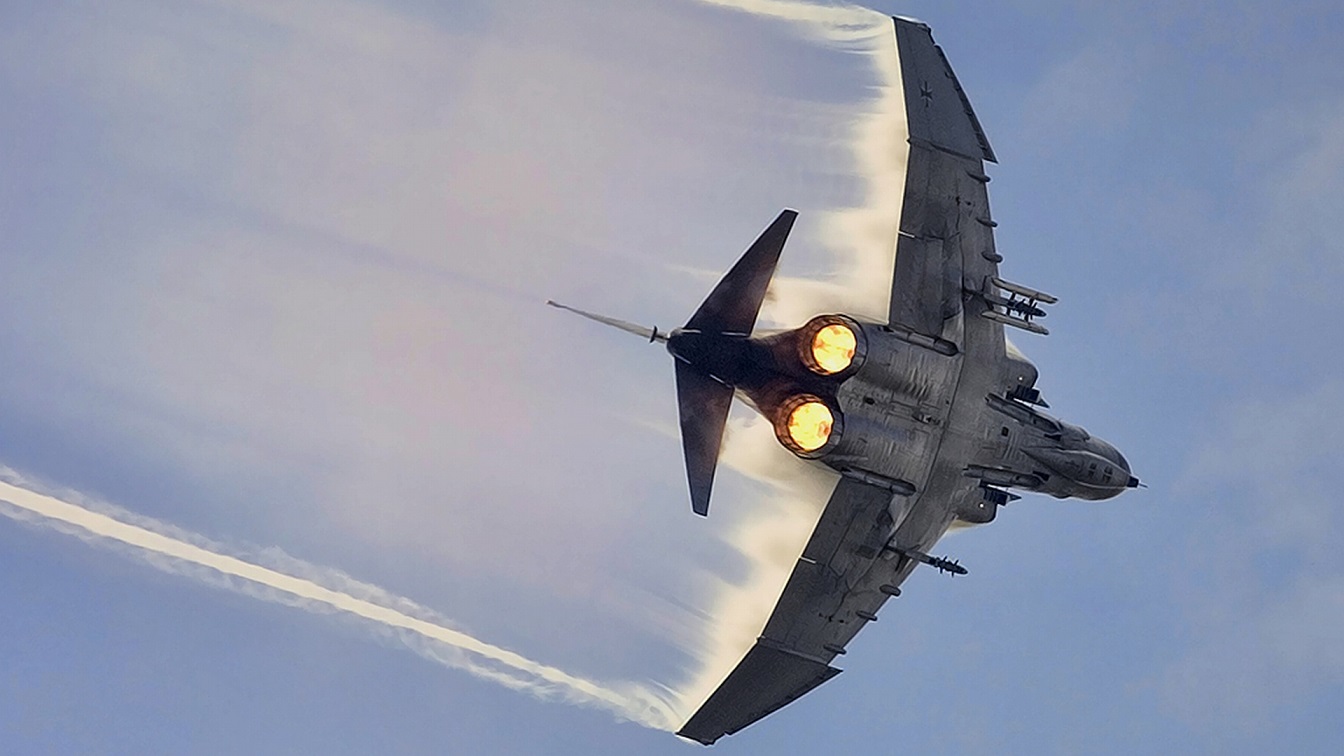
F-4 Phantom II. Image Credit: Creative Commons.
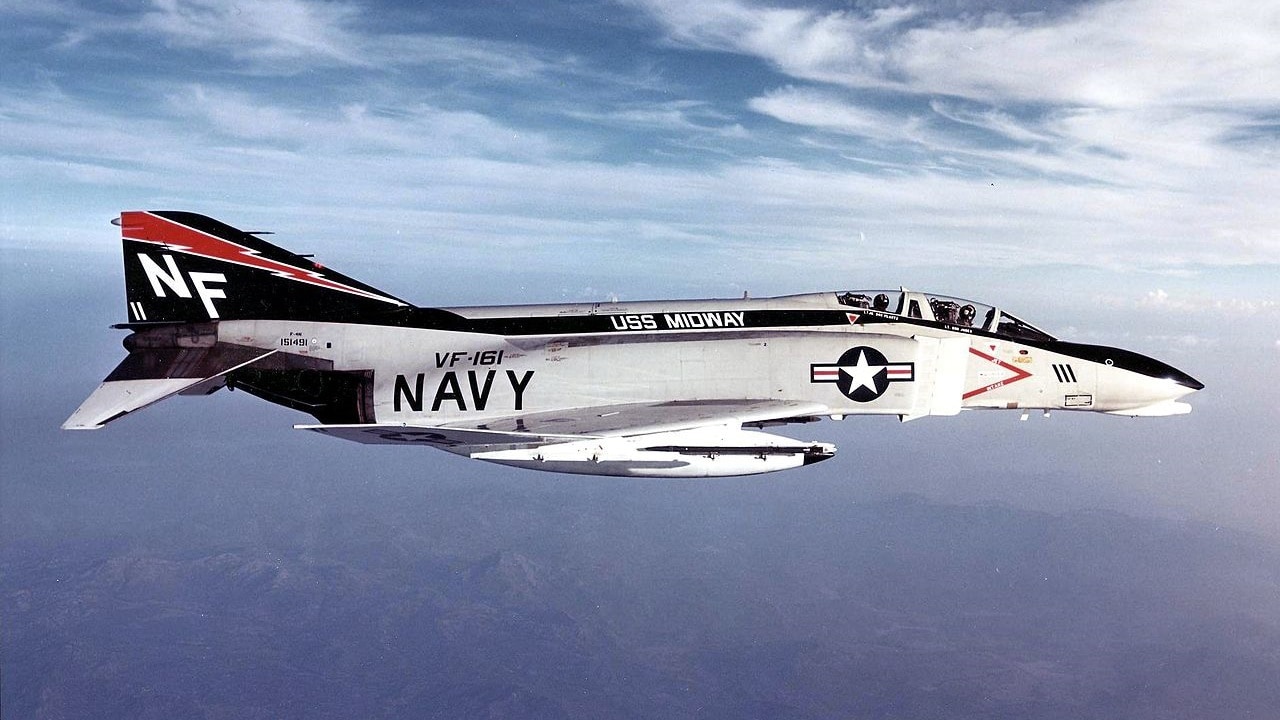
A U.S. Navy McDonnell F-4N Phantom II (BuNo 151491) of Fighter Squadron VF-161 “Chargers” in flight. 151491 was assigned to VF-161, Carrier Air Wing 5 (CVW-5), aboard the aircraft carrier USS Midway (CV-41) from 1973 to 1977. It was retired to the MASDC as 8F0077 on 3 November 1977.
The Super Phantom Concept
The Super Phantom concept that emerged in the early 1980s was a joint proposal from Boeing and Pratt & Whitney, a defense prime and an aerospace company, respectively.
Their pitch revolved around one of the Phantom’s shortcomings: its smoky, fuel-thirsty engines.
The firms pitched swapping in the PW1120 turbofan, a compact derivative of the F-15’s F111 engine originally developed for Israel’s Lavi light fighter. Exchanging the Phantom’s smoky, fuel-thirsty J79S for PW1120s would have given the F-4 about 30 percent more thrust and far superior fuel efficiency.
Additionally, Boeing proposed mating conformal fuel tanks to the F-4, which would have nearly doubled its range while reducing drag compared to externally carried fuel tanks.
The resulting platform would have been a higher-performance Phantom, one with vastly improved acceleration, shorter take-off runs, and the ability to sustain supercruise without fuel-guzzling afterburners.
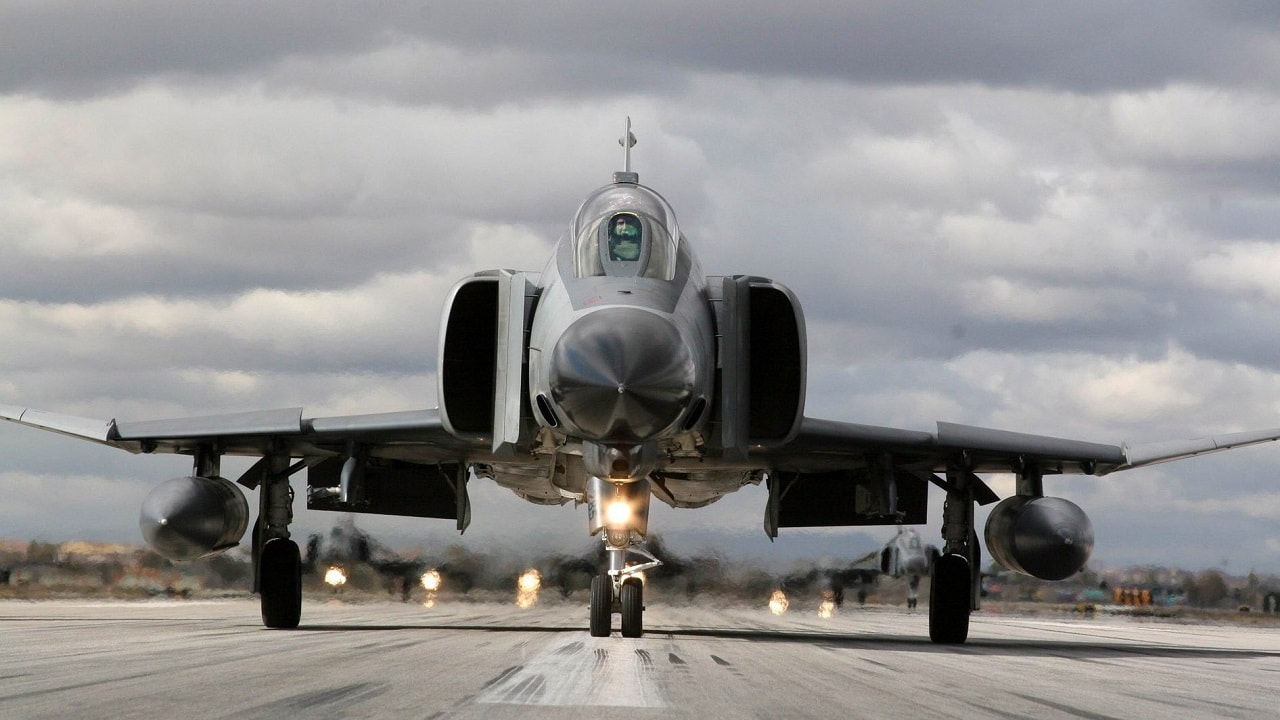
F-4 Phantom. Image Credit: Creative Commons.
In tandem, Israel Aircraft Industries’s effort would have taken the Boeing-Pratt & Whitney effort even further.
In addition to the PW1120 engine swap, the Israeli concept would have incorporated a more extensive modernization package, including a new radar, a heads-up display, and mission computers. A single F-4E was used as a testbed for the upgrade concept, and its performance was markedly superior.
Thrust-to-weight rose from about 0.86 to 1.04, climb rate improved by about a third, turn rates improved by about 15 percent, and take-off distance fell by about a fifth. During the 1987 Paris Air Show, the modified Phantom performed maneuvers that were both unusual and remarkable for a jet of its early Cold War vintage.
The Ultimate Failure of Both Projects
Cost and timing were decisive factors for both the American and Israeli projects ultimately lack of success.
Cost estimates for upgrading F-4s to the Super Phantom standard we
The cancellation of the Lavi in 1987 removed the justification for producing large numbers of PW1120s.
The United States Air Force also played a role by cutting funding for the Boeing-Pratt & Whitney proposal, opting instead to channel funding toward new platforms rather than extending the service life of a 1960s platform.
By the 1980s, a platform that had first taken off during the early years of the Cold War had reached the limits of technological expansion.
The Phantom’s basic aerodynamics, systems architecture, and structural margins could integrate some impressive upgrades, but not enough — at a reasonable price — to best newer, fourth-generation fighter aircraft.
Though significant upgrades were still possible in principle, the costs were not justifiable at a time when new, cutting-edge aircraft were just over the horizon.
About the Author: Caleb Larson
Caleb Larson is an American multiformat journalist based in Berlin, Germany. His work covers the intersection of conflict and society, focusing on American foreign policy and European security. He has reported from Germany, Russia, and the United States. Most recently, he covered the war in Ukraine, reporting extensively on the war’s shifting battle lines from Donbas and writing on the war’s civilian and humanitarian toll. Previously, he worked as a Defense Reporter for POLITICO Europe. You can follow his latest work on X.