
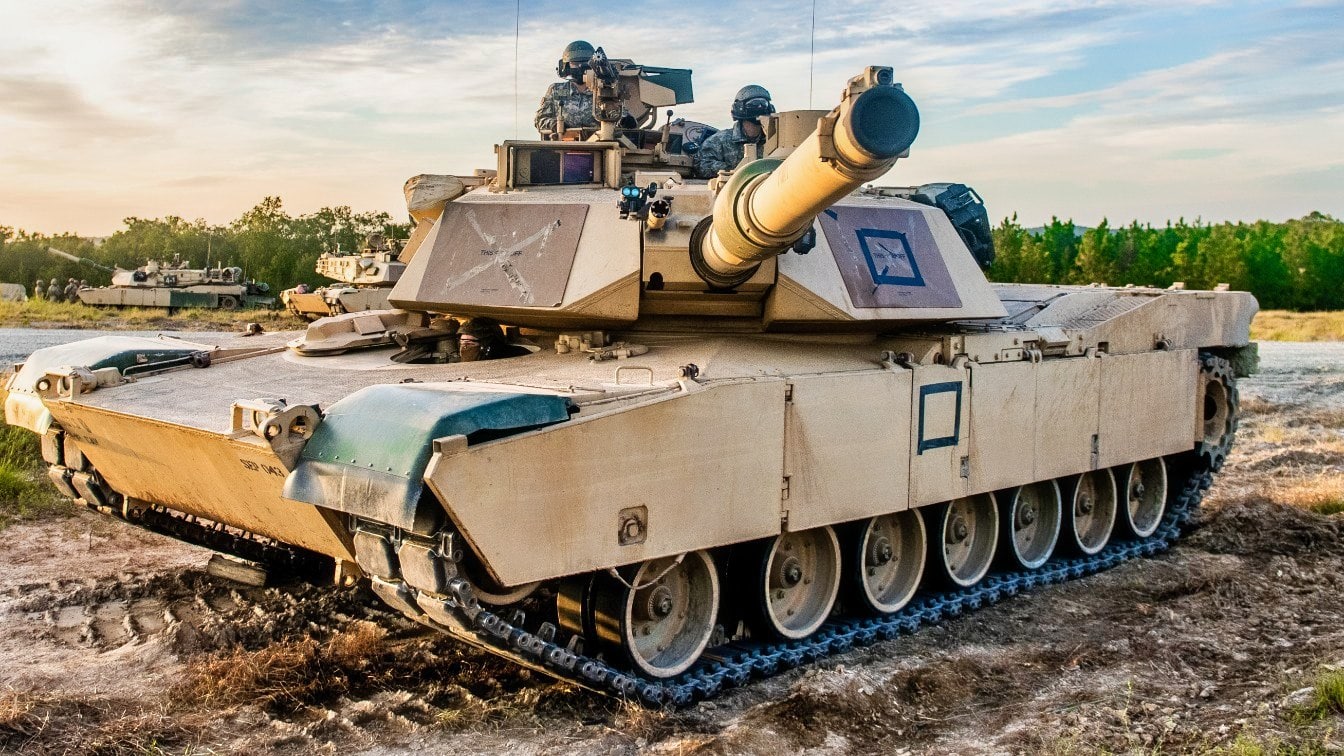
The M1 Abrams SEPv3 is the End of the Line: The M1 Abrams is a strong contender for the most advanced tank right now. This is largely due to the number of continuous upgrades the tank has received over its long lifetime.
Since its glorious combat debut during the Gulf War, the Abrams has received several incremental improvements, culminating in the M1A2 SEPv3.
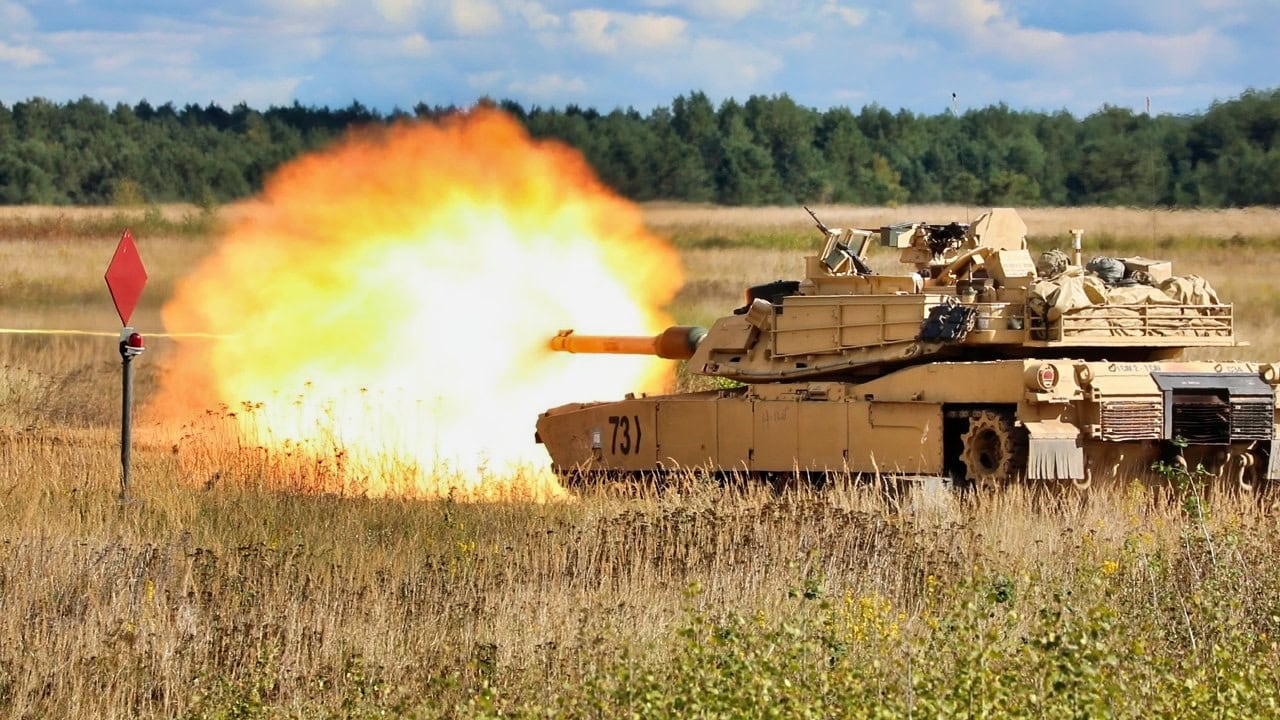
U.S Army troopers assigned to 3rd Armored Brigade Combat Team, 1st Cavalry Division fire the M1A2 SEPV3 Main Battle Tanks as part of gunnery qualification, Sept. 22, 2022, on Mielno Tank Range, Drawsko Pomorskie Training Area, Poland. Training like this ensures the units readiness in order to provide combat-credible forces in support of NATO allies and regional security partners. (U.S. Army Photo by Staff Sgt. Charles Porter)
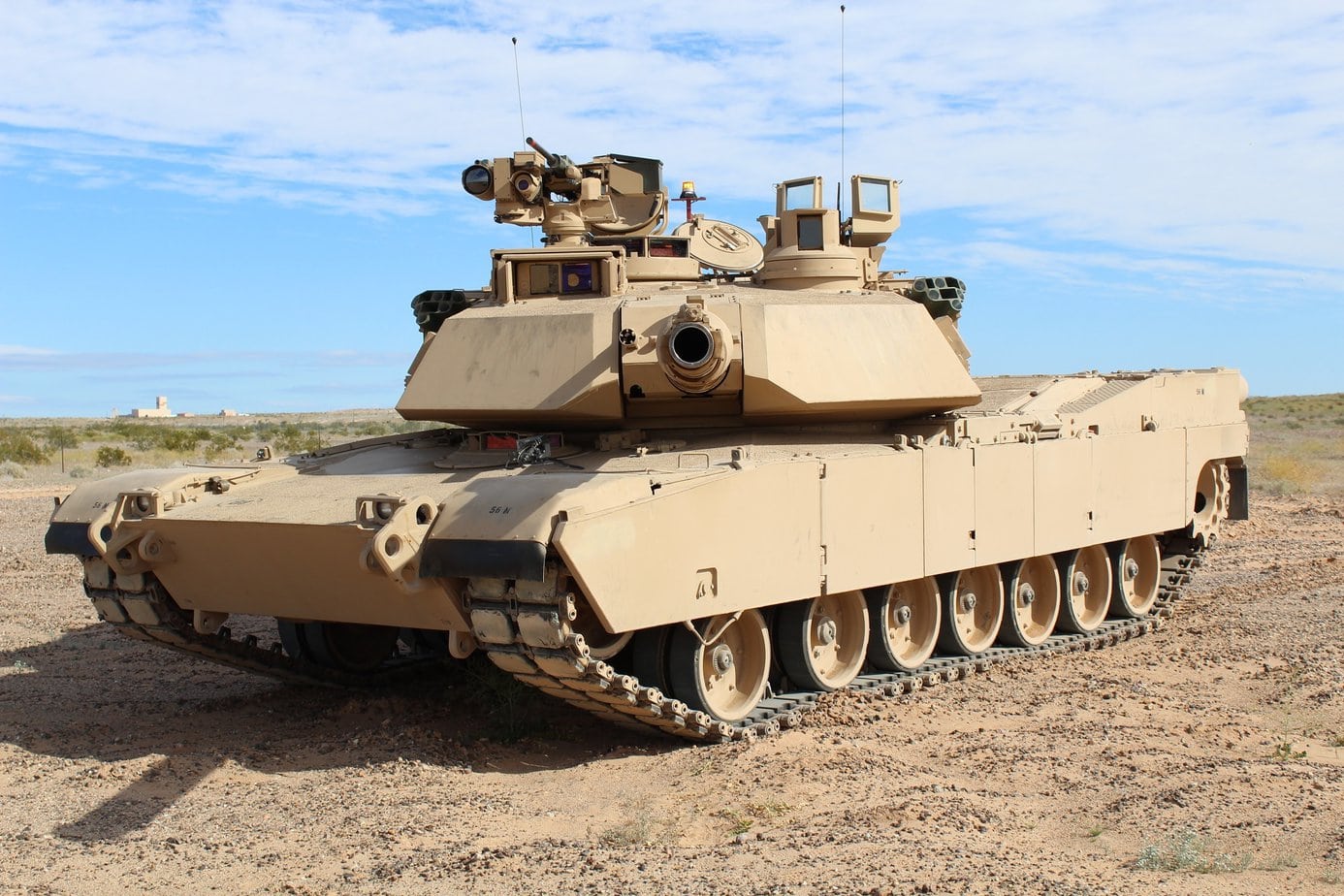
M1A2 SEPv3. Image Credit: Creative Commons.
The SEPv3 is the latest iteration of the tank, incorporating the best armor, firepower, and situational awareness to date.
However, after decades of add-on packages, the M1A2 has finally reached its limit. The platform is too heavy, and each new addition yields diminishing returns.
Evolution of the Abrams From M1 to M1A2
The original M1 Abrams, first fielded in 1980, laid the foundation for the Abrams lineage.
It incorporated the same general layout as the M1A2 today, with advanced composite armor and the gas turbine engine (for better and for worse).
However, despite the excellent design, there was still plenty of room for improvement.
The M1A1 was introduced shortly afterward in 1985 with a few notable changes.
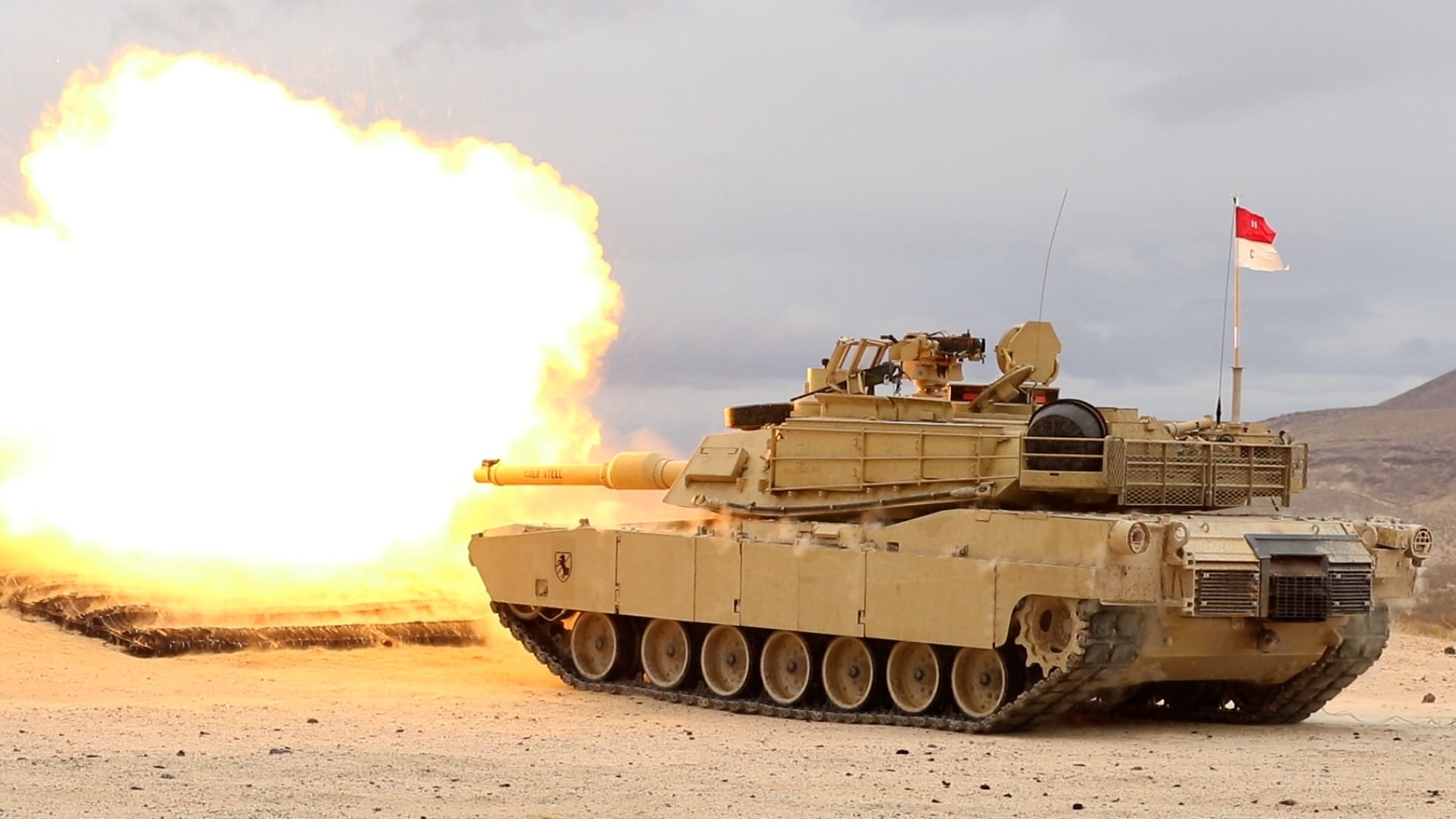
An M1A2 Abrams SEP V2 main battle tank, assigned to Cold Steel Troop, 1st Squadron, 11th Armored Cavalry Regiment, fires a M865 target practice cone stabilized discarding sabot with tracer on December 9, 2021, at the National Training Center and Fort Irwin training area.
The rear turret bustle was expanded to improve ammo stowage and included redesigned blowoff panels in case ammunition detonated during combat missions.
Most notably, however, the tank was uparmored with the M256 120 mm smoothbore cannon (a licensed version of the Rheinmetall Rh0120 L44 gun).
This change drastically increased the tank’s firepower, making it the dominant battlefield presence it is today.
The next leap in the Abrams’ evolution came with the M1A2 upgrade.
The M1A2 features second-generation depleted uranium armor, which offers significantly more protection than the armor on previous tanks (though at the cost of some minor health concerns).
The M1A2 also introduced an independent thermal sight for the tank’s commander along with major improvements to its fire-control systems (FCS).
These upgrades allow the crew to rapidly engage multiple targets without acquiring each one sequentially.
In the 2010s, as the Global War on Terror (GWOT) raged on, it was discovered that the tank needed further improvements to increase its effectiveness against irregular insurgents.
As a result, the M1A2 was provided with a series of Survival Enhancement Packages (SEPs) for increased survivability.
Survival Enhancement Packages
The M1A2 SEP introduced next-generation thermal sights for the gunner, along with third-generation depleted uranium armor components.
The SEPv2 added the Common Remotely Operated Weapon Station (CROWS) low-profile, along with improved displays, new thermal sights, improvements to the FCS and display panels, and new crew compartment cooling systems (which tankers operating in the Middle East greatly appreciated).
The SEPv2 also included the Abrams Integrated Display and Targeting System (AIDATS), which significantly improved the tank’s targeting capabilities and situational awareness, allowing the gunner and commander to coordinate more closely and identify and engage targets more rapidly.
The final and most comprehensive upgrade package was the SEPv3.
The M1A2 SEPv3 includes Improved Forward-Looking Infrared (IFLIR) technology, which enhances the tank’s ability to identify, designate, and engage targets under all conditions.
The sides of the hull and the turret now include mountings for ARAT explosive reactive armor (ERA) along with the improved counter-IED armor package, Next Generation Armor Package (NGAP).
To further emphasize survivability, some SEpv3s were also fitted with the Israeli Trophy active protection system (APS) to intercept incoming anti-tank missiles and other munitions.
For improved firepower, the tank is now equipped with the M829A4 armor-piercing round and the M1147 Advanced Multi-Purpose (AMP) round.
The low-profile CROWS is fitted with better cameras to improve the commander’s situational awareness, and the tank is fitted with a new Vehicle Health Management System (VHMS).
Time for a New Approach: Enter the M1E3 (We Visited One and Have the Photos)
After decades of continual upgrade packages, however, the M1A2 has finally reached its limit.
The Abrams, a heavy tank to begin with, has ballooned in weight from 60 tons to its current 73.6 tons.
The tank is too heavy for certain transports and cannot cross certain bridges.
In the 2020s, the U.S. Army explored the possibility of upgrading the tank even further.
The proposed SEPv4 would have included next-generation FLIR sights, improved laser warning systems, and a vastly improved sensor suite.
However, after some testing, the SEPv4 was too heavy, and its improvements came at too high a cost.
The program was officially canceled in 2023, with the Army forced to look elsewhere for its next tank.
Rather than designing a new tank from the ground up, the U.S. chose a more modular approach.
The new M1E3 Abrams, currently in development, was designed based on lessons learned from the ongoing war in Ukraine.
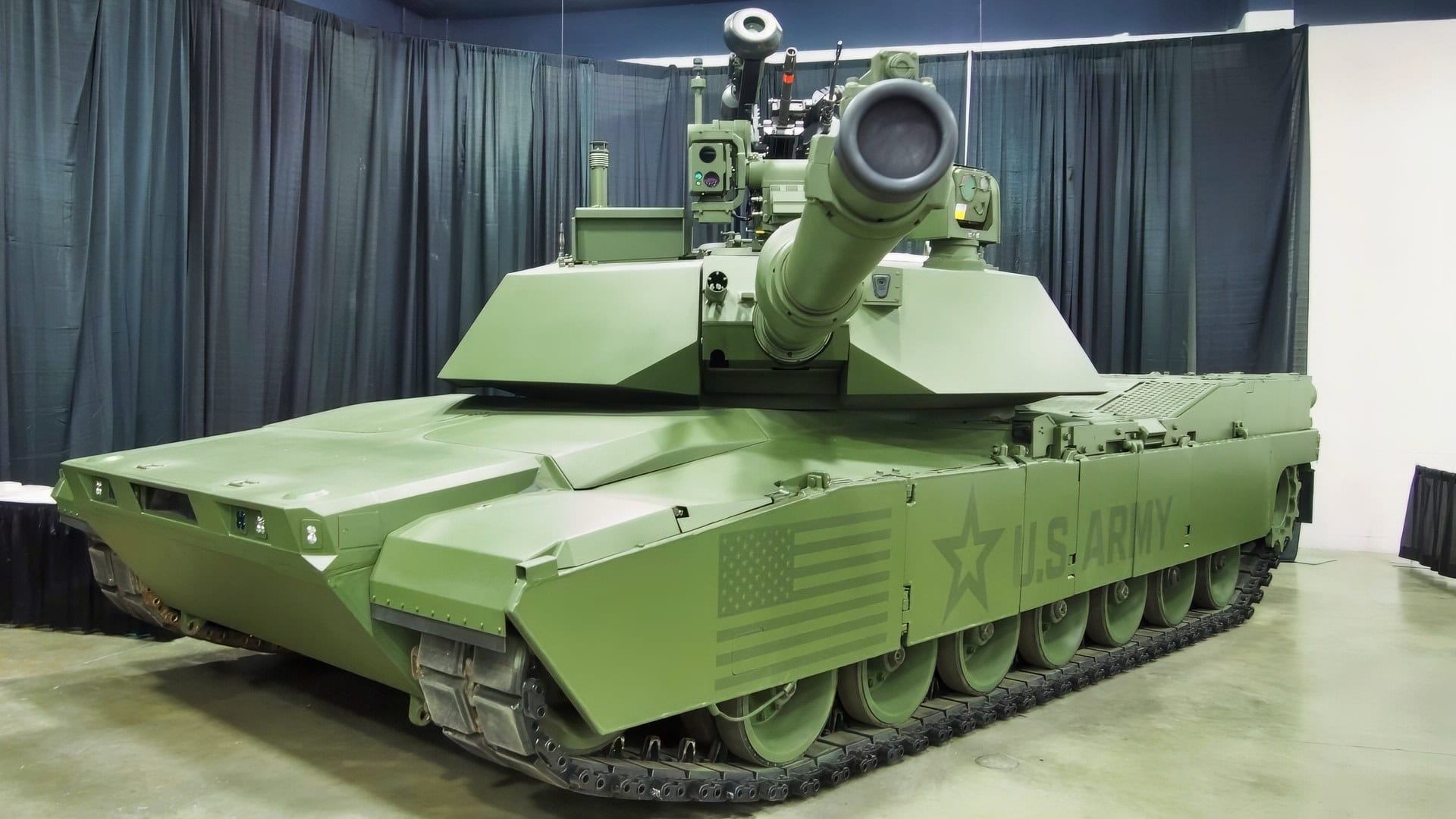
M1E3 Abrams Detroit Auto Show 19FortyFive Image
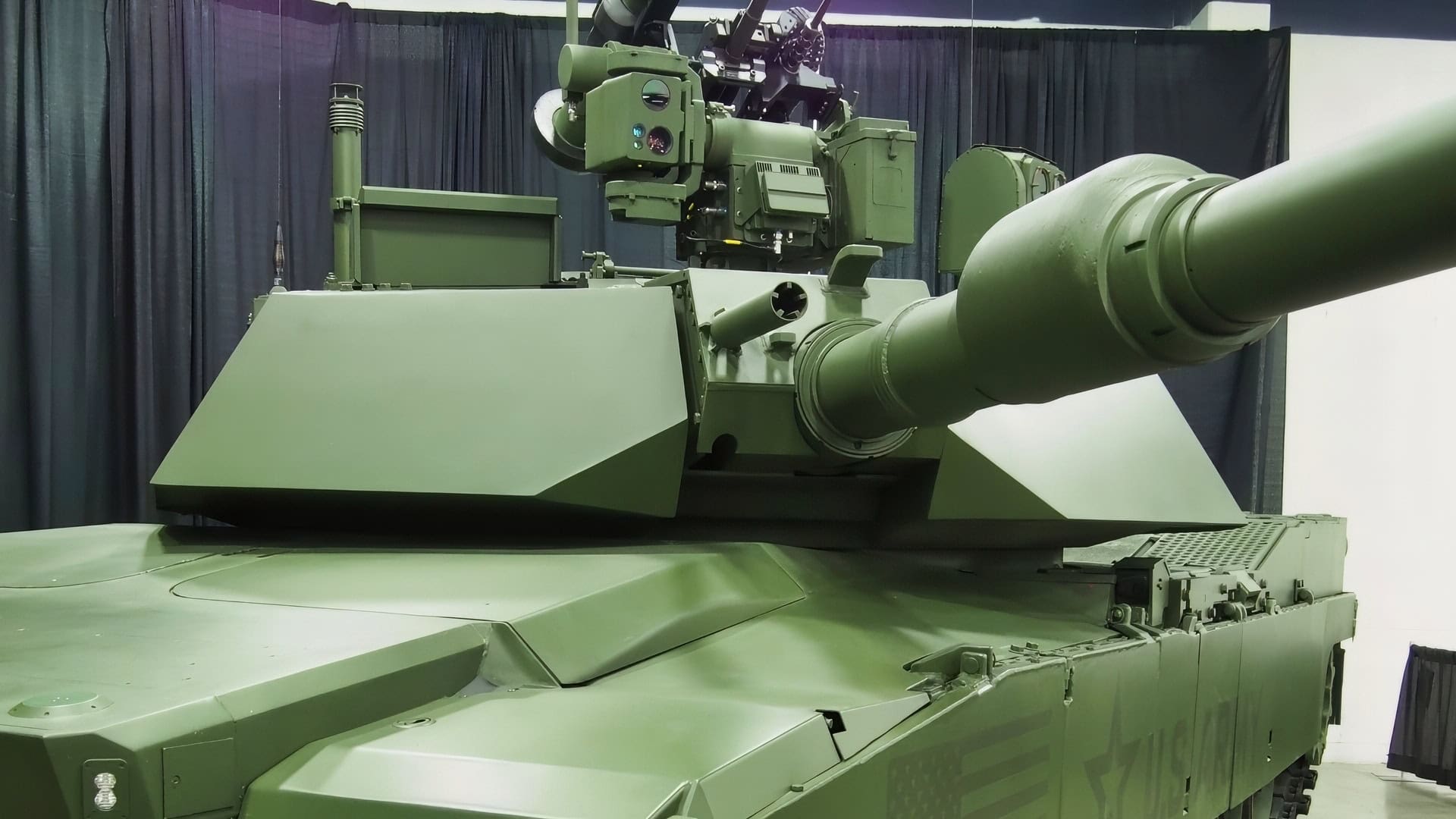
M1E3 Abrams Tank at the Detroit Auto Show. 19FortyFive.com Original Image.
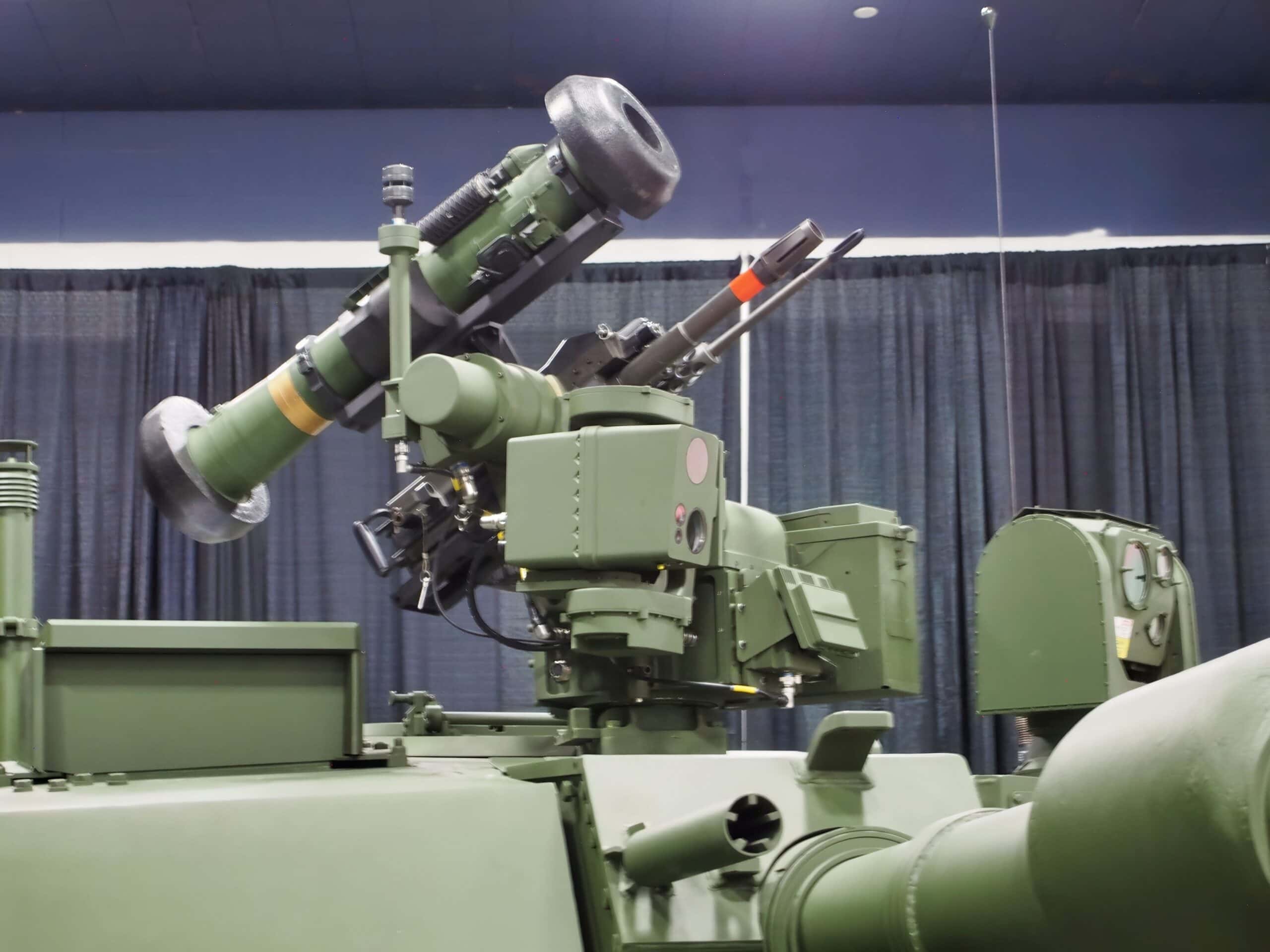
M1E3 Abrams Tank. Taken by 19FortyFive.com
With an unmanned turret, the loader has been eliminated, and the crew reduced to three. Many of the proposed SEPv4 upgrades are integrated directly into the hull, along with the Israeli Iron Fist APS, to reduce dead weight.
The M1E3 retains the armor and firepower of the Abrams but now has a more fuel-efficient hybrid engine and reworked suspension.
The new tank is also designed to be modular, meaning future upgrades can be integrated more easily, hopefully without adding much weight.
About the Author: Isaac Seitz
Isaac Seitz, a Defense Columnist, graduated from Patrick Henry College’s Strategic Intelligence and National Security program. He has also studied Russian at Middlebury Language Schools and has worked as an intelligence Analyst in the private sector.