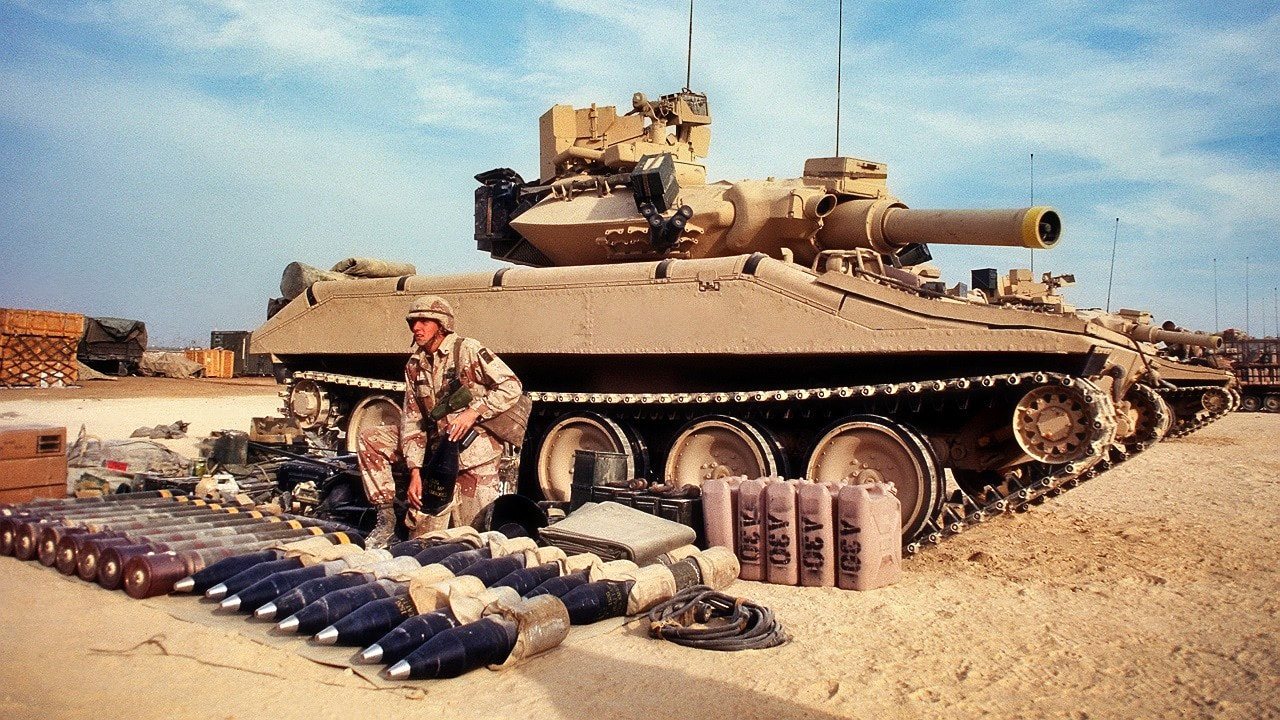
Thirty years ago, the United States Army retired its troubled Vietnam War-era M551 Sheridan light tank. Despite the Sheridan’s problems, the Pentagon spent decades trying to replace the mechanically troubled system but never succeeded. The recent failure of the M10 Booker platform proves that.
Unique Capabilities of the M551 Sheridan
What made the Sheridan so useful was that it could be deployed rapidly alongside airborne forces and dropped by parachute.
At only around 17 tons, this system was extraordinary for its size.
Once dropped from an airplane alongside American ground forces, the Sheridan provided considerably more direct firepower than almost anything else that could accompany paratroopers into battle.
As noted, though, it was a real problem for maintainers throughout its lifecycle.
Further, it had thin armor.
It also had a potent 152mm gun and missile system that, unfortunately, never lived up to its promise.
Back in the 1950s, the Army needed a replacement for its aging light tanks.
The new system needed to perform reconnaissance missions while supporting airborne troops.
Development of the M551 began at the end of the decade, in 1959, alongside work on the MGM-51 Shillelagh guided missile.
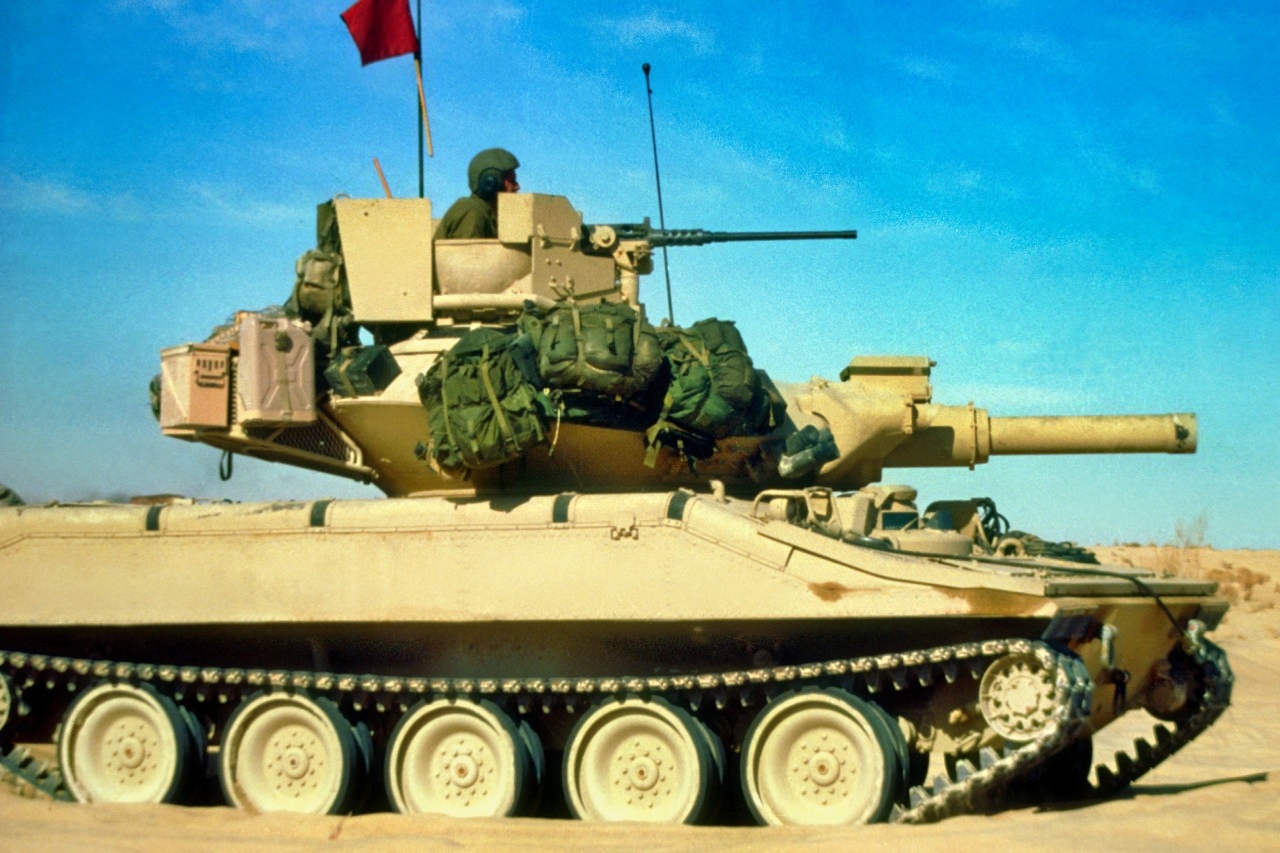
M551 Sheridan Light Tank. Image Credit: Creative Commons.
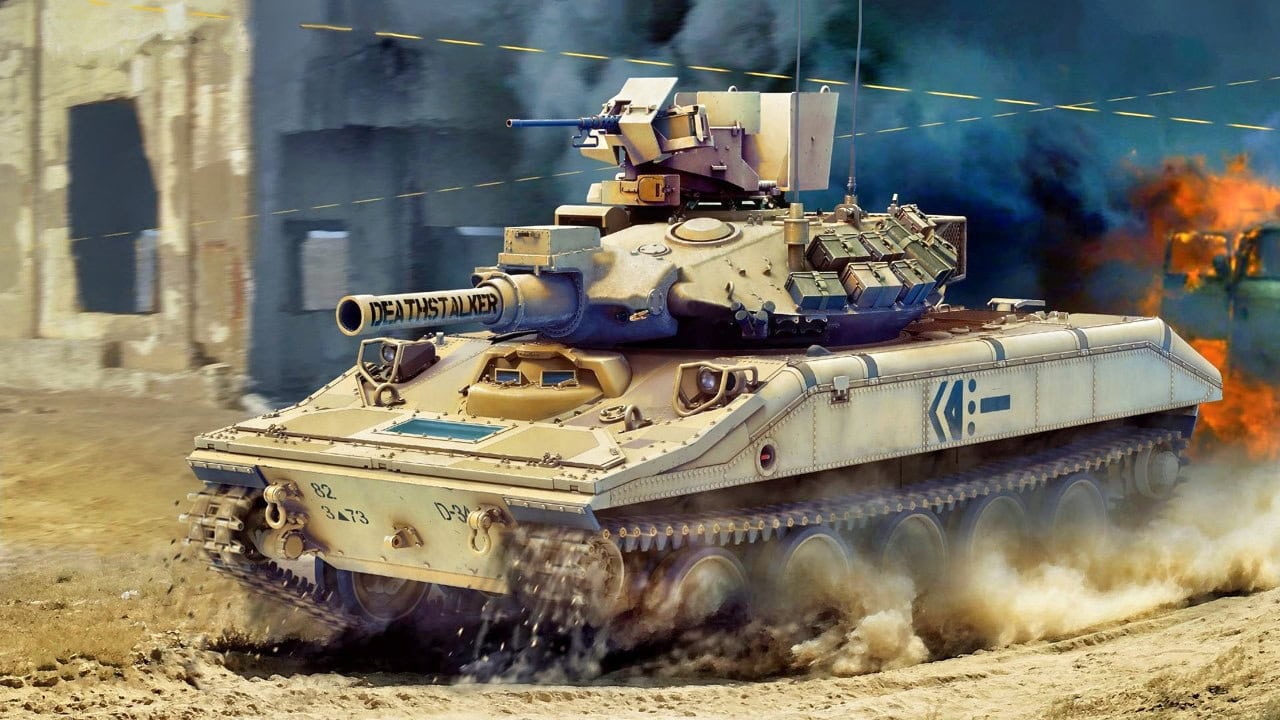
M551 Sheridan. Image Credit: Creative Commons.
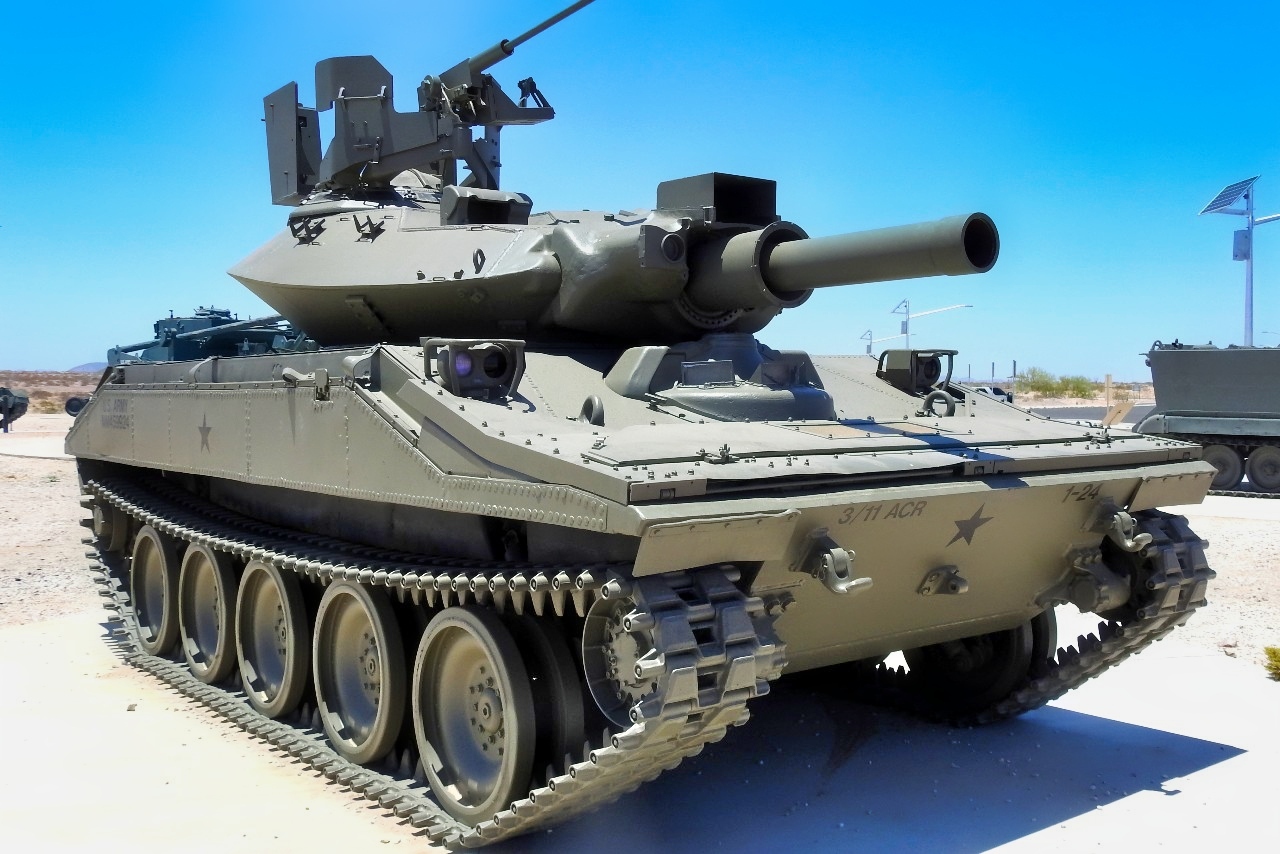
M551 Sheridan Light Tank. Image Credit: Creative Commons.
Full-scale Sheridan production began in 1966. The Army produced nearly 1,700 units before production ended in 1970.
Because the Sheridan was made of aluminum, its hull weight stayed low.
The turret was made of steel.
A 300-horsepower Detroit Diesel engine gave the tiny vehicle all the mobility it needed.
This system could traverse a variety of environments while reaching a road speed of 45 mph.
The system was also amphibious.
The M81 152mm gun/launcher, the M551 Sheridan’s main weapon system, could fire conventional ammunition or the MGM-51 Shillelagh anti-tank guided missile.
So, the design promised to give the light tank a capability previously lacking in light tank designs: the ability to threaten heavier armor in combat.
Yet this design brought serious complications.
The M551 Sheridan’s light armor made the platform highly vulnerable to mines and the ubiquitous rocket-propelled grenades (RPGs) that defined the era in which the Sheridan served.
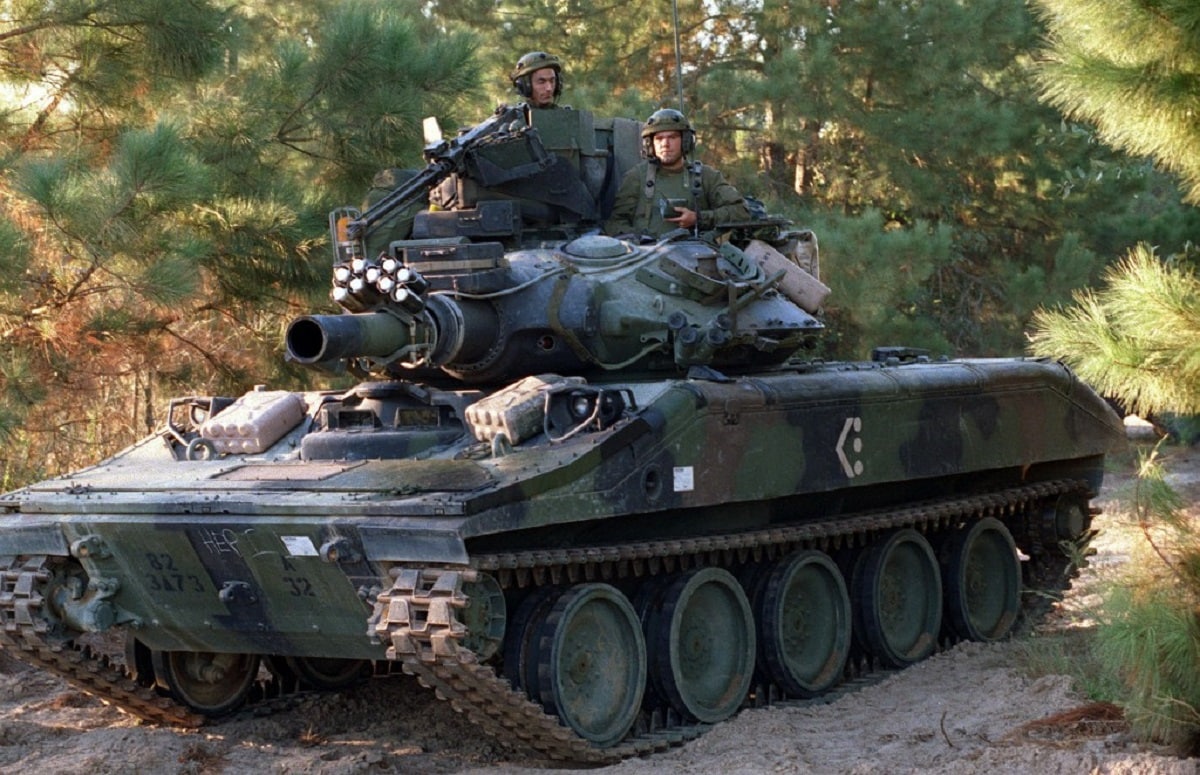
M551 Sheridan. Light Tanks.
The platform was also susceptible to heavy weapons fire.
Because of its massive cannon, the crew faced additional hazards when firing it.
A vehicle weighing between 15 and 17 tons and armed with that massive 152mm gun meant only one thing: massive recoil.
It was during the Vietnam War that these weaknesses were really felt.
Struggling in Vietnam
Undoubtedly, the Sheridan’s firepower was utterly devastating to North Vietnamese and Viet Cong infantry, their bunkers, and other soft targets.
The M625 canister round could fire thousands of flechettes and was extremely useful at close range.
Yet, the Vietnamese employed mines against the Sheridan with wanton abandon, meaning the utility of this platform was greatly reduced (especially once the Vietnamese figured out its vulnerability to those weapons).
Vietnam’s dense vegetation also routinely clogged the platform’s engines, causing severe overheating. The region’s intense climate also seriously disrupted onboard electronics.
By 1978, the Army started phasing the M551 Sheridan out of conventional units. But the 82nd Airborne refused to give theirs up.
Even a mediocre light tank that could deploy alongside Airborne units, such as the 82nd, was better than no armor at all.
So, the Sheridan survived the Army’s culling efforts.
Indeed, during Operation Golden Pheasant in Honduras in 1988, the platform was deployed, and it even made a parachute drop a year later during Operation Just Cause in Panama.
Success In Desert Storm
When Desert Storm erupted, the Sheridan fired its Shillelagh rounds in combat, using that anti-tank guided missile against Iraqi armor and entrenched positions.
But the tank was old by then.
The Army determined that, despite its success in desert warfare, the platform had little growth potential given its advanced age.
Plus, the Sheridan suffered from disappearing component suppliers (thanks to widespread deindustrialization).
In 1992, the Army tried to replace the Sheridan with the FMC XM8 Armored Gun System.
That system carried an autoloading 105mm cannon, had a three-man crew, and used modular armor.
It could also be deployed via parachute from a plane.
Six prototypes were built and tested.
But once the Cold War ended and the Army’s budgets tightened considerably, the Army cut the XM8. That program cost the taxpayer $1.3 billion.
Gone But Not Forgotten
By 1997, the Sheridans were retired and inactivated.
Modified Sheridans impersonated Soviet-era vehicles at the National Training Center until the early 2000s.
Despite its maintenance woes and relatively light armor, no replacement ever emerged to directly replace the Sheridan.
Similar systems, like the M1128 Stryker Mobile Gun System, brought a 105mm cannon into the fight, but they were not direct successors to the Sheridan.
The Army tried again recently with the M10 Booker light tank.
That resulted in a costly procurement failure.
To this day, the Sheridan remains the Army’s best post-World War II light tank, not because it was perfect–far from it–but because it was light enough to be deployed from an aircraft and its main gun could take on heavier armor (while being highly maneuverable).
The Pentagon has not matched that capability since retiring the Sheridans.
About the Author: Brandon J. Weichert
Brandon J. Weichert is the Senior National Security Editor at 19FortyFive.com. He also manages The Weichert Brief on Substack. Weichert also hosts “National Security Talk” on Rumble. He is the author of four bestselling national security books, most recently A Disaster of Our Own Making: How the West Lost Ukraine (Encounter Books). Follow him via Twitter/X @WeTheBrandon.