With the war between the Kingdom of Saudi Arabia and the Houthis in Yemen in full swing, Riyadh has been asking its allies for military aid.
Pakistan and Turkey have declined to provide direct aid. The Israelis and the United States are apparently providing intelligence to the Saudis.
Meanwhile, the Saudi leadership had an emergency meeting with the Egyptian leadership, demanding that the Houthis reopen the Strait of Bab El-Mandeb.
Although the Americans have declined — twice on the same day — to intervene directly against the Houthis, there remain some strategists in Washington who think it might be necessary to have US Air Force bombers ready to deploy in support of the Saudis.
And this would not be the first time that Air Force bombers have been used to wage a sustained air campaign against Houthi targets in Yemen.
The Force Today
Today, the US Air Force has three operational strategic bomber types: the B-52H Stratofortress, the B-1B Lancer, and the B-2A Spirit long-range, nuclear-capable stealth bomber.
All three fleets are aging and relatively small.
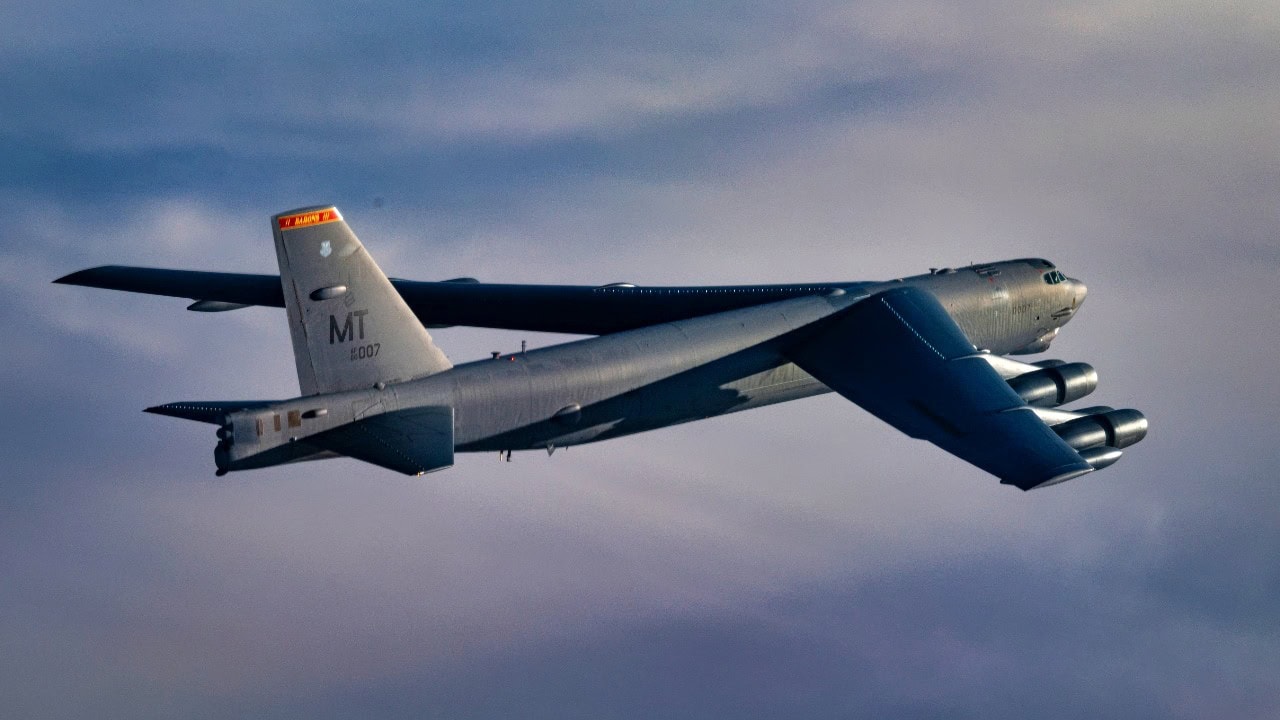
A U.S. Air Force B-52H Stratofortress from the 69th Expeditionary Bomb Squadron flies over the skies of Sweden for their celebration of their acceptance into NATO during Bomber Task Force 25-2, RAF Fairford, United Kingdom, March 11, 2025. These operations demonstrate the ability to rapidly deploy strategic assets in support of global stability. (U.S. Air Force photo by Master Sgt. Chris Hibben)
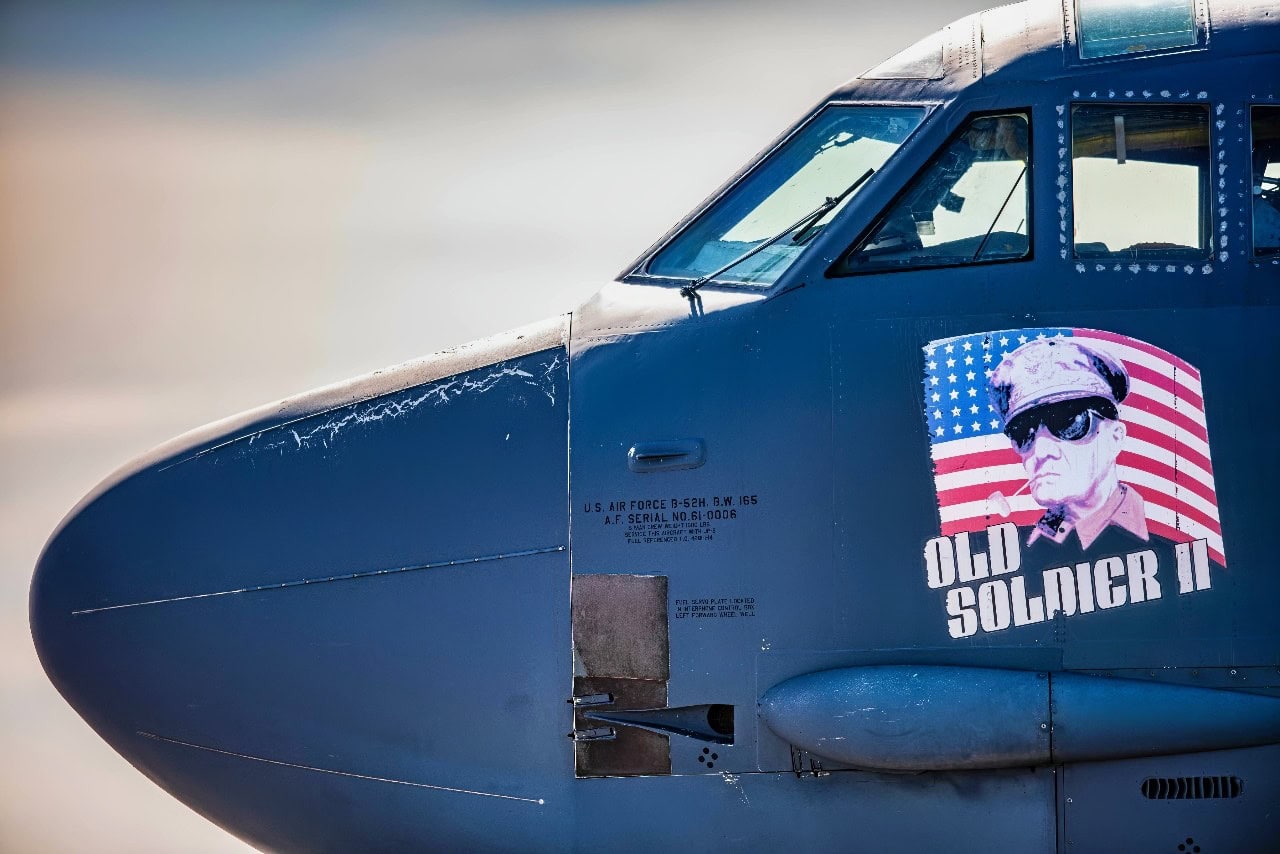
A U.S. Air Force B-52H Stratofortress assigned to the 96th Bomb Squadron, Barksdale Air Force Base, Louisiana, sits on the flightline during exercise Prairie Vigilance 25-1 at Minot Air Force Base, North Dakota, April 12, 2025. For more than 60 years, the B-52 has been the backbone of the strategic bomber force of the United States. As a routine training mission, PV 25-1 enhances the safety, security, and reliability of the bomber leg of the U.S. nuclear triad. (U.S. Air Force photo by Senior Airman Kyle Wilson)
Despite these negative trends, the Air Force is being made to rely on these aircraft because of their unmatched long-range strike capabilities.
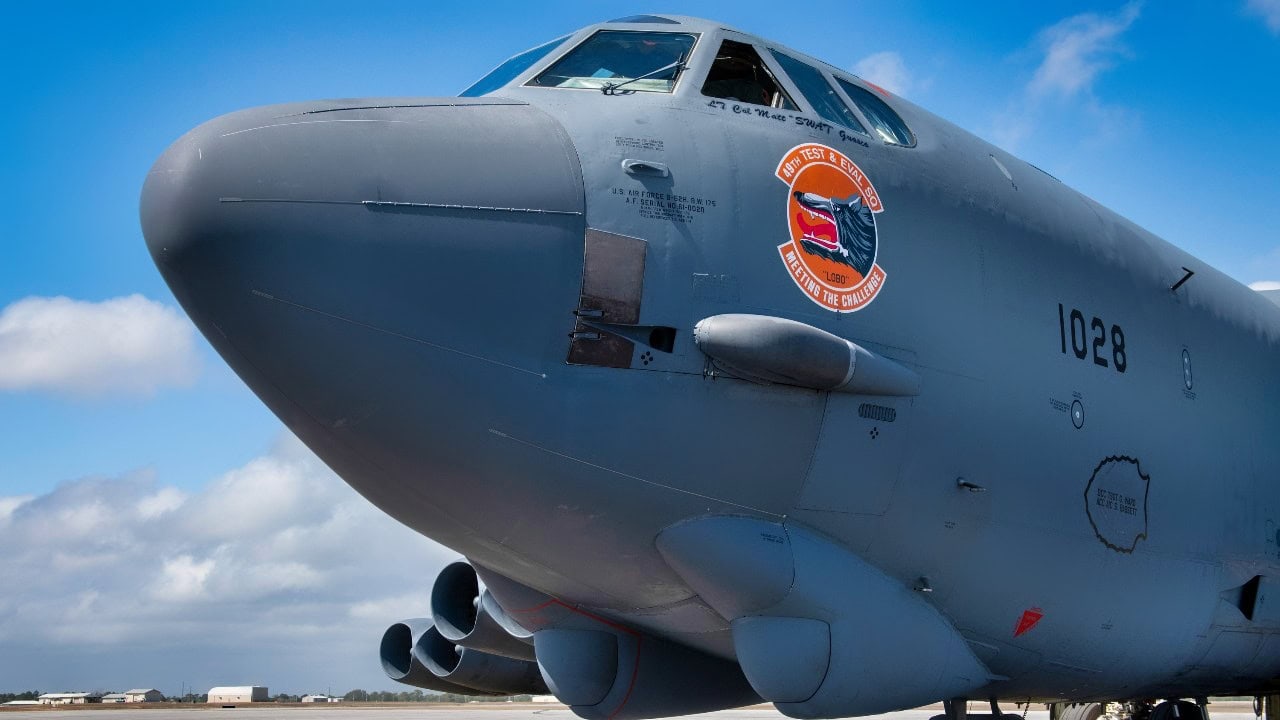
Just look at America’s iconic B-52H fleet.
The Air Force has 76 units available, with the newest delivered in 1962.
The Air Force intends to keep the B-52s flying into the 2050s, while pouring $21 billion into new engines, radar, communications, and other key modernization efforts to keep the plane relevant.
In July of this year, though, ten of the 13 modernization programs for the B-52 were running over schedule, experiencing cost overruns, and suffering from performance problems.
In fact, the B-52Hs met their mission-capable-rate goal only four times between 2011 and 2021. A B-52H Stratofortress can carry roughly 70,000 pounds of weapons.
The B-1B Lancer fleet numbers around 45 units and can carry 75,000 pounds of munitions.
Originally intended as a nuclear-strike bomber during the Cold War, the Air Force retooled these legendary birds into conventional long-range strike bombers. They’re aging, too.
As for the B-2 Spirits, they are nuclear-capable bombers, and only 19 remain operational today.
The B-2s are also set to be replaced by the B-21 Raider.
B-2s can deploy from the United States, receive midair refueling, and then reach targets deep inside enemy airspace, dropping powerful ordnance before returning to the United States.
These bombers are especially useful because they are truly stealthy, and they have already been used successfully against targets deep inside Iran and were allegedly used against the Houthis the last time the Air Force tussled with the Yemeni group.
The Readiness Concerns
The problem facing the United States is that the entire military is strained as never before, thanks to the decision by the Trump administration to initiate its war against the Islamic Republic of Iran on February 28.
That war continues dragging on, with the destabilizing effects from that war touching everywhere–including in Yemen.
To better prepare their forces for the prospects of both another round of attacks against Iran, as well as the possibility of strikes against the Houthis on behalf of the Saudis, the Air Force is fixated on increasing readiness rates for its bomber fleet.
Air Force Global Strike Command recently launched the North Star Readiness Campaign with Air Force Materiel Command and the Defense Logistics Agency (DLA) to increase the number of mission-capable B-52H Stratofortress long-range bombers and B-1B Lancer long-range bombers.
That initiative focuses heavily on one of the least appealing, albeit most important, aspects of military operations: the spare parts inventory.
Mission Impaired Capability Awaiting Parts (MICAP) has already seen a significant turnaround, thanks to this joint program. MICAP problems reportedly declined from more than 450 to 160.
Parts transfers that previously required a week (or more) have, in some cases, been reduced to just two or three days.
The B-1 fleet is receiving particular attention to structural components, avionics, depot maintenance, and parts availability.
These birds are critical for any long-range, sustained bombing campaign against the Houthis or, if needed, against Iran.
Geopolitics Rears Its Ugly Head
Yemen is a particularly tough target for these bombers to hit because the Houthis located there are dispersed, mobile, and increasingly experienced at hiding missile and drone launchers from the prying eyes of Air Force intelligence officers and targeters.
Plus, US officials believe that another Houthi campaign would require massive levels of US Navy and Air Force resources that would only divert those assets away from the main fight against Iran.
Of the 76 B-52s, 45 B-1Bs, and 19 operational B-2s, none are available at once because of maintenance cycles, modernization efforts, and training missions.
So North Star becomes even more relevant.
This Air Force program is designed to enhance combat power from fleets of aircraft that are already decades old, as the Air Force needs greater long-range strike capacity than ever before.
So, if the US were ever called upon to assist the Saudis in their war of choice against the Houthis of Yemen, these long-range bombers would be called into action.
Yet, not enough of these systems are available to meet the new demands being placed on them.
The Air Force cannot simply wait for new systems to come online.
So, it must generate enough aircraft, spare parts, weapons, and crews for the systems it already has available.
North Star is the Air Force’s only real shot at achieving that herculean task.
About the author: Brandon J. Weichert
Brandon J. Weichert is the Senior National Security Editor at 19FortyFive.com. He also manages The Weichert Brief on Substack. Weichert also hosts “National Security Talk” on Rumble. He is the author of four bestselling national security books, most recently A Disaster of Our Own Making: How the West Lost Ukraine (Encounter Books). Follow him via Twitter/X @WeTheBrandon.