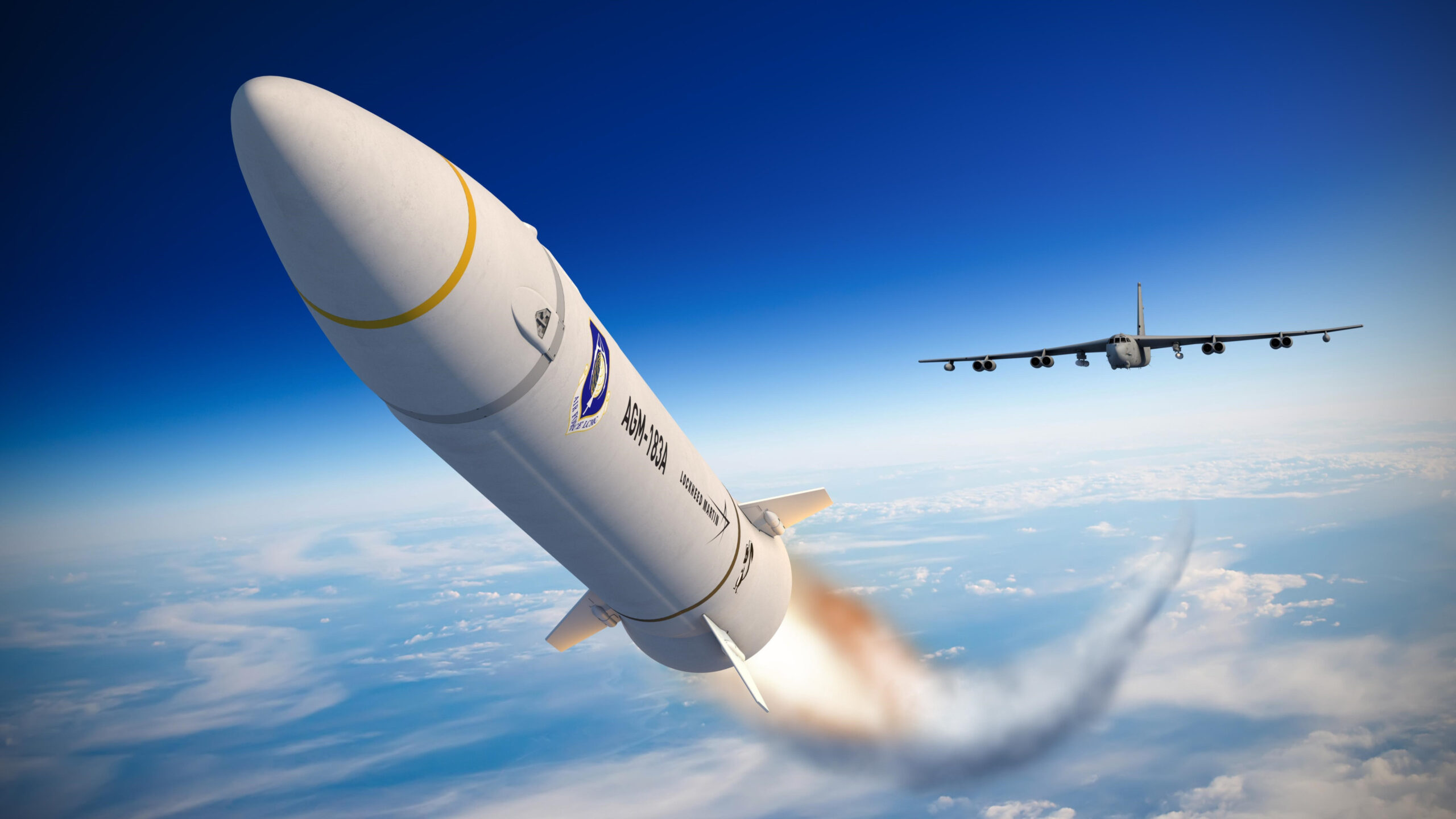
Summary and Key Points: The Government Accountability Office reviewed all 13 programs in the US Air Force’s B-52 modernization effort — totaling roughly $21,000,000,000 — and found 10 of them running over budget, behind schedule, or failing to meet performance targets. The largest single contributor is the Commercial Engine Replacement Program, which will strip the 8 Pratt & Whitney TF33 engines off each bomber and replace them with Rolls-Royce F130s, a military variant of the engine that powers the Gulfstream G650ER business jet. That program was budgeted at roughly $3,000,000,000. It now stands at about $15,400,000,000 — more than five times the original figure — and initial operational capability has been delayed by 15 months. The radar program has grown from about $2,300,000,000 to $2,900,000,000, triggering a Nunn-McCurdy breach.
The B-52J Bomber Cost Crisis?
It is the oldest bomber in the United States Air Force, and it is set to keep flying into the middle of this century — and potentially even beyond.
The B-52 Stratofortress, the workhorse of the United States nuclear deterrent against the Soviet Union, is in the midst of several modernization programs that promise to boost the bomber’s capabilities.
And though the ongoing upgrade efforts are likely to succeed from a capabilities standpoint, they still face looming pitfalls, including significant cost overruns. Here’s what we know at the moment:
B-52J Radar Modernization Program
Boeing’s B-52 Radar Modernization Program, or RMP, saw two test aircraft outfitted with an APQ-188 active electronically scanned array radar system that the company says is broadly similar to the AN/APG-79 radar that Boeing F/A-18E/F Super Hornets and EA-18G Growler electronic attack jets are equipped with.
“The new radar will significantly increase B-52 mission effectiveness by improving situational awareness, speeding target prosecution and enhancing aircrew survivability in contested environments,” explained Troy Dawson, vice president of Boeing Bombers. “This phase of the program is dedicated to getting it right at the start so that we can execute the full radar modernization program.”
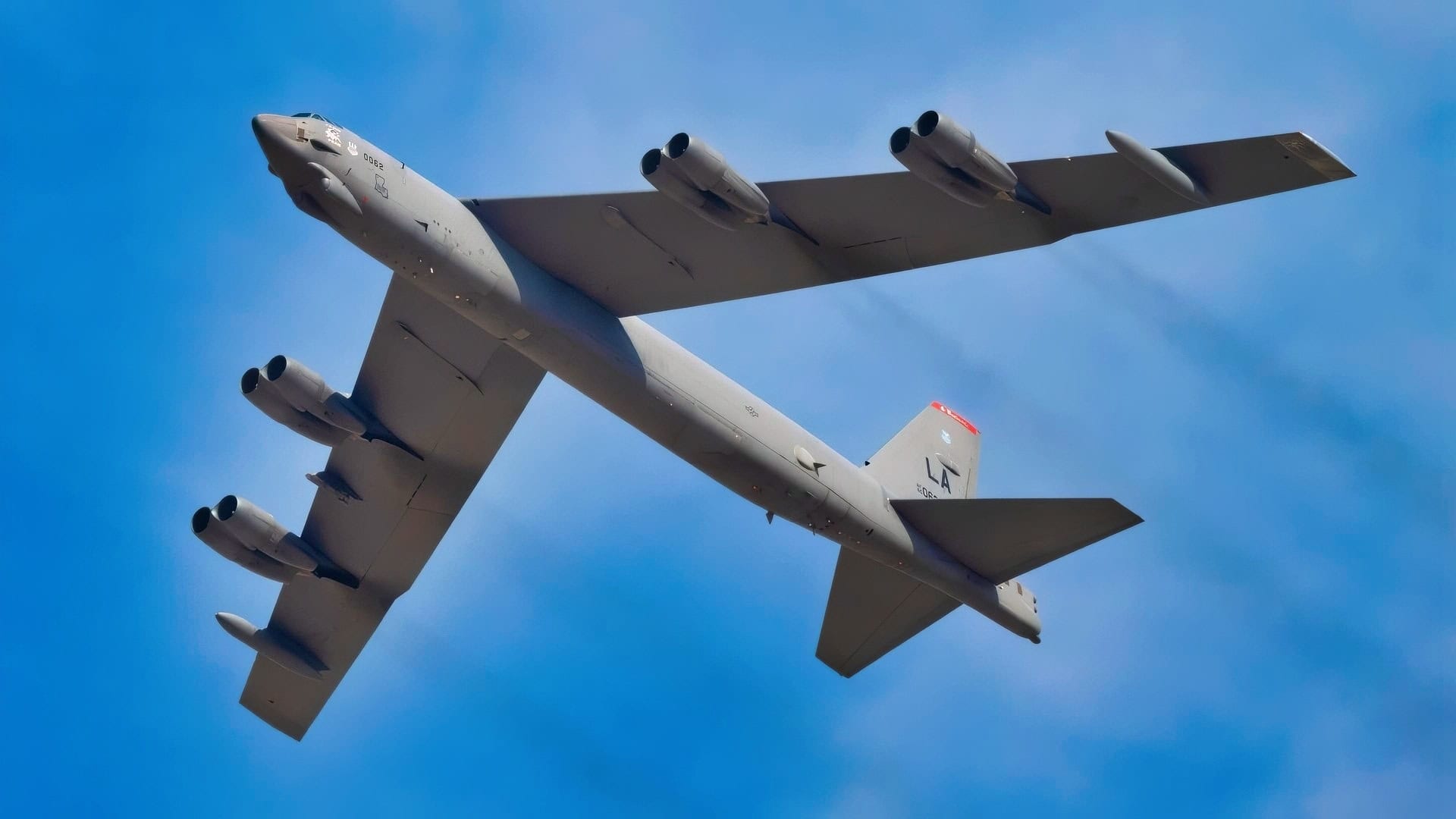
A U.S. Air Force B-52 Stratofortress aircraft, assigned to the 96th Bomb Squadron from Barksdale Air Force Base, Louisiana, flies over spectators at the Dubai Airshow 2025, Nov. 17, 2025, at the Al Maktoum International Airport in Dubai, United Arab Emirates. The B-52 flew from Rota, Spain, to participate in the event, showcasing U.S. airpower on a global stage. (U.S. Air Force photo by Staff Sgt. Tylin Rust)
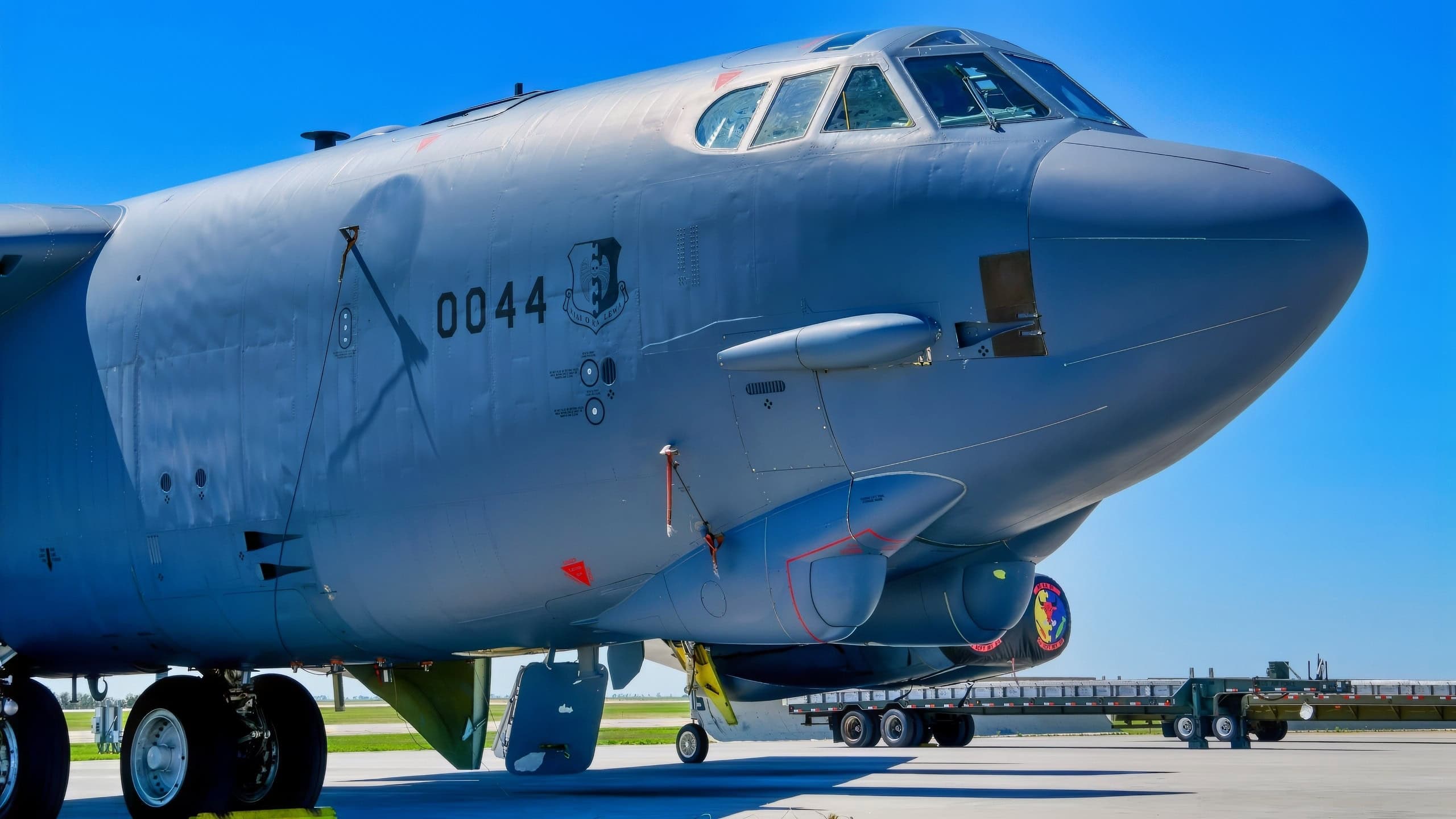
A B-52H Stratofortress sit parked on the flight line at Minot Air Force Base, North Dakota, Aug. 8, 2022. The B-52 is capable of dropping or launching gravity bombs, cluster bombs, precision-guided missiles and joint direct attack munitions. (U.S. Air Force photo by Airman Alysa Knott)
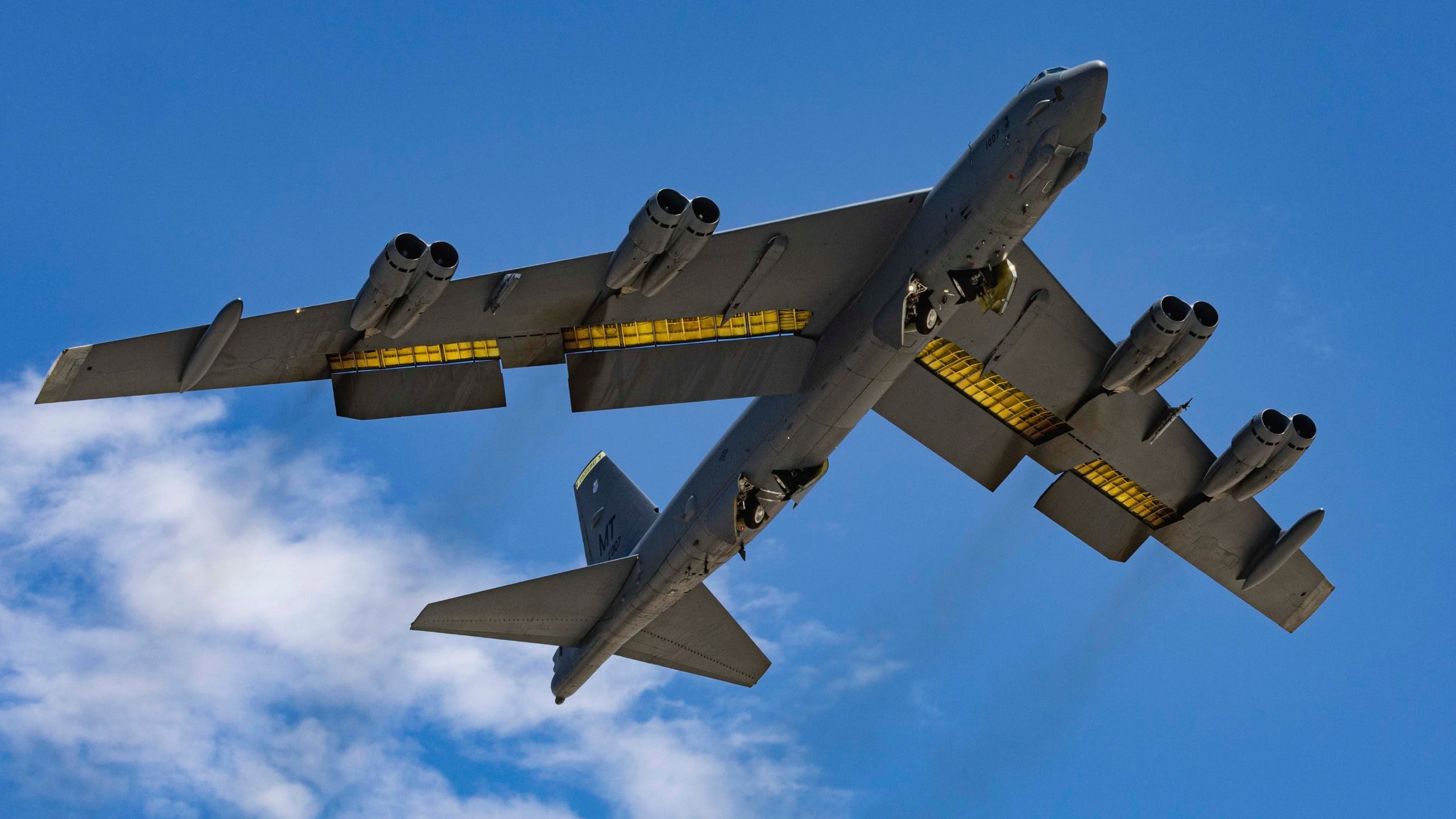
A B-52 Stratofortress assigned to the 69th Bomb Squadron, Minot Air Force Base, North Dakota, flies during Red Flag-Nellis 22-3 at Nellis Air Force Base, Nevada, July 18, 2022. RF-N 22-3 provides realistic combat training that saves lives while increasing combat effectiveness. (U.S. Air Force photo by Airman 1st Class Makenna Gott)
The effort will also integrate a pair of Display and System Sensor Processors into the B-52’s radar, as well as a pair of touchscreens and what Boeing describes as “fighter-like hand controllers” for radar operation.
B-52J Commercial Engine Replacement Program
The Stratofortress’ new radar is not, however, the only bit of revamped kit that will eventually be integrated onto the B-52 fleet — new engines are set to power the Cold War-era bombers well into the middle of this century. Rolls-Royce, one of the world’s leading aerospace engine manufacturers, will re-engine B-52H bombers.
That part of the B-52’s upgrade effort, known as the B-52J Commercial Engine Replacement Program, or CERP, passed a critical design review milestone that validated the Rolls-Royce F130 low-bypass turbofan that replaces the eight Pratt & Whitney TF33 engines that have propelled the Stratofortress for decades.
The new engines are a variant of the 16,900lb-thrust BR725 turbofan engines that power Gulfstream G650ER business jets.
Show Me the Money
While the various concurrent modernization efforts underway will boost the B-52 fleet’s capabilities and keep the bomber aloft for many years to come, the update effort is not without its pitfalls — rising costs and slipping schedules.
Of the thirteen upgrade programs that make up the roughly $21 billion B-52 modernization effort, ten are experiencing cost overruns, delays, and performance issues, according to a report published earlier this summer by the Government Accountability Office, a federal, nonpartisan watchdog.
“The scope of the cumulative B-52 modernization effort, combined with the inherent complexity associated with simultaneously executing multiple independent and concurrent programs, results in technical, programmatic, and operational challenges for the entire community tasked to develop, integrate, test, and field these upgrades,” the report elucidated.
The Commercial Engine Replacement Program is by far the single largest contributor.
The projected cost has soared to around $15.4 billion, up from roughly $3 billion initially projected.
That price growth, in tandem with a 15-month delay to initial operational capability, reflected the U.S. Air Force’s decision to move toward production with minimal developmental flight testing, a move that risks further cost increases and schedule delays.
The Radar Modernization Program has done little better. Originally budgeted at around $2.3 billion, it now stands at around $2.9 billion, triggering a Nunn-McCurdy breach last year after costs rose beyond Congressionally mandated thresholds.
Design changes, contractor performance problems, and installation complexity have all contributed, and the loss of one test aircraft in a crash has also driven costs.
Stratofortress Crash
The B-52 test aircraft involved in the crash at Edwards Air Force Base in June was a B-52H equipped with the new AN/APQ‑188 radar.
During that accident, the bomber broke apart shortly after takeoff, killing all eight aboard the airplane. The cause remains under investigation, and U.S. Air Force officials have denied any link between the accident and the new radar. And while there is a second test aircraft, the loss of one of them will add scheduling risks and almost certainly raise testing costs, though by how much precisely remains to be seen.
Flying into the Future
One potential bright spot on the cost front is the prospect of savings from the Commercial Engine Replacement Program’s F130 engines.
Compared to the older TF33 engines, the new power plants promise better fuel efficiency, lower maintenance burdens, and improved reliability, as the new engines should reduce both fuel burn and depot-level work over the bomber’s extended service life.
Whether those savings fully offset the $3 billion-plus in development and integration cost overruns will depend on myriad factors, including fuel prices, flight-hour numbers, and how long the B-52J fleet remains in service, variables that are highly uncertain at this time.
But the overall logic of the program, despite ongoing cost issues, is clear.
Higher upfront investment costs in exchange for lower per-hour operating costs and a more sustainable supply chain for a fleet now approaching its seventh decade of service.
About the Author: Caleb Larson
Caleb Larson is an American multiformat journalist based in Berlin, Germany. His work covers the intersection of conflict and society, focusing on American foreign policy and European security. He has reported from Germany, Russia, and the United States. Most recently, he covered the war in Ukraine, reporting extensively on the war’s shifting battle lines from Donbas and writing on the war’s civilian and humanitarian toll. Previously, he worked as a Defense Reporter for POLITICO Europe. You can follow his latest work on X.