
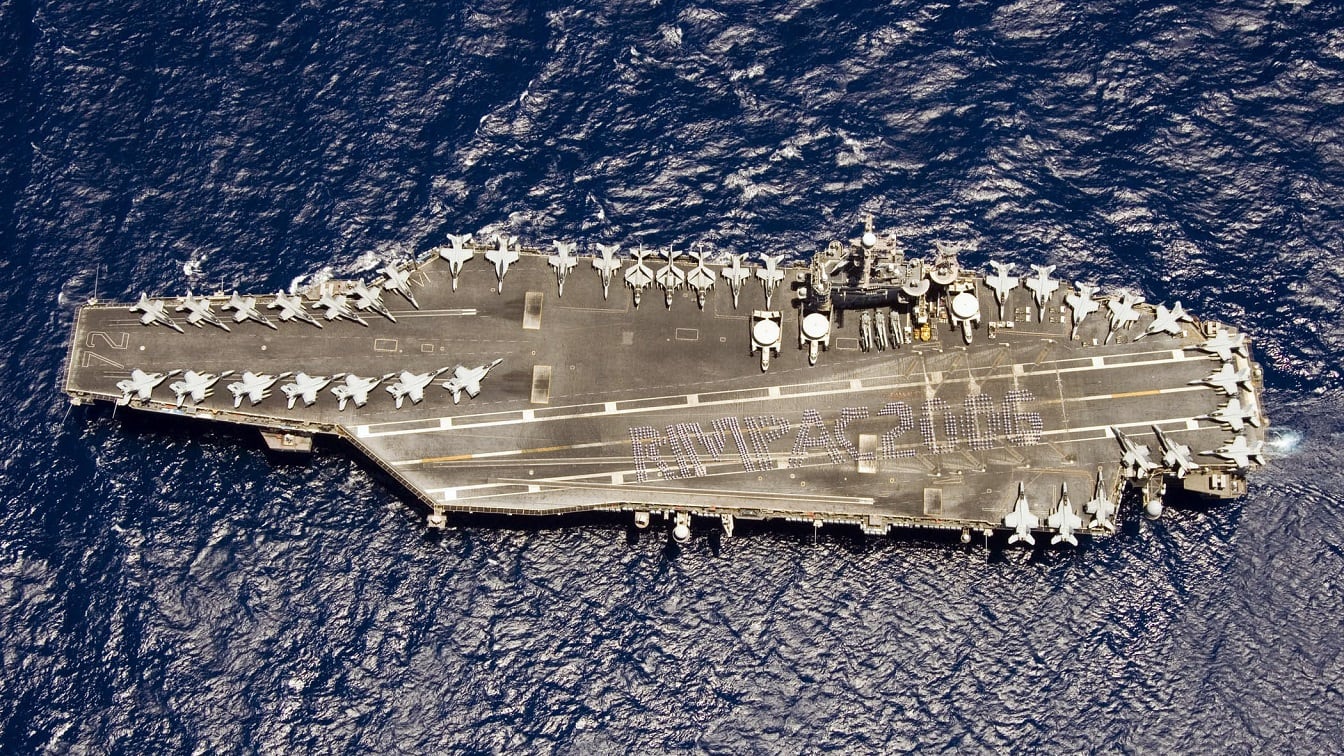
Five retired American supercarriers changed hands for one cent each: Forrestal in 2013, Saratoga in 2014, then Ranger, and finally Kitty Hawk and John F. Kennedy together in 2021. Each had cost hundreds of millions of dollars to build at the time, several billion in today’s money, and each went to a Texas shipbreaker for nothing. On two more, Constellation and Independence, the Navy did not even collect a penny; it paid the scrapper millions of dollars to take the ships away. The arithmetic looks like institutional madness until the contracts are read closely, and then it becomes the most honest accounting in the fleet: a retired aircraft carrier is not an asset. It is a liability with a flight deck, and the penny is what a liability costs, at least, in this author’s humble opinion.
The Penny Club for US Navy Aircraft Carriers
The sales themselves span less than a decade.
Forrestal, the first supercarrier ever built, went to All Star Metals of Brownsville, Texas, in 2013 for one cent. Saratoga followed to ESCO Marine for the same price, then Ranger to International Shipbreaking Limited, whose Brownsville yard would become the fleet’s terminus.
In 2021, the Navy announced the sale of Kitty Hawk and John F. Kennedy, the last conventionally powered carriers, to International Shipbreaking for one cent apiece, and a Naval Sea Systems Command spokesman explained the number plainly: the contract values reflect that the company profits from the subsequent sale of the scrap steel, iron, and non-ferrous metals. Kitty Hawk’s final voyage made the point about what the buyer was getting: too broad for the Panama Canal, the dead hull was towed around South America, a months-long journey to reach the cutting torches.
The class’s other members tell the rest of the roster’s story. Constellation was dismantled at the same Brownsville yard beginning in 2015, but under a contract in which the Navy paid the breaker roughly $3 million for the work, and Independence went under a paid dismantling contract as well; America, the fourth Kitty Hawk, was deliberately sunk in a 2005 survivability experiment. No supercarrier has ever fetched a real price.
Who Pays Whom, and Why
The penny is a legal instrument, not a market verdict. On the early deals, Naval Sea Systems Command structured the transactions as procurement contracts rather than ordinary sales: the Navy paid the breaker the cent, retained ownership of the hull until it physically ceased to exist, and granted the company the metal recovered along the way as its compensation.
The contractor assumed everything else, the towing, the hazardous-material remediation, the insurance, the regulatory compliance, and the years of labor, betting that the recovered steel, aluminum, copper, and copper-nickel would outrun those costs. Whether the ledger shows the Navy receiving a cent or paying millions on a given ship is simply the market’s estimate of that bet on that hull in that year.
When scrap prices are strong, and the ship is comparatively clean, the breaker will take the job for the token; when the hazard load is heavier or the metal market softer, the Navy pays the difference. Either way, the service’s objective is identical, and it is not revenue. It is the responsible disappearance of a thousand-foot industrial hazard, on a schedule, at a known cost, from the small number of American yards, effectively Brownsville, that hold the permits, workforce, and waterfront to swallow a carrier at all.
The Alternatives All Cost More
Every romantic alternative has been priced, and the penny beat them all.
Museum campaigns formed for nearly every ship on the list, and every one collapsed against the same numbers: tens of millions to prepare and moor a supercarrier, then decades of maintenance that have strained even the successful museum ships of smaller classes, and the Navy has signaled that no future carrier is likely to be donated at all.
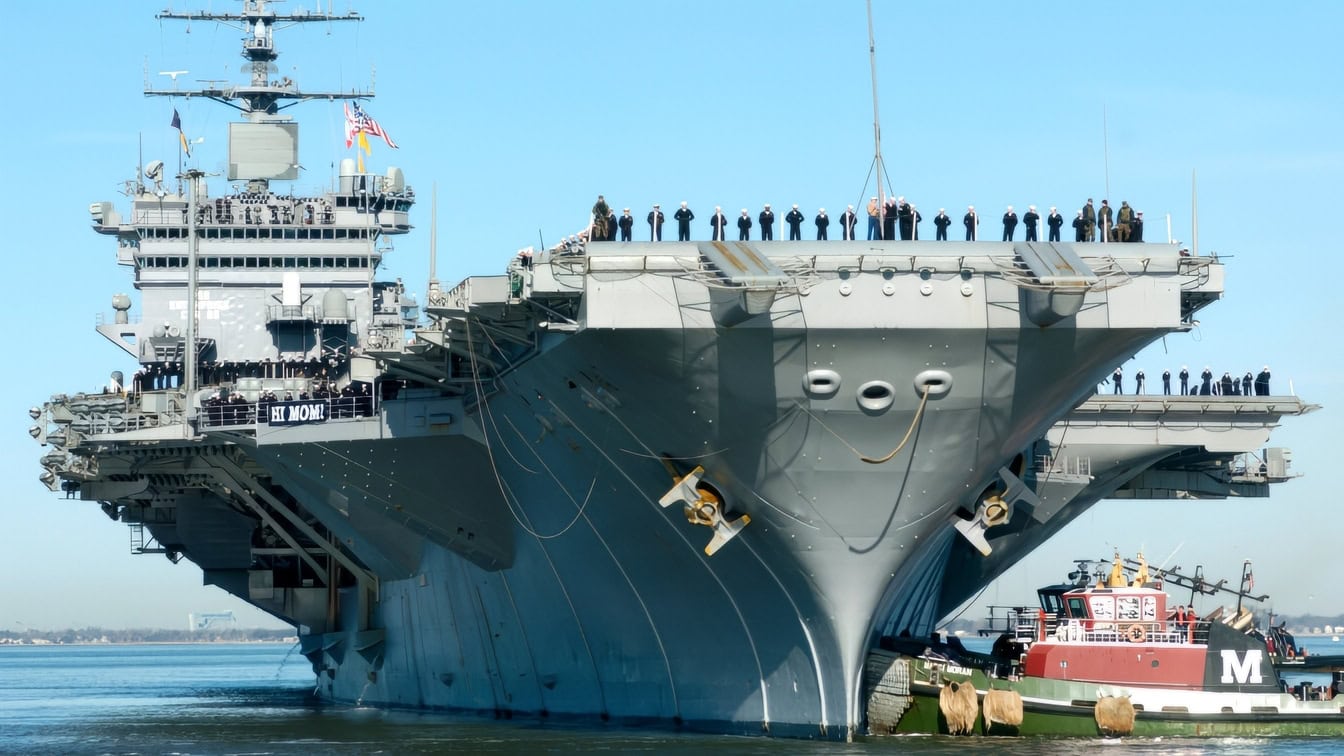
Naval Station Norfolk, Va. (Feb. 29, 2004) – The crew “mans the rails” aboard the nuclear powered aircraft carrier USS Enterprise (CVN 65) as she approaches pier 12 where thousands of family members await. The carrier completed a six-month deployment in support of the global war on terrorism. U.S. Navy photo by Chief Journalist (SW/AW) Dave Fliesen, Fleet Combat Camera, Atlantic. (RELEASED)
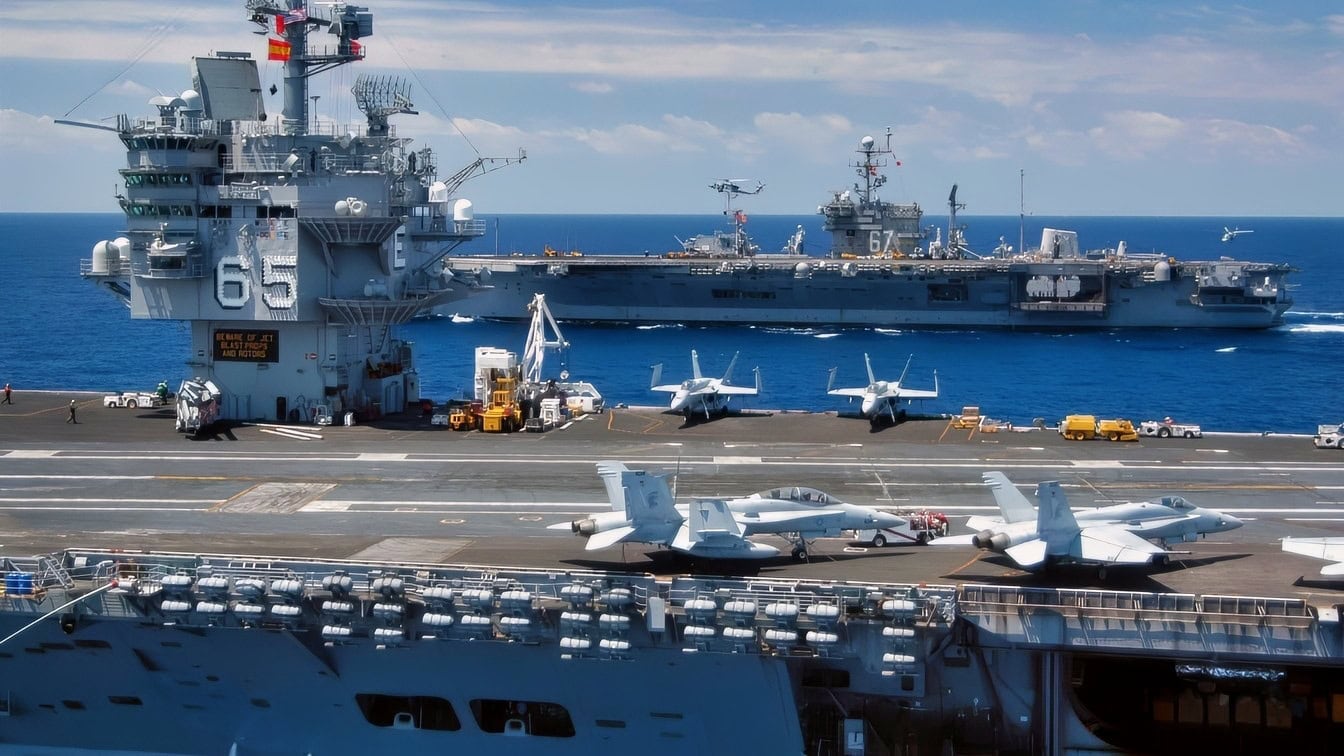
040423-N-8704K-011 Atlantic Ocean April 23, 2004. The USS Enterprise (CVN65) and the USS John F. Kennedy (CV67) steam along side each other while transferring ammunitionin in the Atlantic Ocean on April 23,2004. The Kennedy received ordnance from from the USS Enterprise (CVN65) and the USS Seattle (AOE3) in preperation of an upcoming deployment.
US Navy photo by: Photographers Mate Third Class (AW/SW) Joshua Karsten
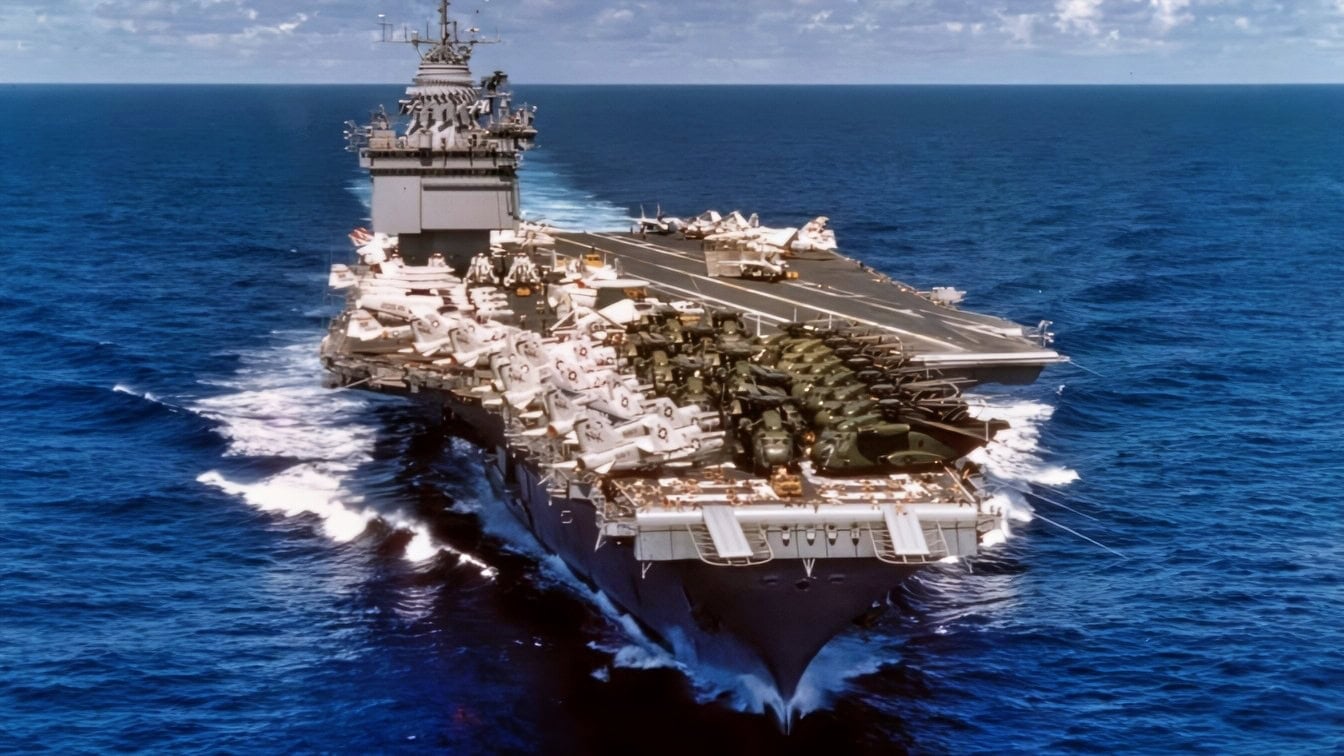
USS Enterprise Nuclear Aircraft Carrier Creative Commons
The artificial-reef route was tried exactly once at supercarrier scale, when Oriskany was scuttled off Florida in 2006 after roughly $20 million and years of environmental preparation, a figure that made sinking a ship for free more expensive than paying Brownsville to erase one. Mothballing merely defers the bill while adding rent: Kitty Hawk and Kennedy sat in inactive maintenance for over a decade, costing money every year, before the one-cent contracts finally closed the accounts. The scrapyard is not the cheapest undignified option. It is the cheapest option, full stop.
The Nuclear Bill Comes Due
The penny era is over, because the conventional carriers are gone, and what replaces it makes a cent look like the good old days, a subject this publication’s accounting of the full price spread laid out ship by ship.
Enterprise, the first nuclear carrier, cannot be handed to a breaker for a token, because her eight defueled reactor compartments make her a radiological project rather than a scrapping job; the Navy’s commercial dismantlement of the ship is priced at $1.28 billion and scheduled to run through 2030.
Behind her wait Nimitz, now entering the inactivation process, and ten sisters, each a comparable undertaking, which means the fleet the penny sales quietly closed out was the last generation of carriers America will ever dispose of at a profit to anyone.
The contract mechanics this publication has traced through the one-cent deals, and the reality that the buyer was never getting a bargain, scale up by three orders of magnitude when a reactor enters the hull.
The lesson runs the same direction as every disposal story this publication has followed since the first penny carrier coverage: the bill for taking a warship apart is written into it on the day the keel is laid, and the nuclear fleet wrote itself the largest such bills in naval history. The penny was never the absurdity, at least in my view.
The penny was the last time getting rid of an aircraft carrier would ever be that cheap. It all sounds crazy, until you dig into the facts.
About the Author: Harry J. Kazianis
Harry J. Kazianis (@Grecianformula) was the former Senior Director of National Security Affairs at the Center for the National Interest (CFTNI), a foreign policy think tank founded by Richard Nixon based in Washington, DC. Harry has over a decade of experience in think tanks and national security publishing. His ideas have been published in the NY Times, The Washington Post, The Wall Street Journal, CNN, and many other outlets. He has held positions at CSIS, the Heritage Foundation, the University of Nottingham, and several other institutions related to national security research and studies. He is the former Executive Editor of the National Interest and the Diplomat. He holds a Master’s degree focusing on international affairs from Harvard University.

