Dozens of U.S. Army pilots cut from aviation roles may find a new home not elsewhere in the U.S. Army — but in service with the U.S. Navy. Though hundreds of U.S. Army pilots were cut from their aviation roles following a thinning of the Army’s aviation presence, up to 75 of the pilots may transfer. The cuts happened last year and hit more junior aviators hardest.
As the U.S. Army transitions to more unmanned, autonomous aircraft, the need for combat aviators has diminished, leaving some aviators in a kind of uncertain limbo.
And while the U.S. Navy cannot adopt all the aviators the Army ditched, it seems keen to snap up the best it can find.
Speaking to Task & Purpose, a respected defense website, a U.S. Navy spokesperson said the branch is exploring the transfer of 75 U.S. Army pilots to the Navy.
“This is not a new or standalone recruitment program, but the Navy has a long-standing tradition of interservice transfers between service branches when the opportunity aligns,” the U.S. Navy official explained. “Interservice transfers are a standard opportunity to align experienced talent with mission requirements and provide a clear path for continued service in uniform.”
Retaining Pilots is an Issue Across Branches
The United States Navy is keen to retain its aviation talent, sweetening the deal with a healthy injection of cash. Some monetary incentives for senior aviation leaders are sizable, ranging from $37,000 to $150,000.
The need for experienced pilots has grown so great — and the struggle to retain them so intense — that lawmakers earlier this spring began mulling changes to what time-in-service could look like.
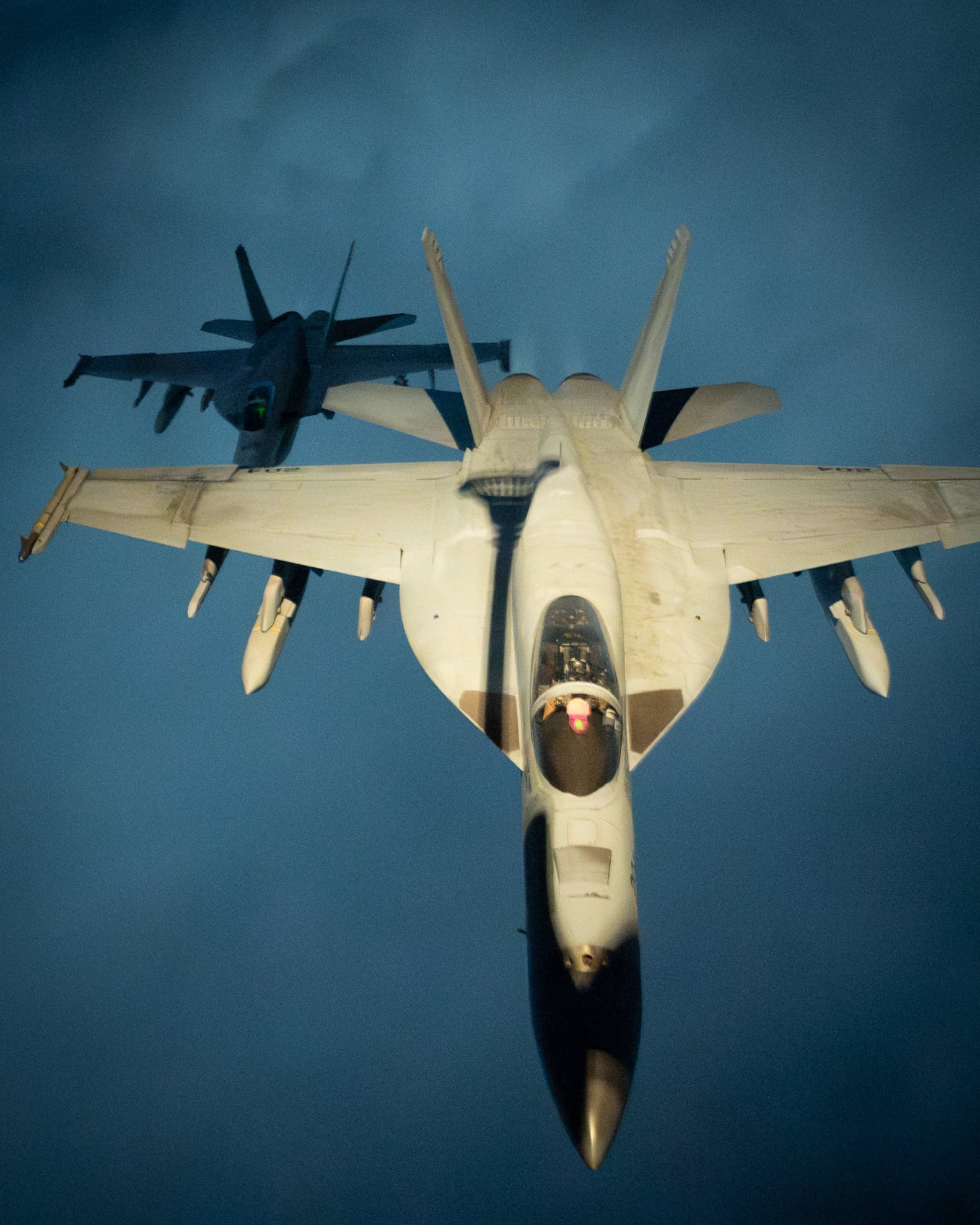
Two U.S. Navy F/A-18 Super Hornets fly in formation over the U.S. Central Command area of responsibility, April 5, 2025. The Super Hornets are assigned to the Truman Carrier Strike Group, which is responsible for patrolling approximately 2.5 million square miles of water space and includes the Arabian Gulf, Gulf of Oman, Red Sea, parts of the Indian Ocean and three critical choke points at the Strait of Hormuz, Suez Canal and Strait of Bab al-Mandeb (U.S. Air Force photo by Staff Sgt. Gerald R. Willis)
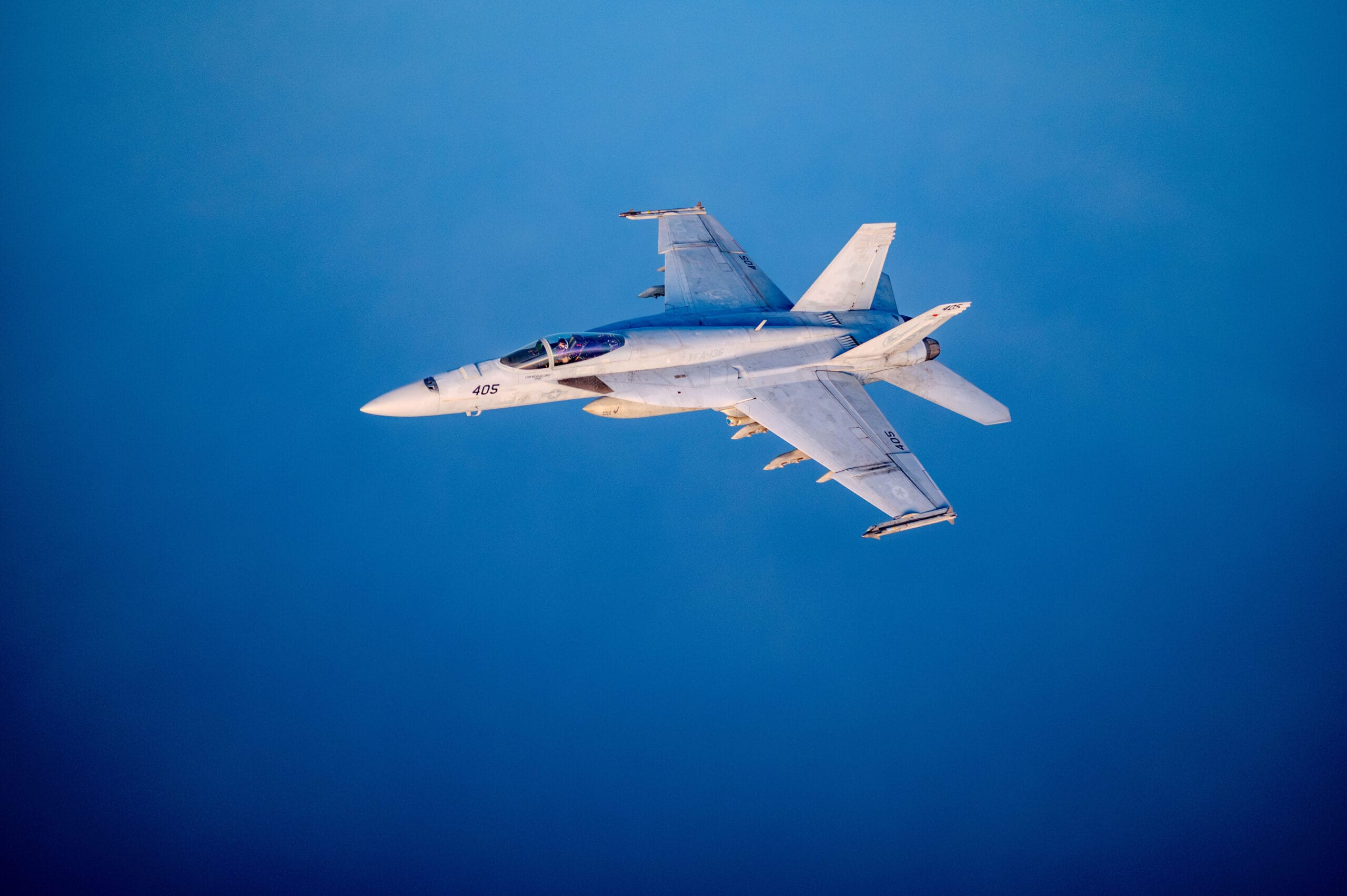
A U.S. Navy F/A-18 Super Hornet, assigned to the Harry S. Truman Carrier Strike Group, flies a mission over the U.S. Central Command area of responsibility, April 8, 2025. The HSTCSG is responsible for patrolling approximately 2.5 million square miles of ocean and includes the Arabian Gulf, Gulf of Oman, Red Sea, parts of the Indian Ocean and three critical choke points at the Strait of Hormuz, Suez Canal and Strait of Bab al-Mandeb. (U.S. Air Force photo by Staff Sgt. Jackson Manske)
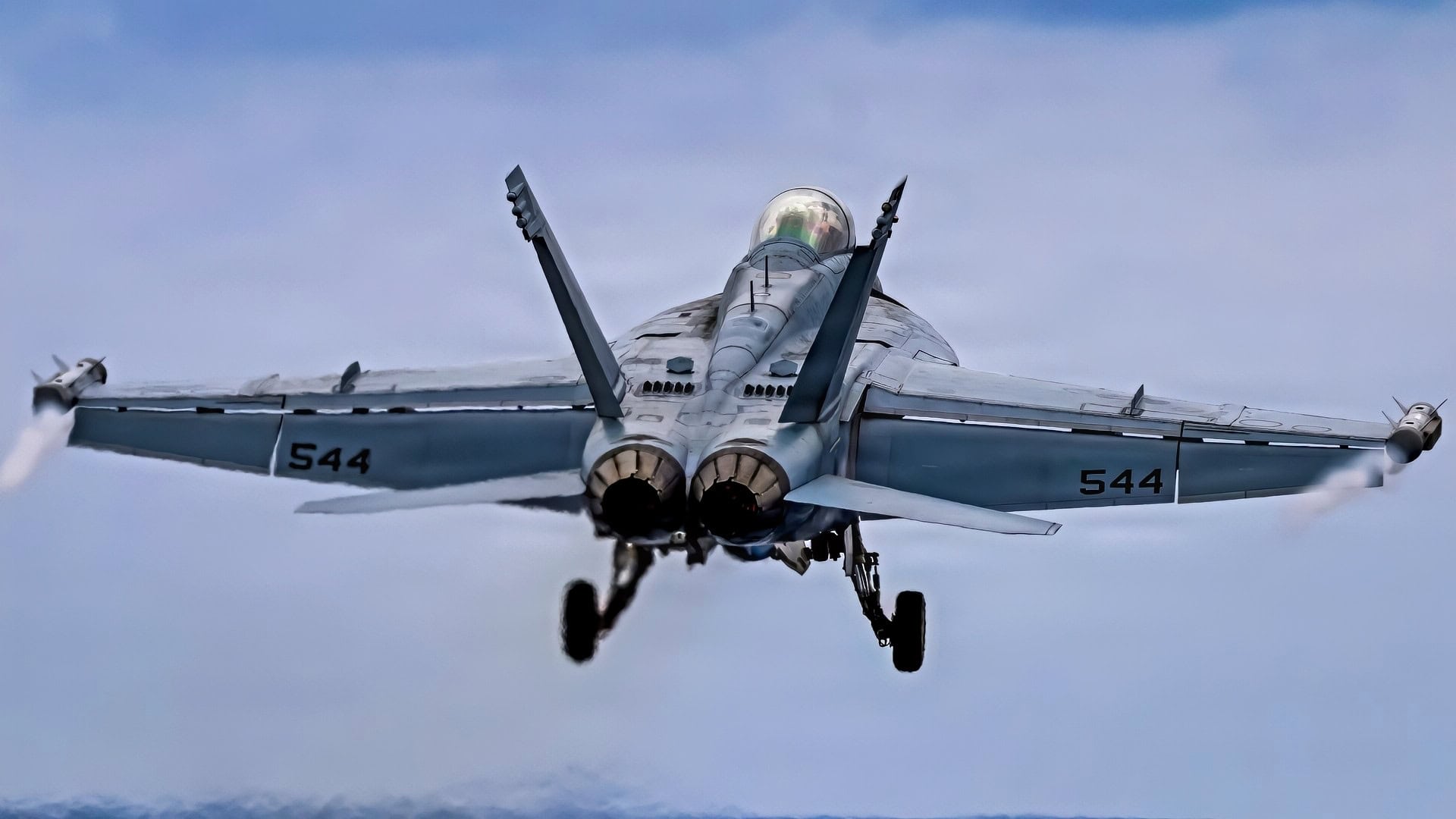
PACIFIC OCEAN (March 31, 2026) –U.S. Navy Capt. William Mathis, commanding officer of the Nimitz-class aircraft carrier USS Theodore Roosevelt (CVN 71), pilots a E/A-18G Growler assigned to Electronic Attack Squadron (VAQ) 129, March 31, 2026. Theodore Roosevelt, flagship of Carrier Strike Group (CSG) 9, is underway conducting exercises to bolster strike group readiness and capability in the U.S. 3rd Fleet area of operations. (U.S. Navy Photo by Mass Communication Specialist 2nd Class Ryan Holloway)
One proposal was a sabbatical, or a career intermission, during which U.S. Air Force pilots could take time off and return to service later.
Retention Enhancements for Tactical Aircrew Initiative
The two bills that would facilitate sabbatical periods for eligible aviators —called the Retention Enhancements for Tactical Aircrew Initiative, or RETAIN, and the Fighter Aircrew Career Flexibility Act —would make a raft of incentives available beyond time off.
Pilots with more than 8 years of experience would receive up to $1,500 per month in incentive pay, and the maximum cash bonuses for eligible pilots would increase from $50,000 to $100,000, along with several other quality-of-life incentives.
And while the financial bonuses are certainly substantial, it remains to be seen whether they, along with the other non-financial bonuses, will be enough to retain aviators.
Speaking to Air & Space Forces Magazine, Matt Donovan, the former Undersecretary and Acting Secretary of the Air Force and a qualified F-15 pilot, expressed skepticism.
“You can pay people any amount of money, but flyers want to fly,” Donovan said to Air & Space Forces Magazine. “And from what I understand… they’re getting about half the number of sorties and half the number of hours that they were getting even 10, 15 years ago. So if flyers aren’t flying, they’re going to go someplace where they can fly, especially the younger guys, the captains and majors.”
A Sabbatical in Name Only
The proposed U.S. Air Force sabbatical scheme would allow aviators who successfully completed Undergraduate Pilot Training or Undergraduate Navigator Training to request four to twelve months off.
If a wing commander granted it, those pilots would be placed on Individual Ready Reserve, ready to be called up in case of war, and would draw a fraction of their pay along with some benefits.
But the sabbatical period is not without costs.
For every month of time off taken, an extra two months of regular service will be added to their service commitment, a prospect that would almost certainly deter many prospective employees from taking time off.
Donavan was, however, deeply skeptical about the proposed retention scheme as it currently stands.
“These sort of schemes have been tried before,” he explained. “They don’t work very well because… the rated management system isn’t set up for people to just decide where they want to go and go do it.”
About the Author: Caleb Larson
Caleb Larson is an American multiformat journalist based in Berlin, Germany. His work covers the intersection of conflict and society, focusing on American foreign policy and European security. He has reported from Germany, Russia, and the United States. Most recently, he covered the war in Ukraine, reporting extensively on the war’s shifting battle lines from Donbas and writing on the war’s civilian and humanitarian toll. Previously, he worked as a Defense Reporter for POLITICO Europe. You can follow his latest work on X.