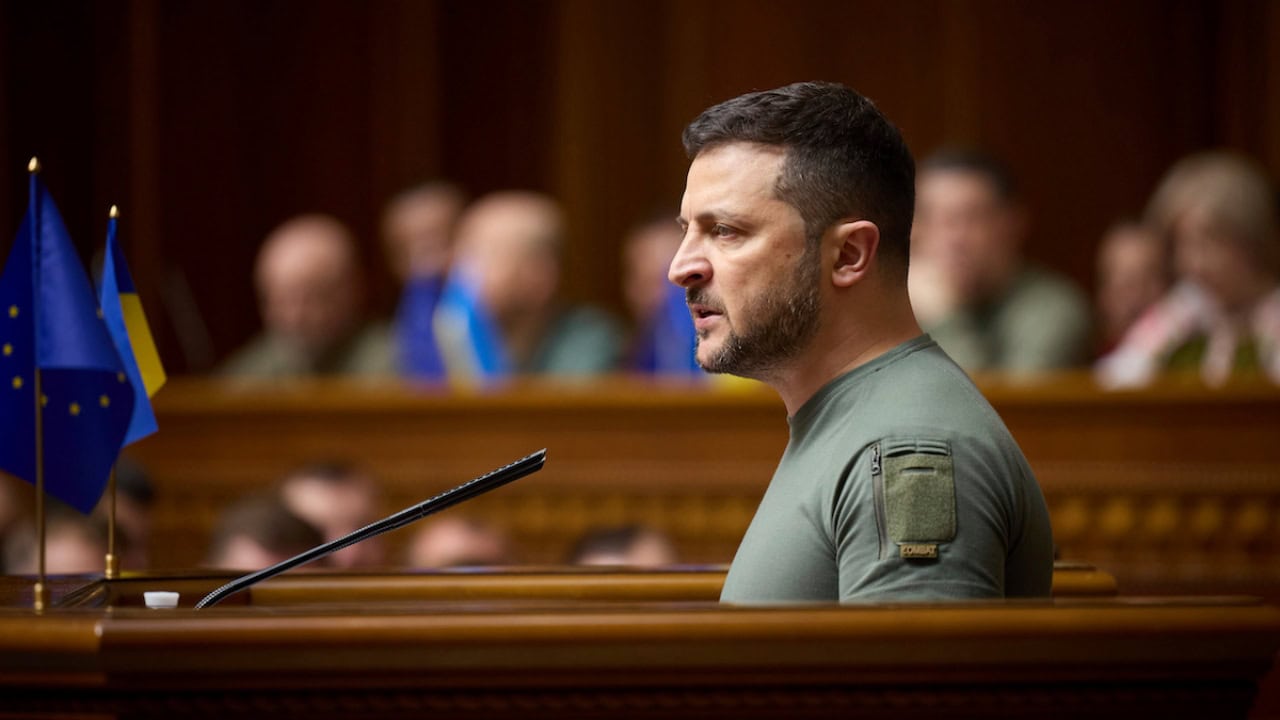
According to newly appointed Prime Minister Serhii Koretskyi, Ukraine must implement wide-ranging budget cuts in the coming weeks.
Unless lawmakers in parliament adopt unpopular changes, the country will be unable to access billions in Western aid ahead of the coming winter.
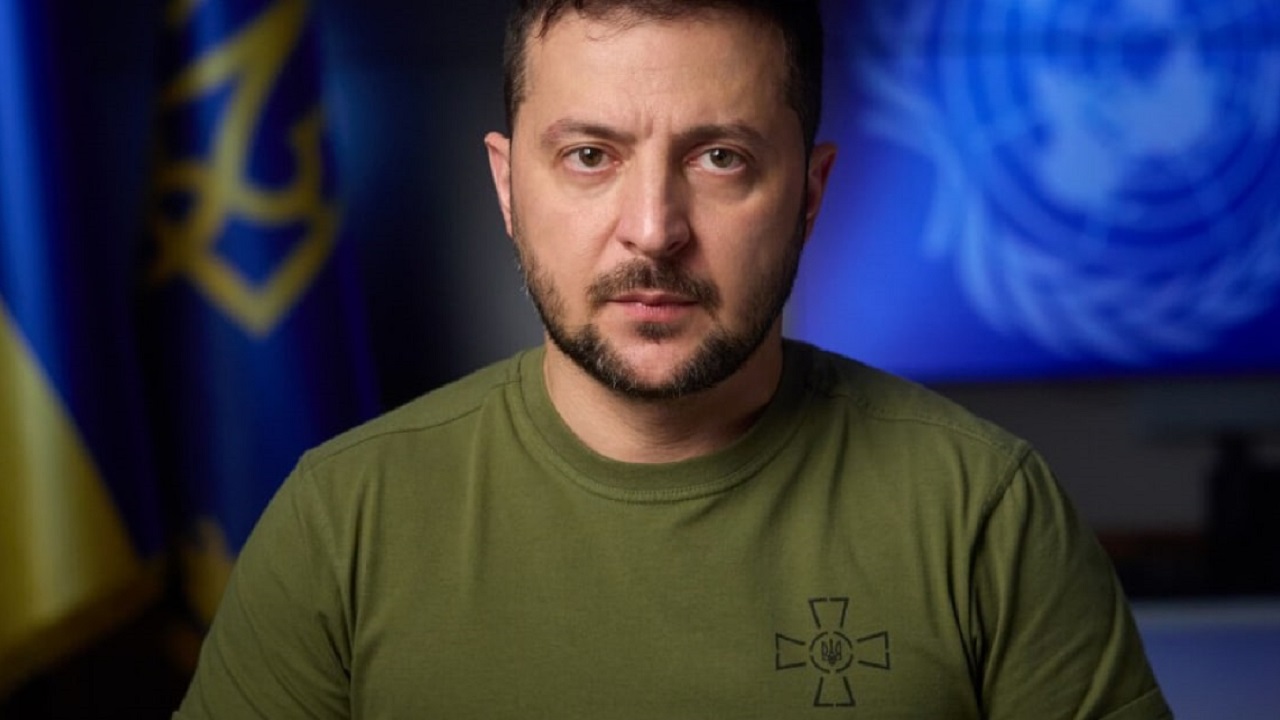
Ukraine’s President Zelensky. Image Credit: Creative Commons.
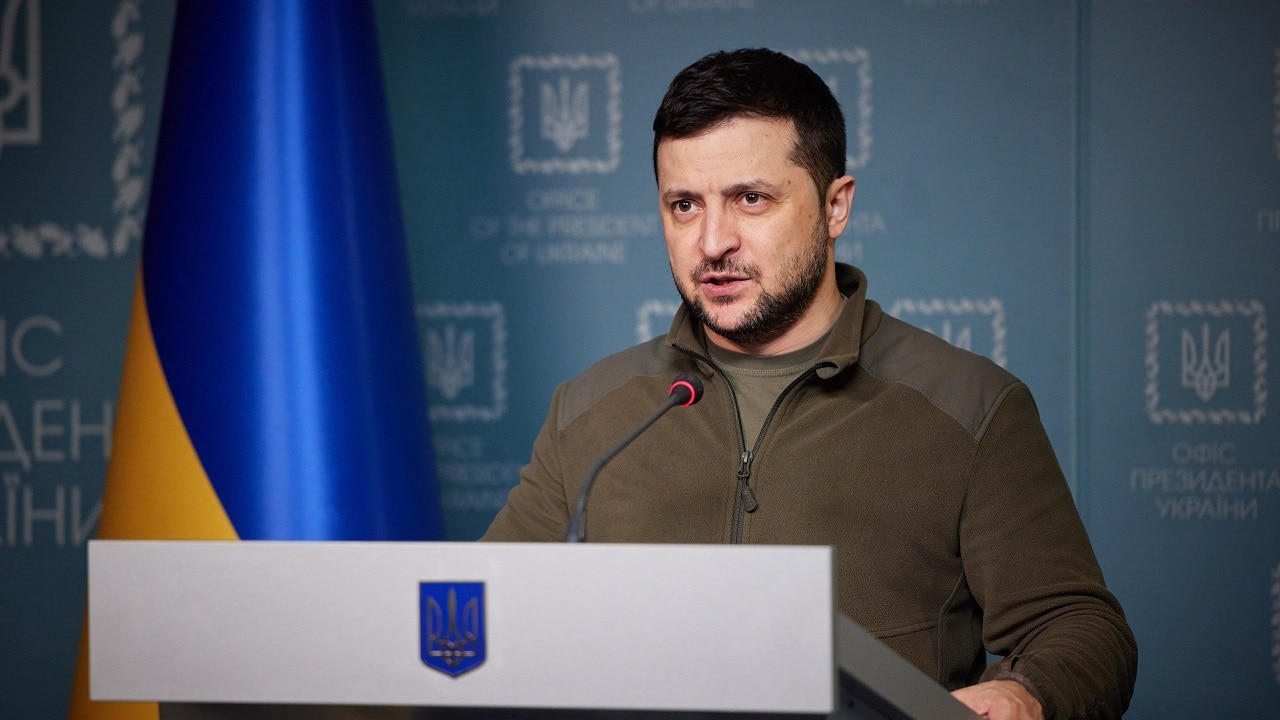
Volodymyr Zelensky. Image Credit: Creative Commons.
Due to Russia’s intensified strikes on Ukraine’s energy infrastructure, this winter is projected to see the worst heating and electricity shortfalls since the war began.
But worse than the unpreparedness for the winter months is that the state faces an unexpected $27 billion budget gap for defense requirements that Ukrainian officials say must be filled by year’s end.
A months-long deadlock in parliament, the Verkhovna Rada, has already delayed close to $4 billion in European Union assistance that was scheduled to arrive in the third quarter of this year, the PM told Bloomberg News.
He described Ukraine’s public finances as “close to critical” in remarks he made Monday on his Telegram channel.
On 14 September, President Volodymyr Zelenskiy and the PM called on lawmakers to move forward legislation tied to Ukraine’s international support.
Koretskyi also announced the dismissal of the acting State Tax Service Head Lesia Karnaukh in the middle of the scramble over this budget shortfall.
The government issued its warnings after failing to move the legislation forward through parliament.
These bills must be passed and enacted in accordance with Ukraine’s commitments to the International Monetary Fund.
Among these measures is a bill imposing a highly unpopular and controversial parcel tax, which some interpret as targeting lower-income segments of the population.
The Missile Hazard
Another gap, and one that is widening by the day, is the one between the number of missiles Russia can churn out of its production lines and the number of interceptors Ukraine has on hand to shoot them down.
Zelenskiy has said this week that Russia is now producing 140 ballistic missiles per month.
Since late August, almost daily waves of missiles and drones have been raining down on Ukraine’s capital and other cities.
Ukraine’s air defenses are increasingly unable to cope with the number of missiles coming from Russia’s expanding arsenal.
To intercept those missiles, Zelenskiy said, Ukraine requires a 2:1 ratio — a total of 280 interceptors.
He emphasized that he is requesting hundreds of US-made Patriot and other interceptors as necessary “for the difficult, cold months ahead.”
The Ukrainian leader is asking them to be provided from US and European nations’ stockpiles. There is simply no time to manufacture them in the numbers needed in the months ahead.
“With all due respect to the Europeans — they have provided a great deal of assistance, and we appreciate it — they need to share these missiles to help save lives,” he stated.
In the past weeks, Russia has ramped up its production and use of jet-powered drones, practically doubling the numbers launched from July to August.
Patriot missiles are not needed to take down these drones, which can evade Ukraine’s defenses more effectively, but they do require more sophisticated short-range interceptors, such as the Diehl IRIS-T IR-guided missile.
Dozens of Bills Required To Be Passed by 15 October
“I urge all members of parliament to pass the necessary bills as soon as possible, as they are crucial for receiving international financial assistance,” said the PM.
Failure to pass these bills by the required deadlines could cost the country billions, Koretskyi said. In particular, Ukraine could lose out on “a significant portion” of $29.5 billion in planned funds.
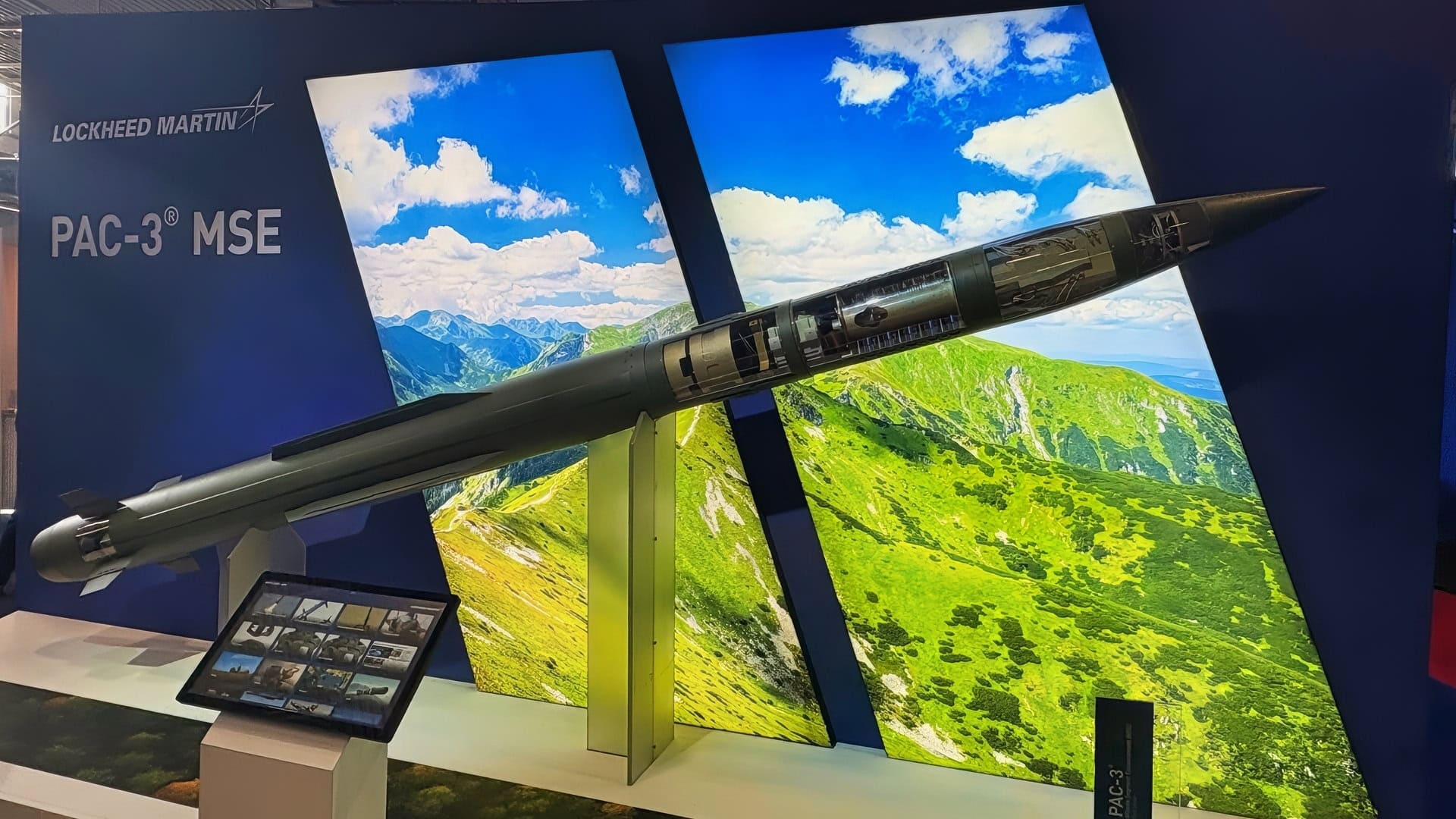
PAC-3 MSE Patriot Missile 19FortyFive Image from Poland
To do its part in the crisis, the government will accelerate the planned implementation of over 40 decisions Ukraine must adopt to secure the planned international assistance funding.
Previously, Koretskyi had set a later deadline of 1 November for the government to complete this process.
Zelenskiy reiterated the importance of the bills in his evening address.
“To close this budget deficit and continue the necessary payments, parliamentarians and the government must work together as seamlessly as possible,” he said. “The list of laws and government decisions that need to be adopted is quite specific. … The list includes both popular and unpopular decisions, but each one represents specific funds to ensure that Ukraine survives and can defend itself.
About the Author: Reuben F. Johnson
Reuben F. Johnson has thirty-six years of experience analyzing and reporting on foreign weapons systems, defense technologies, and international arms export policy. Johnson is the Korea Fellow at the Casimir Pulaski Foundation. He is also a survivor of the Russian invasion of Ukraine in February 2022. He worked for years in the American defense industry as a foreign technology analyst and later as a consultant for the U.S. Department of Defense, the Departments of the Navy and Air Force, and the governments of the United Kingdom and Australia. In 2022-2023, he won two awards in a row for his defense reporting. He holds a bachelor’s degree from DePauw University and a master’s degree from Miami University in Ohio, specializing in Soviet and Russian studies. He lives in Warsaw.