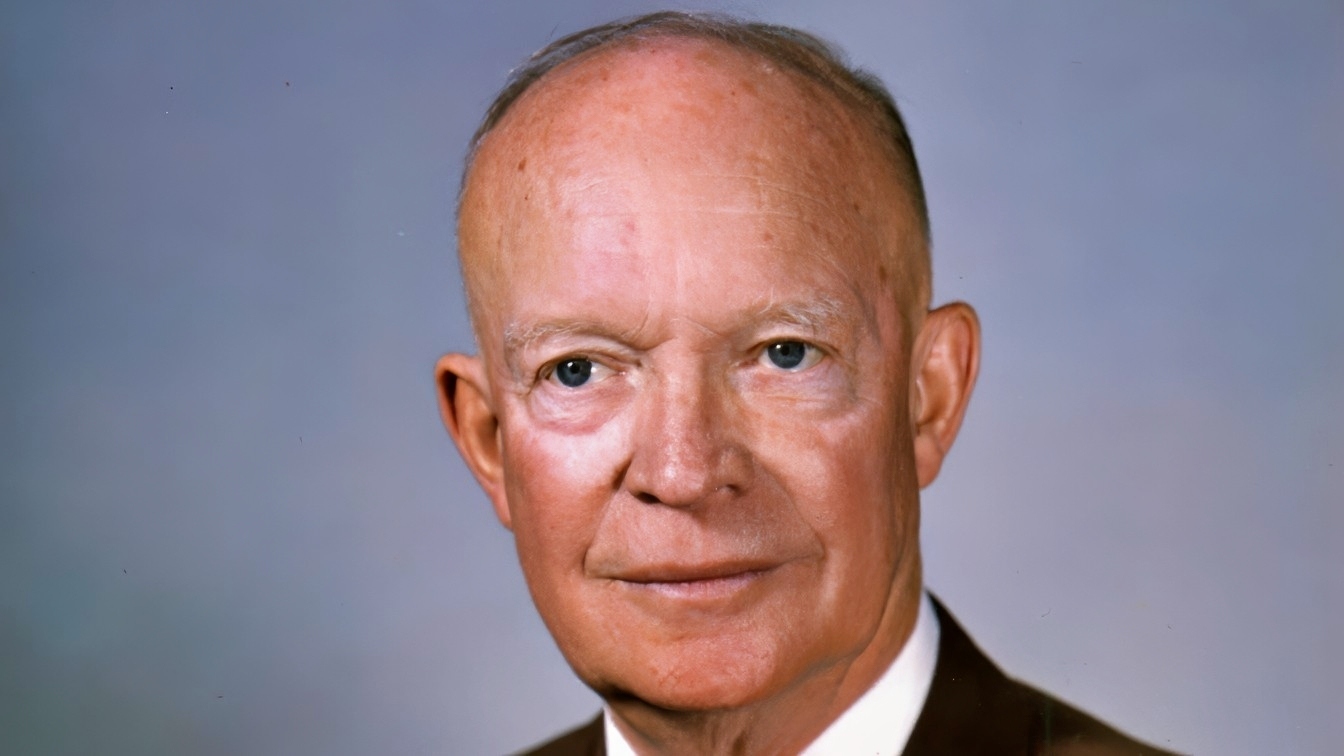
“I hate war as only a soldier who has lived it can, only as one who has seen its brutality, its futility, its stupidity.” Dwight D. Eisenhower said those powerful words, among other statements throughout his career, that reflected a true experience few of his colleagues and predecessors had. Yes, America has had military men serve as president before.
The Horrors of War
But no American president had seen the horrors–experienced the agony–of the kind of modern War that the Second World War was. And Eisenhower led the European Theater of that War against the Germans, one of the fiercest military opponents the United States had ever faced.
Eisenhower began World War II as the commander of the War Plans Division in Washington, D.C. He was personally appointed to that role by none other than General George C. Marshall, who would be remembered by many of his peers as the “Greatest Living American.”
Eisenhower was appointed to that role in 1941. However, he did not stay in the War Plans Office in D.C. for long. Within a year, Eisenhower led the Allied landings in French North Africa during Operation Torch.
It was a multinational operation, meaning Eisenhower had to have specialized skills in navigating the complexities of commanding a force of officers and troops from multiple nations. He did that aspect of the mission with stunning aplomb. Indeed, Operation Torch in 1942 was what led many of his superiors — and even foreign leaders in Britain — to think that Eisenhower was the man made to lead the Allies in the Normandy landings and the ultimate invasion of Europe.
From Operation Torch, Ike oversaw the Allied invasions of Sicily and even mainland Italy.
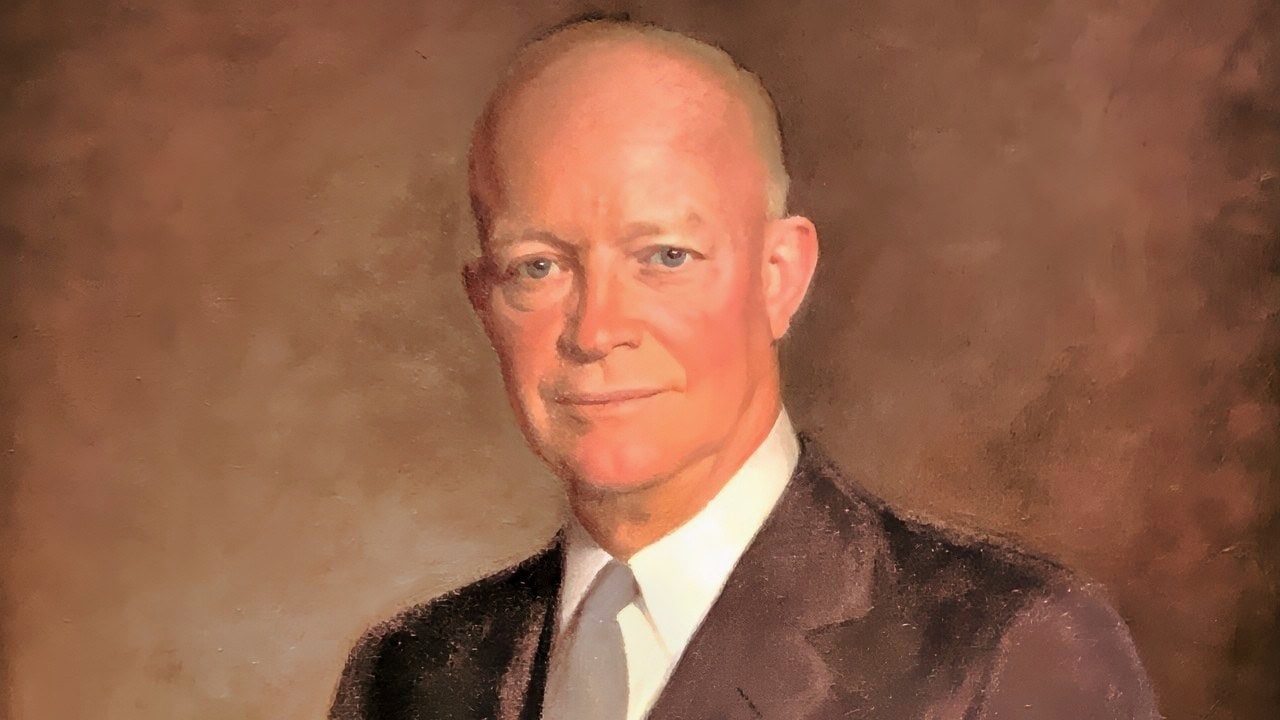
Dwight D. Eisenhower President. Image Credit: Creative Commons.
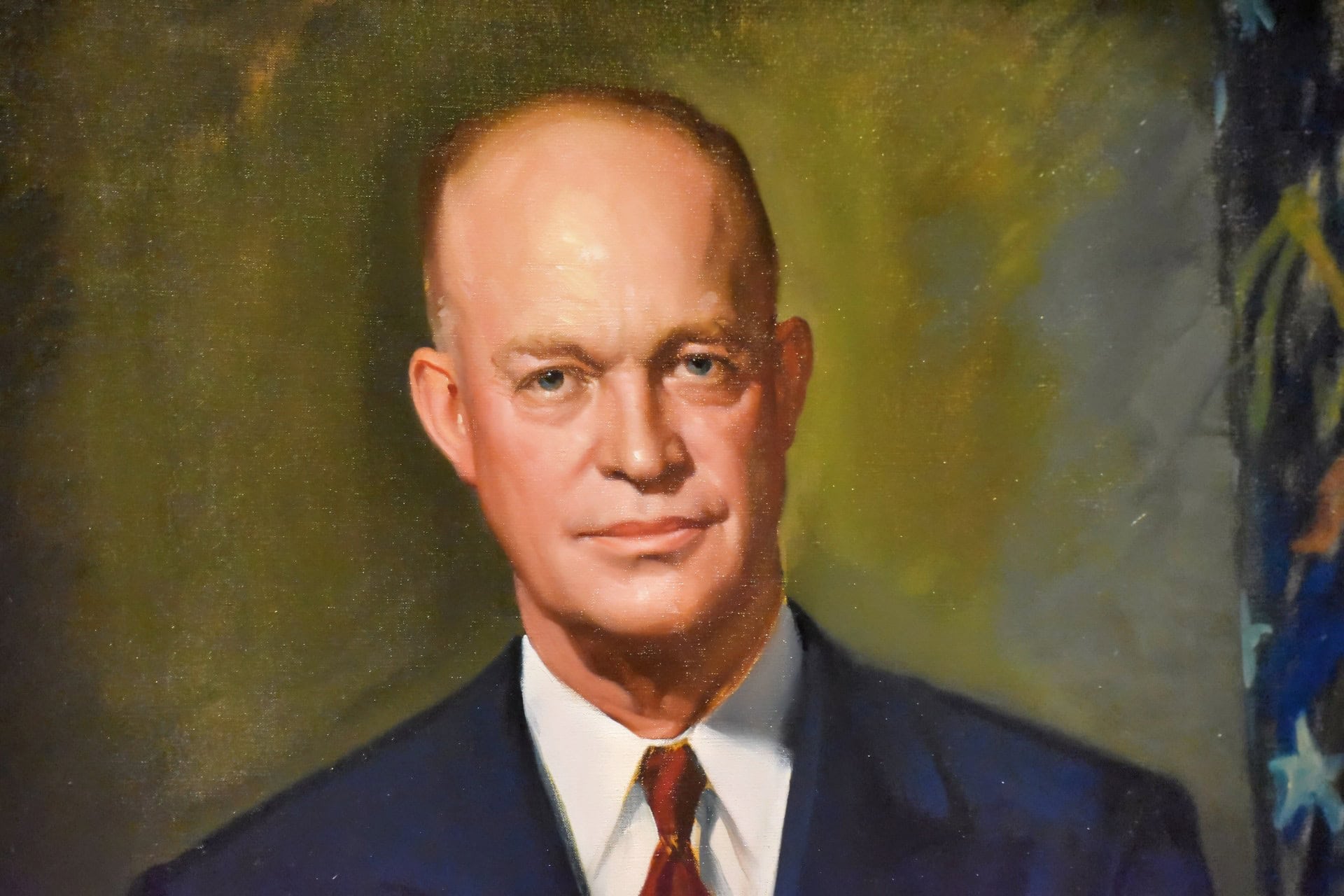
Dwight D. Eisenhower 19FortyFive.com Image. Taken on 1/23/2026 at the National Portrait Gallery in Washington, DC By Dr. Brent M. Eastwood.
One of Ike’s greatest gifts was his ability to organize for victory. Unlike some of the other well-known men who served alongside him. General George Patton often appeared exasperated by Eisenhower’s many olive branches to Allied generals.
Omar Bradley would often defend Eisenhower’s decisions to the exasperated Patton.
Fundamentally, though, Eisenhower could bring himself out of the American mindset–much to Patton’s chagrin–and place himself in the boots of other, foreign allies, respecting their wants and needs as much as he respected his fellow American commanders’ needs.
Italy was basically a proving ground for American forces in combat.
It was also a real test to see how well American and Allied forces could integrate and operate.
Over time, and this is in no small part because of Eisenhower’s overall leadership, the Allies became sharpened into a lethal fighting force that toppled Mussolini, pushed back the Germans who were defending Mussolini’s Fascist regime, and set the stage for the kind of leadership and structure that would topple Hitler’s regime in 1945.
Operation Overlord
And that’s when the Allies went to Eisenhower to lead Operation Overlord in 1944.
The invasion of France would be the most complex military undertaking in history until that point.
In some respects, there has not been an amphibious landing as massive and complex since those landings on June 6, 1944. The Allies had to get it right.
Germany wasn’t Italy.
It was a hardened target surrounded by sharp steel and serious defenders. Breaking through it would require more than greater force.
It needed skill and brains.
Eisenhower brought a keen understanding of tactics.
He also understood the overall Allied strategy.
More importantly, though, he had built political capital among the Allies.
He was a man that everyone could get behind.
Beyond that, Eisenhower could organize a multinational force like no other.
Patton may have been the greater tactician.
Bradley was undoubtedly the true “soldier’s general.” But Eisenhower knew how all individual parts fit into the whole.
An Organizational Mastermind
What’s more, Eisenhower knew how to lead men–and how to put them in Harm’s Way without needlessly sacrificing them or risking their lives.
Everything he did was calibrated to accomplish the mission while striving to keep as many of his men–including Allied troops–alive.
When he became president, Eisenhower demilitarized American foreign policy as much as possible in the post-Cold War era, favoring covert action against the Soviets and the threat of Massive Retaliation with nukes.
For Eisenhower, every bomb and bullet built was the equivalent of theft from the American taxpayer.
It was an opportunity for profound innovation or civilian business endeavor lost to the demands of the war state.
It’s what made Eisenhower one of the last truly great American presidents (as in, on a bipartisan basis).
About the author: Brandon J. Weichert
Brandon J. Weichert is the Senior National Security Editor at 19FortyFive.com. He also manages The Weichert Brief on Substack. Weichert also hosts “National Security Talk” on Rumble. He is the author of four bestselling national security books, most recently A Disaster of Our Own Making: How the West Lost Ukraine (Encounter Books). Follow him via Twitter/X @WeTheBrandon.