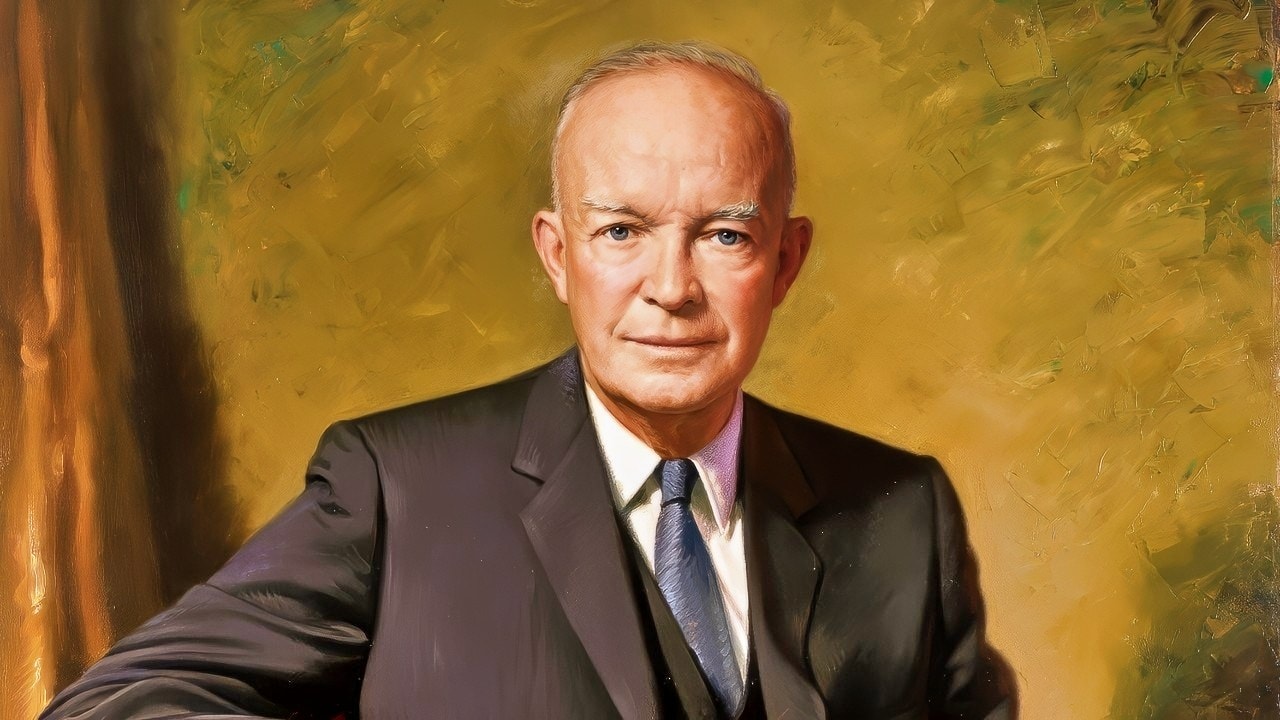
“The sergeant is the Army,” a line long attributed to Dwight D. Eisenhower, reduces military power to five words. The general who directed the Allied invasion of Western Europe understood that no headquarters plan survives unless sergeants turn it into disciplined action. Eisenhower became a five-star general, NATO’s first Supreme Allied Commander Europe, and the 34th president of the United States. The exact date and setting of the quotation are not firmly documented, but its meaning fits his career.
Dwight D. Eisenhower Explained
Eisenhower was born in Denison, Texas, on October 14, 1890, and grew up in Abilene, Kansas. With little money available for college, he pursued a service-academy education and entered West Point in 1911. He graduated in 1915, 64th in a class of 164, alongside Omar Bradley and other future generals from a group later nicknamed “the class the stars fell on.”
His first great disappointment came during World War I. Eisenhower wanted an overseas command, but the Army kept him in the United States because he was effective at organization and training. He finished the war commanding Camp Colt, a tank training center at Gettysburg. In 1919, he joined the Army’s transcontinental motor convoy, a punishing 3,251-mile journey that took 62 days, suffered 230 accidents, and exposed the weakness of the nation’s roads.
The interwar Army gave Eisenhower few chances for glory, but it prepared him for command. In Panama, Brig. Gen. Fox Conner pushed him to study history, military science, and coalition warfare. Eisenhower graduated first among 245 officers at the Command and General Staff School in 1926. He later worked for Douglas MacArthur in Washington and the Philippines. By 1940, after 25 years in uniform, he had finally reached the rank of colonel.
Eisenhower Became Supreme Commander Through Coalition Leadership
Japan’s attack on Pearl Harbor changed his career.
Army Chief of Staff George C. Marshall summoned Eisenhower to Washington in December 1941 and tested him with major strategic problems. Eisenhower soon became chief of the War Plans Division, traveled to Britain, and took command of American forces in Europe. He led Operation Torch in North Africa, then oversaw campaigns in Sicily and Italy while managing strong personalities and competing national interests. He also kept George S. Patton in the war after disciplining him for the 1943 slapping incidents.
President Franklin D. Roosevelt selected Eisenhower to command Operation Overlord in December 1943. The invasion assembled more than 2.8 million Allied troops in Britain and over 4,000 ships. On June 6, 1944, American troops hit Omaha and Utah beaches while British and Canadian forces landed farther east. Before the assault, Eisenhower wrote a short note accepting full responsibility if it failed. His son John graduated from West Point on the same day. Eisenhower missed the ceremony.
A documented 1954 remark expressed the same leadership philosophy as “The sergeant is the Army.” Eisenhower defined leadership as persuading people to act because they understood and accepted the mission, not because rank forced them. This was the institutional skill behind his rise. He had never led troops in a frontline trench, but he knew how to make an immense coalition move under pressure.
Eisenhower understood that the high command depended on work performed far below his headquarters. Plans written in England meant little unless noncommissioned officers kept units organized after landing craft scattered, radios failed, and officers became casualties. His belief that planning mattered more than any fixed plan reflected the same outlook: headquarters established the purpose, while trained leaders on the ground adapted to reality.
The Normandy lodgment held. Eisenhower’s command liberated France, entered Germany, and accepted the German military surrender in May 1945. He received his fifth star on December 20, 1944. His wartime achievement rested less on tactical brilliance than on coalition command, logistics, delegation, and his understanding that mistakes in war were paid for in casualties. The losses behind victory also explain why he later said he hated war as only a soldier who had lived it could.
Eisenhower Took Army Leadership to the White House
After the war, Eisenhower served as military governor of the American occupation zone in Germany, Army chief of staff and president of Columbia University.
President Harry Truman recalled him to active service in 1950 as NATO’s first Supreme Allied Commander Europe. Eisenhower returned home in 1952, won the presidency in a landslide, and served two terms from January 1953 to January 1961.
His administration helped secure the Korean armistice, created the Interstate Highway System, and established NASA. His civil-rights record was cautious and uneven, but he signed the Civil Rights Act of 1957, the first federal civil-rights law since Reconstruction, and sent federal troops to enforce school integration in Little Rock. He left office warning against unwarranted influence by the “military-industrial complex.”
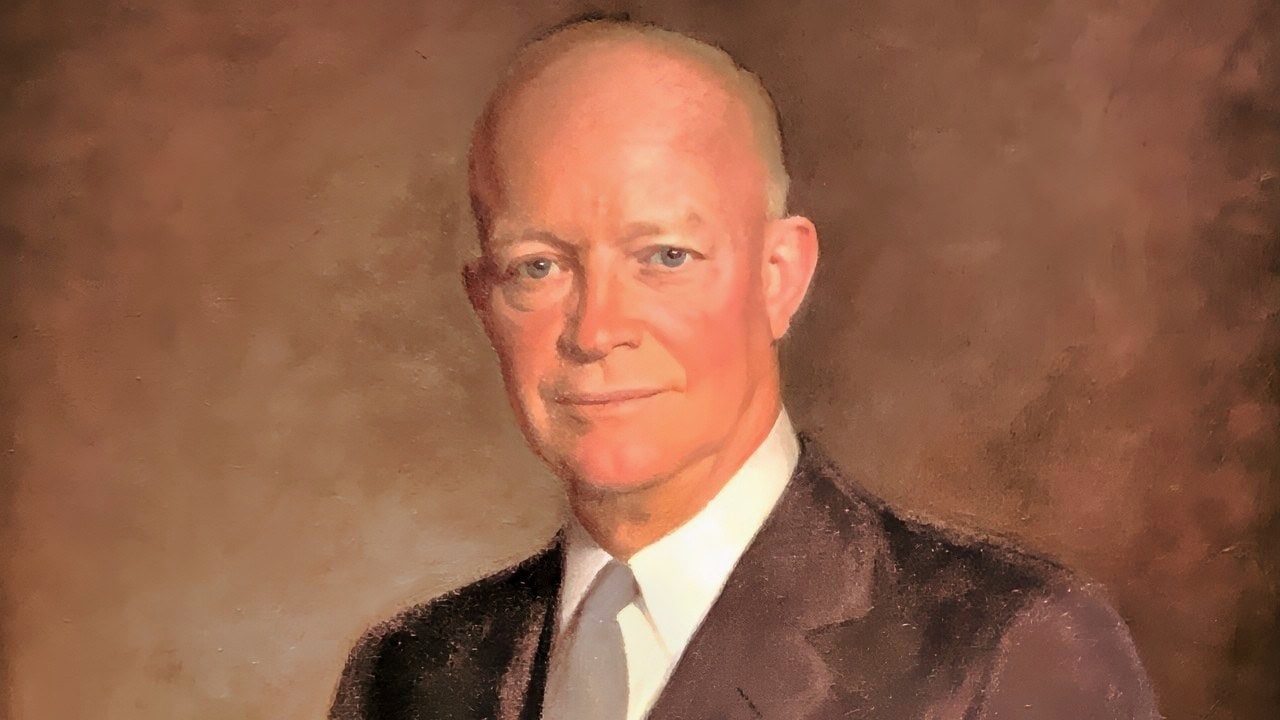
Dwight D. Eisenhower President. Image Credit: Creative Commons.
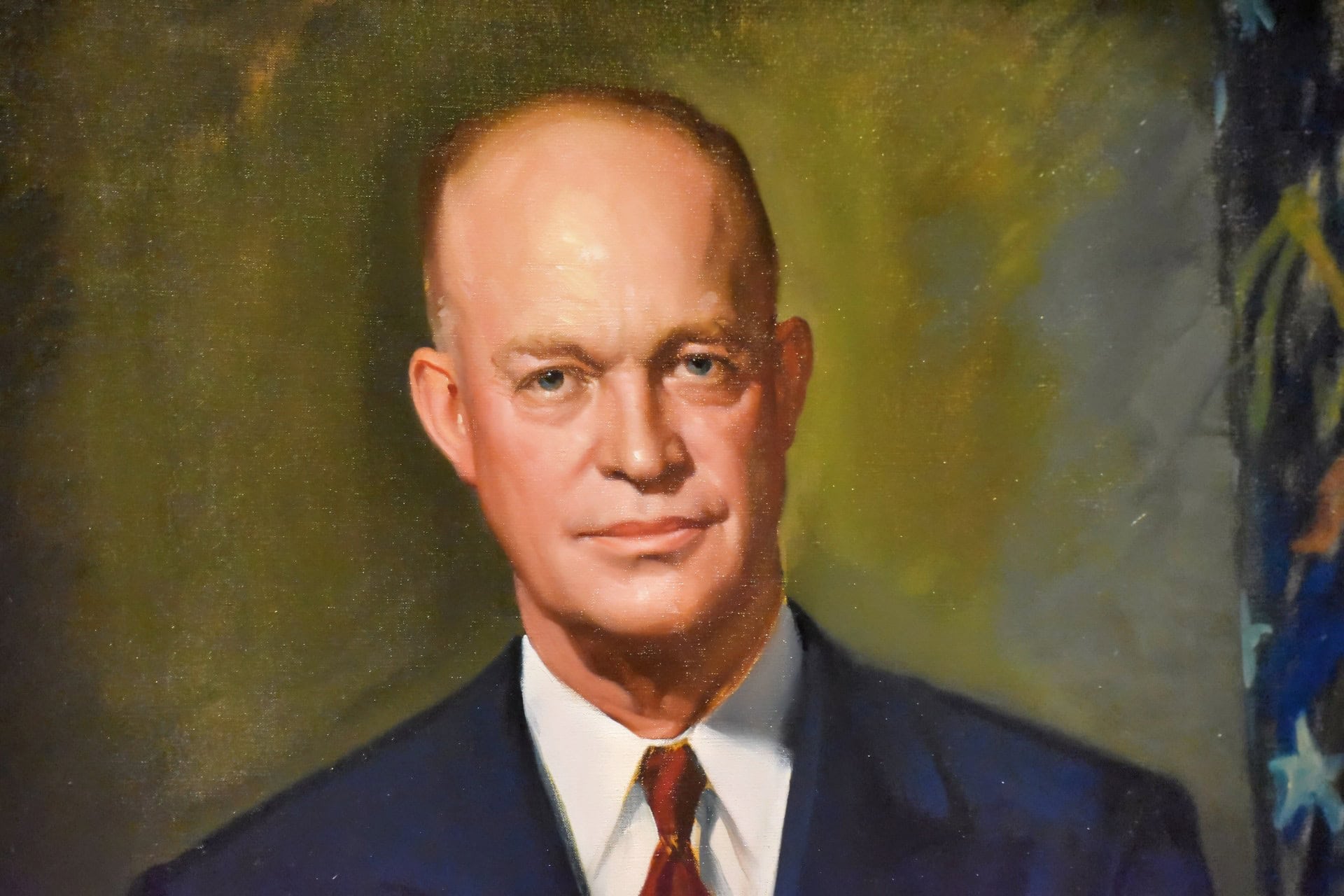
Dwight D. Eisenhower 19FortyFive.com Image. Taken on 1/23/2026 at the National Portrait Gallery in Washington, DC By Dr. Brent M. Eastwood.
Eisenhower died on March 28, 1969, at Walter Reed Army Medical Center. He was buried in Abilene in his World War II uniform, including the green “Ike” jacket, with only three decorations.
The former Supreme Allied Commander and president had requested the same government-issue casket furnished for any soldier buried by the Army. Its listed price was $80.
About the Author: Harry J. Kazianis
Harry J. Kazianis (@Grecianformula) was Senior Director of National Security Affairs at the Center for the National Interest (CFTNI), a foreign policy think tank founded by Richard Nixon based in Washington, DC. Harry has over a decade of experience in think tanks and national security publishing. His ideas have been published in the NY Times, The Washington Post, The Wall Street Journal, CNN, and many other outlets worldwide. He has held positions at CSIS, the Heritage Foundation, the University of Nottingham, and several other institutions related to national security research and studies. He is the former Executive Editor of the National Interest, RealClearDefense, and the Diplomat. He holds a Master’s degree focusing on international affairs from Harvard University.