
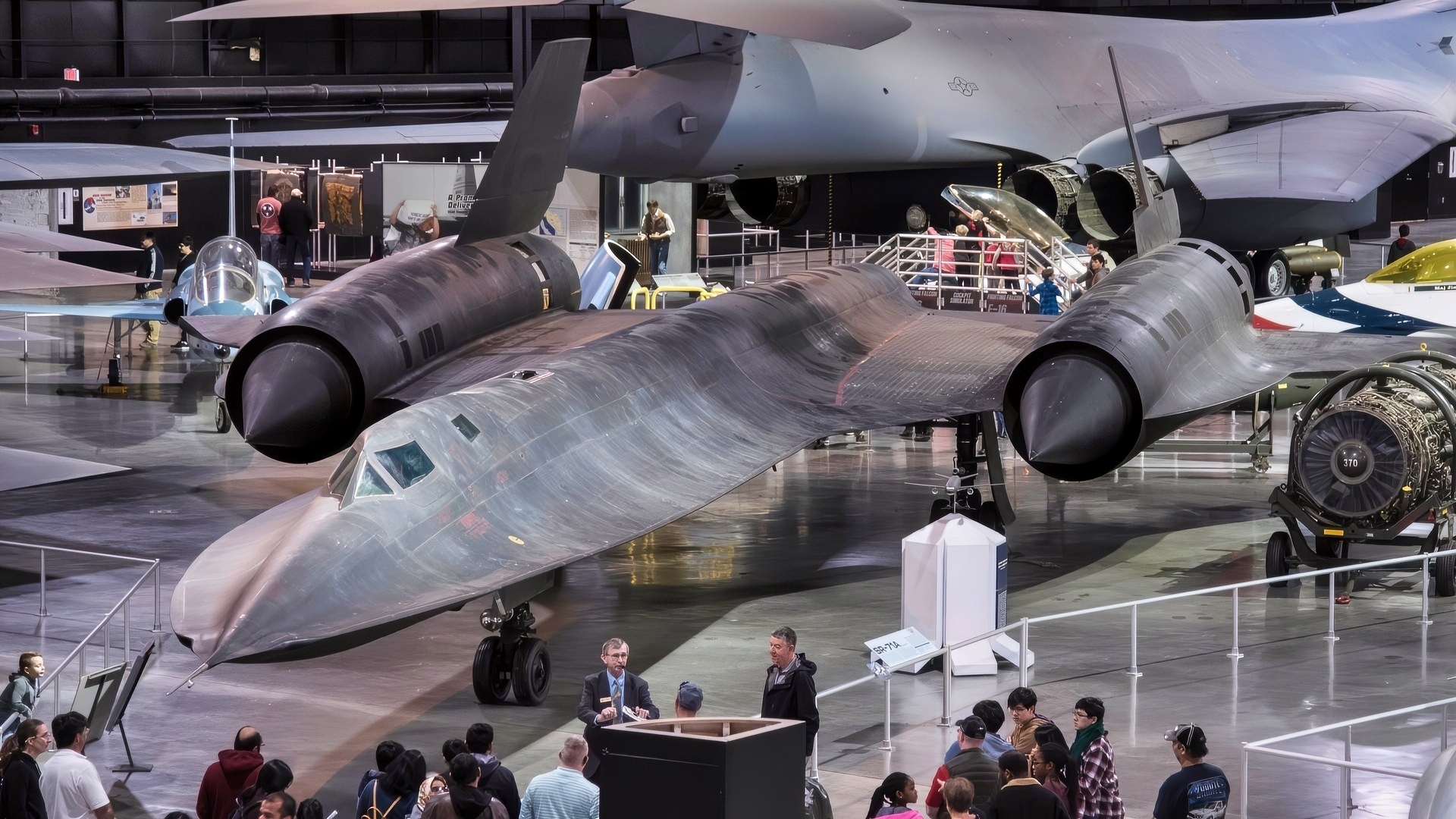
The Lockheed SR-71 is widely regarded as one of the most outstanding technological advancements of the Cold War.
Designed for reconnaissance, the jet flew at high speed and altitude, making it ideal for near-undetectable surveillance of an enemy state.
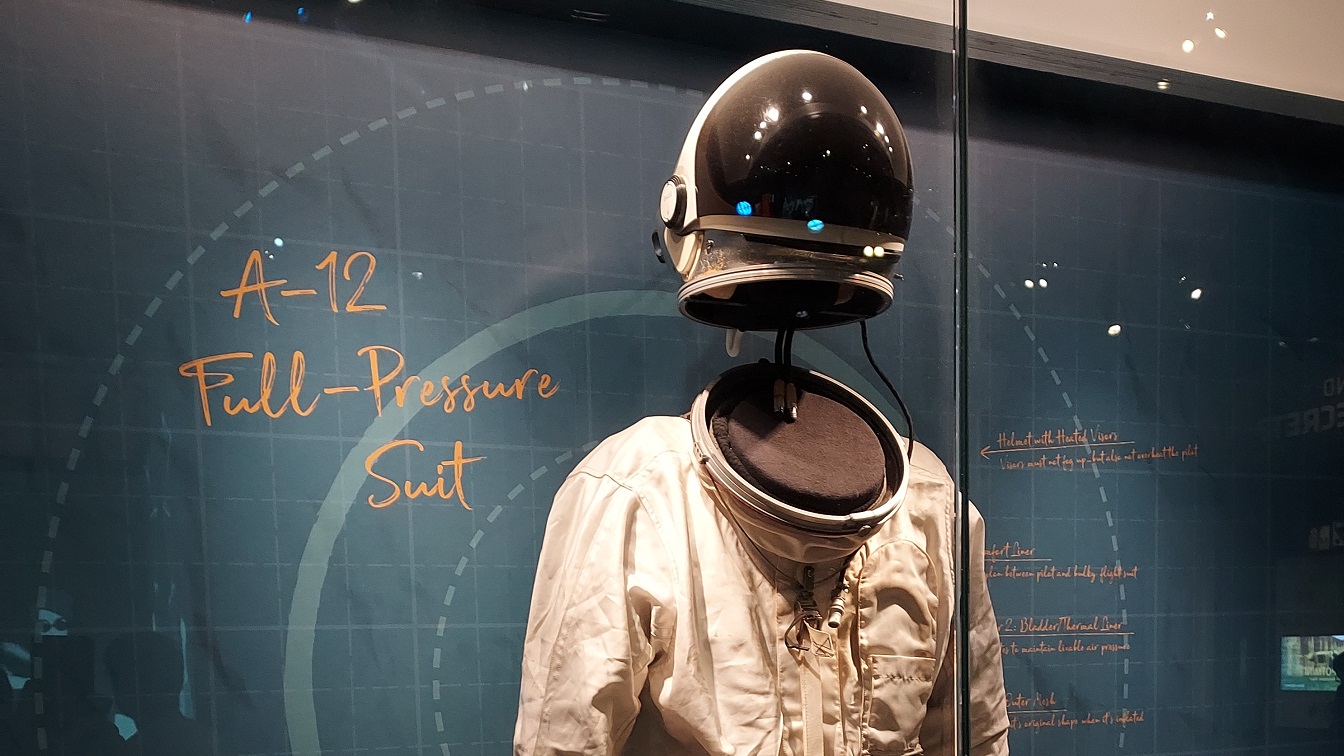
Flight suit. Image Credit: 19FortyFive Original Image.
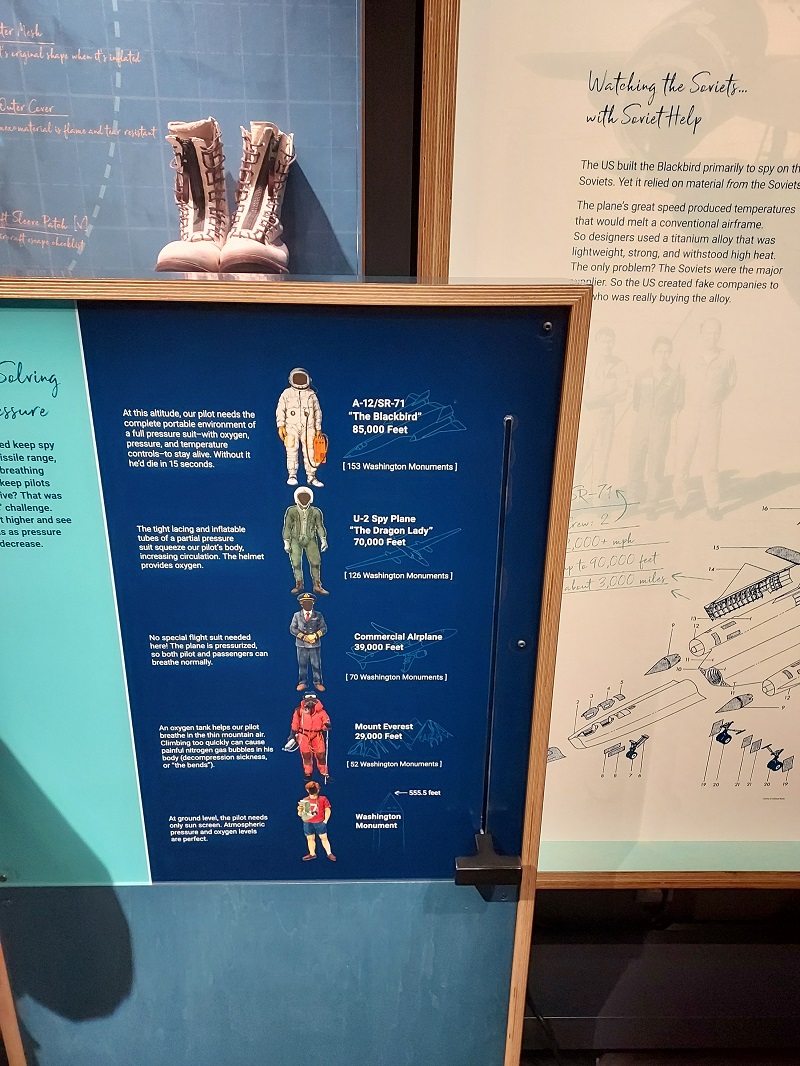
SR-71 Suit. 19FortyFive original image.
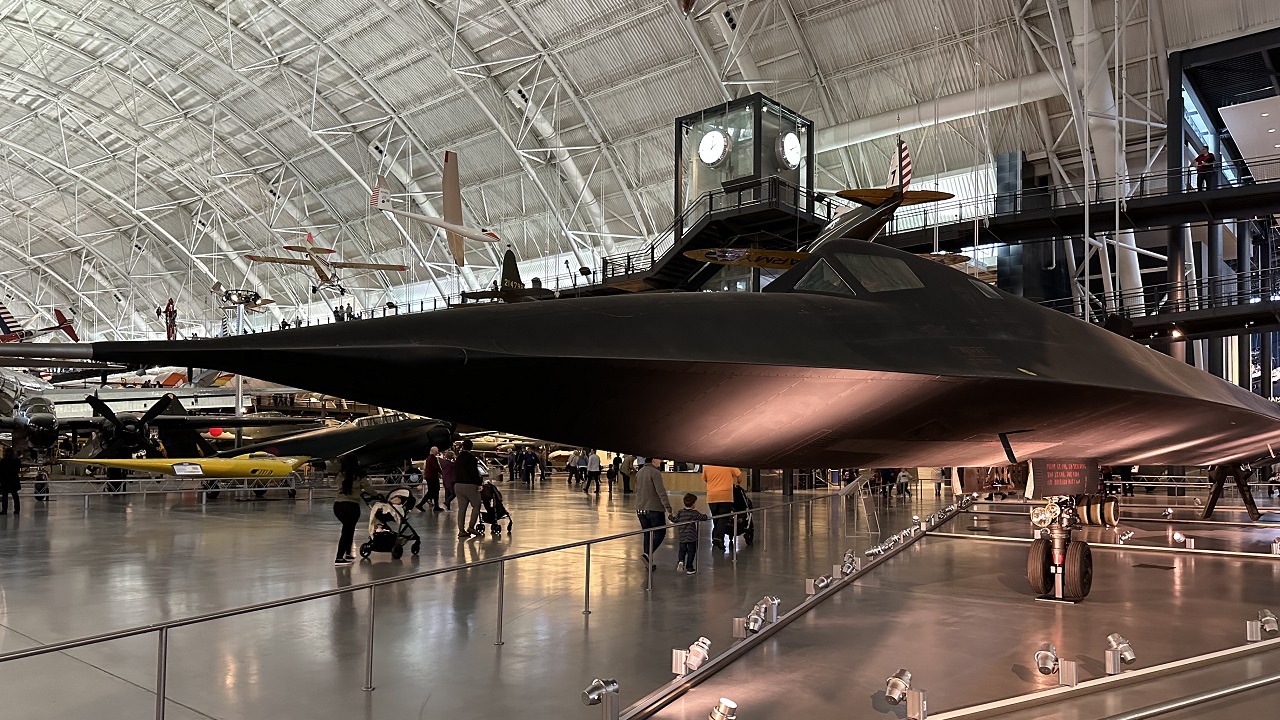
SR-71. SR-71 photo taken at the National Air and Space Museum. Taken by 19FortyFive on 10/1/2022.
Yet, there were always concerns about what to do if this highly classified piece of equipment was shot down over the Soviet Union.
A surface-to-air missile could destroy the aircraft, killing the pilots and revealing confidential secrets to the enemy.
One interesting tale describes the measures the United States Air Force (USAF) undertook to prevent such a scenario.
The SR-71
Produced by Lockheed Corporation, the SR-71 Blackbird was one of the most remarkable technological developments of the Cold War.
Revealed in July 1964 before entering service 18 months later, the SR-71 was used by the U.S. Air Force for strategic reconnaissance for more than three decades. Developed from the Lockheed A-12, the aircraft was used for conflicts across the world.
Only 32 were ever made, with missions covering Vietnam and North Korea, before it was later used from RAF Mildenhall in the United Kingdom for reconnaissance along the Soviet Union’s Baltic and Barents Sea coastlines.
Missions were also flown over Central America and northern Africa, as well as to probe nuclear weapons production in Israel and South Africa.
It was never overtly flown over regions that formed the Warsaw Pact or China.
The SR-71 was well known for its remarkable speed.
It was capable of reaching speeds beyond Mach 3, and in 1974 broke the record for the fastest flight between London and New York at just under 1 hour and 55 minutes.
It also became the fastest air-breathing manned aircraft ever produced. It still holds both records to this day.
It could fly over Vietnam in eight minutes, surveilling 100,000 square miles every hour at 80,000 feet. Some of its equipment, including its electronic countermeasures, are still used to this very day.
It was retired by the USAF in 1989, with brief reactivations before the project’s permanent end in 1998. NASA used the SR-71 as a research platform up until 1999.
An Exploratory Idea
As noted first by Aviation Geek Club, one day in 1968, SR-71 crew members were discussing anti-SAM tactics.
They knew the aircraft would be flying into enemy airspace at Mach 3, so discussions centered on whether a slight increase to Mach 3.2 could evade a surface-to-air missile.
The idea was that a comparatively small increase in speed could force an enemy missile’s guidance system to recalculate its interception course.
To achieve this, it was suggested that pilots could dump fuel when locked on to by an enemy missile.
This would reduce the aircraft’s weight, allowing it to become faster and increase its climb rate.
Good in Theory
There is logical thinking behind the idea.
The SR-71 was so advanced that the Soviets were desperate to get their hands on any information they could about the jet.
A shot-down SR-71 not only leads to lives lost or pilots captured, but also hands over vital intel to an enemy that, at the time, much of the world thought was intent on nuclear destruction.
It therefore made sense to test the idea before seeing whether it worked in practice.
Bad on Paper
Soon after, a crew in Montana sought to end the debate once and for all.
The plan was to dump fuel for 10 seconds to see if the afterburner would ignite the fuel trail, thereby lightening the aircraft and evading a guided missile attack.
It didn’t work.
Instead, the trail turned instantly into an ice cloud in the -55 degrees Celsius stratosphere.
Even though the burn had lasted only one-sixth of a minute, the contrail was five miles long, effectively pointing directly at the aircraft and indicating its direction of travel.
Upon turning back, the pilot reported that he could see the trail for hundreds of miles, thereby completely defeating the purpose of a stealth aircraft.
Fortunately for the Air Force, only 12 SR-71s were lost in accidents, none of which were due to enemy action.
A potential unmanned successor, the SR-72, was floated by Lockheed Martin in 2018, but as of 2026, that remains nothing more than a concept.
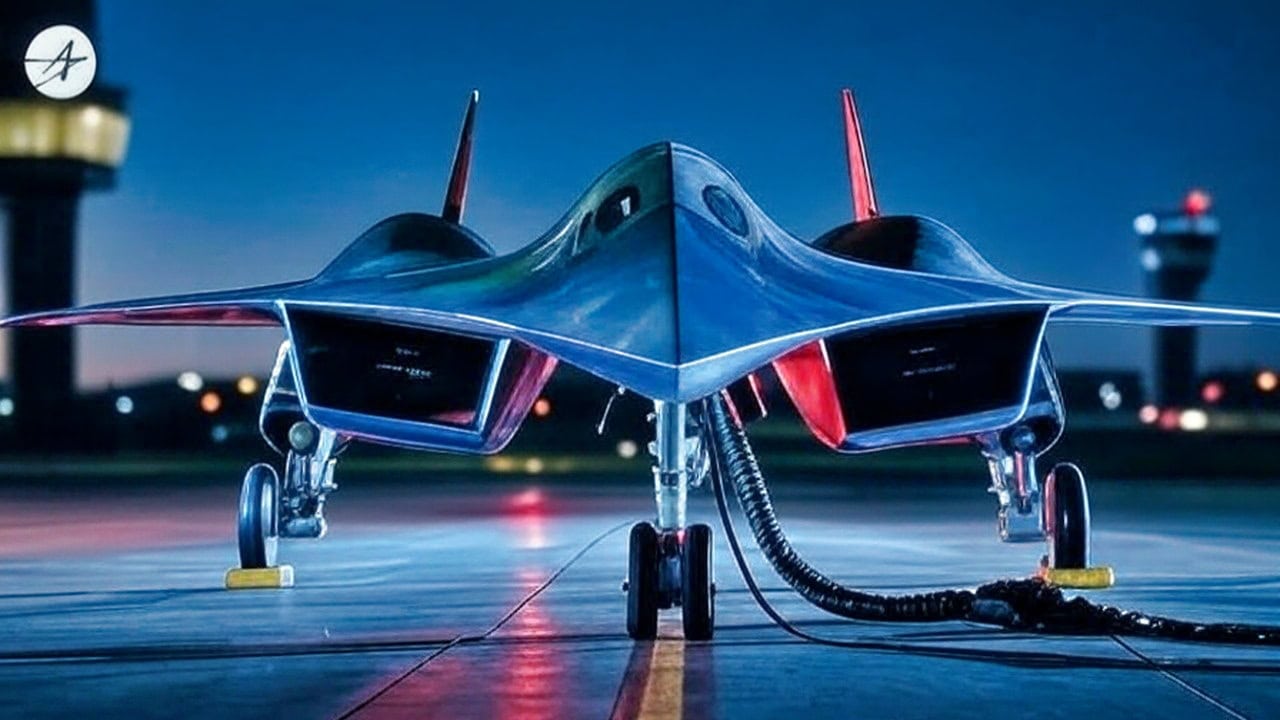
SR-72 Darkstar. Image Credit: Lockheed Matin with AI enhancement.
About the Author: Shay Bottomley
Shay Bottomley is a British journalist. He has written for the Western Standard, Business Insider, Maidenhead Advertiser, Slough Express, Windsor Express, Berkshire Live and Southend Echo.