
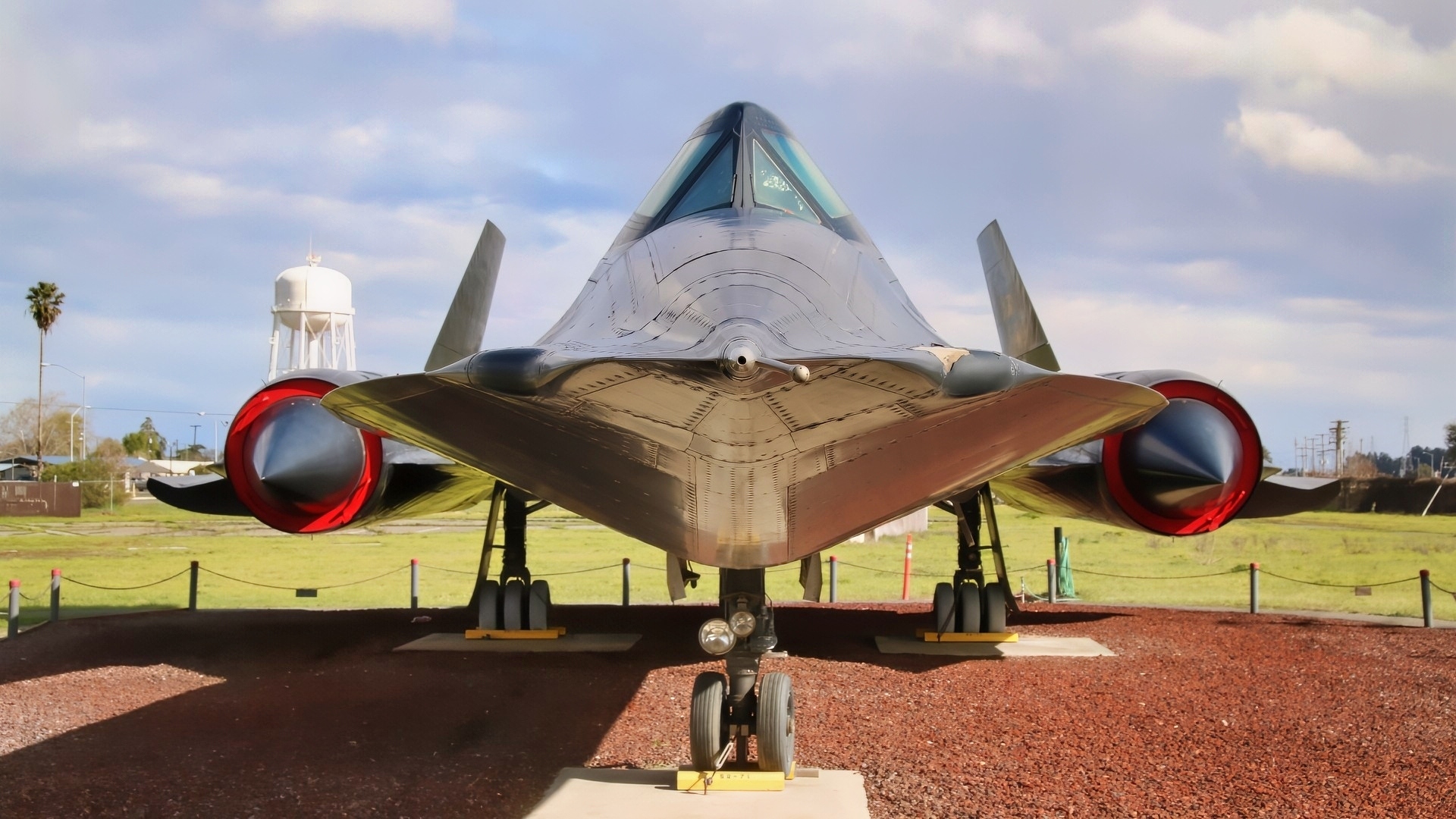
A former SR-71 Blackbird pilot recalled an extraordinary low-level, low-speed fly-past in the United Kingdom. Vietnam War veteran Major Brian Shul, who flew more than 200 missions, recounted how a requested fly-by over a small RAF base in the English countryside almost ended in disaster. Shul was returning from a reconnaissance mission across the Iron Curtain during the height of the Cold War.
The SR-71 Blackbird
Produced by Lockheed Corporation, the SR-71 Blackbird was one of the most remarkable technological developments of the Cold War. And as you can see from this article, we love to take lots of photos and videos of this piece of Cold War history.
Revealed in July 1964 before entering service 18 months later, the SR-71 was used by the United States Air Force (USAF) for strategic reconnaissance for more than three decades. Developed from the Lockheed A-12, the aircraft was used for conflicts across the world.
Only 32 were ever made, with missions covering Vietnam and North Korea, before it was later used from RAF Mildenhall in the United Kingdom for reconnaissance along the Soviet Union’s Baltic and Barents Sea coastlines. Missions were also flown over Central America and northern Africa, as well as to probe nuclear weapons production in Israel and South Africa. It was never overtly flown over regions that formed the Warsaw Pact or China.
The SR-71 was well known for its remarkable speed. It was capable of reaching speeds beyond Mach 3, and in 1974 broke the record for the fastest flight between London and New York at just under 1 hour and 55 minutes. It also became the fastest air-breathing manned aircraft ever produced. It still holds both records to this day.
It was retired by the USAF in 1989, with brief reactivations before the project’s permanent end in 1998. NASA used the SR-71 as a research platform up until 1999.
Shul’s Story
Major Shul, who returned to fly the jet after being badly burned at the end of the Vietnam War, has written four books on the SR-71. It was common for the aircraft to fly at 35 miles per minute, but it could also fly much slower, according to Shul.
On a return trip from Denmark, Shul and Reconnaissance Systems Officer Walter Watson were asked to perform a fly-by for a group of cadets at RAF Mildenhall. Keen to oblige, the pair refueled over the North Sea before heading towards England.
“Walter had myriad sophisticated navigation equipment in the back seat and began to vector me toward the field,” Shul said. “Descending to subsonic speeds, we found ourselves over a densely wooded area in a slight haze. Like most former World War Two British airfields, the one we were looking for had a small tower and little surrounding infrastructure.”
“Walter told me we were close and that I should be able to see the field, but I saw nothing but trees as far as I could see in the haze. We got a little lower, and I pulled the throttles back from 325kt. With the gear up, anything under 275 was just uncomfortable. Walt said we were practically over the field, but there was nothing in my windscreen. I banked the jet and started a gentle circling maneuver in hopes of picking up anything that looked like a field.”
Low Speed Fly-By
With Shul reducing his speed, Wilson continued to insist that the RAF base was below them, but Shul couldn’t see through the overcast weather. It was at this point that he noticed the speed, or lack thereof, they were flying.
“As I noticed the airspeed indicator slide below 160kt, my heart stopped, and my adrenaline-filled left hand pushed two throttles full forward,” Shul continued. “At this point we weren’t really flying, but falling in a slight bank. Just at the moment that both afterburners lit with a thunderous roar of flame – and what a joyous feeling that was! – the aircraft dropped into full view of the shocked observers on the tower. Shattering the still quiet of that morning, they now had 107ft of fire-breathing titanium in their face as the plane accelerated in full burner on the tower side of the infield, closer than expected, maintaining what could only be described as some sort of ultimate knife-edge pass.”
A Routine Approach
Much to his amazement, Shul was congratulated after conducting “the greatest SR-71 fly-past ever seen” at RAF Mildenhall. The SR-71 dropped down to 152 knots – well below its optimum flying speed.
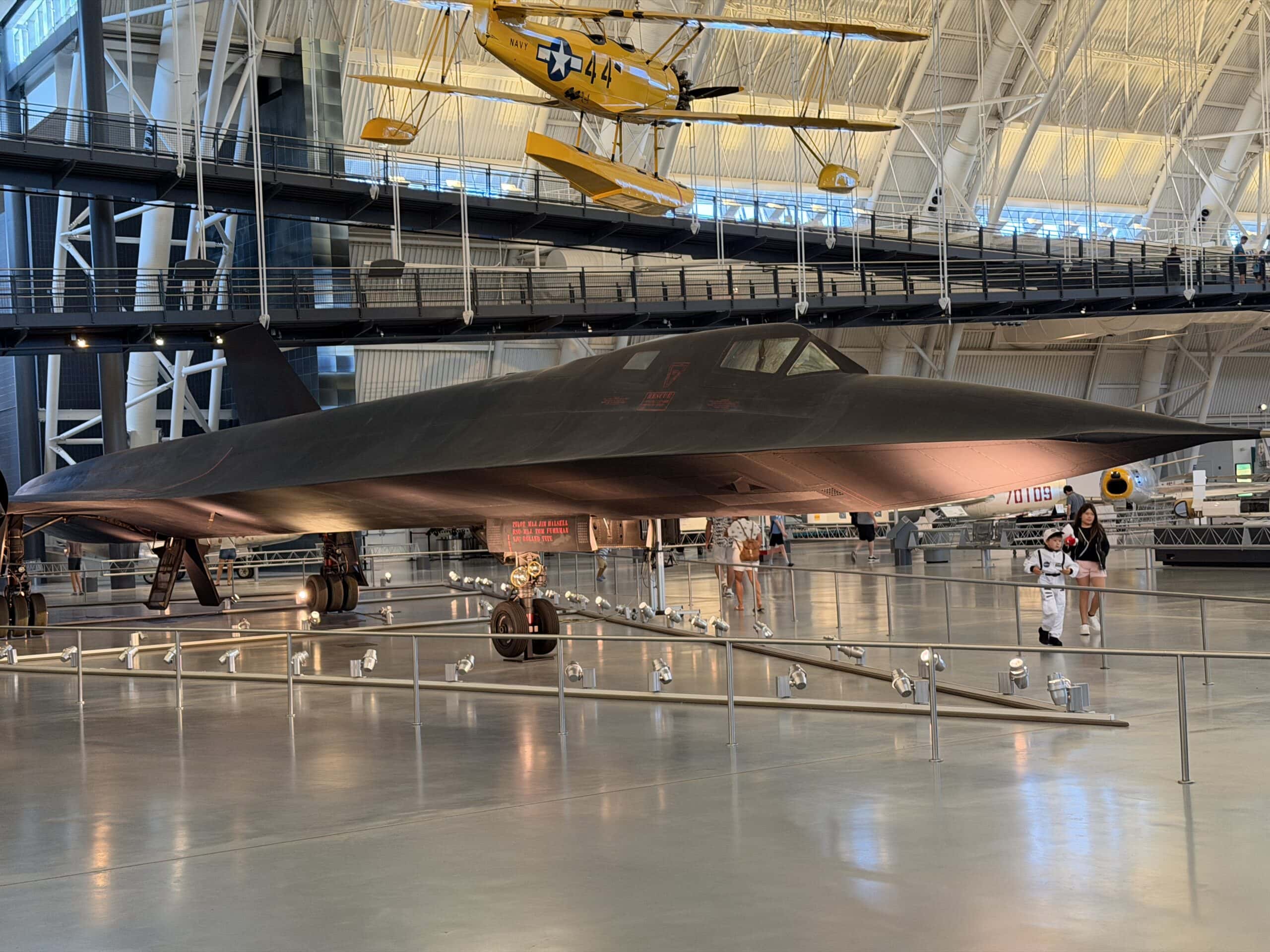
SR-71 Blackbird. Image taken at the Smithsonian on 6/30/2026 by 19FortyFive
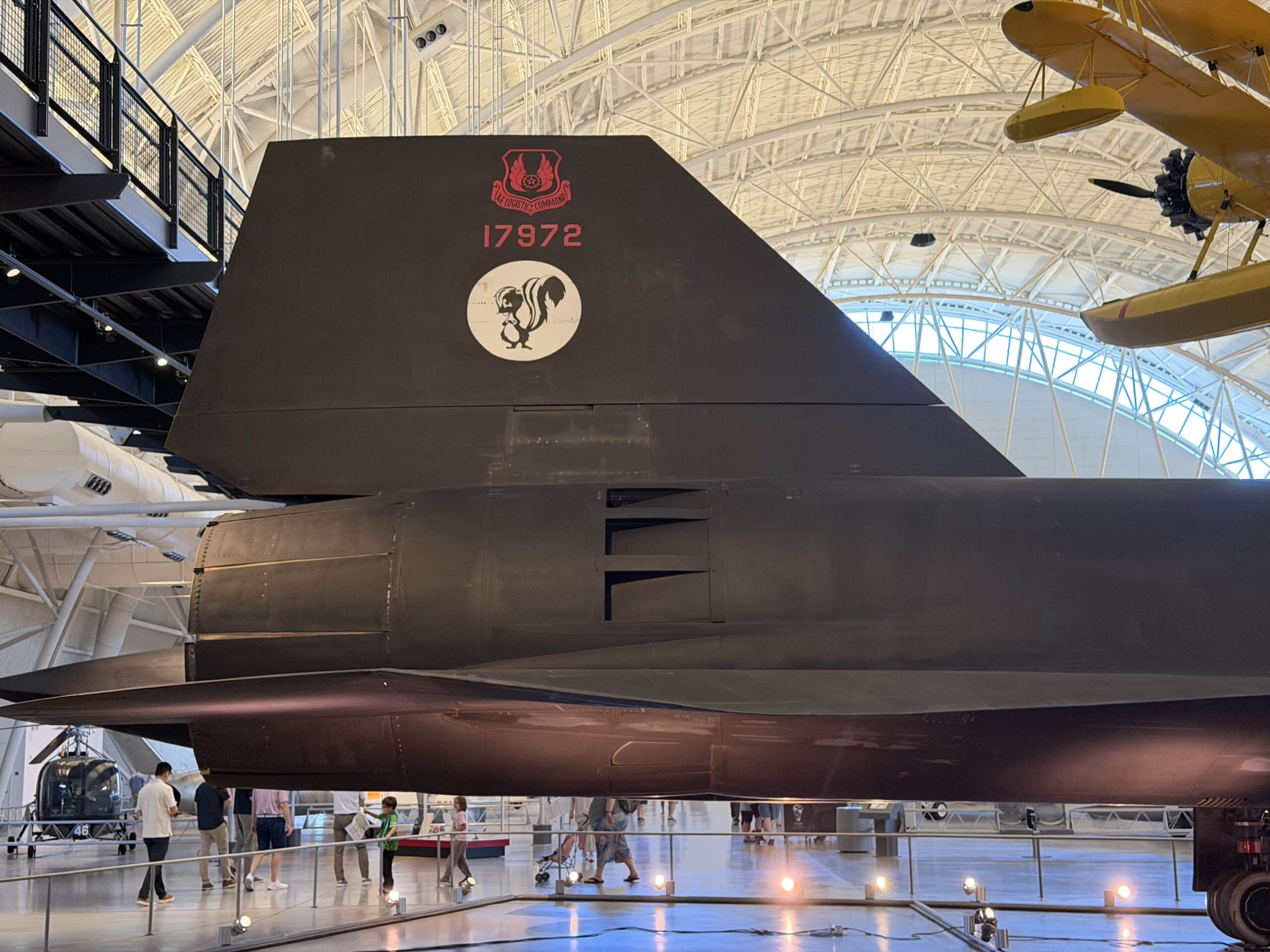
SR-71 Blackbird at the Smithsonian. 19FortyFive Image taken by Christian D. Orr.
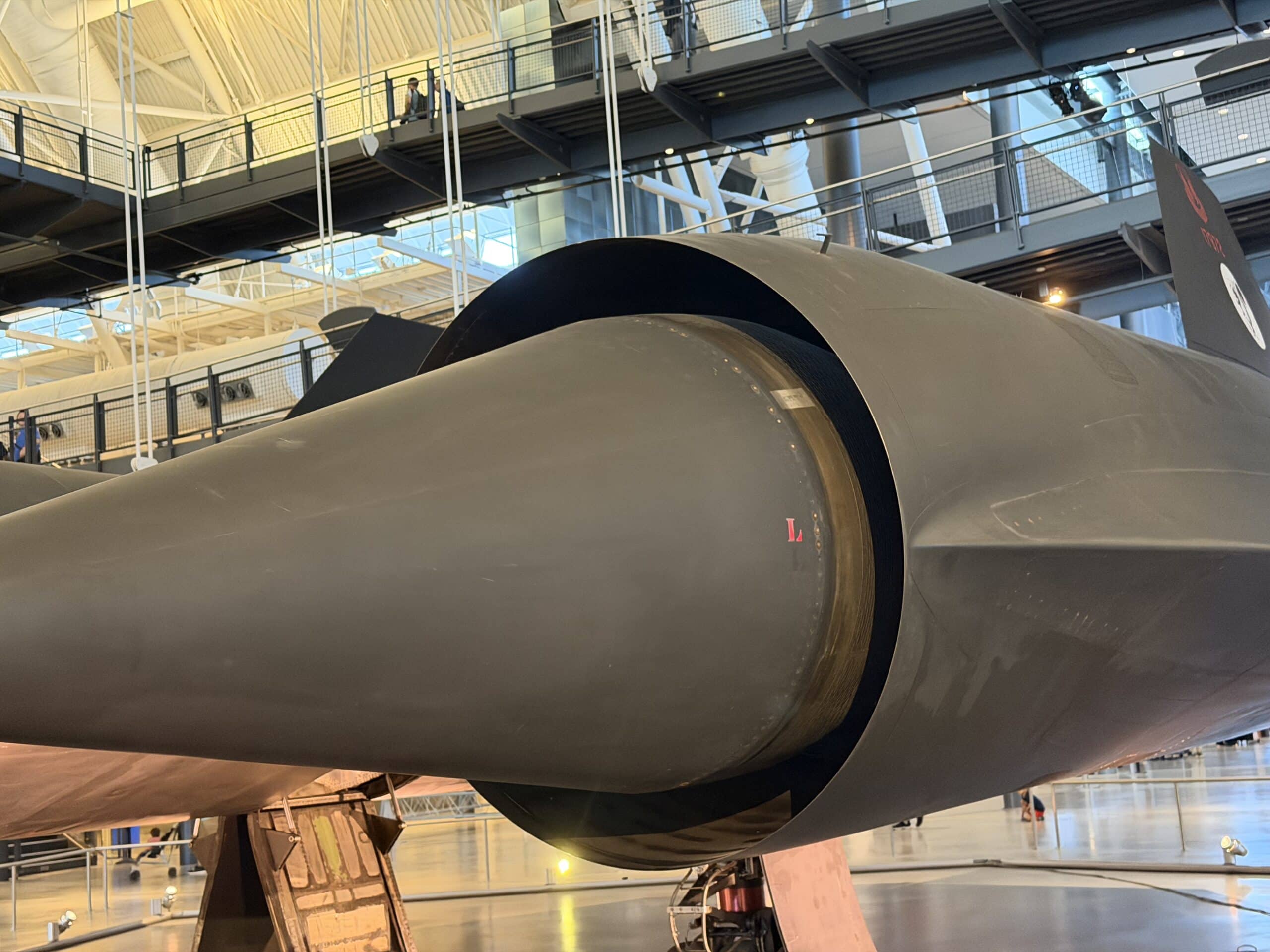
SR-71 Blackbird. Image taken at the Smithsonian on 6/30/2026 by 19FortyFive
“A year later, Walter and I were having lunch in the Mildenhall officers’ club and overheard someone talking to some cadets about an SR-71 fly-past that he had seen one day,” Shul recounted. “Of course, by now, the story included kids falling off the tower and screaming as the heat of the jet singed their eyebrows. Noticing our ‘HABU’ patches as we stood with lunch trays in our hands, he asked us to verify to the cadets that such a thing had occurred. Walt just shook his head and said: ‘It was probably just a routine low approach. They’re pretty impressive in that plane.’ Impressive indeed!”
Shul served for 20 years before retiring in 1990. He died in May 2023 in Reno, NV, after collapsing at the end of his famous SR-71 presentation. He was 75 years old.
About the Author: Shay Bottomley
Shay Bottomley is a British journalist. He has written for the Western Standard, Business Insider, Maidenhead Advertiser, Slough Express, Windsor Express, Berkshire Live and Southend Echo.