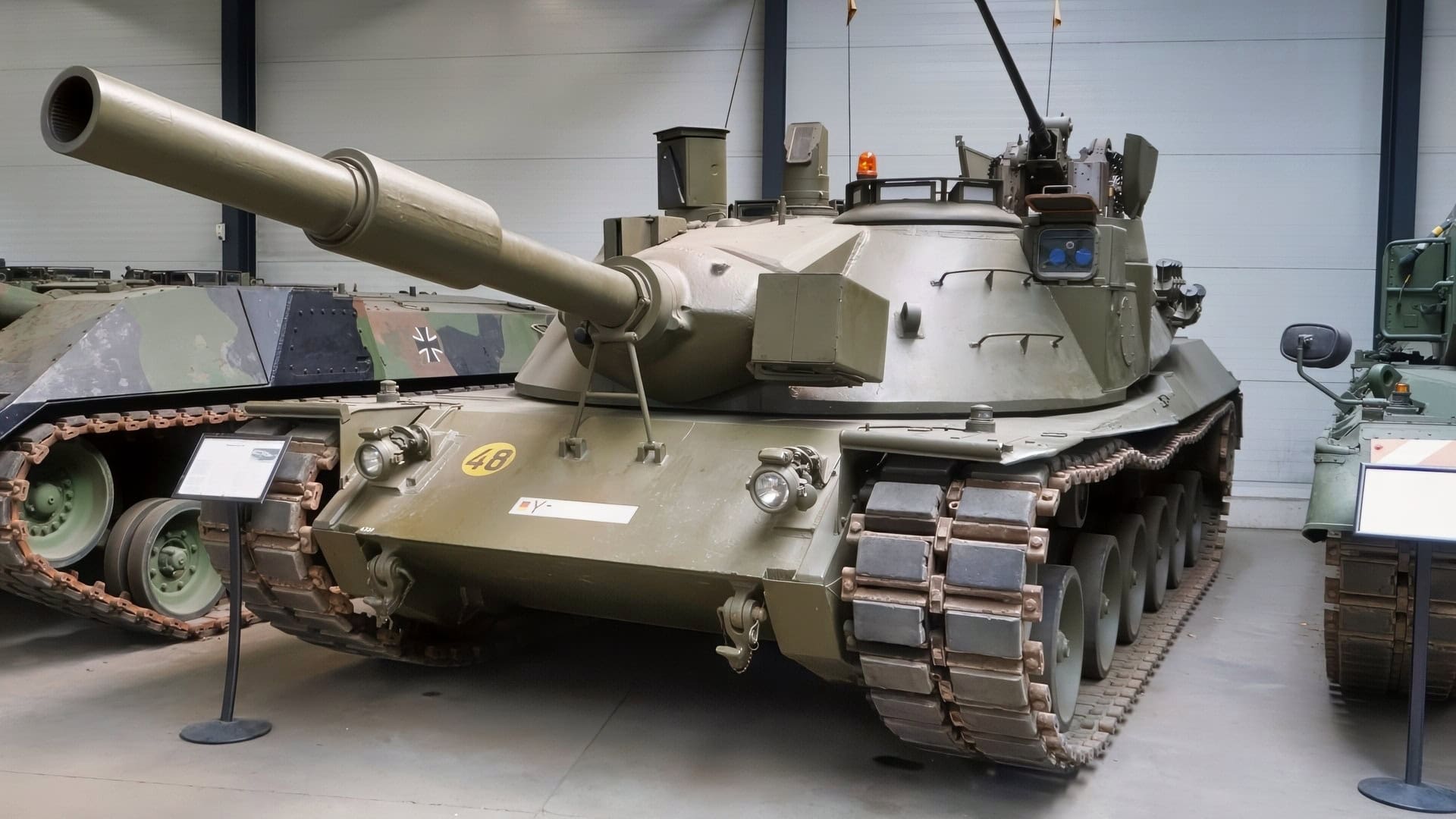
Summary and Key Points: In 1963, 18 years after their armies fought each other, the United States and Germany agreed to design one main battle tank for NATO, the MBT-70, on an $80 million budget. They disagreed on everything.
The Great MBT-70 Tank Mistake
During the Cold War in 1963, the US and Germany collaborated to design a new main battle tank known as the MBT-70.
Just 18 years earlier, US and German tanks had slugged it out across Western Europe.
NATO’s Logistical Nightmare and the Soviet Threat
At this time, the NATO Alliance was a logistical mess.
There was little standardization of equipment in terms of tanks, guns, and aircraft. Each member country had its own preferred battle rifle for its soldiers, with its own ammunition calibers.
Across the border were the Soviet Union and Warsaw Pact countries, which shared the same tanks, guns, planes, and ammunition.
In a war, NATO countries would face a logistical nightmare trying to supply their armies right down to rifle ammunition.
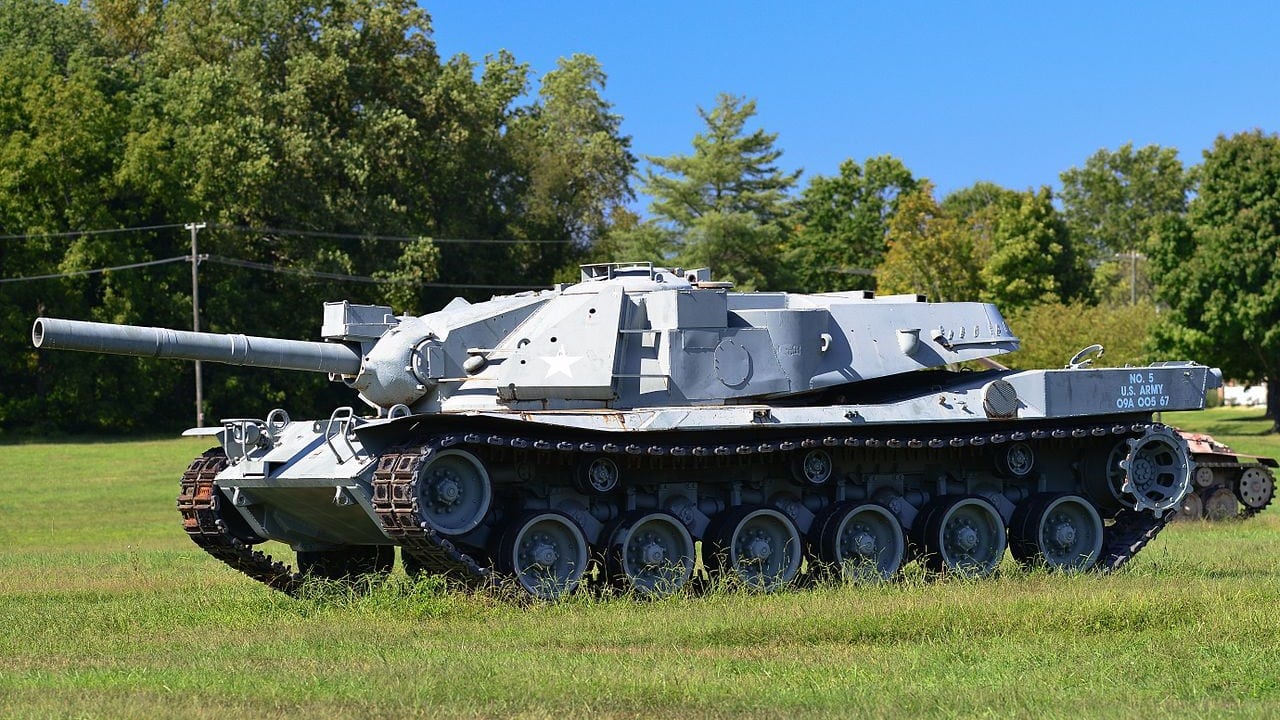
MBT-70 Tank.
The US and Germany were working to fix this by collaborating on a single tank design they would both share and encourage other NATO armies to adopt, moving toward standardization.
With the appearance of the new Soviet T-62 tank, the US understood that its older M-48 Patton and even the new M60 tank faced being eclipsed by those of the USSR and Warsaw Pact.
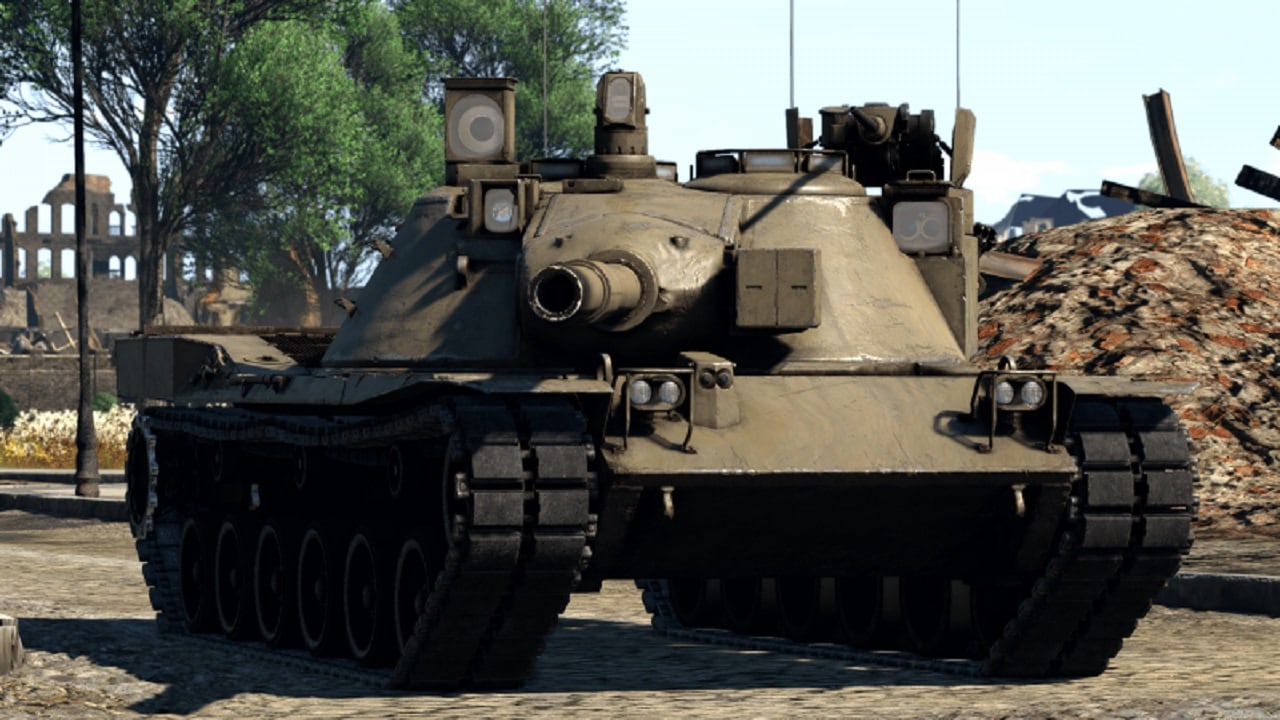
MBT-70. Artist Rendering. Image Credit: Creative Commons.
The Ambitious Alliance: McNamara’s $80 Million Gamble
Defense Secretary Robert McNamara believed the combined industrial capacity of the US and Germany, sharing the cost of an $80 million research-and-development budget and mass production, could produce an advanced tank cheap enough for other NATO countries.
The US could offer state-of-the-art electronics, computers, and missile technology like the Shillelagh ATGM.
At the same time, the Germans provided their heavy machinery engineering, high-velocity guns, and powerful engines and transmissions.
At the time, Germany led the world in advanced armor metallurgy.
A Clash of Visions: Missiles, Metric, and Design Deadlocks
This ambitious plan ran into problems almost immediately.
The US wanted a tank capable of global deployment anywhere in the world and protection from nuclear, chemical, and biological threats.
They wanted an expensive air-filtering, air-conditioning system in the tank.
Rather than using a high-velocity gun, the US wanted the tank to use an anti-tank guided missile like the Shillelagh. The Germans insisted on a conventional high-velocity gun and a tank better suited to Europe’s climate and terrain.
A lighter tank, not so heavy that it would tear up roads, require specialized flat cars to move by rail, and be able to cross bridges without them collapsing under the weight.
Then disputes broke out over which measuring system to use to build the tank: US standard or Metric.
Industrial machinery in the two countries was built and calibrated to two different measurement standards, while the parts had to fit together precisely in assembly.
Soon, both countries made duplicate parts under their own measurement systems and tolerances, and they didn’t fit.
The MBT-70’s weight also grew from 48 tons to more than 54, exceeding limits for bridges, rail networks, and roads.
The Turret Trap: Motion Sickness and Skyrocketing Costs
The MBT-70 driver sat inside the turret; he couldn’t drive the tank when the turret turned.
To solve this, they placed him in a cupola with a driver’s periscope that kept him facing forward while the rest of the crew rotated around him in the turret.
In testing, this caused severe spatial disorientation, vertigo, and even nausea for the driver.
The Collapse of the Collaboration (1969–1971)
By 1968, the collaboration had produced 14 prototype and pilot vehicles. By then, the program’s cost had exploded from $80 million to more than $303 million. This meant the target price of $200,000 per copy would now be $1 million.
At this price, only one-fifth of the tanks Germany wanted were affordable, and other countries had little reason to adopt it as the standard NATO tank.
Even the US balked at it.
In today’s dollars, each tank would cost more than $9.6 million.
By 1969, the Germans decided to withdraw from the program.
The US kept throwing good money after bad at what they now called the XM-803 until 1971, when it gave up, too.
Two of the test prototypes still exist at the US Army and Cavalry Collection Museum in Georgia.
Rebuilding From The Wreckage: The Leopard II and M1 Abrams
The US and Germany then set off again separately to build the tank they each wanted. Both countries decided that putting a driver in a Cupola was a bad idea and discarded it.
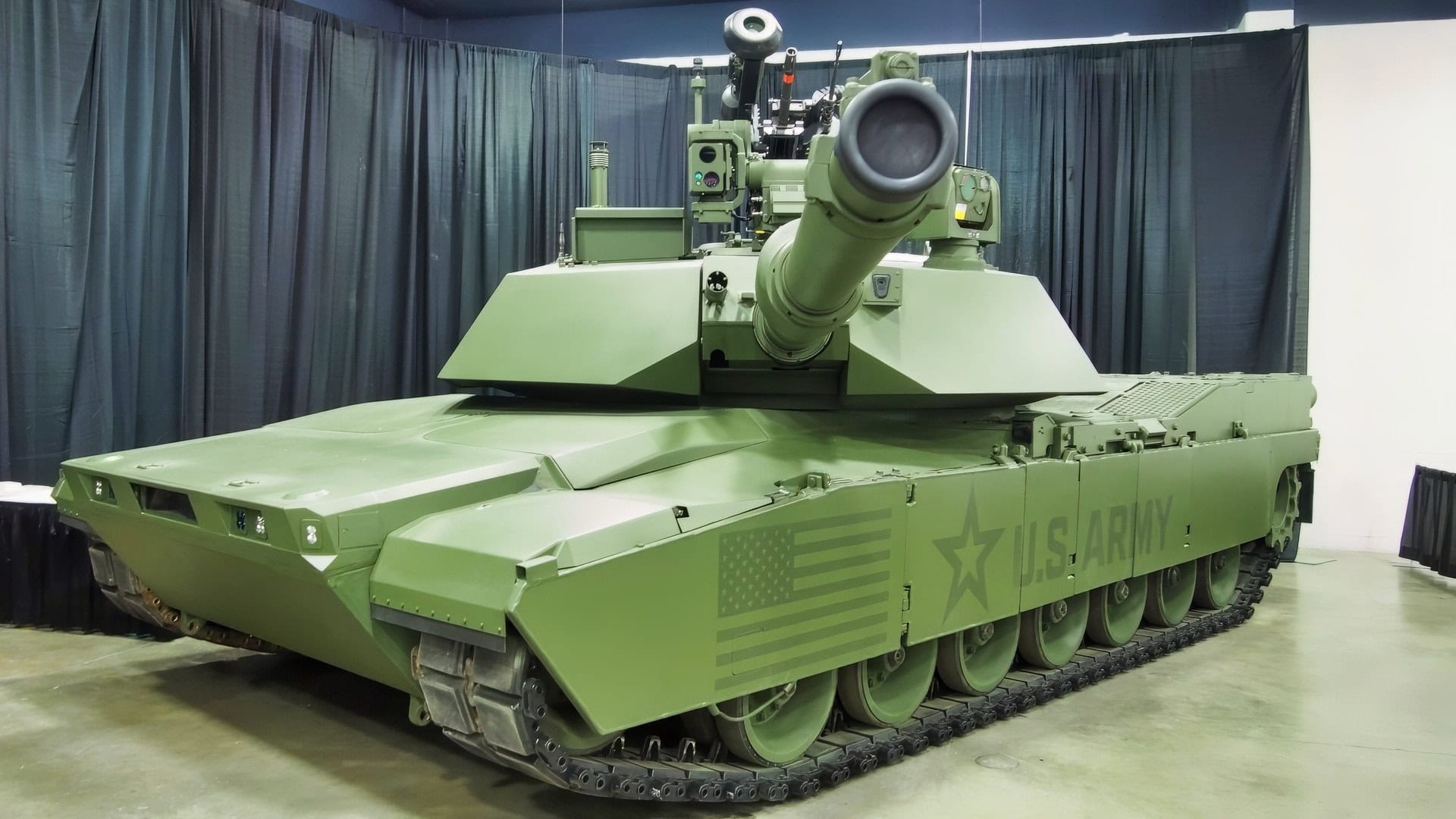
M1E3 Abrams Detroit Auto Show 19FortyFive Image
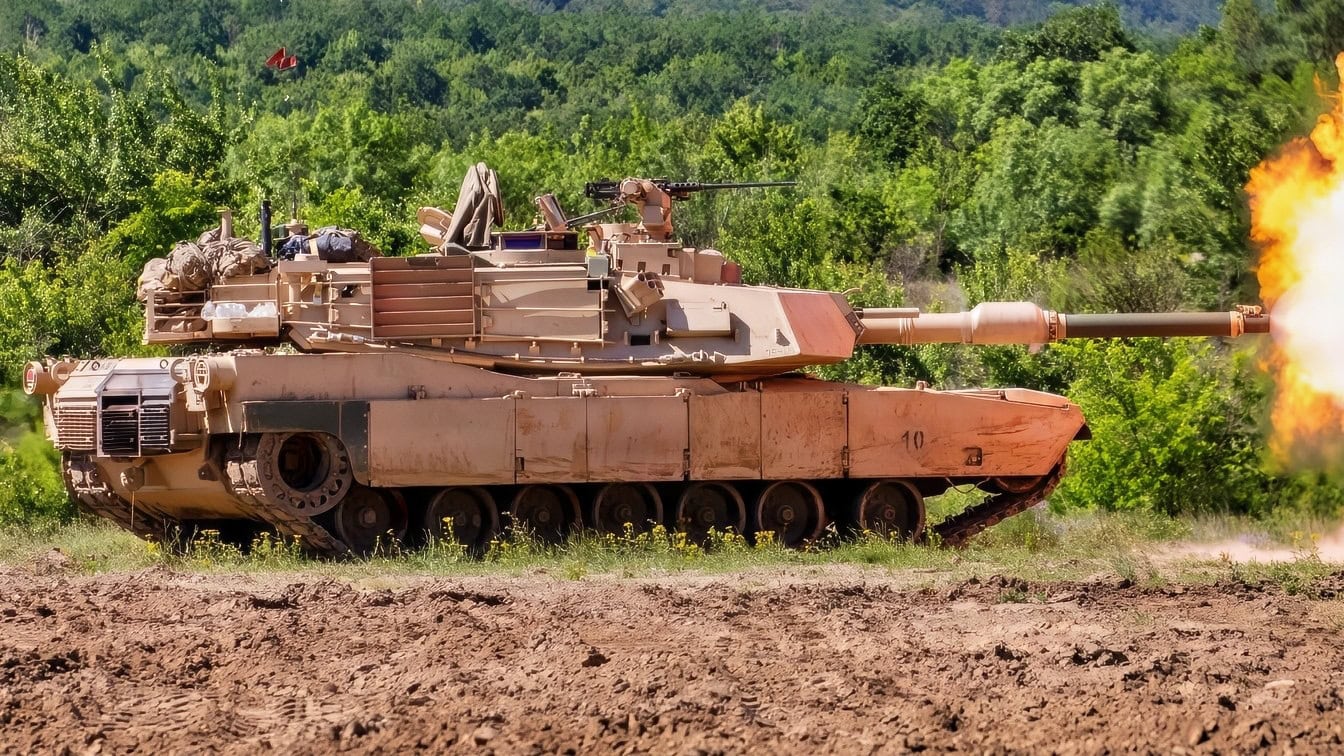
U.S. Army Soldiers assigned to Charlie Company, 1st Battalion, 36th Infantry Regiment, 1st Armored Division, zero their M1 Abrams tank’s sighting system during gunnery training operations at Novo Selo Training Area, Bulgaria, May 30, 2026. Zeroing the tank’s sights allows armored crews to confirm accuracy, build crew proficiency and prepare for follow-on engagements during live-fire training. (U.S. Army video by Spc. Thomas Madrzak)
Both decided that an autoloader for the gun was too complex and removed it, returning to a four-person crew.
Both decided the advanced adjustable suspension in the MBT-70 was a mechanical nightmare and deleted it from their new designs.
For Germany, that became the Leopard II, able to use modern roads, railways, and bridges, weighing 55.3 Metric tons and featuring a smoothbore 120 mm Rh-120 gun made by Rheinmetall in Germany.
They would stick with spaced, multilayered composite steel armor and the tried-and-true diesel engines that had served them so well.
The US also returned to the drawing boards and designed the M1 Abrams tank.
The Abrams would be capable of global deployment, with Chobham-spaced ceramic armor and a closed ventilation system that could withstand nuclear, chemical, and biological attacks.
Abrams tank would weigh 68-74 US tons and be powered by a gas turbine engine.
The US would abandon the use of a 152mm dual-purpose gun able to fire both cannon rounds and anti-tank guided missiles.
Instead, it would be fitted with a British-designed 105mm gun, the M-68.
The designers created the Abrams turret with extra space to adopt later the 120 mm Rh-120 gun made by Rheinmetall under license.
Although the Cold War collaboration between the US and Germany to jointly develop a Main Battle Tank for NATO failed, it did not stop the drive for standardization among member countries.
While NATO countries still use their own tanks, artillery, planes, and helicopters, much of the ammunition for these systems has been standardized.
The US military now uses the Metric system much more frequently.
Although disagreements over the MBT-70 may have doomed it to failure, it still resulted in the production of two exceptionally advanced tanks: the M1 Abrams and the Leopard II.
About the Author: Sean Spoonts
Sean Spoonts is the former Editor-In-Chief of SOFREP.com. He is a military analyst, writer, and commentator whose work has appeared in Newsweek, CS News, Ukrinform, and various military/veteran media networks and professional publications, including the Military Intelligence Professional Bulletin. He is a U.S. Navy veteran, having served as an Aviation Anti-Submarine Warfare Operator and Search and Rescue Helicopter Aircrewman.