
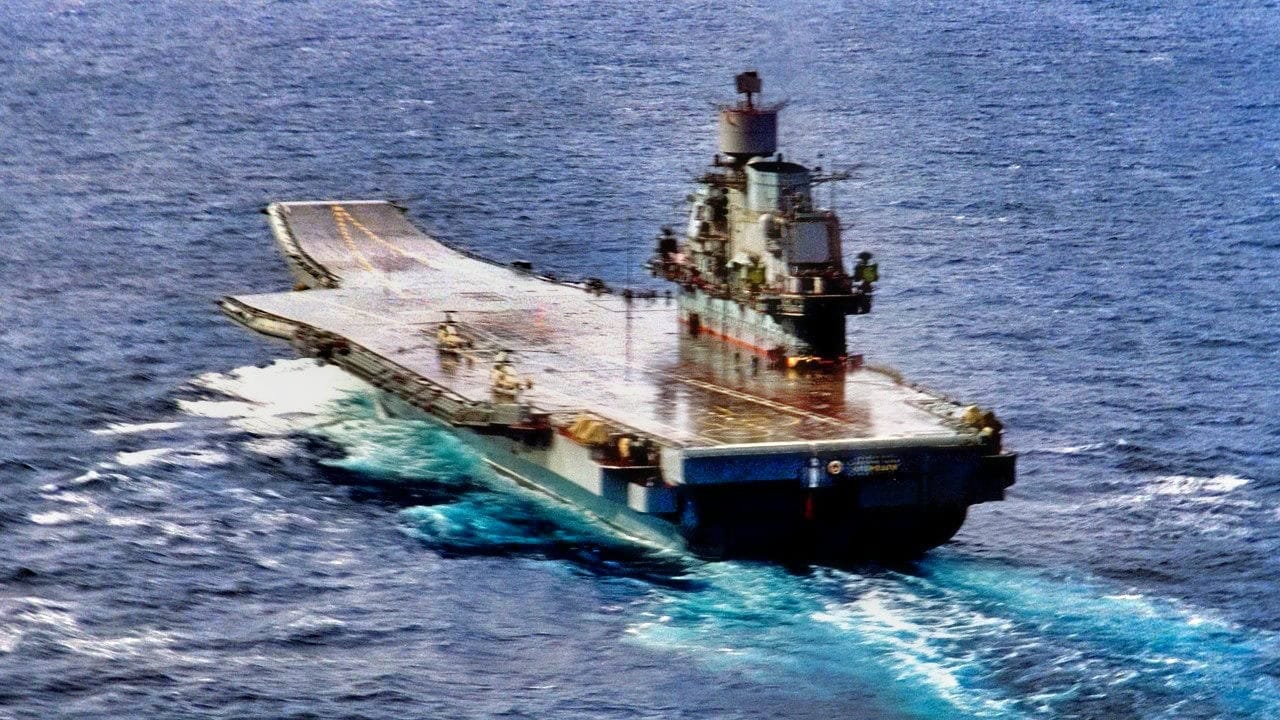
The Russians have de facto decommissioned two of their largest surface warships: the aircraft carrier Admiral Kuznetsov and the nuclear battlecruiser Pyotr Velikiy. Kuznetsov, Russia’s sole carrier, has been wasting away in Murmansk since 2017, undergoing an extensive overhaul that has been on pause since 2024, with little chance of ever returning to service.
Meanwhile, recent Russian news reports have confirmed that the Kirov-class cruiser Pyotr Velikiy will not receive any additional modernizations like her sister ship, Admiral Nakhimov, leaving the ship’s fate uncertain. While both ships are technically still listed in the Russian Navy’s fleet, they have essentially been written off.
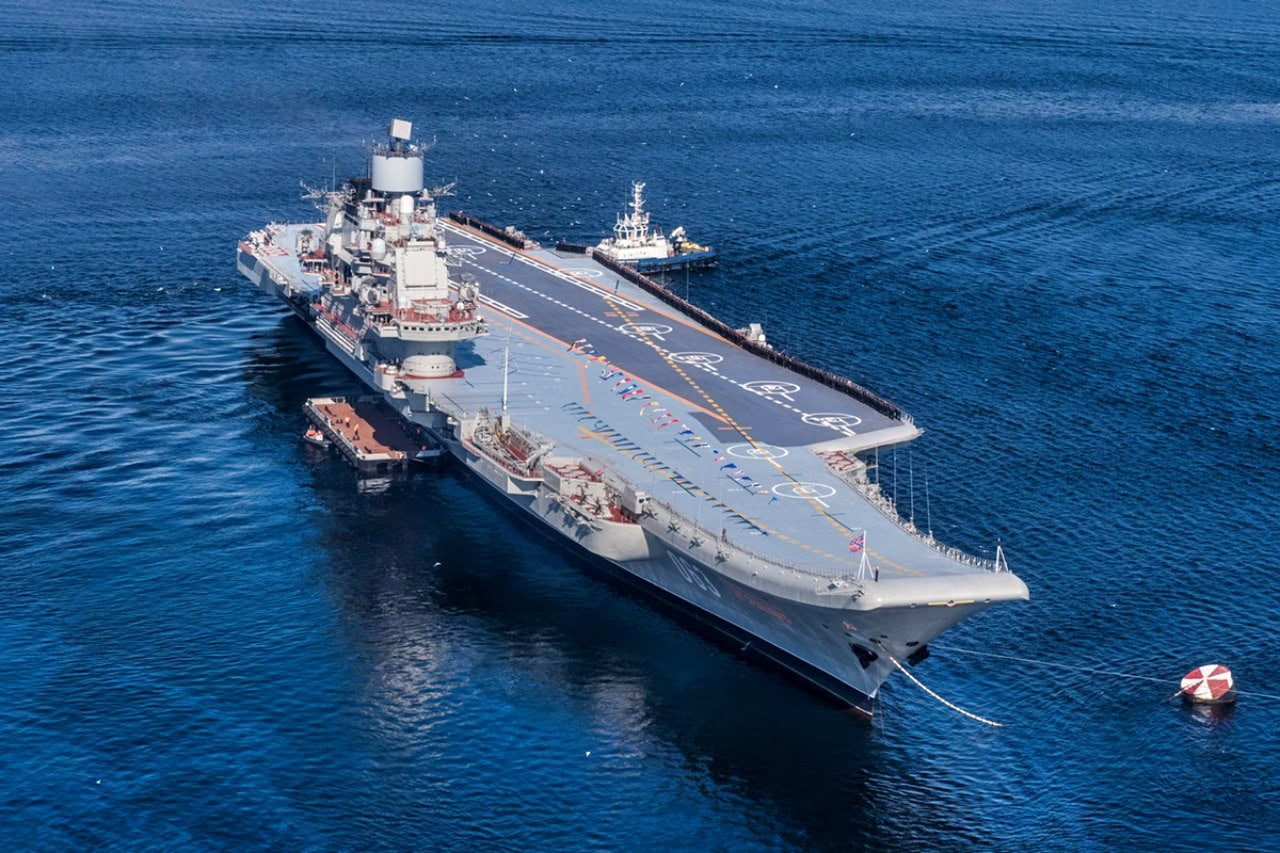
Aircraft Carrier Admiral Kuznetsov from Russian Navy.
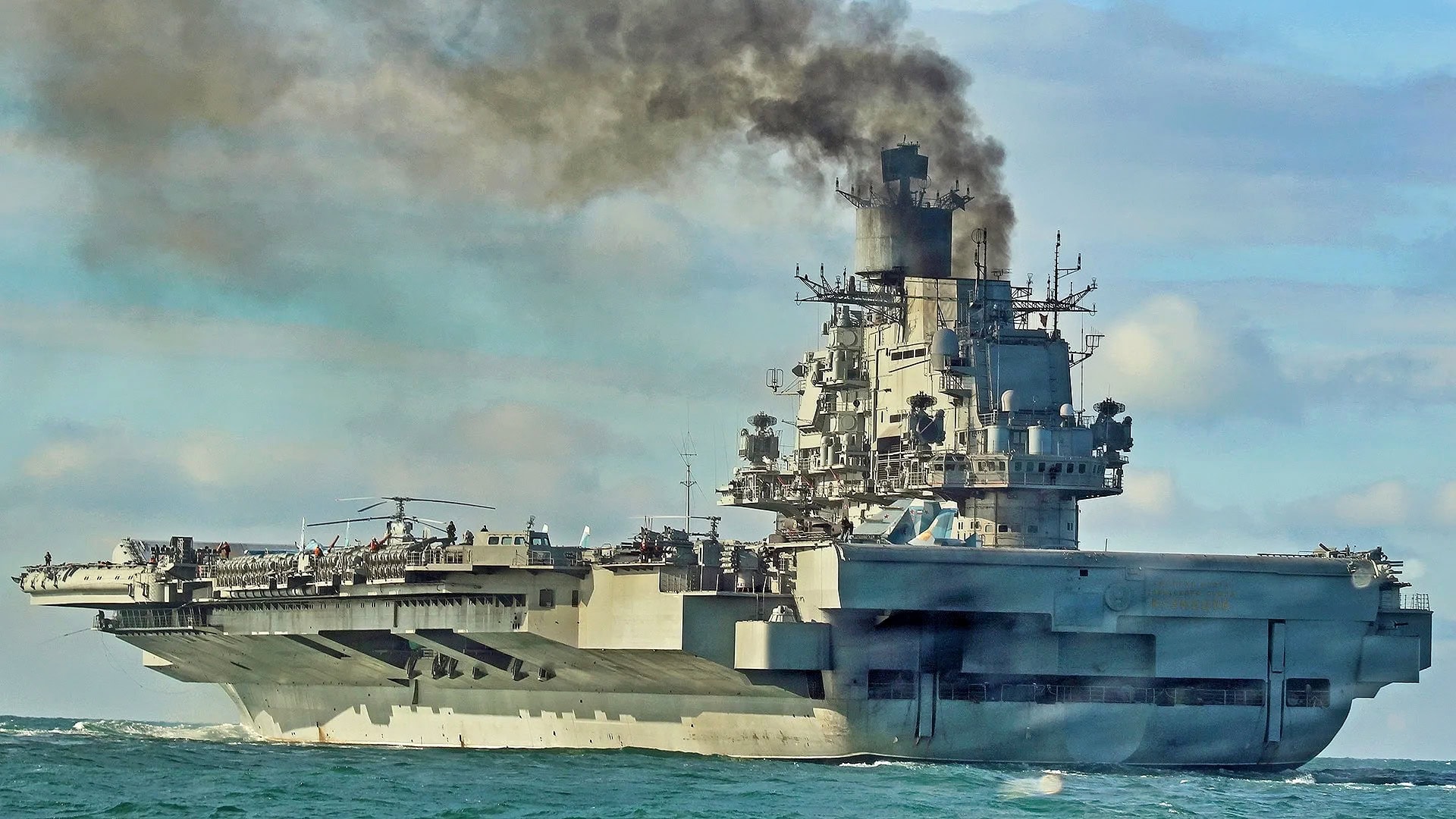
Aircraft Carrier Admiral Kuznetsov Russian Navy. Image Credit: Creative Commons.
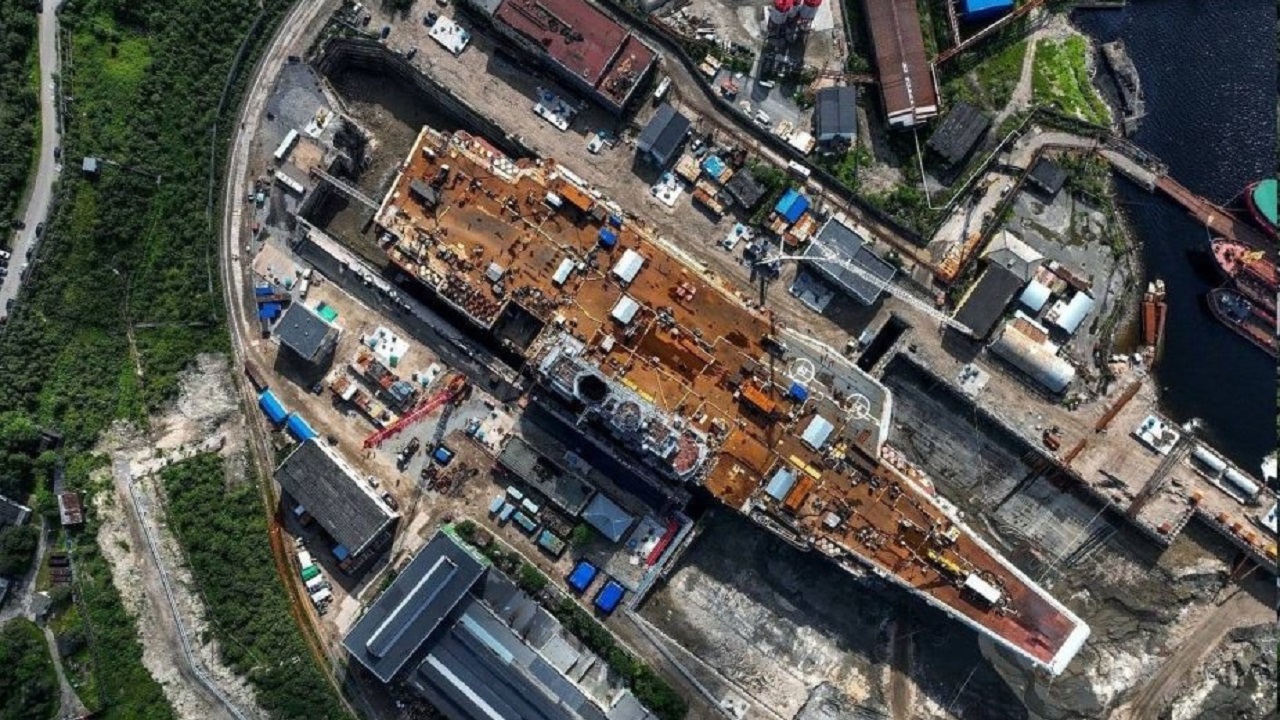
Russian aircraft carrier Admiral Kuznetsov (Picture source: Creative Commons.)
The Sad Case of Admiral Kuznetsov
Admiral Kuznetsov is arguably the most tragic casualty of the Russian Navy’s decline following the Soviet Union’s collapse.
When the USSR dissolved, one of its most important shipbuilding facilities, the shipyard at Mykolaiv, fell under the control of the newly independent Ukraine.
More importantly, however, the defense budget was dramatically cut, forcing the newly formed Russian Navy to retire a sizable portion of its Soviet-era fleet and cancel several important projects, including the aircraft carrier Ulyanovsk, which was roughly 40% complete at the end of the Cold War. Additionally, many of Russia’s shipbuilding companies went bankrupt during the turbulent 1990s and either closed down or transitioned to civilian projects. Despite the curtailed budget and the declining shipbuilding industry, the Russian Navy held on to Admiral Kuznetsov, recognizing the need to maintain an aircraft carrier.
Unfortunately, the Russians lacked both the funds and the industrial capacity to maintain the maintenance-heavy carrier. From 1995 to 2017, the carrier suffered from numerous mechanical and technical issues. In 2017, the carrier was laid up in Murmansk for an extensive overhaul to extend her service life by another 25 years.
However, the program encountered numerous difficulties and hurdles that delayed the ship’s modernization and cost billions of rubles.
In 2018, an accident caused Russia’s largest floating dry dock, PD-50, to sink, and a crane fell onto the carrier, puncturing a large hole in her flight deck. In 2019, a major fire broke out aboard the carrier, killing two people and injuring more than a dozen workers.
The loss of PD-50 and the onboard fire likely ended any chances of Admiral Kuznetsov returning to the fleet.
The ongoing war in Ukraine was the final nail in the coffin, as Russia’s already tight defense budget was further strained to maintain the war effort.
And, of course, it runs on Mazut fuel, which is dirty and leaves smoke trails everywhere.
Pyotr Velikiy: Not Worth Keeping
In contrast, Pyotr Velikiy never suffered major breakdowns or delayed maintenance.
Originally laid down in 1982, she was the fourth and final Kirov-class battlecruiser to be completed.
Commissioned in 1998, she became the flagship of Russia’s Northern Fleet and participated in numerous exercises and deployments.
Unlike Admiral Kuznetsov, Pyotr Velikiy’s problem was not unreliability, but cost.
With a full-load displacement of 26,000 tons, the Kirov-class cruisers are the largest warships built since World War II, excluding aircraft carriers.
As a result, maintaining these massive nuclear-powered cruisers is incredibly expensive and requires a budget much larger than the Russian Navy currently possesses.
Pyotr Velikiy’s sister ship, Admiral Nakhimov, has spent the last 27 years undergoing maintenance and modernization.
Originally, the Kirov class received 20 vertical-launch systems designed to launch P-700 Granit anti-ship missiles.
Under the extensive modernization program, the VLS tubes have been replaced with 80 universal VLS cells, allowing Nakhimov to carry newer munitions like the P-800 Oniks anti-ship missile, the Kalibr cruise missile family, and the Zircon hypersonic cruise missile.
Originally, Russian sources reported that Pyotr Velikiy would receive similar modernization efforts after Nakhimov returned to service.
However, after Nakhimov’s refit dragged on for multiple years, plans to modernize Pyotr Velikiy have been scrapped, and the ship will likely be written off.
A Navy of Frigates and Corvettes: The Decline of Russia’s Surface Fleet
Ever since the end of the Cold War, Russia has struggled to maintain a large blue-water fleet.
As mentioned earlier, many of the Russian Navy’s problems trace back to the economic and political troubles of the 1990s.
However, Russia’s naval situation has yet to improve despite the country’s economic recovery in the 2010s.
The fault lies partially with the Navy itself, which has been engulfed in corruption scandals and has suffered from poor management for decades.
Although Russia’s position has improved significantly since the 1990s, its naval budget remains limited, hindering its efforts to develop and build new blue-water ships like destroyers and aircraft carriers.
The only large naval vessels Russia has built since the Cold War are the Ivan Rogov-class amphibious assault ships, which are currently under construction in Crimea.
As a result, the Russian Navy’s surface fleet is composed mainly of frigates and corvettes. Its fleet of Udaloy-class destroyers is aging despite modernization efforts, and its two Slava-class cruisers are aging as well.
Both classes have been in service for nearly 40 years and are nearing the end of their service lives.
The latest additions to the Russian Navy include the Admiral Grigorovich-class and Admiral Gorshkov-class frigates, along with the Steregushchiy-class corvettes.
This leaves the Russian Navy with a sizable but ultimately limited surface fleet.
The Commander-in-Chief of the Russian Navy, Admiral Aleksandr Moiseev, confirmed that Russia was working on a new class of destroyer with a displacement of around 9,000 tons.
However, no concrete information has been made available on this project.
Summed Up in 1 Word: Scrap
As for aircraft carriers, there are no plans. Admiral Kuznetsov is currently the only carrier the Russians have, and it is currently sitting in Murmansk awaiting its inevitable scrapping.
About the Author: Isaac Seitz
Isaac Seitz, a Defense Columnist, graduated from Patrick Henry College’s Strategic Intelligence and National Security program. He has also studied Russian at Middlebury Language Schools and has worked as an intelligence Analyst in the private sector.