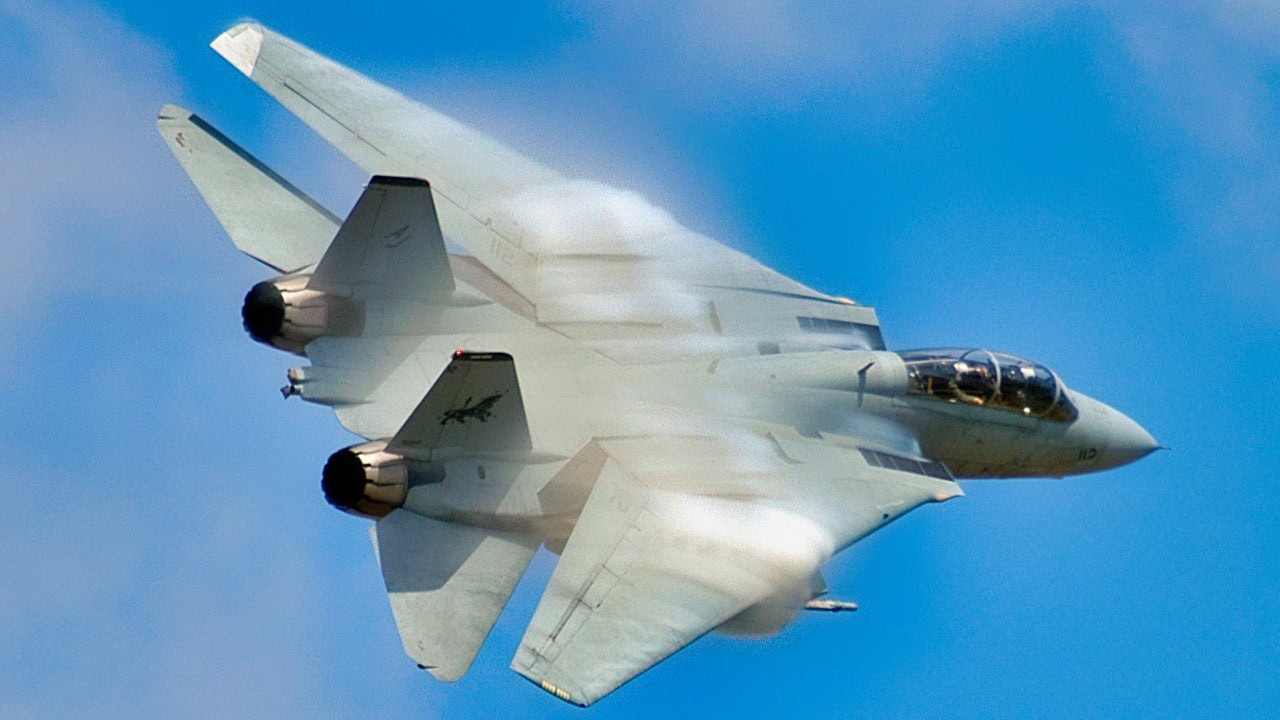
Summary and Key Points: During NATO’s Teamwork 1976 exercise, 60 nautical miles north of Scotland, an F-14A Tomcat on USS John F. Kennedy suffered a runaway engine, slid across the flight deck, and went over the side as its two-man crew ejected onto the deck. It sank nearly 2,000 feet with an AIM-54 Phoenix, the Tomcat’s 100-mile-plus fleet-defense missile.
NOTE: We have visited many F-14 Tomcats over the last two years and have included some of our best visit photos in this article.
The Race for an F-14 Tomcat That Fell Into the Sea
The competition between the Soviet Union and the United States in the Cold War was one of the fiercest geopolitical rivalries in history.
It defined the last half of the twentieth century and still informs us today.
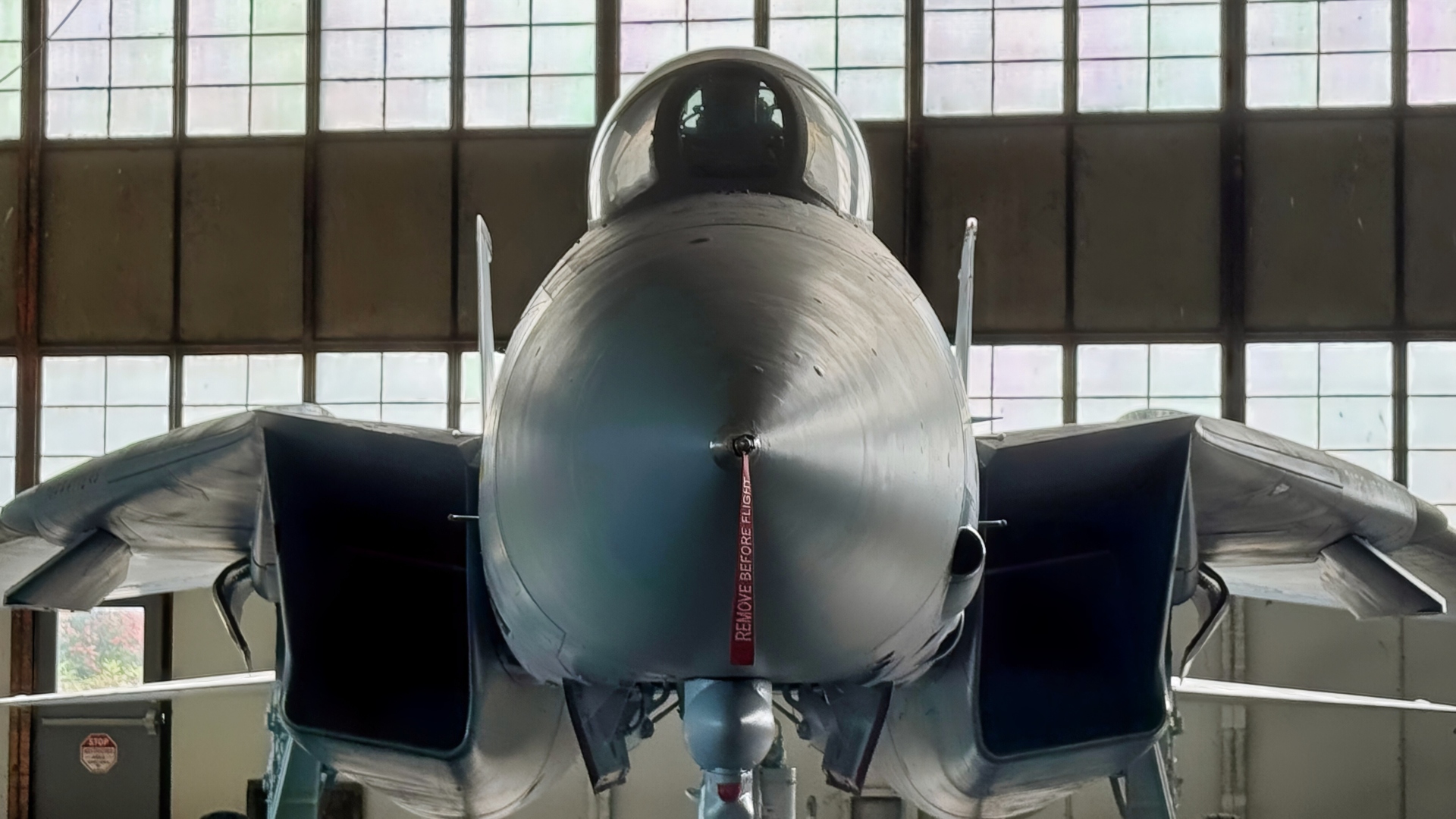
F-14D Tomcat 19FortyFive Photo from Museum Shoot
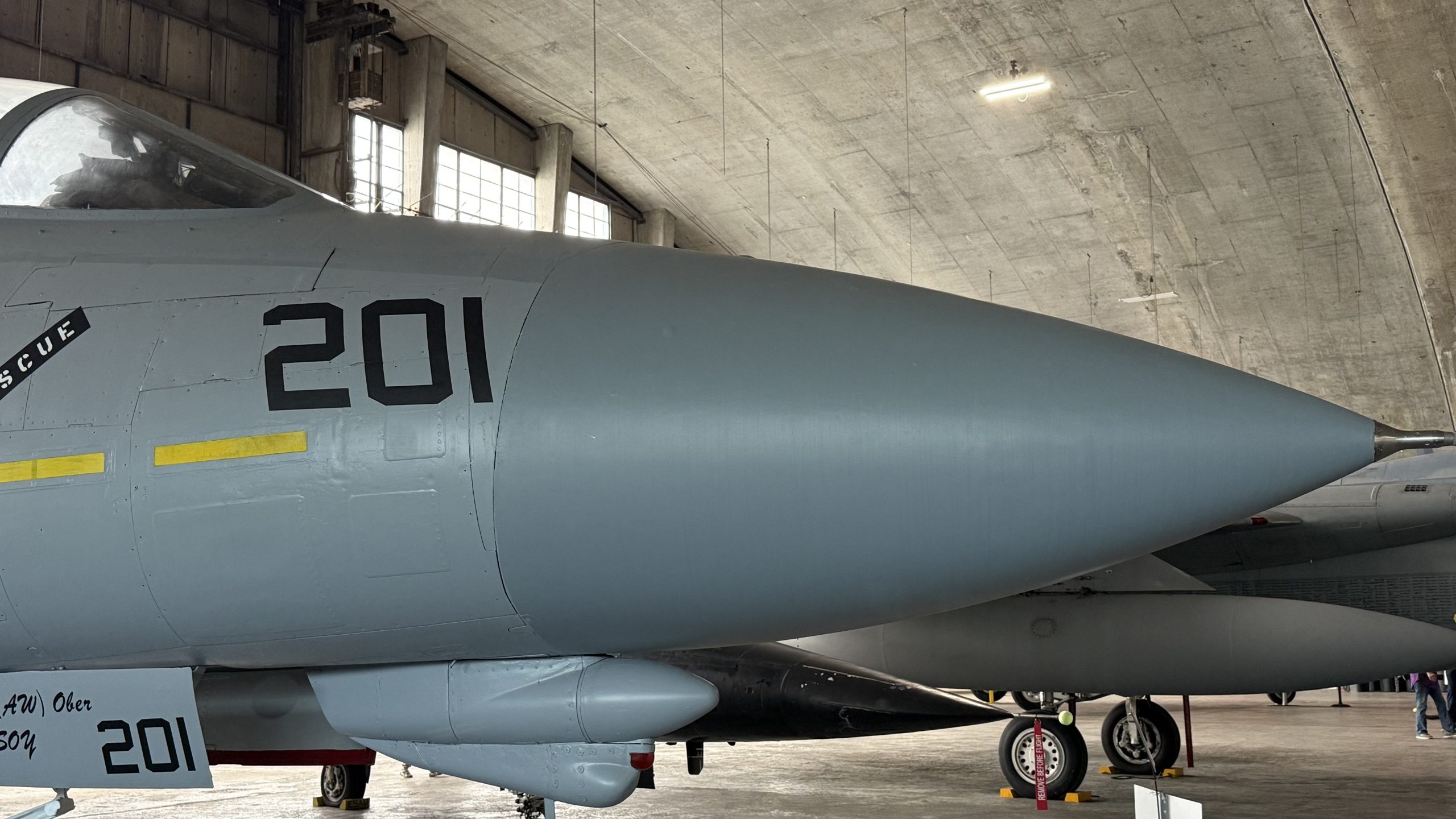
F-14 Tomcat. 19FortyFive staff photo from museum visit.
The competition was also very petty. While everyone remembers the big parts of the competition–the space race, the race for nuclear weapons supremacy–there were smaller races, too. One recent story Aviation Geek Club, an online trade publication, highlighted.
According to the trade publication, an American F-14A Tomcat fighter plunged off the flight deck of the USS John F. Kennedy (CV-67) during NATO exercises in the North Atlantic.
That aircraft sank nearly 2,000 feet beneath the surface, carrying an AIM-54 Phoenix long-range air-to-air missile. The incident triggered an intensive, secretive recovery operation amid worries that the Soviet Union might acquire some of America’s most advanced aeronautical technology.
The Importance of the Tomcat
At the time, the Tomcat was relatively new to the US Navy. In 1976, the F-14’s sophisticated radar, long-range missiles, and variable-sweep wings made it a formidable fleet-defense aircraft. Losing one so close to Soviet surveillance vessels created a firestorm in the US intelligence community.
Naval History and Heritage Command, an online publication focusing on the unique and storied history of the US Navy, reported that the incident occurred 60 nautical miles north of Scotland during NATO’s Teamwork 1976 exercise.
While operating from the USS John F. Kennedy, an F-14 Tomcat experienced an uncontrolled increase in engine power. That plane began sliding across the flight deck as a result of the sudden, uncontrolled increase in engine power. The F-14 pilot moved the aircraft toward the deck’s edge to prevent it from crashing into parked aircraft.
The naval flight officer immediately initiated command ejection just before the Tomcat went overboard.
Three sailors were injured in the accident, and the pilot and his naval flight officer landed safely on the flight deck after ejecting from the stricken plane.
The F-14’s primary mission was to defend aircraft carrier battle groups against Soviet bombers and long-range anti-ship missiles.
Possessing a powerful AN/AWG-9 radar, the Tomcat could track up to 24 targets at once (while engaging up to six targets with the mighty AIM-54 Phoenix missiles).
Under favorable conditions, that missile had a range exceeding 100 miles, letting American naval aviators fire at Soviet bombers before those planes could approach carrier formations.
The Tomcat also had a substantial carrying capacity.
This bird carried AIM-7 Sparrow and AIM-9 Sidewinder missiles, alongside an internally mounted 20mm M61 Vulcan cannon.
The Soviets really wanted to acquire the Phoenix missile and components of the AWG-9 radar that might have revealed information about American detection capabilities, missile guidance, and electronic countermeasures.
The Soviets Wanted the Plane
Aviation Geek Club recounts how Soviet vessels allegedly attempted to recover the downed aircraft while operating under the guise of fishing activities.
Soviet fishing nets became entangled with the wreckage. Contemporary American naval reporting confirms that Soviet intelligence vessels were nearby and that American officials feared a Soviet recovery attempt.
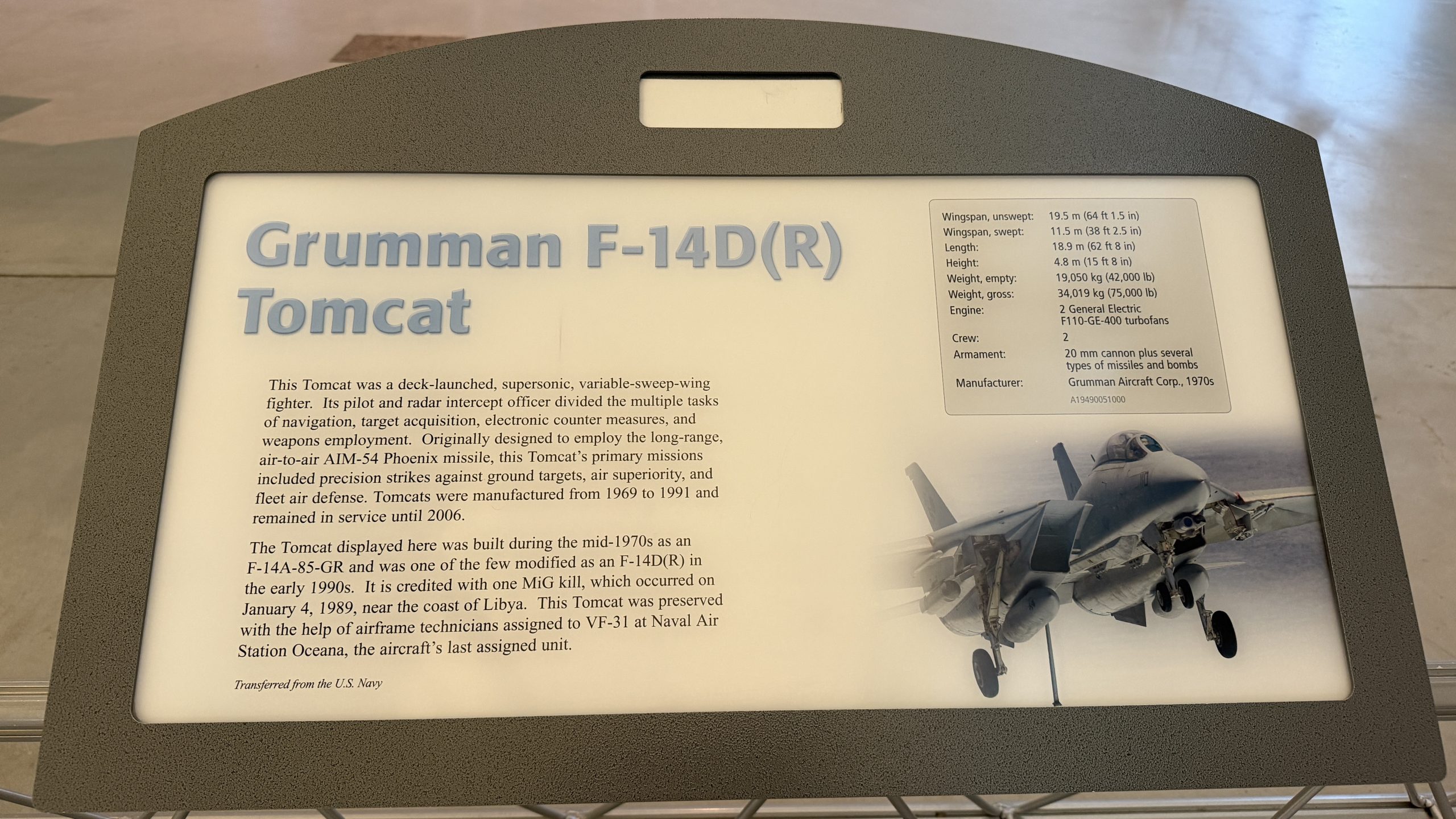
F-14 Tomcat from Steven F. Udvar-Hazy Center. Image taken by 19FortyFive staff on 9/30/2026.
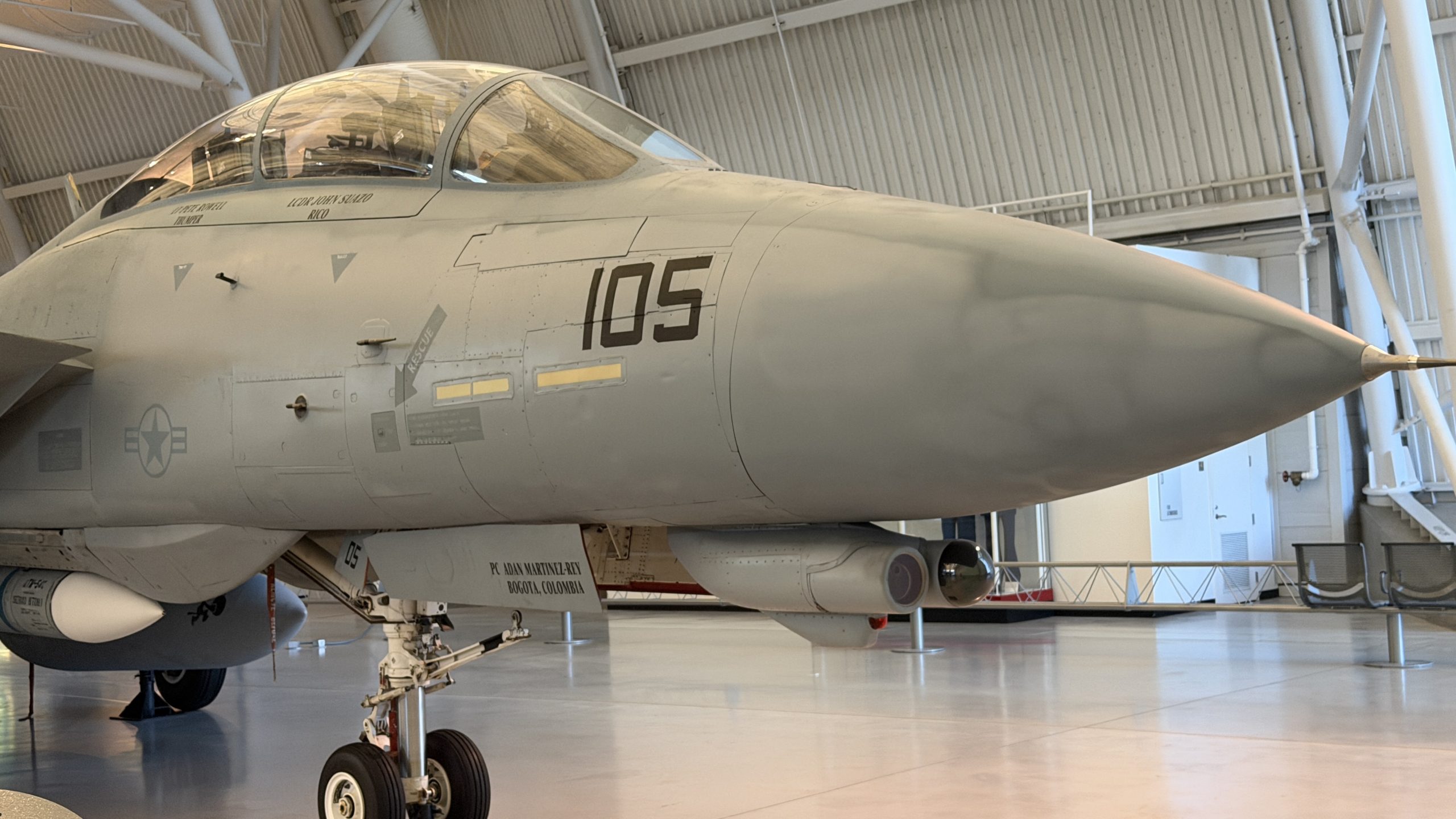
F-14 Tomcat from Steven F. Udvar-Hazy Center. Image taken by 19FortyFive staff on 9/30/2026.
Still, there is no corroboration from official sources indicating that Soviet vessels successfully reached or manipulated the wreckage.
To counteract the Soviet operation, the US Navy conducted its own deep-water salvage operation.
The mission was to recover the downed F-14 and the missile that the Soviets coveted.
It involved underwater search equipment deployed from a nuclear-powered research submarine, designated NR-1.
That sub was specifically designed for extended seabed investigations.
The Navy Beat the Soviets
The depth of the downed aircraft was complex.
But the Navy located the weapon and the plane.
The salvage team recovered the fighter and weapon before the Soviets could.
If the USSR had recovered this plane, it would have fundamentally transformed the air component of the Cold War.
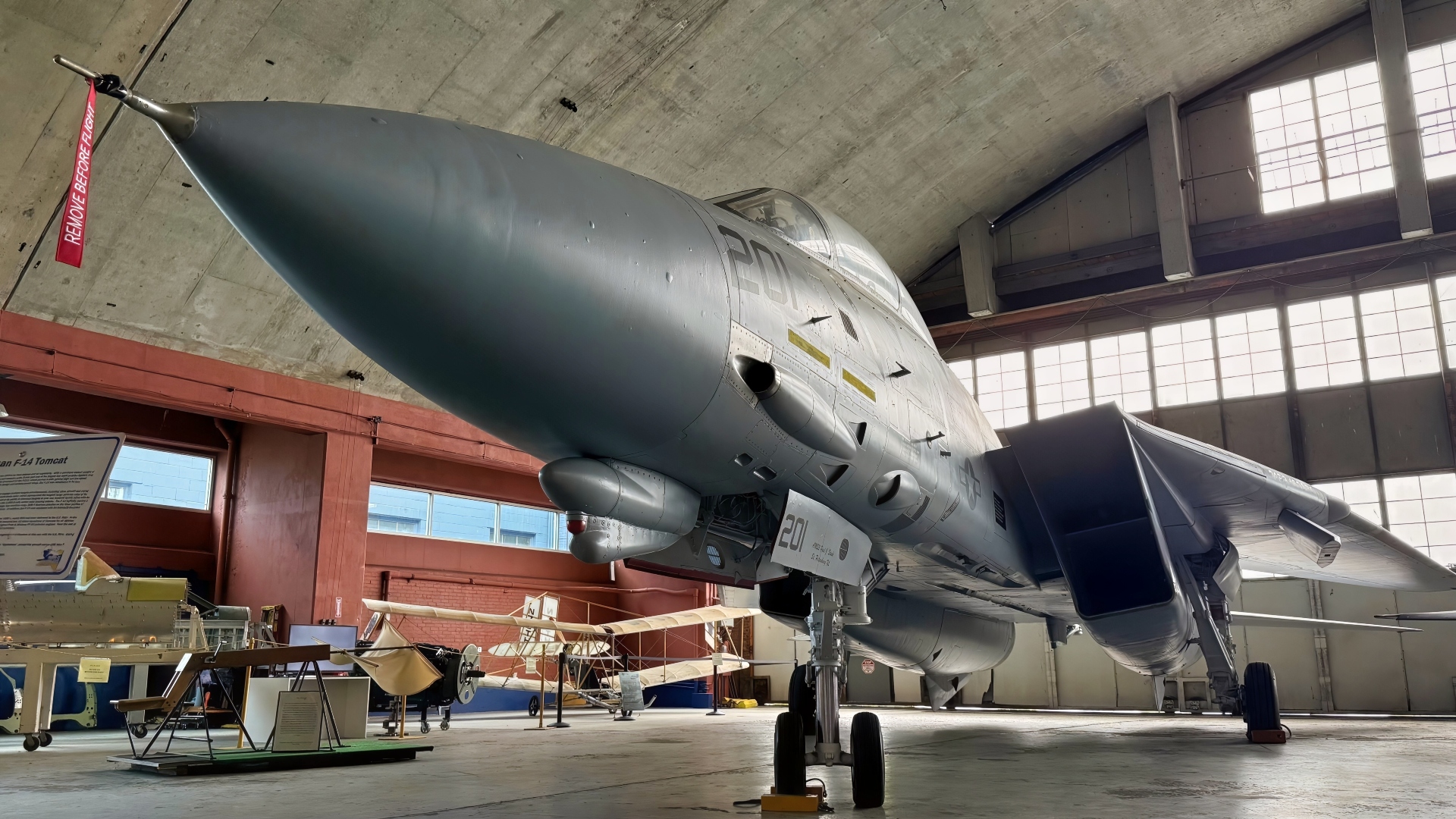
F-14 Tomcat Museum Photo 19FortyFive Photo Taken September 2026
For many years after this incident, the F-14 Tomcat remained central to American naval aviation until its retirement in 2006.
Its long-range interception capabilities helped shape US carrier-defense strategy for 30 years.
In fact, some tried to extend the F-14’s lifespan beyond 2006, even pushing Grumman to build a new F-14 Tomcat II.
So, the Soviets never got their hands on the F-14–even though they very much tried.
About the Author: Brandon J. Weichert
Brandon J. Weichert is the Senior National Security Editor at 19FortyFive.com. He also manages The Weichert Brief on Substack. Weichert is the co-host of The Mario Nawfal Show on Twitter/X. He is the author of four bestselling national security books, most recently A Disaster of Our Own Making: How the West Lost Ukraine (Encounter Books). His next book, Fortress Americas: A New Monroe Doctrine (Tucker Carlson Books), is due out December 8. Follow him via Twitter/X @WeTheBrandon.