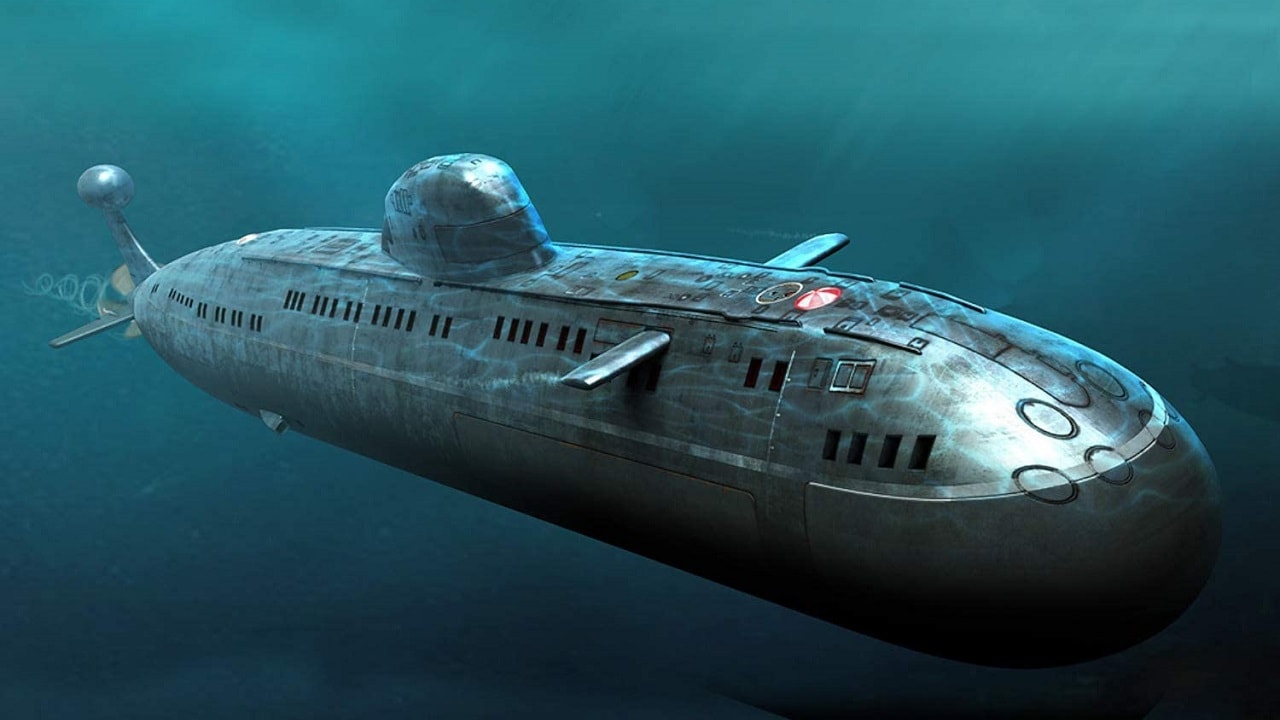
Summary and Key Points: On March 21, 1984, the US Navy aircraft carrier USS Kitty Hawk collided with Soviet Victor I-class submarine K-314 in the Sea of Japan. The nuclear sub surfaced with no lights in the carrier’s path at 10:07 PM, 150 miles east of Pohang, South Korea.
A Russian Submarine and US Navy Aircraft Carrier Smashed Into Each Other
At the height of the Cold War, one of the most inopportune events imaginable occurred in the Sea of Japan.
The date was March 21, 1984, and the US Navy’s USS Kitty Hawk (CV-63) aircraft carrier collided with a Soviet nuclear-powered attack submarine.
The incident occurred as the Kitty Hawk participated in joint exercises with the South Korean military.
The Soviet submarine was K-314, a Victor I-class nuclear-powered attack submarine.
It had been shadowing the American carrier group.
At 10:07 pm local time, the submarine surfaced directly in the path of the Kitty Hawk, which had been traveling at 15 knots.
The collision seriously damaged both vessels and disabled the Soviet submarine.
Pieces of its propeller and specialized acoustic coating embedded themselves in the US carrier’s hull (creating a pristine intelligence-gathering opportunity).
No one onboard either ship was killed or even injured.
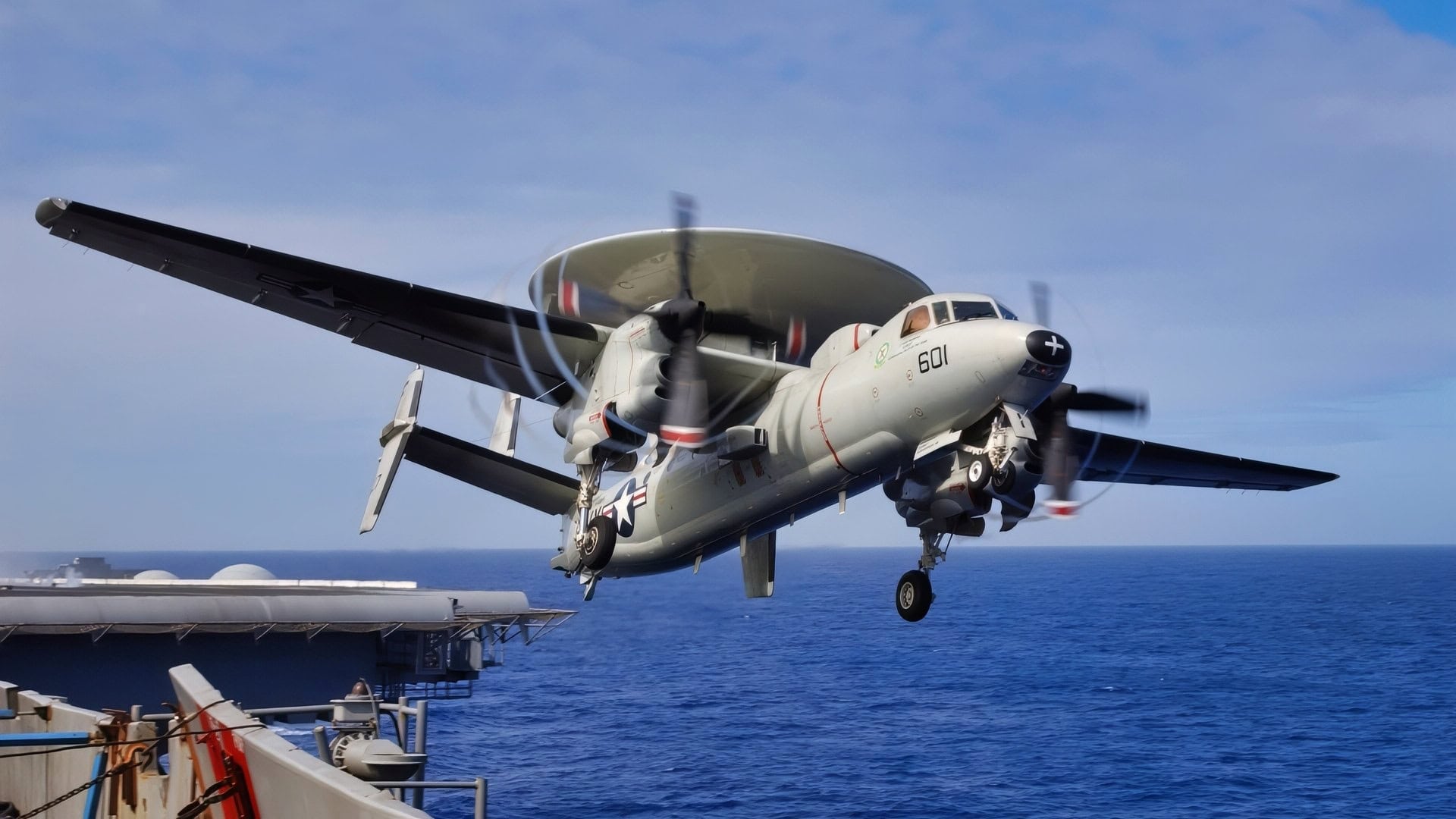
ABOARD USS KITTY HAWK (CV 63) AT SEA (May 22, 2004) — An E-2C Hawkeye assigned to Airborne Early Warning Squadron (VAW) 115 “Liberty Bells” banks after being launched from USS Kitty Hawk (CV 63) following the ship’s annual spring cruise. The E-2C is all weather, carrier-based tactical warning/control system aircraft, providing airborne early warning and control functions for the strike group. Currently under way in the 7th Fleet area of responsibility (AOR), Kitty Hawk demonstrates power projection and sea control as the world’s only permanently forward-deployed aircraft carrier, operating from Yokosuka, Japan.
U.S. Navy photo by Photographer’s Mate 3rd Class Jason T. Poplin
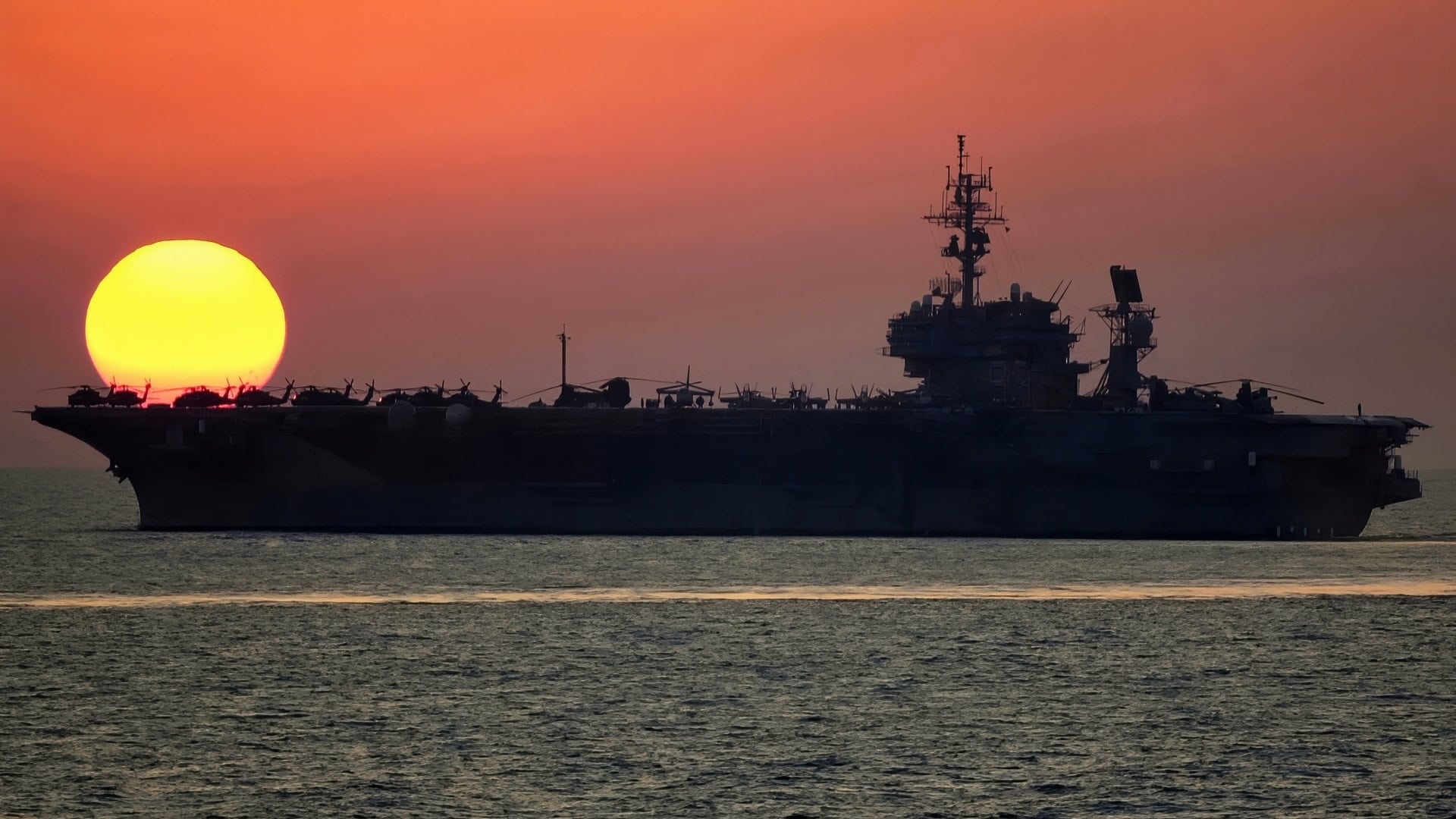
USS Kitty Hawk in the Sunset Creative Commons Image

At Sea (Aug. 9, 2004) -USS Kitty Hawk (CV 63) plows through the waters of the Pacific Ocean as it makes its approach to the oiler USNS Yukon (T-AO 202) before commencing a replenishment-at-sea (RAS) evolution. A RAS is the on- and off-loading of fuel and stores while ships are under way. Currently underway in the 7th Fleet area of responsibility (AOR), Kitty Hawk demonstrates power projection and sea control as the world’s only permanently forward-deployed aircraft carrier, operating from Yokosuka, Japan.
U.S. Navy photo by Photographer’s Mate 3rd Class Jason T. Poplin
The Kitty Hawk
The USS Kitty Hawk was a conventionally powered US Navy supercarrier commissioned on April 29, 1961.
This great ship measured around 1,047 feet long and displaced 80,000 tons when fully loaded.
She could reach around 30 knots while carrying 85 aircraft (both fixed-wing and rotor-wing).
In March 1984, the carrier participated in Exercise Team Spirit 84-1 with the South Korean military.
The carrier was part of Battle Group Bravo, along with eight escort vessels.
The Soviets were deeply concerned about this exercise to their east.
Because of Moscow’s fears over this exercise, the Soviets sent multiple surveillance platforms, including surveillance planes, surface warships, and submarines like the K-314 that ultimately crashed into the Kitty Hawk.
The Victor I-Class Soviet Sub
The Soviet submarine in question belonged to Project 671.
The Soviets developed these nuclear-powered attack submarines in the 1960s to track and potentially destroy American submarines and surface warships.
K-314 measured about 309 feet long and displaced about 4,750 tons (when submerged).
This submarine could reach 24 knots underwater.
The sub had torpedo tubes that could launch more than just conventional torpedoes.
They could also deploy nuclear-armed torpedoes.
Because of the Soviet sub’s nuclear reactor, the K-314 could remain submerged for long periods.
It increased the submarine’s stealth, especially when operating near American vessels.
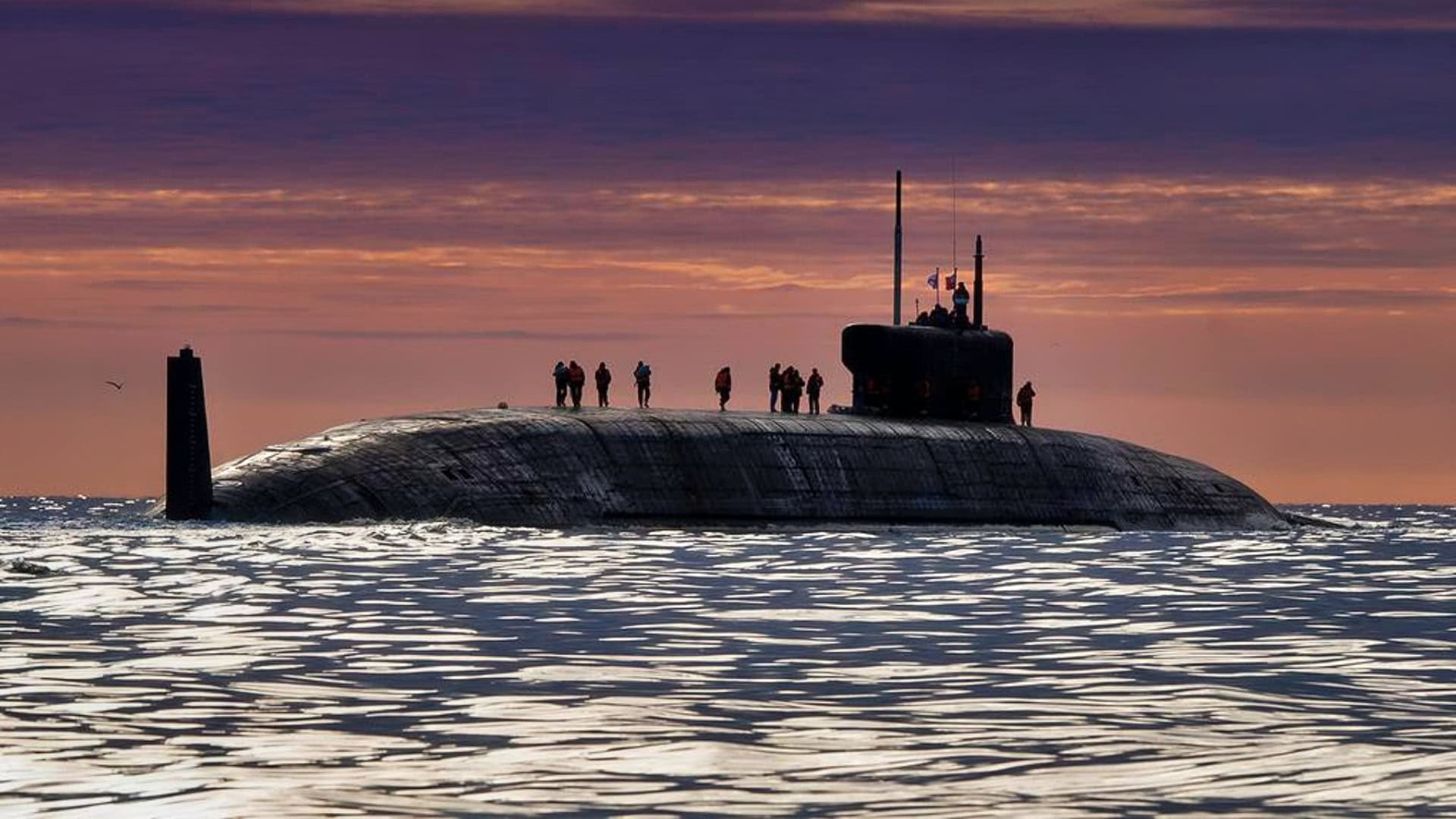
The Russian Navy is experiencing a resurgence, with new ships and submarines entering service despite ongoing challenges.
During the exercise, K-314 trailed the American battle group for days. US anti-submarine helicopters repeatedly detected the sub.
During the exercise, the US helicopters even practiced destroying the sub more than 15 times.
Somehow, though, the carrier group lost contact with K-314.
On the submarine, things got murky, too. The Soviet Navy crew tried to keep monitoring the American formation.
But they also lost the carrier’s position.
Losing Track
Once the submarine lost track of the carrier, the American carrier lost the Soviet sub, setting the stage for disaster. Submarines rely on sonar to listen for nearby vessels.
Using passive sonar, the submarine can maintain its stealth while listening for nearby ships (potential targets).
However, propulsion noise and some acoustic blind spots interfere with detection.
The crew of K-314 failed to recognize that the US carrier was fast approaching, likely because of these blind spots.
At 10:07 pm local time, around 150 miles east of Pohang, South Korea, the submarine surfaced directly into the Kitty Hawk’s path.
Captain David N. Rogers of the USS Kitty Hawk was on the bridge when he reported feeling a violent shudder.
A lookout saw the silhouette of a submarine sail moving away from the carrier in the darkness.
The Soviet submarine displayed no navigation lights.
The Kitty Hawk, traveling at 15 knots, stopped as quickly as possible for an 80,000-ton carrier.
American SH-3 Sea King helicopters were dispatched to inspect the submarine the carrier hit.
There was no catastrophic damage visible.
However, the Soviet submarine did suffer severe damage to its propulsion system.
The propeller was damaged to the point that it could no longer return to port under its own power.
So, the USS Harold E. Holt, a frigate, remained nearby while the Soviet crew called for assistance.
A Soviet rig eventually arrived and towed the K-314 back to the USSR for repairs.
An Intelligence Bonanza
While the Kitty Hawk was still functional, it remained damaged.
A fuel tank in the carrier’s starboard bow was breached, allowing seawater to enter.
The damage did not prevent the US warship from continuing operations.
Kitty Hawk underwent inspection and repairs at Subic Bay in the Philippines; US personnel soon discovered that part of the K-314’s propeller blade was lodged in the carrier’s hull.
So, too, were pieces of the submarine’s sensitive anechoic coating.
Those tiles were key for intelligence.
They’re made of specialized materials designed to absorb and reduce reflected sonar energy.
The recovered material let US intelligence see how far Soviet submarine technology had advanced.
This embarrassing event became an intelligence bonanza for US military intelligence.
Back in the USSR, the Soviet authorities removed K-314’s commanding officer from submarine command following the incident.
The Soviets repaired the submarine and returned it to service.
Kitty Hawk continued operating for another 25 years.
She was ultimately decommissioned in 2009.
About the Author: Brandon J. Weichert
Brandon J. Weichert is the Senior National Security Editor at 19FortyFive.com. He also manages The Weichert Brief on Substack. Weichert is the co-host for The Mario Nawfal Show on Twitter/X. He is the author of four bestselling national security books, most recently A Disaster of Our Own Making: How the West Lost Ukraine (Encounter Books). His next book, Fortress Americas: A New Monroe Doctrine (Tucker Carlson Books), is due out December 8. Follow him via Twitter/X @WeTheBrandon.