
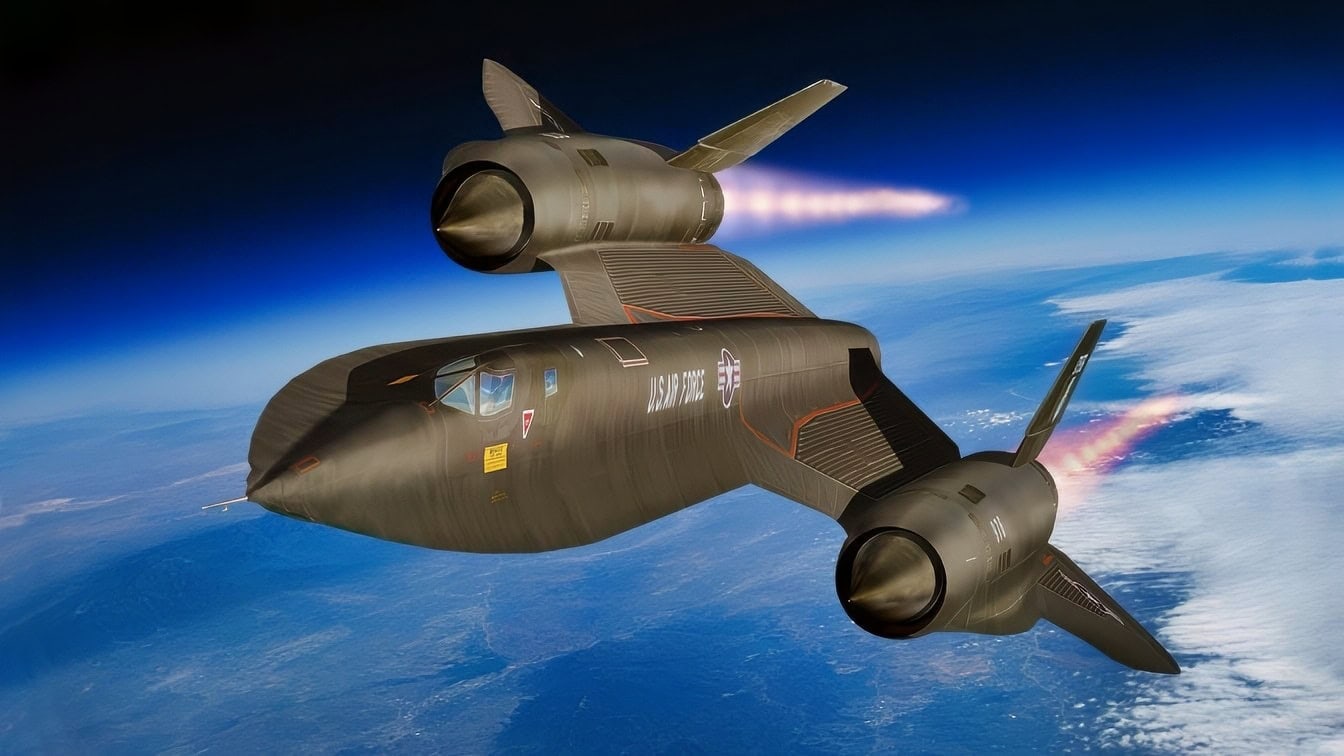
Summary and Key Points: Christian D. Orr weighs the idea of a Mach 4 SR-71 Blackbird, a 20.4 percent jump on its official Mach 3.32 record, 62 years after its first flight. Citing TWZ’s October 7, 2026 interview with former NASA Dryden propulsion lead Tim Connor, he describes a 1990s concept to spray-cool intake air above Mach 3.4 for brief dashes, the J58’s material limits, and a combined-cycle engine like the SR-72’s. SR-71 #844 has vanished from NASA Armstrong.
The SR-71 Blackbird Mach 4?
In the past couple of weeks, we at 19FortyFive have run multiple stories discussing the prospect of NASA reviving the Lockheed “Skunk Works” SR-71 Blackbird, which is *still* the world’s fastest air-breathing aircraft ever built, a whopping 62 years after its maiden flight and 27 years after its retirement.
As if that wasn’t wildly ambitious enough, people are talking about pushing the reborn Blackbird to even higher speeds, Mach 4.0, or 2,660 mph.
Whoa there. Here’s why we know:
Putting Those Numbers in Perspective on the SR-71 Blackbird
The *official* record airspeed for that cool, iconic Cold War classic spy plane was Mach 3.32, while unofficially it was Mach 3.56.
Those records still stand today. Yes, the North American X-15 more than doubled down on that official stat, reaching a max airspeed of Mach 6.7, but the X-15 was rocket-powered rather than an air-breather.
So, Mach 4.0 would give the Blackbird a 20.4 percent boost
Meanwhile, the SR-71’s supposed heir apparent, the SR-72 “Darkstar,” aka “S.O.B. (Son Of Blackbird), will allegedly be able to hit Mach 6.
Okay, but how do you get the Blackbird to Mach 4?
In other words, it sounds great in theory, but how practical would it be?
Well, the idea certainly isn’t new. On 7 October 2026, TWZ published an article co-authored by the ever-savvy Howard Altman, Thomas Newdick, and Tyler Rogoway.
The article draws heavily upon the remarks of Tim Connor, former lead propulsion engineer for the SR-71s at NASA’s Dryden Flight Research Center.
It turns out Mr. Connor had explored the notional possibility of a Mach 4 Blackbird as far back as the early 1990s: “The study that I did at Dryden was purely conceptual. I asked the Lockheed and Pratt folks about speed limitations. So stagnation temperature. What can we get to at altitude?”
A major obstacle to further pushing the envelope of the plane’s already super-impressive record airspeed was mitigating the effects of extreme heat upon the engines: “What we looked at was spray cooling of the incoming airflow to lower the bulk temperature, so it would only be used when you were accelerating beyond about Mach 3.4.
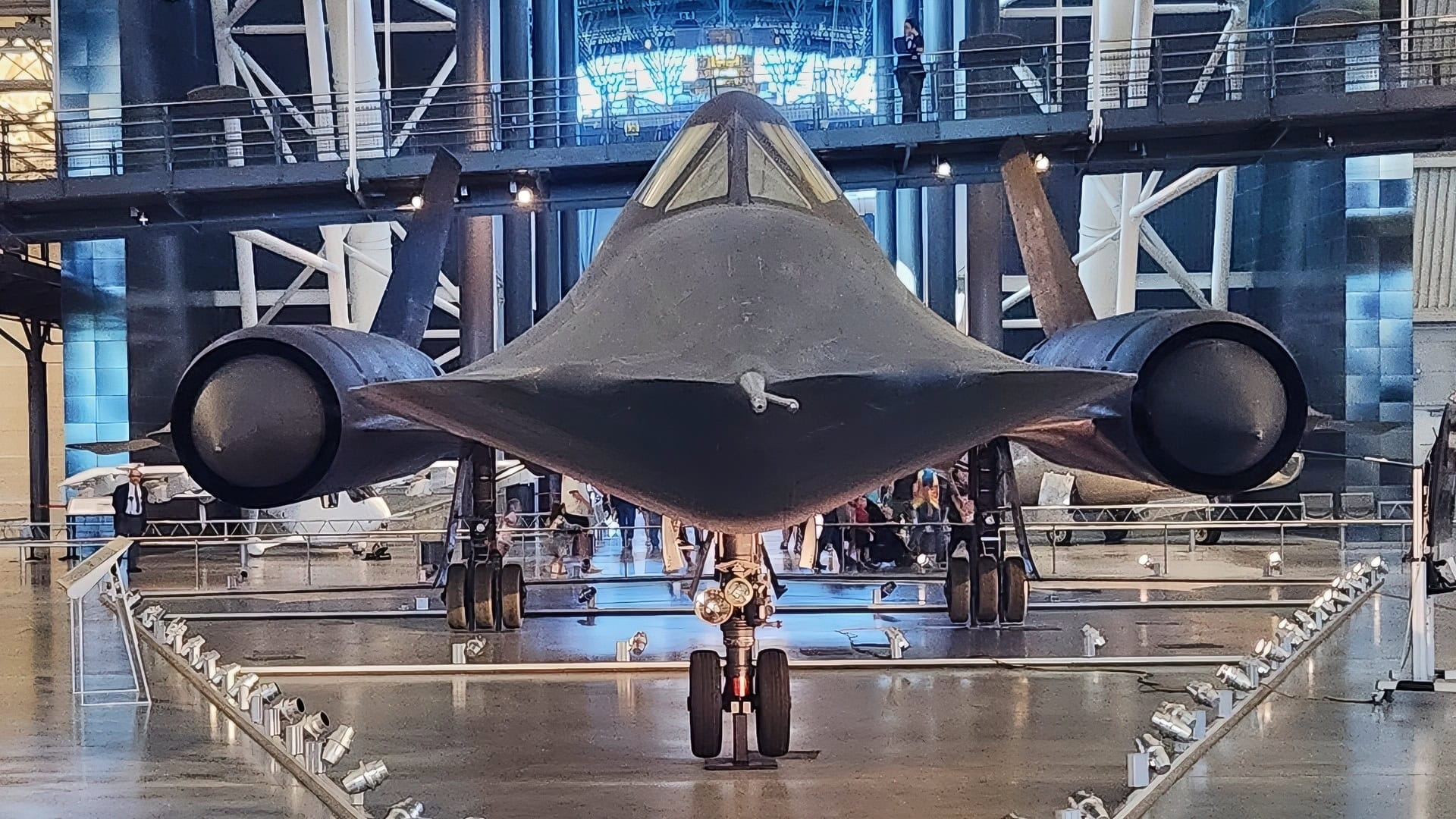
SR-71 At the Smithsonian. Image Credit: Creative Commons.
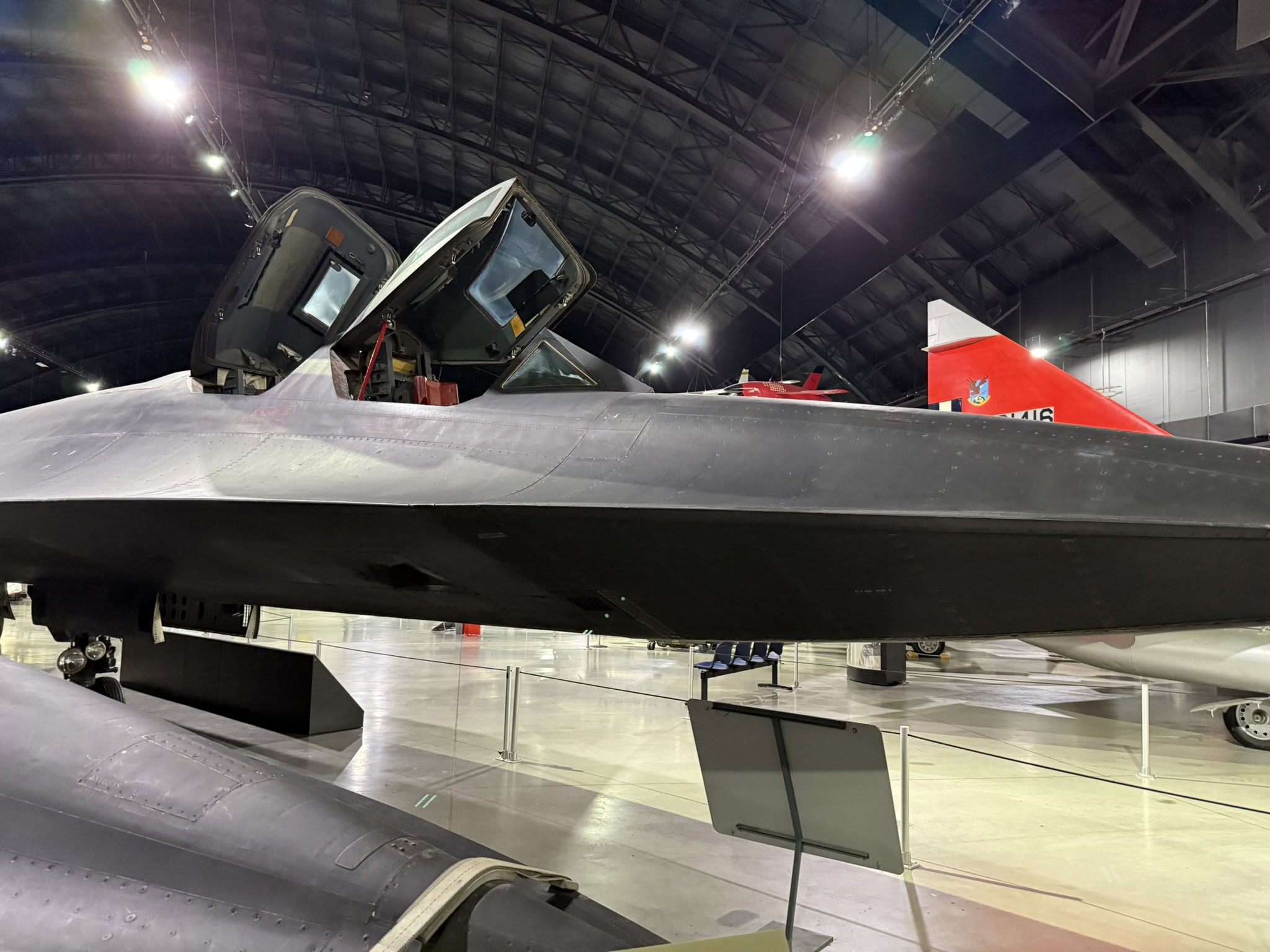
SR-71 at National Museum of the Air Force.
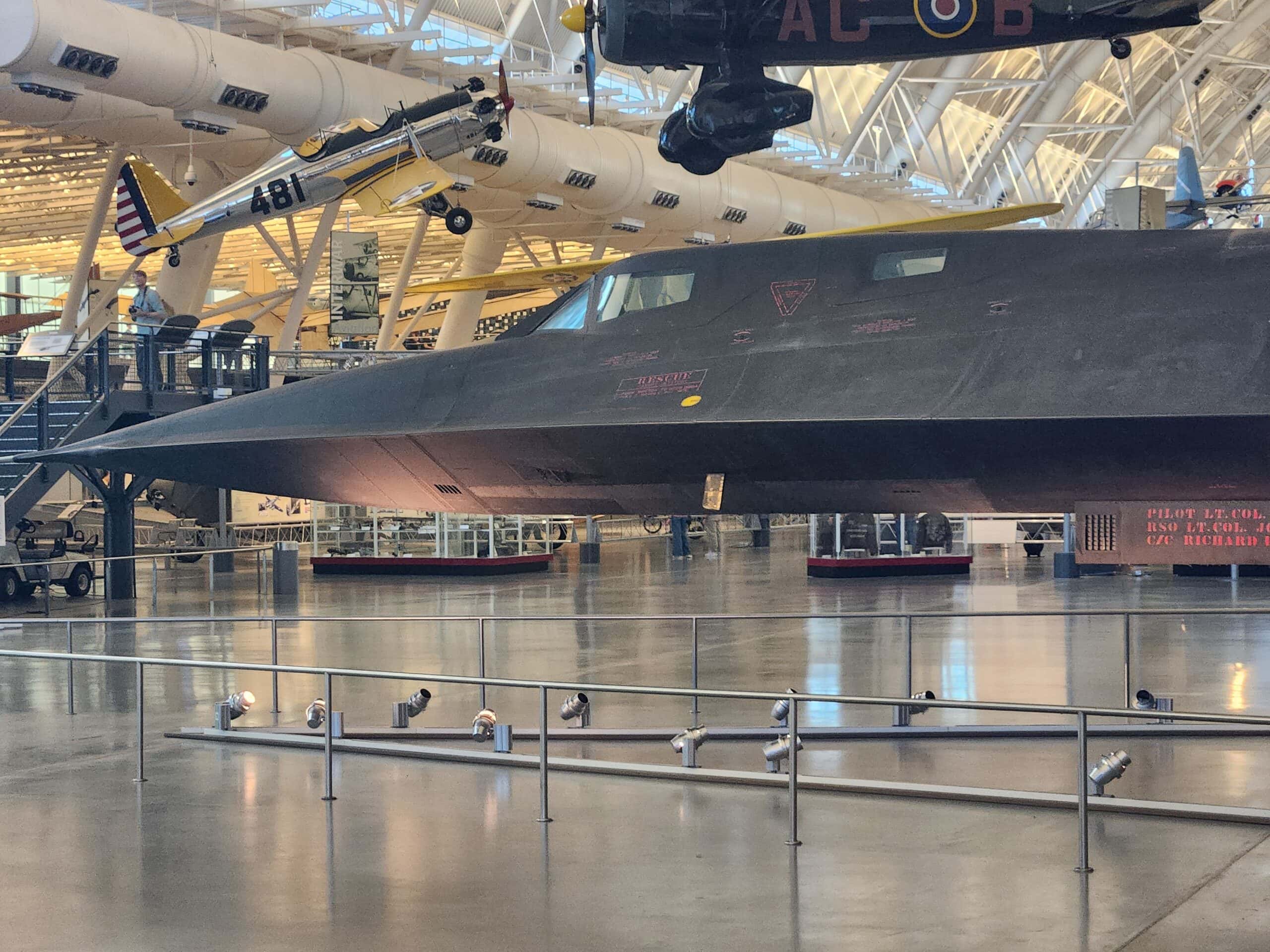
SR-71 Blackbird. 19FortyFive.com Image from the Smithsonian.
You would only very briefly do Mach excursions to a higher Mach number, and then come back.
That was the conops for that system… “This is a way to [get to a higher Mach range] briefly,” the engineer postulated. “You could probably get to a higher Mach number. The problem is that if you clog or freeze the system, if it fails while you’re at higher speed, you have to decelerate in a hurry to protect the assets.”
Then there’d be the issue of the aged Pratt & Whitney J58 afterburning engines, which, even in their heyday, “had the performance, but not the material strength.”
A presumptive solution would be a combined-cycle engine capable of hypersonic flight, one that combines turbojet and ramjet or scramjet functions and “hands off” propulsion from the turbojet to the other, optimized for extreme speed…which just so happens to be the same concept behind the S.O.B. To quote Mr. Connors one more time: “We were talking about the SR-72. Where is that at? I don’t know. I know people who worked on it years ago. I’ve never heard anything since. So it could be that it’s so deep black that there’s no way that platform could be used as a test asset. So I think it’s precisely what you said. The Blackbird’s no longer classified, and it’s possible that the engines that might be used in Blackbird wouldn’t be classified either.”
Adding to the Intrigue
Even if that lofty Mach 4.0 goal isn’t attained, restoring the old-school spy plane to flying condition has been gaining momentum.
On 24 September 2026, TWZ’s Joseph Trevithick published a report noting that SR-71 #844 had mysteriously and oh-so-conveniently disappeared from NASA’s Armstrong Flight Research Center.
As the refrain from one popular early 1990s song goes, “It’s the things that make you go ‘Hmmmm…’”
About the Author: Christian D. Orr
Christian D. Orr is a Senior Defense Editor. He is a former Air Force Security Forces officer, Federal law enforcement officer, and private military contractor (with assignments worked in Iraq, the United Arab Emirates, Kosovo, Japan, Germany, and the Pentagon). Chris holds a B.A. in International Relations from the University of Southern California (USC) and an M.A. in Intelligence Studies (with a concentration in Terrorism Studies) from American Military University (AMU). He is also the author of “Five Decades of a Fabulous Firearm: Celebrating the 50th Anniversary of the Beretta 92 Pistol Series,” whose second edition was recently published.