
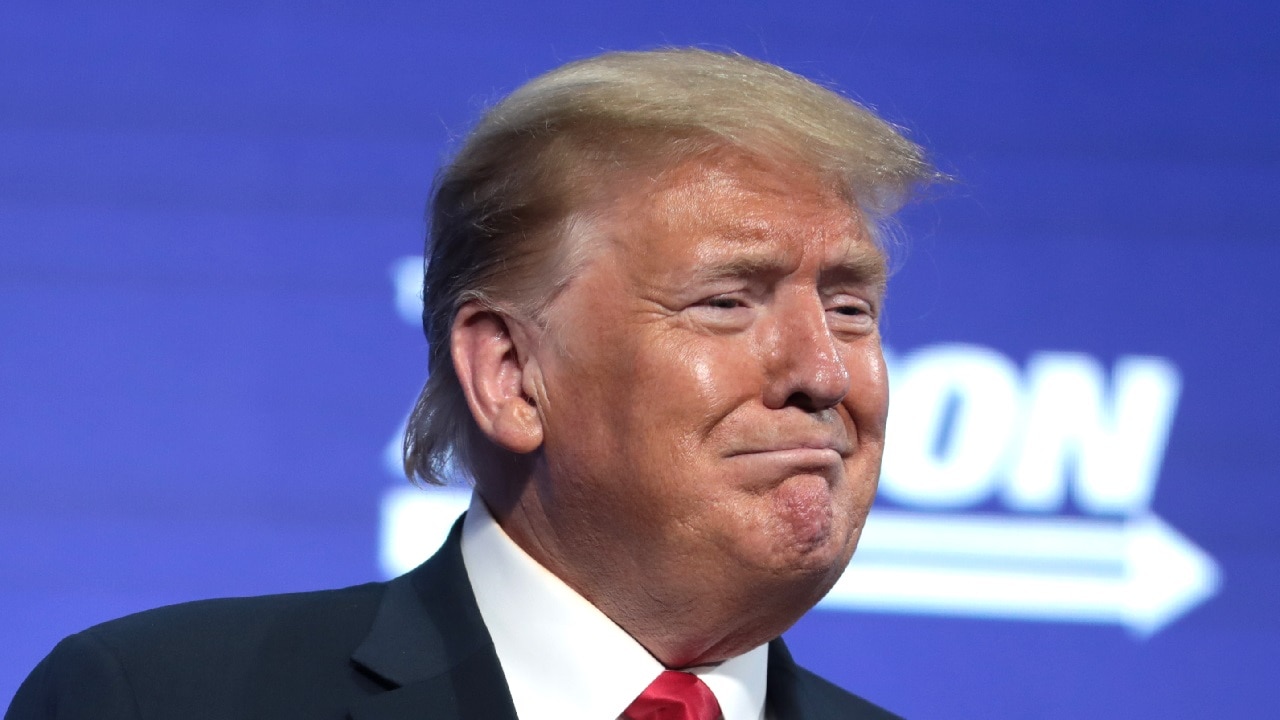
The administration of United States President Donald Trump has suggested it will broker ninety trade deals in ninety days in the wake of Trump’s imposition of ‘Liberation Day’ tariffs. Trump has instituted a substantial, across-the-board tariff of ten percent on imports into the US. He has also slapped country-specific tariffs on individual nations. Some of these tariffs, such as those on China, are hugely disruptive. Trump now suggests he wants to negotiate with his tariff targets. It is unclear whether any new trade deals would eliminate the tariffs.
If Trump follows through on his tariff war, many countries will effectively decouple from the US. Exorbitantly high tariffs on poor countries, particularly, will make their exports so pricey that they will likely stop exporting to the US altogether. The tariffs on China are even more punishing. Trump has repeatedly threatened to tariff China over one hundred percent! This would more than double the price of goods from China.
In practice, this would rapidly decouple the US and China. The unpredictable fallout from such a massive, rapid rupture is likely why Apple scrambled to get a tariff exemption and why Trump expects Chinese President Xi Jinping to call him to deal. But tariffs are unlikely to yield the rapid results—within ninety days—Trump demands.
Trump, Tariffs, and Nationalism
The most apparent problem with tariffs as a trade deal cudgel is that they provoke a nationalist backlash. Trump seems to have expected US trading partners to knuckle under and simply accept the tariffs. A few states—like South Korea and Japan, which are exceptionally dependent on the US for their national security—have not hit back with countervailing duties. But most have, including America’s biggest trading partners—the European Union and China.
This is unsurprising. Trump campaigned on American nationalism, and his rhetoric about US trade partners has been filled with accusations of theft and advantage-taking. Trump seems to genuinely believe that a trade deficit is a trade partner ‘ripping off’ the US (it is not). Predictably, US trade partners have responded to American trade nationalism with their own nationalism.
Trade Deals Take a Long Time
Ninety deals in ninety days is a swift average of one trade deal struck daily for the next three months. If the Trump team came remotely close to this benchmark, it would be the most astonishing achievement in the history of international trade negotiation. It is, obviously, wildly unlikely—and probably undesirable, too.
The most important trade deals are those between large, systemically important economies. The membership of the G-20 (Group of 20) is a good proxy for these big economies. As wealthy, complex economies with many sectors, trade deals (FTAs, free trade agreements) among them are often highly complex. The final text of FTAs usually numbers in the hundreds of pages, and the negotiations take years.
This lengthy, exhausting process reflects the many domestic interests at stake. Vulnerable sectors often demand emergency provisions (against ‘dumping,’ for example). Standards between the two countries are often different, which requires regulatory harmonization. Dispute settlement processes are usually included to prevent politics from pulling apart the FTA later. All of this takes time. The US-South Korea deal of 2009 (KORUS FTA) took seventeen months to hammer out, even though South Korea is just a mid-size economy. And Trump, in his first term, insisted on revisions to it.
Trump Might Be Disappointed on Trade Deals
In short, the only FTAs likely to be struck in one day will be with small, unimportant economies. Those countries will have small export totals and, likely, already be in an FTA with the US. At best, the Trump team can probably change a few minor details and then claim it a new deal. However, no new FTA with a G-20 economy will be struck in just three months.
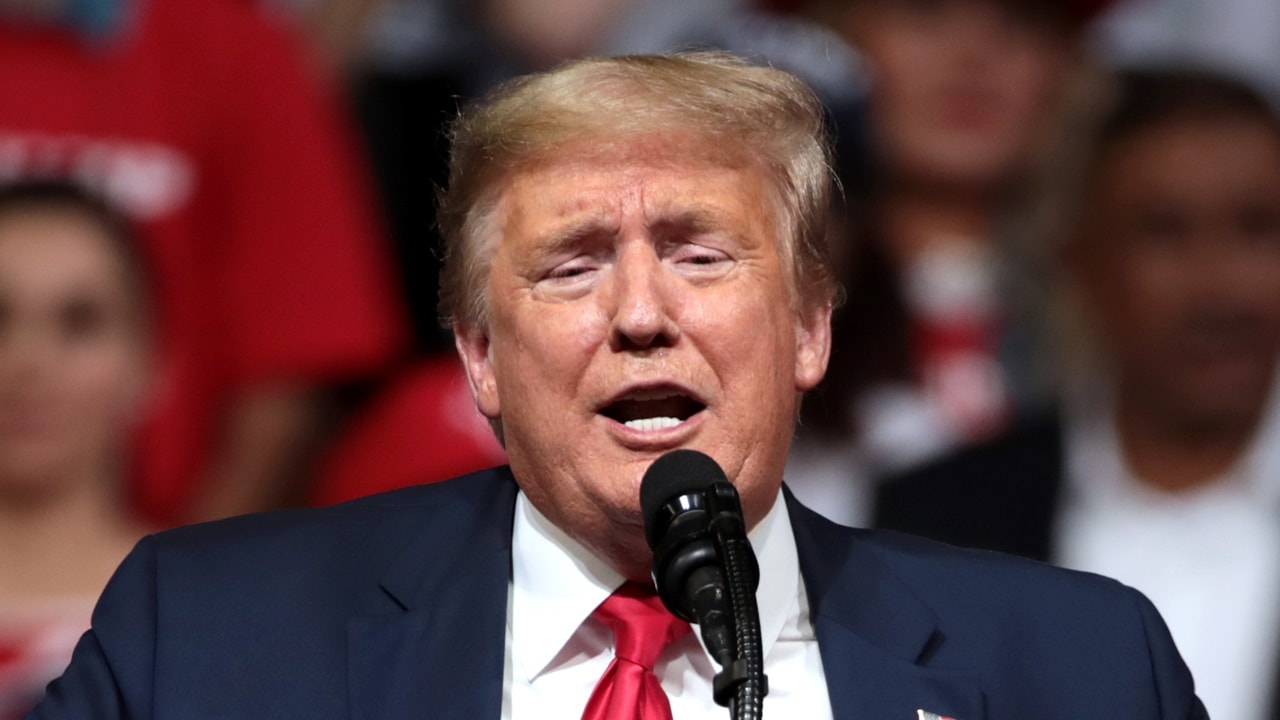
President of the United States Donald Trump speaking with supporters at a “Keep America Great” rally at Arizona Veterans Memorial Coliseum in Phoenix, Arizona.
Trump’s theory of the case seems to be that in a bilateral setting, the US can leverage its national power for partner concessions better than in a multilateral setting like the World Trade Organization. This is likely true for small economies, which America can openly bully.
But nationalism cuts both ways. Large economies that can hold out likely will. They will stiffen their spines and demand traditional negotiations lasting far longer than ninety days.
About the Author: Dr. Robert E. Kelly
Dr. Robert E. Kelly is a professor of political science at Pusan National University. Kelly is also a 19FortyFive Contributing Editor. You can find him on X: @Robert_E_Kelly.