Ukraine is currently embroiled in the largest conventional war against Russia, not seen since the Iran-Iraq War. Fighting a stronger adversary with advantages in artillery, missiles, and fighter jets, Kyiv needed to counter Moscow’s aggression.
Ukraine’s drone warfare is one such strategy to counter Russia’s military excess. Aerial and seaborne drones scored major military success against the Russian military. Adapting to the rapidly changing battlefield, Kyiv utilizes seaborne drones to limit the freedom of movement of Russia’s Air Force and Black Sea naval capabilities.
The Downing of Two Russian SU-30s
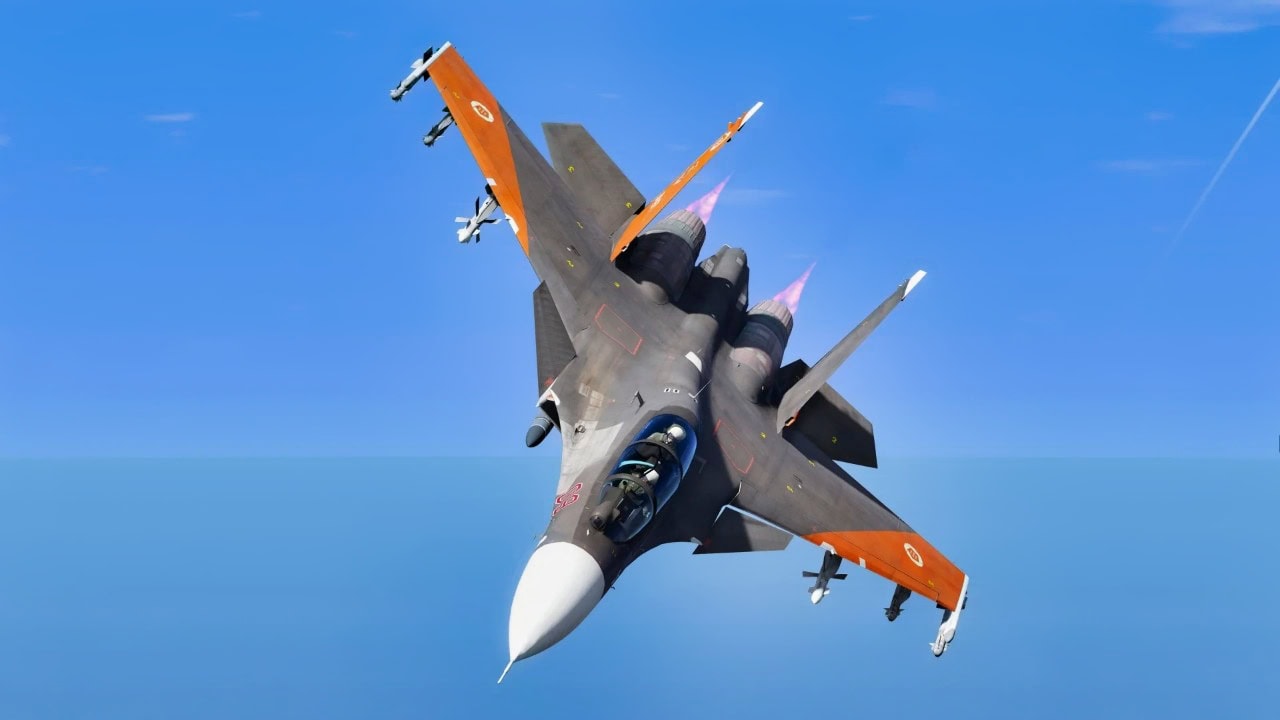
In early May, Ukraine’s military intelligence (GUR) conducted a major operation against Russia’s base near Novorossiysk. Using the Magura-7 sea drone, equipped with AA-11 Archer air-to-air sidewinders, the GUR shot down two Russian SU-30 fighter jets.
The downing of the two SU-30s is the first time in history a drone was able to eliminate a prized fixed wing with air-to-air missiles—which Ukraine’s military intelligence chief, Lt. General Kyrylo Budanov, would later state to the Kyiv Independent.
The Magura-7 is a more advanced air defense drone, upgraded from the Magura-5 variation, which downed and destroyed two Russian MI-8 helicopters in late December 2024. The Magura-5 is also used to ram enemy Russian warships, as this drone variation is packed with explosives upon contact.
Naval News first published images of the Magura-7, equipped with AIM-9 missiles, underscoring Ukraine’s growing seaborne drone capabilities. According to Naval News, the Magura-7 is larger than the Magura-5, which allows upgrades to the version 7 with more capable missiles.
Ukraine’s Growing Seaborne Drone Capabilities
Developing domestic drone technology through growing manufacturing giant Ukroboronprom, Kyiv continues to enhance drones capable of reaching strategic targets deep inside Russia. Ukraine currently has over 100 teams working 24/7 to produce millions of armed drones to incapacitate Russia’s war machine.
Alongside the Magura-5 and 7 variants, Ukraine also produces the TLK-150 and 400 sea drones. The TLK-150 has a maximum range of 100 kilometers, while the TLK-400 can reach distances of 1,200 kilometers.
Ukraine’s seaborne drones changed the trajectory of war as Russia’s Black Sea Fleet was incapacitated, with one-third of its vessels either damaged or destroyed during the past three years. Due to the significant losses of naval ships, the Kremlin instructed the Black Sea Fleet to be withdrawn from Crimea to Novorossiysk, which is more fortified and tenable against Ukrainian attacks.
The Black Sea Fleet’s withdrawal has been demonstrated to be strategic and symbolic. The fleet’s absence of naval support leaves Russian forces exposed in the South and additionally safeguards Ukrainian cities from missile barrages.
Regarding symbolism, the Black Sea Fleet represents Putin’s strongman aura and the prize of the Russian navy. It was the most powerful of Russia’s current fleets and was considered a major challenge to NATO, which, unless reconstituted, would remain out of the fight.
An Opportunity for Conventional Military Partners to Study and Learn
Ukraine’s seaborne drones are changing the trajectory of Russia’s invasion and the face of future naval warfare and operations. Through sea drones, conventional militaries will need to adapt to growing technological changes and enhance their capabilities in amphibious operations.
The United States, which faces a major challenge from China’s military (PLA), could learn or perhaps share technology with Ukraine to develop capable sea drones in the Indo-Pacific. With Ukraine holding major economic and diplomatic partnerships with Japan, Taiwan, and the United States, all three latter countries could benefit from deep ties learning from Ukrainian drone technology.
Seaborne drones that mirror Magura-5 and 7 in the South China Sea could limit the PLA’s freedom of movement across the various sporadic islands before capable forces can be amassed to counter the threat against allies such as the Philippines. Simultaneously, sea drones can benefit Taiwan, which not only needs to deter a Chinese invasion but potentially defend against an amphibious assault or naval blockade until substantial U.S. forces can defend Taipei.
Regarding Japan’s existential threats posed by the Russian occupation of the Kuril Islands and China’s growing naval violations of the Japanese archipelago, seaborne drones would further bolster Tokyo’s remilitarization. Already sharing synthetic aperture radar (SAR) data with Ukraine, Japan can learn from Ukrainian intelligence to produce their own Magura variants, which would hamper naval and aerial movements by the Chinese navy and the Russian Pacific Fleet.
Kyiv’s sea drones are not only a turning point on the Black Sea front of Russia’s invasion of Ukraine but also a game changer in naval warfare. With sea drones fitted to become makeshift air defense batteries, conventional militaries now need to plan contingencies to protect their fighter jets and naval assets against an unmanned enemy.
About the Author: Julian McBride
Julian McBride is a forensic anthropologist and independent journalist born in New York. He is the founder and director of the Reflections of War Initiative (ROW), an anthropological NGO which aims to tell the stories of the victims of war through art therapy. As a former Marine, he uses this technique not only to help heal PTSD but also to share people’s stories through art, which conveys “the message of the brutality of war better than most news organizations.” Julian is also a new 19FortyFive Contributing Editor.

