30,000 Dead in Two Days: The Horrific Scale of Iran’s Crackdown
As U.S. warships head to the Middle East, internal tabulations by Iran’s Health Ministry state more than 30,000 protesters may have been killed by Iran’s security forces in just a two-day period from January 8-9. The Health Ministry, which reports to Iran’s elected president rather than the Supreme Leader, Ali Khamenei, is releasing estimates in line with reporting gathered from hospitals, physicians, and emergency services workers.
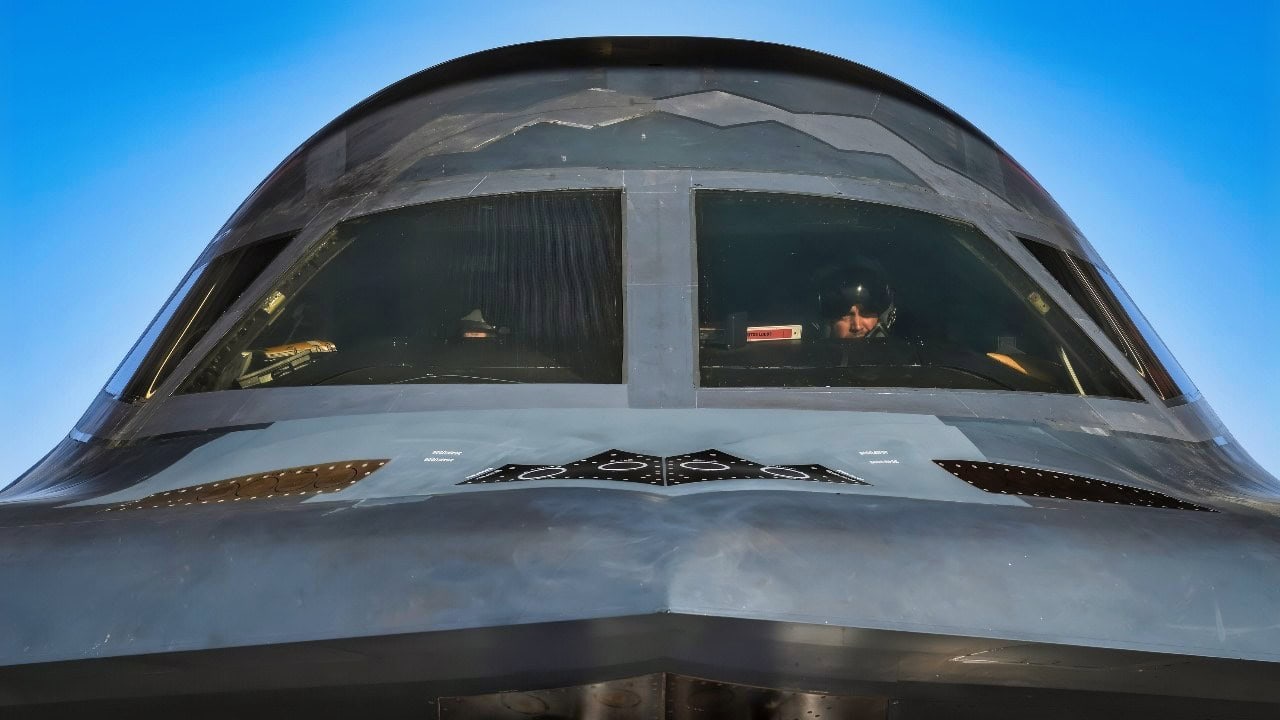
A U.S. Air Force B-2 Spirit aircrew performs pre-flight checks in the cockpit of their aircraft at Whiteman Air Force Base, Missouri, March 8, 2020. The B-2 took off from Whiteman AFB to support U.S. Strategic Command Bomber Task Force operations in Europe. The 131st Bomb Wing is the total-force partner unit to the 509th Bomb Wing. (U.S. Air Force photo by Tech. Sgt. Alexander W. Riedel)

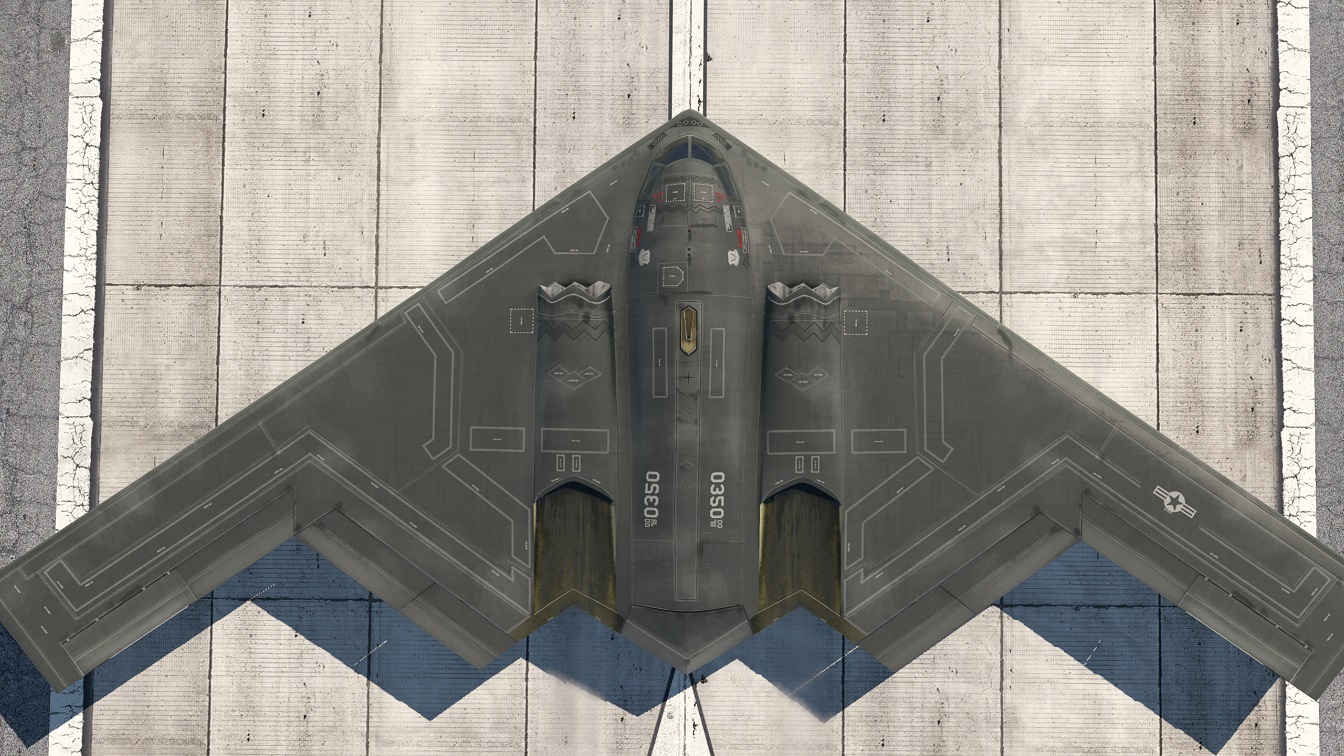
B-2 Spirit Stealth Bomber 19FortyFive Image. Taken By Harry J. Kazianis at U.S. Air Force Museum in 2025.
U.S. media outlets have been unable to independently verify the numbers, but according to other reporting, the number of victims “overwhelmed the state’s capacity to dispose of the dead.” Health Ministry officials stated the available supply of body bags has been exhausted, and 18-wheeler semi-tractor-trailers have been pressed into service in place of ambulances to haul away corpses.
A January 25 report in Time magazine quotes Amir Parasta, a German-Iranian eye surgeon who is credited with first estimating the casualties. Parasta added that his numbers do not include the protest-related deaths of people registered at military hospitals, those whose bodies were taken directly to morgues without first being identified or recorded by first responders, and those killed in more distant municipalities that did not fall within the scope of his investigation.
According to reports, protests erupted in 100 different cities across Iran, and the country’s National Security Council has said demonstrations have now occurred in some 4,000 locations across the nation.
“We are getting closer to reality” in adding up the death toll, Dr. Parasta told Time correspondents. “But I guess the real figures are still way higher,” he added.
Killing on Scale Not Seen in Decades
The slaughter of 30,000 or more people in a period of only two days creates grounds for horrific comparisons from history. A close parallel is a slaughter outside the city of Kyiv during the World War II occupation by Hitler’s Wehrmacht.
From September 29-30, 1941, Nazi death squads from Sonderkommando 4a, a special detachment from SS Einsatzgruppe C, machine-gunned 33,771 Ukrainian Jews in a ravine known as Babyn Yar.
The massacre of thousands of Chinese civilians in June 1989 on Tiananmen Square in Beijing is another uncomfortable analogue—an emblematic example of a regime using violence on a mass scale to quell a popular revolt.
Almost two weeks ago, Ray Takeyh from the Council on Foreign Relations and former CIA officer and Iran specialist Reuel Marc Gerecht wrote in a Wall Street Journal op-ed that proverbial red lines have been crossed in Iran. In an article titled “Don’t Repeat Obama’s Mistake in Iran,” the authors point out that the 44th president established one of those “red lines” in Syria in 2013, but then failed to impose any consequences when Syria’s ruling regime crossed it.
“Mr. Obama’s failure opened the door to Damascus and its Iranian and Russian backers to crush the rebellion mercilessly,” they write. “It signaled to Tehran that it could have both its way in the region and [still have] nuclear talks with Washington.”
Iran’s Islamist rulers are not likely to be removed by protests alone, the authors say. The “Trump administration should assume that the theocracy will suppress this eruption absent outside intervention,” they conclude.
What Are the Options on Iran: What Our Sources Are Saying
An assessment from the Atlantic Council outlines the options available to the White House. The possible military actions fall into roughly two categories: 1) strikes on what remains of Iran’s ballistic missile and nuclear programs, and 2) a more extensive set of attacks targeting the personnel and facilities of the Islamic Revolutionary Guard Corps (IRGC) and other parts of the security apparatus.
The first option would create the impression that “the administration was at least doing something,” said a former senior U.S. intelligence official speaking to 19FortyFive. “But it would also do almost nothing to assist the protesters being gunned down in the streets,” he added.
Attacking the more than 1-million-strong cohort of IRGC and other security agencies would have more of the desired effect. But as the Atlantic Council points out, it would require a sustained effort over a period of time. The U.S. administration is not likely willing to commit to such a prolonged course of action.
Regardless of what the administration does or what it fails to do, the question remains of what comes next for the protest movement.
“Previous protests have had some common denominator among the different interest groups leading them as to what they wanted Iran to look like should they be successful,” said one young scientist working near the capital, Tehran. “But in this current revolt the only common goal among all of those involved is getting rid of the clerical rulers. Beyond that singular objective there is scant consensus among the major constituencies.”
About the Author: Reuben F. Johnson
Reuben F. Johnson has thirty-six years of experience analyzing and reporting on foreign weapons systems, defense technologies, and international arms export policy. Johnson is the Director of Research at the Casimir Pulaski Foundation. He is also a survivor of the Russian invasion of Ukraine in February 2022. He worked for years in the American defense industry as a foreign technology analyst and later as a consultant for the U.S. Department of Defense, the Departments of the Navy and Air Force, and the governments of the United Kingdom and Australia. In 2022-2023, he won two awards in a row for his defense reporting. He holds a bachelor’s degree from DePauw University and a master’s degree from Miami University in Ohio, specializing in Soviet and Russian studies. He lives in Warsaw.