
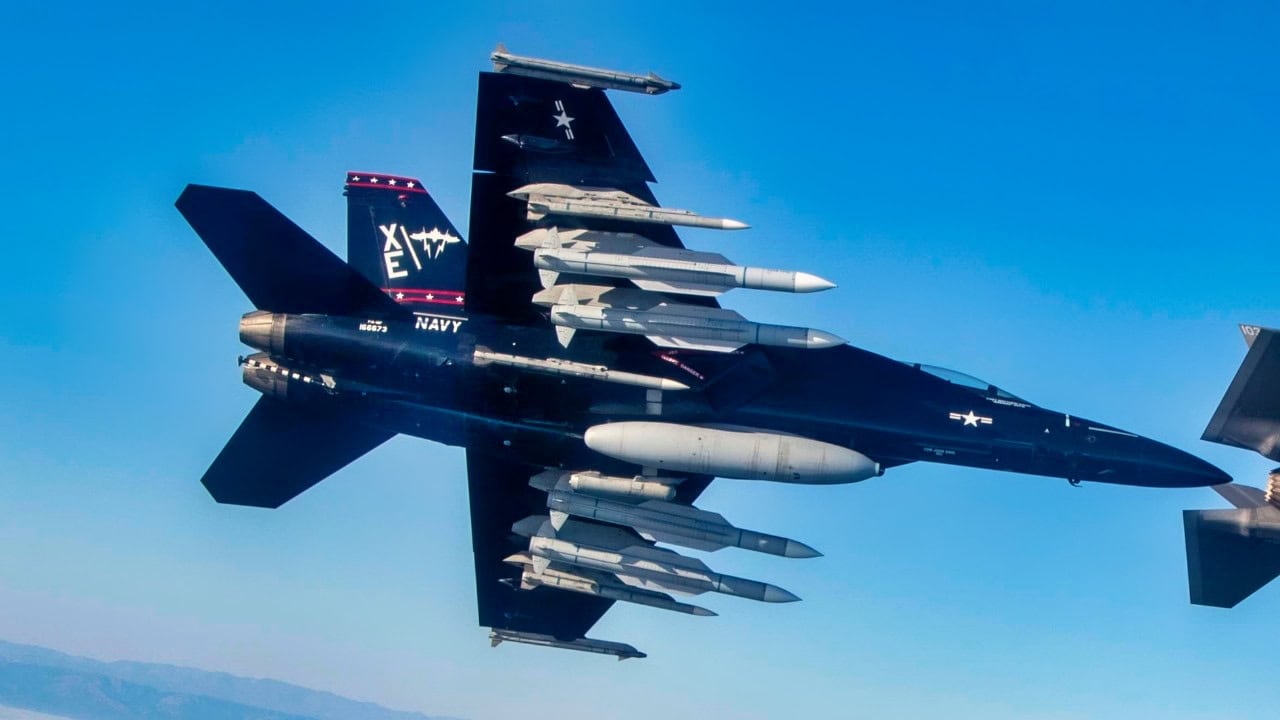
NATO Baltic Air Patrols Get First Dedicated Counter-Drone System
Spain’s air force has deployed an advanced Crow counter-drone system alongside its fighter detachment to Lithuania as part of NATO’s Baltic Air Policing mission. It is the first time in the history of the Baltic Air Policing rotation system that a participating fighter detachment has deployed together with a dedicated counter-drone system, rather than relying solely on fighter jets and traditional air defense assets.
The news comes amid escalating drone threats across Europe and reflects growing efforts from the alliance to adapt its air defense postures along NATO’s eastern flank.
A First for Counter-Drone Capability
For the first time in its history, Spain’s 15th Wing arrived at Šiauliai Air Base in northern Lithuania with the Crow counter-UAS (unmanned aircraft system) technology to support NATO air policing missions that protect the airspace over Lithuania, Latvia, and Estonia.
While Spain’s fighter detachment (a military unit detached from a parent wing) routinely rotates through the Baltic region as part of NATO’s defensive footprint, this deployment is notable for integrating a ground-based counter-drone system directly into its mission.
The Crow system – developed by Spanish defence firm Indra – combines radar, optical sensors, and electronic warfare components to detect, track, identify, and neutralize a wide range of unmanned threats. It operates as a flexible shield capable of protecting military units, airbases, critical infrastructure, and surrounding areas from unauthorised drones and balloons.
The deployment goes above and beyond traditional NATO air policing, which has historically prioritized fighter jets in responding to crewed aircraft and airspace violations, adding a new, dedicated toolset to counter low-cost aerial threats.
Meeting New Threats
The decision to bring the Crow system to Lithuania reflects growing concern among NATO members about uncrewed aerial threats. Recent months have seen an uptick in drone activity near sensitive sites across Europe, including incidents where nearly 20 drones associated with Russia violated Polish airspace, forcing NATO jets to scramble and engage them.
Incursions like this have prompted urgent discussions among NATO members about how best to protect critical infrastructure and forward-deployed forces without relying too heavily on finite supplies of expensive interceptor missiles originally designed to engage high-speed aircraft.
The unpredictable flight patterns and lower altitudes of small drones – and the fact that they are so quick, cheap, and easy to make – make them a unique new threat that cannot be efficiently countered using established methods.
Lithuanian Minister of National Defense Robertas Kaunas has praised Spain’s contribution, describing it as a demonstration of allied solidarity and shared responsibility for European security, noting that improved airspace defense today serves as a strategic deterrent.
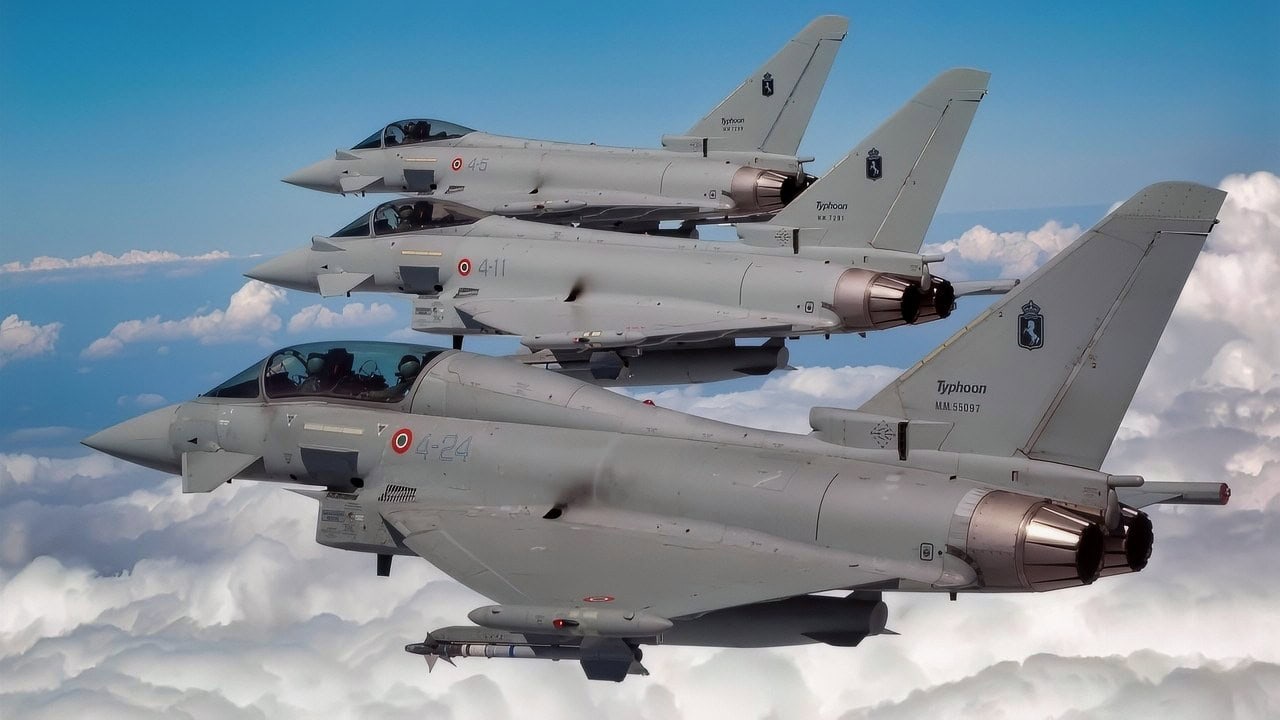
Eurofighter Typhoon Aircraft NATO. Image Credit: Creative Commons.
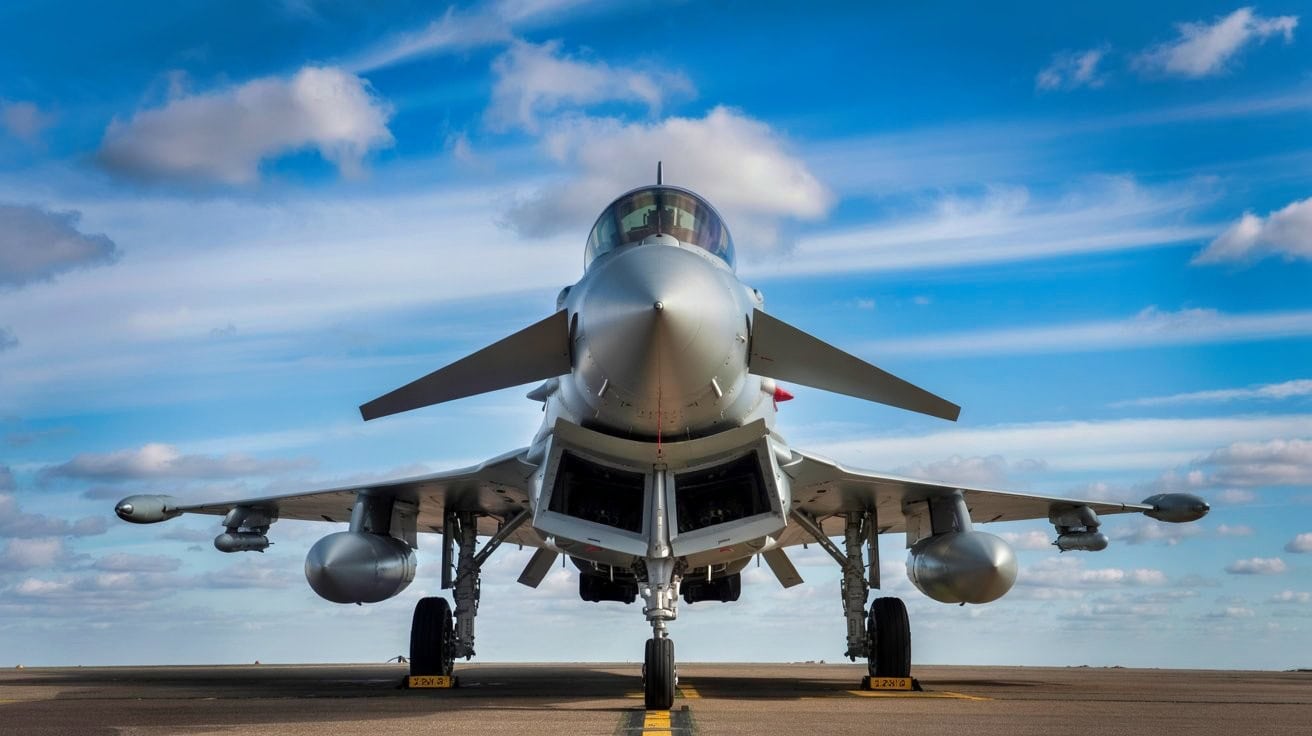
Eurofighter Typhoon. Image Created by Ideogram.
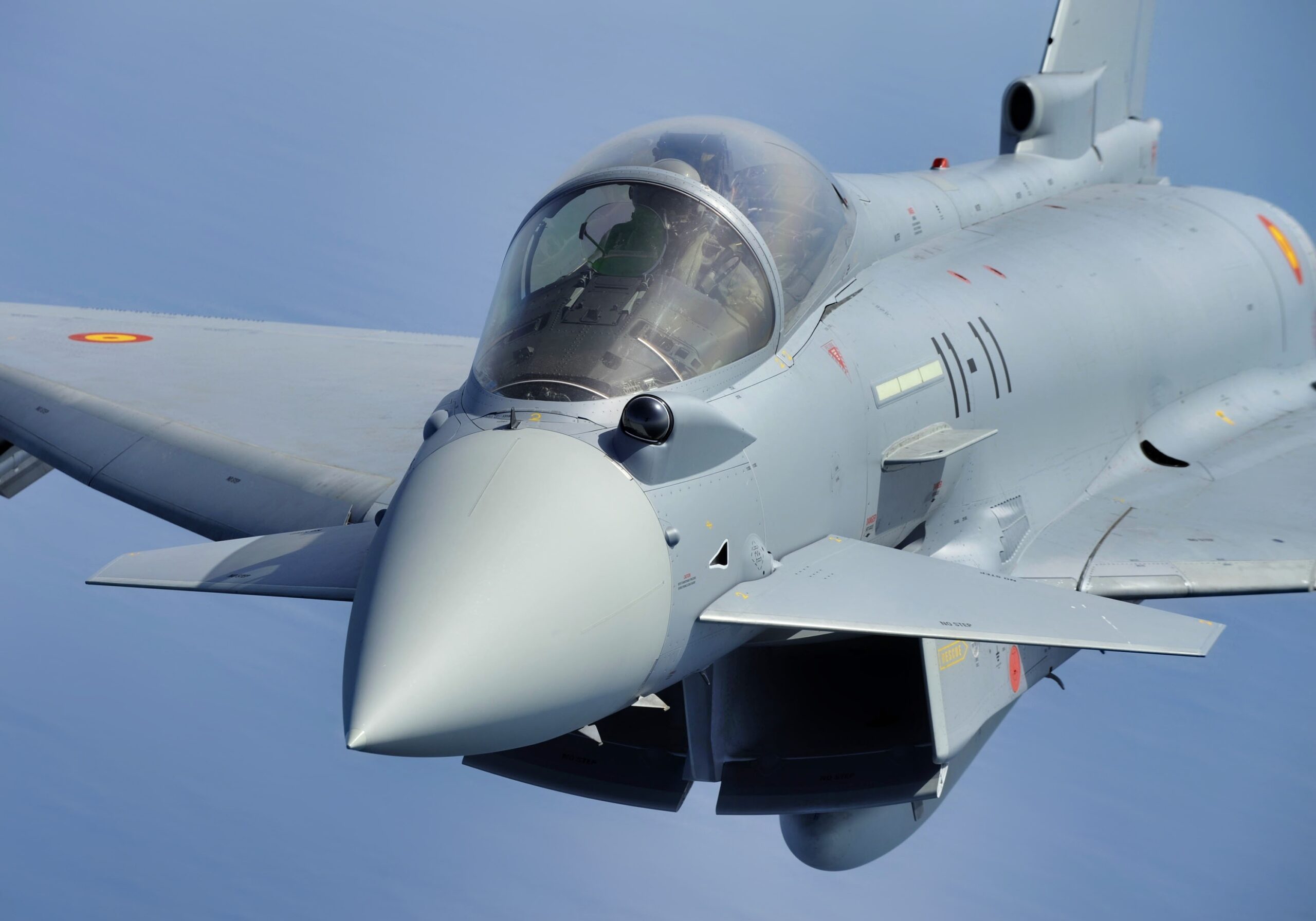
Eurofighter Typhoon Fighter. Image Credit: Creative Commons.
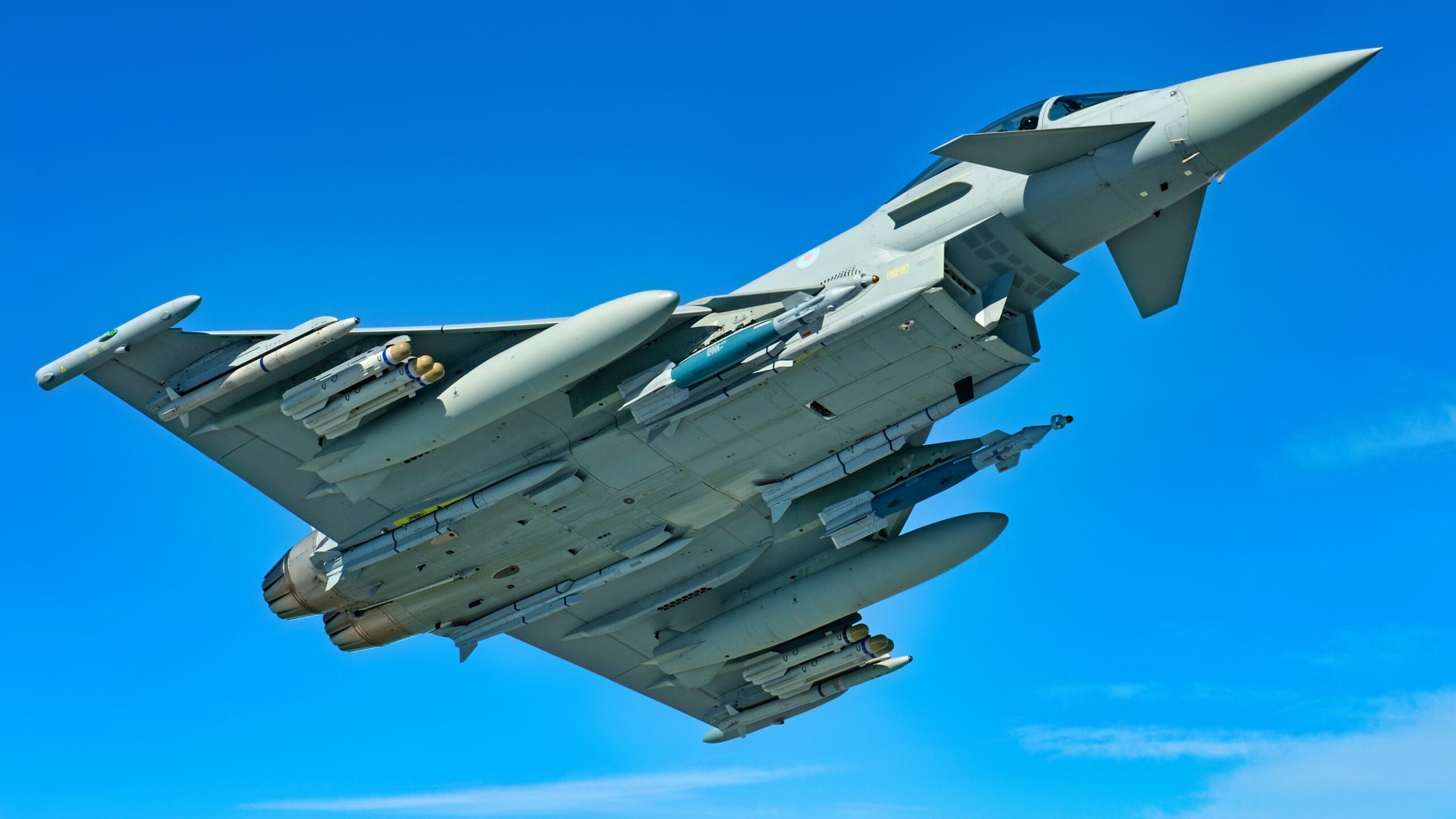
Eurofighter Typhoon. Image Credit: Creative Commons.
“I thank Spain for your timely decision to deploy the Crow counter-UAV system to Lithuania. It is yet another proof of Allied solidarity and shared responsibility for European security. Today, as the Baltic region is faced with relentless provocative actions from the East, each decision to enhance the airspace guard is a strategic signal,” Kaunas said on a phone call with the Minister of Defence of Spain, Margarita Robles.
Crow: How It Works and Why It Matters
Unlike traditional interceptors, the Crow counter-UAS system uses integrated sensors and electronic warfare techniques to detect and identify unmanned aerial assets before targeting them. The architecture of the system includes radars for early detection of small, slow-moving targets; optical systems for threat classification; and signal-jamming technologies that can disrupt control links and safely neutralize threats without kinetic engagement.
That layered capability – meaning the use of multiple, complementary detection and defense systems – is especially important given that drones can be launched cheaply and operate at altitudes below radar coverage used for crewed aircraft. Crow’s modular design allows it to be deployed in fixed, mobile, or semi-static configurations, making it adaptable to different mission requirements – from protecting runways and hangars to providing wide-area surveillance for allied ground forces.
The system in Lithuania is operated by a tactical unit from Spain’s Air and Space Force, with a nine-member team on constant watch over designated airspace. Their role is to maintain situational awareness of potential threats approaching from the east, where Russian and Belarusian territory lie just beyond NATO’s borders.
Integration With NATO
Spain’s deployment with Crow coincides with its leadership of the 70th NATO Air Policing Mission under the alliance’s rotational air defence framework. Spanish F-18 fighter jets operating from Šiauliai continue to patrol the skies, ready to intercept unidentified aircraft and enforce allied airspace sovereignty.
Incorporating counter-drone capabilities into the mission, it’s clear NATO is signaling a shift toward more comprehensive air defense postures that address both the usual and emerging aerial threats. NATO’s Baltic Air Policing mission has been a major form of deterrence along the eastern flank since 2004, when Estonia, Latvia, and Lithuania entered the alliance and required allied nations to help defend their skies.
The decision to deploy the Crow could now influence NATO discussions on air defense modernization, providing a basis for integrating ground-based counter-UAS systems with fighter patrols, radar networks, and command-and-control systems.
About the Author:
Jack Buckby is a British researcher and analyst specialising in defence and national security, based in New York. His work focuses on military capability, procurement, and strategic competition, producing and editing analysis for policy and defence audiences. He brings extensive editorial experience, with a career output spanning over 1,000 articles at 19FortyFive and National Security Journal, and has previously authored books and papers on extremism and deradicalisation.