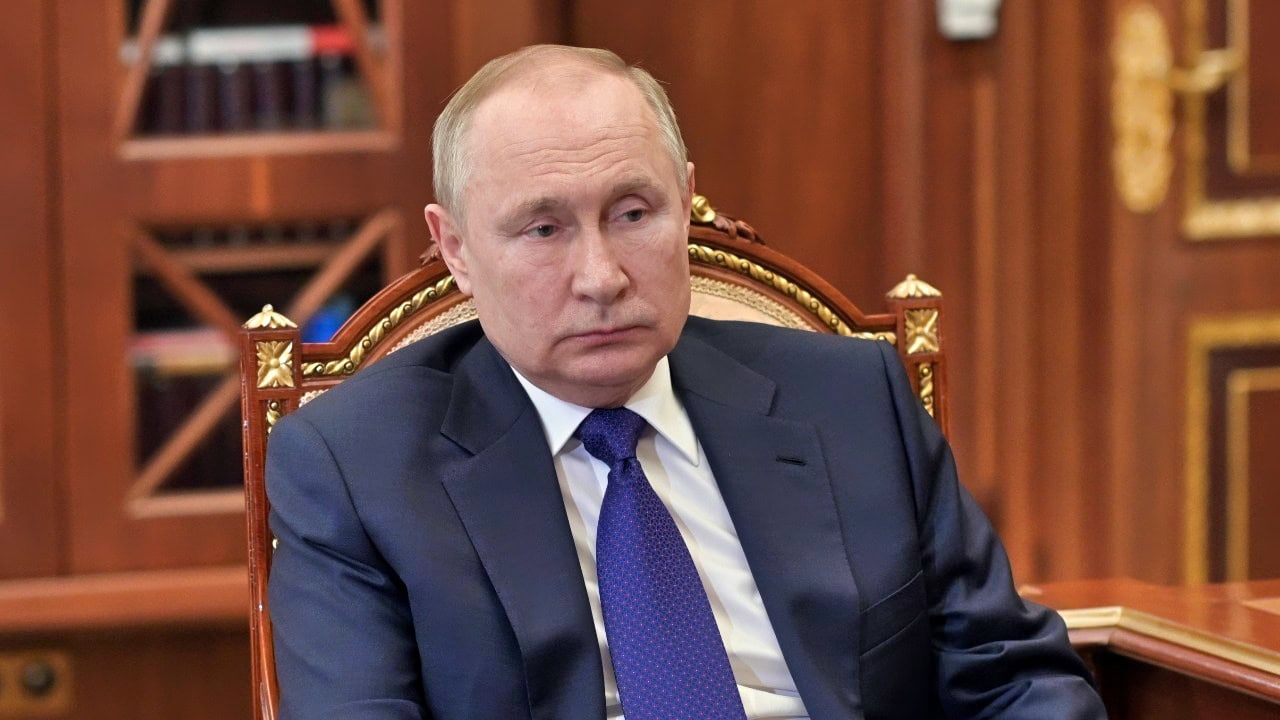
Summary and Key Points: Putin could try to freeze the Ukraine war by declaring victory: Russia holds Crimea, much of the Donbas, and parts of Kherson and Zaporizhzhia.
-Yet three constraints may keep him fighting.
-First, he may believe victory is close, fed by sugarcoated reporting and his own assumptions.
-Second, he may lack the political power to sell an obviously partial win to fractured elites whose support keeps his regime intact.
-Third, he may doubt his ability to manufacture public belief when propaganda clashes with lived experience. As losses mount and gains remain thin, elite resistance grows—and a coup becomes more plausible.
Putin Could End the Ukraine War Tomorrow—Here’s Why He Won’t
If Russian President Vladimir Putin were as smart and powerful as he is made out to be, he would declare victory against the Ukrainians and the West and end his war in Ukraine immediately.
Parades, monuments, medals, ribbons, and speeches would follow, while happy Russians would bask in the knowledge that they had, once again, halted the onslaught of savage hordes and saved civilization.
Such a move would make great sense.
The war would be over. Russia would continue to occupy all of Crimea, most of the Donbas, and sizable chunks of Kherson and Zaporizhzhia provinces.
Putin would be hailed by the White House, as well as most of Europe and the world, as a peacemaker—Russia could rebuild its tattered economy and make nice with its current enemies.
Presumably, Putin has the power and the means to declare victory. If this option is so patently obvious and reasonable, why doesn’t he pursue it? Naturally, he might sometime in the future, but his power and means are unlikely to be greater than they are now.
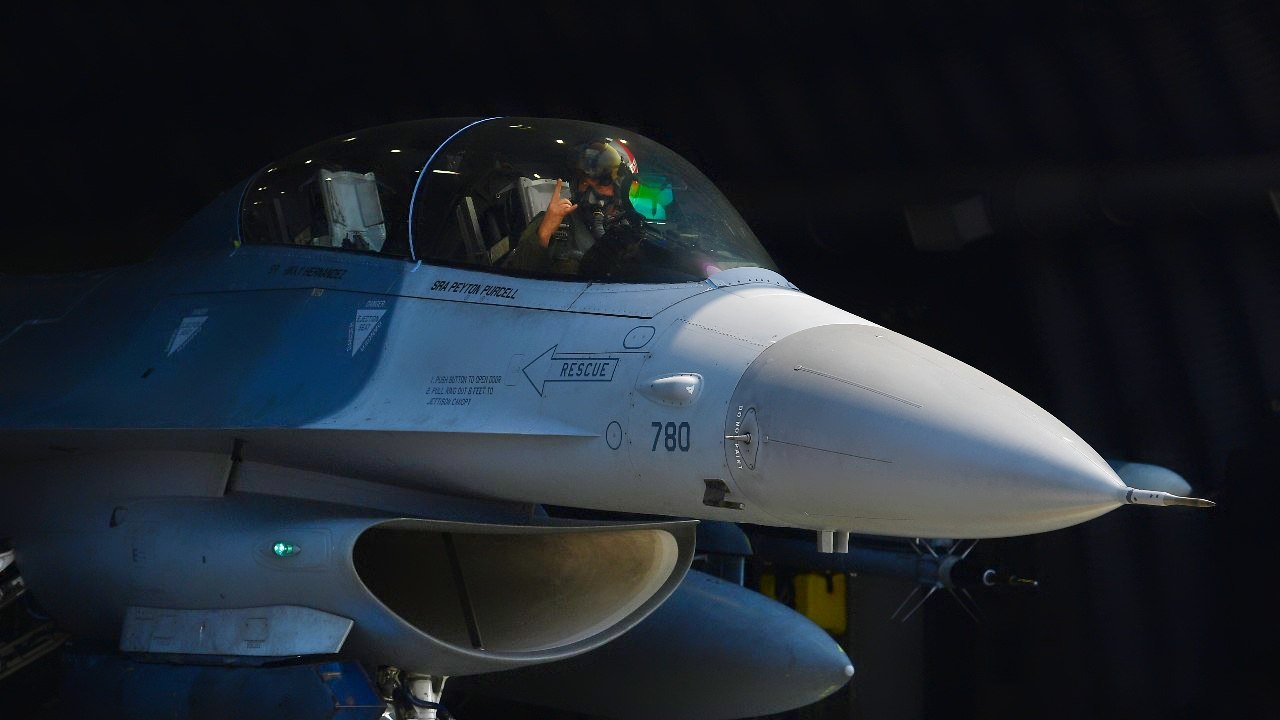
Capt. Michael Terry, 36th Fighter Squadron F-16 pilot, prepares to launch at Osan Air Base, Republic of Korea, July 9, 2020. The 36th Aircraft Maintenance Unit and the flight line operators wokred to make this aircraft mission-capable after being grounded for 186 days. (U.S. Air Force photo by Senior Airman Noah Sudolcan)
There are three possible reasons Putin does not simply declare victory and end the war—each reason is about what he does not have. It may be that Putin is not quite as smart as he is assumed to be. Or, it may be that he lacks the power. Finally, he may lack the means.
As unlikely as it seems, Putin may sincerely believe that Russia is winning the war. The evidence points in the other direction—Russia is suffering huge personnel losses for minuscule, impermanent territorial gains—but Putin may be getting sugarcoated information from his minions, or be blithely ignoring anything that doesn’t fit his preconceived notions of success. Whatever the case, Putin is either ignorant or divorced from reality. In his view, why end the war today if Ukraine’s total defeat is just around the corner? Given such a mindset, it makes sense to wait.
But Putin may also lack the power to declare victory and get away with it. If Russia’s elites support him unconditionally—or if they are all on a short leash and are unable to express dissatisfaction—then Putin should be able to impose his vision of the war on such pliant folk. If, alternatively, Russian elites are fragmented and not universally beholden to Putin, then it makes sense for him to avoid declaring a victory elites know is still out of reach. Logic therefore suggests that the image of the omnipotent Putin able to manipulate his underlings is wrong. His regime appears to be as brittle as his hold on power is tenuous.
Finally, there’s the question of means. Coercion, which he happily employs, can do little to persuade Russians that victory is theirs. Propaganda can do the trick, but only if it’s not at complete variance with lived experience. Have Russians been brainwashed?
Are they captives of an authoritarian political culture? Or are they inwardly grumbling at the regime’s attempts to paint a pretty picture of the war? We can’t say for sure, but there must be some Russians who view the regime’s patriotic hoopla with skepticism. Putin may be aware of such mixed feelings, or he may be so starstruck by his own beliefs that he cannot judge what ordinary Russians believe.
In sum, there is good reason to believe that Putin can’t end the war. First of all, because he may not want to, mistakenly believing that victory is inevitable. Second, because his rule is weak, and an obviously mendacious move would be met with incredulity and opposition by elites. And third, because Putin can’t be certain he can manipulate the people to the extent necessary.
The most important of these three points is the second—Putin’s brittle regime. He may be irrational or unpopular, but the stability of his rule ultimately depends on elite support. If that goes, Putin can’t be far behind.
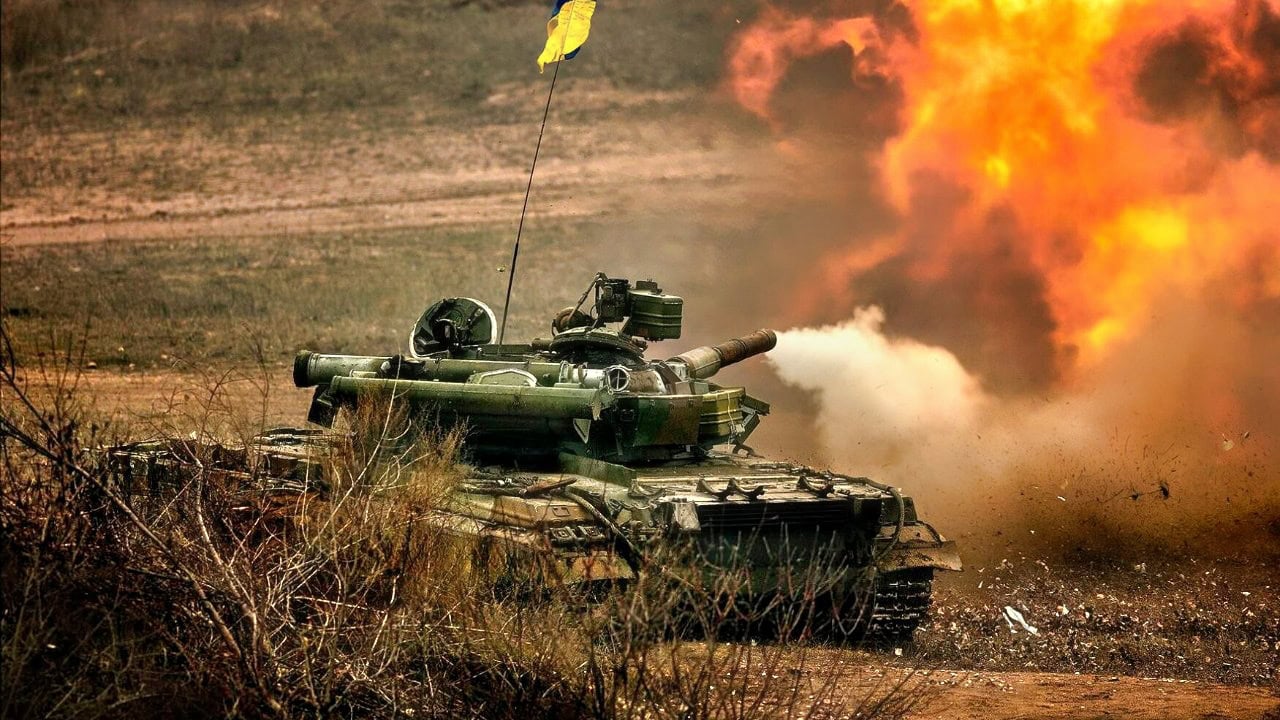
Ukraine tanks fighting. Image Credit: Creative Commons.
This brings us to a possibly optimistic conclusion: The longer the war lasts, the greater elite opposition in Russia will be, and the weaker his regime becomes.
Putin is too weak to act rationally today. He will be even weaker in the near term. When that time comes, a coup d’etat may be inevitable.
About the Author: Dr. Alexander Motyl
Dr. Alexander Motyl is a professor of political science at Rutgers-Newark. A specialist on Ukraine, Russia, and the USSR, and on nationalism, revolutions, empires, and theory, he is the author of 10 books of nonfiction, including Pidsumky imperii (2009); Puti imperii (2004); Imperial Ends: The Decay, Collapse, and Revival of Empires (2001); Revolutions, Nations, Empires: Conceptual Limits and Theoretical Possibilities (1999); Dilemmas of Independence: Ukraine after Totalitarianism (1993); and The Turn to the Right: The Ideological Origins and Development of Ukrainian Nationalism, 1919–1929 (1980); the editor of 15 volumes, including The Encyclopedia of Nationalism (2000) and The Holodomor Reader (2012); and a contributor of dozens of articles to academic and policy journals, newspaper op-ed pages, and magazines. He also has a weekly blog, “Ukraine’s Orange Blues.”