
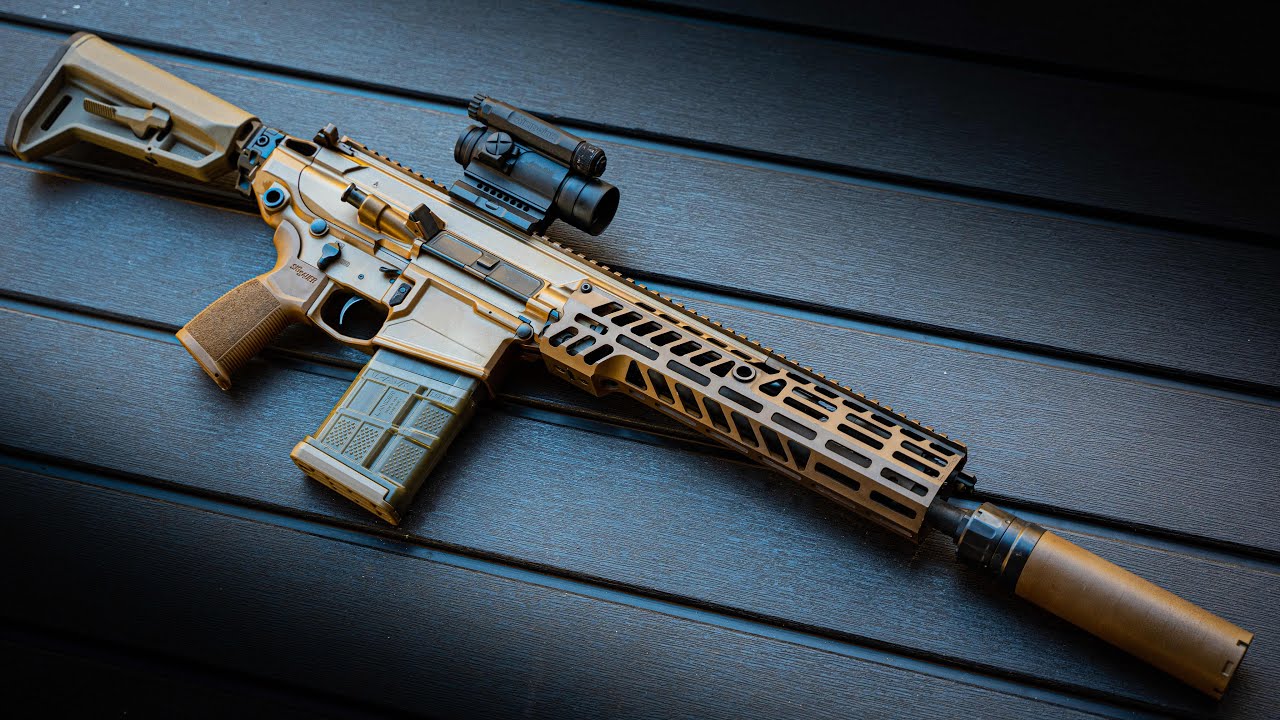
Summary and Key Points: Christian D. Orr, a senior defense editor and former Air Force Security Forces officer, evaluates the U.S. Marine Corps’ decision to retain the M27 Infantry Automatic Rifle over the Army’s M7 NGSW.
-Developed by Heckler & Koch and based on the HK416, the M27 maintains a 30-round capacity in 5.56mm NATO, which the Corps argues better fits amphibious operations.
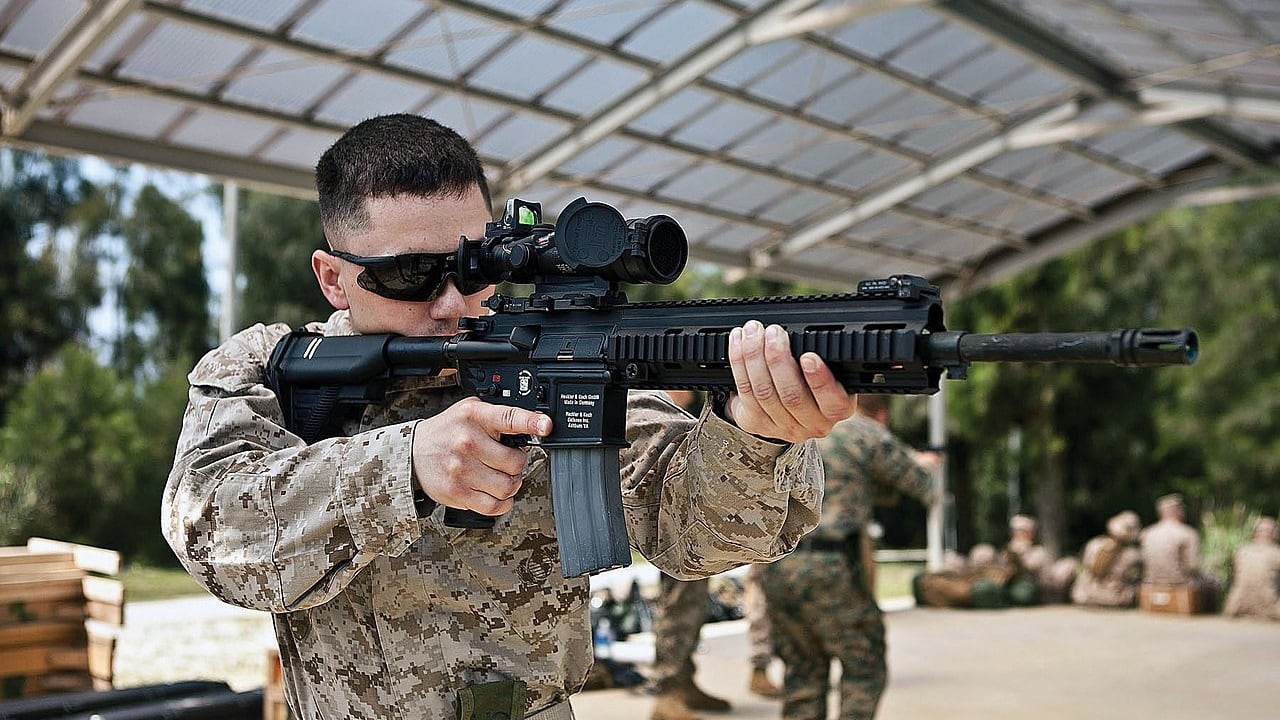
CAMP HANSEN — Lance Cpl. Zachary A. Whitman, a shooter with the III Marine Expeditionary Force detachment, familiarizes himself with the M27 Infantry Automatic Rifle in preparation for the Australian Army Skill at Arms Meeting 2012. AASAM is a multilateral, multinational event allowing Marines to exchange skills tactics, techniques and procedures with members of the Australian Army as well as other international militaries in friendly competition. (U.S. Marine Corps photo by Sgt. Brandon L. Saunders/released)
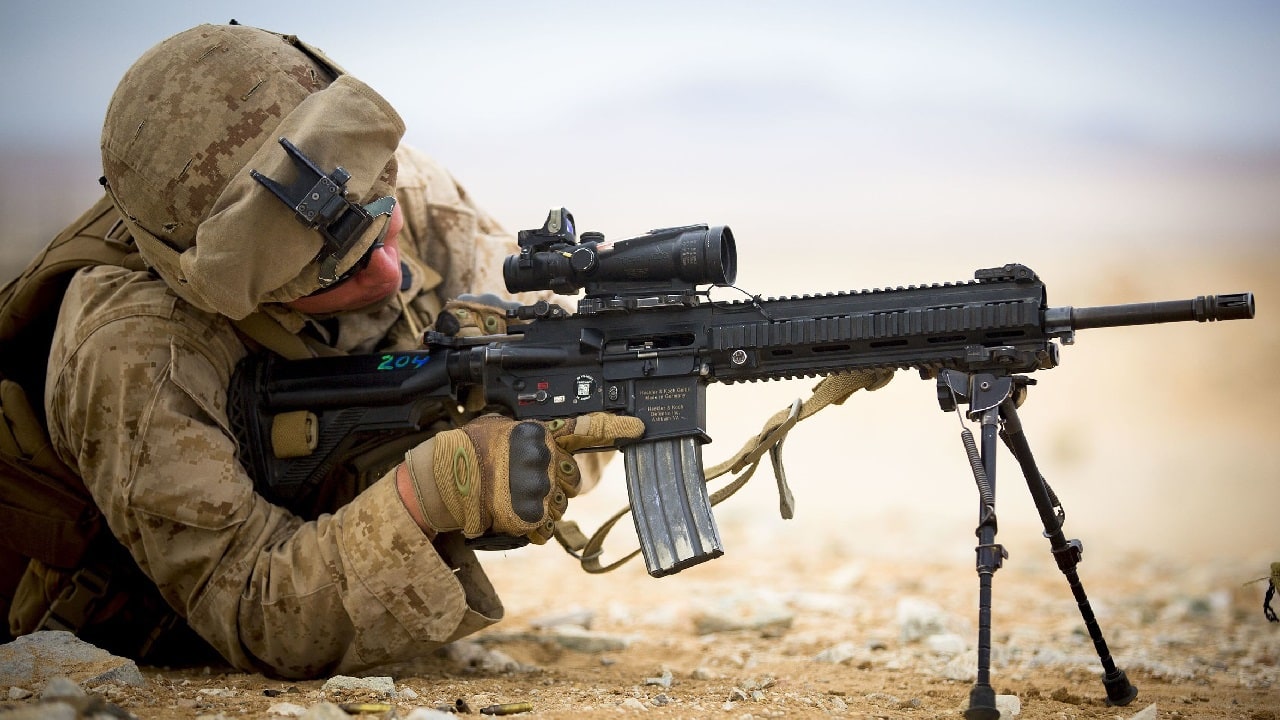
M27 IAR. Image Credit: Creative Commons.
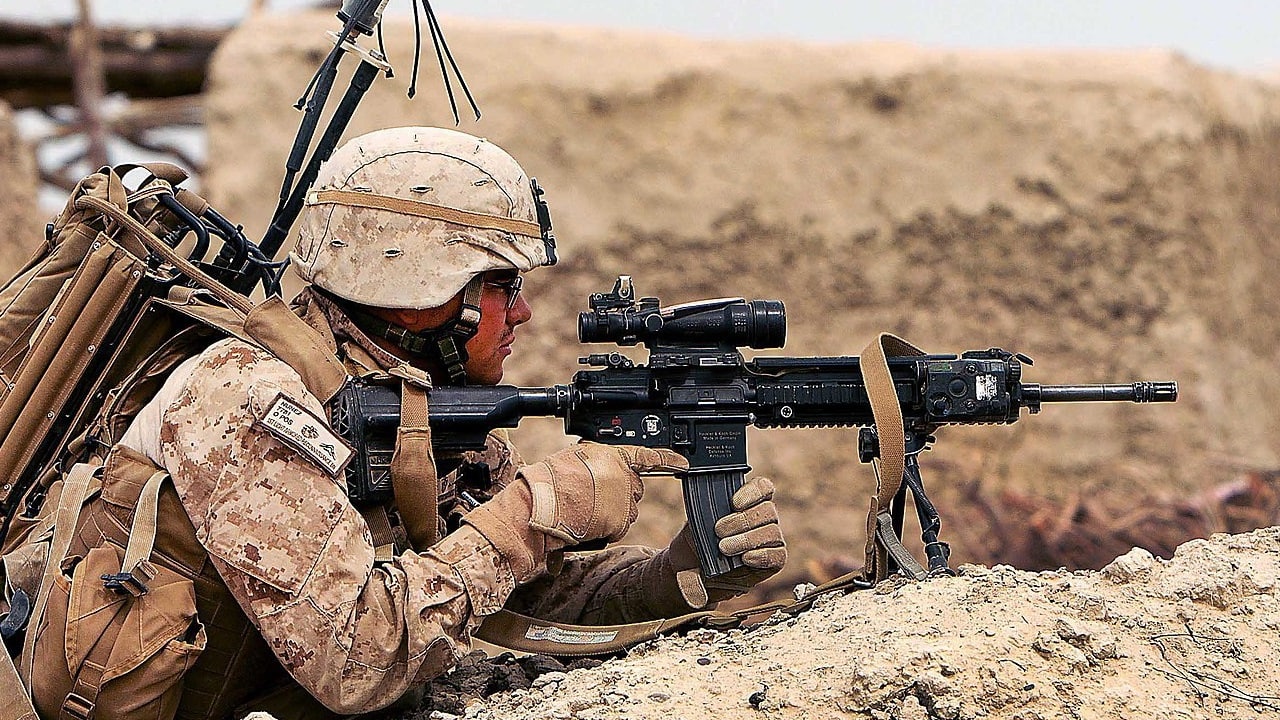
120322-M-PH863-005 U.S. Marine Corps Lance Cpl. Leobardo Nunez provides security during a census patrol through a village near Khan Neshin, Afghanistan, on March 22, 2012. Nunez is an infantry automatic rifleman assigned to Alpha Company, 1st Light Armored Reconnaissance Battalion. DoD photo by Cpl. Alfred V. Lopez, U.S. Air Force. (Released)
-This report analyzes the controversy sparked by CPT Braden Trent’s 2025 report on the SIG Sauer M7, which cited barrel wear and unreliability.
-Orr concludes that while the Army seeks 6.8mm stopping power, the Marines prioritize weight and sustained fire.
The Marine Corps “No” to M7: Why the M27 IAR Remains the Primary Rifle for 2026 Close Combat
Interservice rivalries notwithstanding, on occasion the U.S. Marine Corps does follow the Army’s lead in adopting weapon systems. A prime example is the M1 Abrams main battle tank—the most successful and battle-proven MBT of all-time—which the Marine Corps adopted as a replacement for the M60 Patton, a full decade after the Army did so. (Yes, the Marine Corps dropped tanks altogether back in 2021, but that’s a story of its own.)
But when it comes to the standard-issue infantry rifle replacing both the M16/M4 series and the M249 Squad Automatic Weapon, the Marines are reasserting their independence. They are saying “No, thank you” to the Army’s M7 Next Generation Squad Weapon rifle and sticking with the M27 Infantry Automatic Rifle instead.
Bottom Line Up Front (BLUF)
The latest development comes to us courtesy of Defense Blog reporter Colton Jones, who quotes a Marine Corps spokesperson’s email communications with Task & Purpose:
“‘The Marine Corps will retain the M27 for our close combat formations as it best aligns with our unique service requirements, amphibious doctrinal employment of weapons, and distinct modernization priorities, while ensuring seamless interoperability across the Joint force and with coalition partners.’”
However, the Marine Corps hasn’t completely shut the door on the M7:
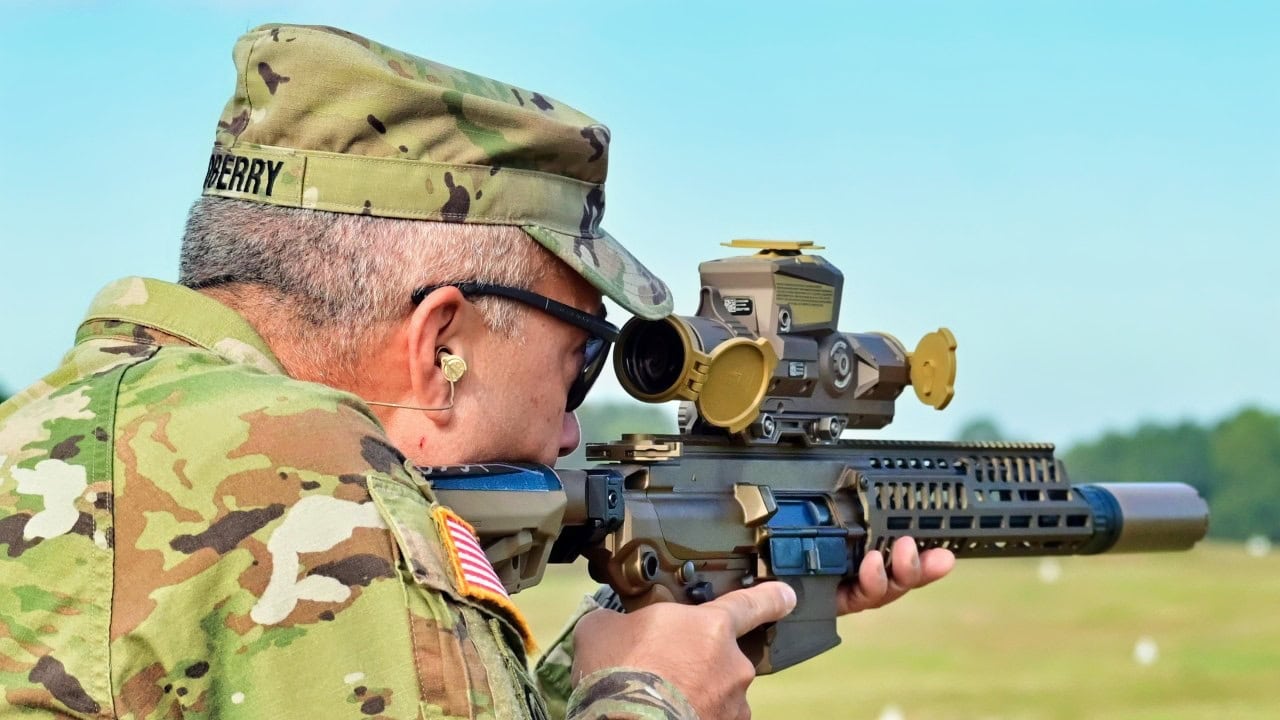
XM7 Next Generation Squad Weapon NGSW.
“‘We will continue to monitor development of the M7 [Next Generation Squad Weapon rifle] to inform future requirements,’ the spokesperson added, noting that the service regularly evaluates equipment against its expeditionary operational needs.”
Ballistic Differences and Initial History
Interestingly, the M27 retains the 5.56x45mm NATO cartridge, while the M7 uses 6.8×51mm Common Cartridge, which was specifically developed because of longstanding concerns and perceptions about the 5.56’s lack of stopping power and lethality. As Brigadier General Phillip J. Kiniery III, commandant of the Army’s Infantry School and Maneuver Center of Excellence at Fort Benning, Georgia, previously stated, the 6.8mm round “stops the enemy at one round versus having to shoot multiple rounds at the enemy to get them to stop.”
At least on paper, it appears to be the best of both worlds: an improvement in power over the 5.56 that is not as overpowering as the 7.62x51mm NATO round used in the M14 battle rifle during the early stages of the Vietnam War.
The M7 was developed by SIG Sauer, which has a longstanding history of issuing small arms to the U.S. Armed Forces. Some of that history is positive, e.g. the 9-mm P226 sidearm used by the elite Navy SEALs since 1990 (officially designated the MK25) and the 9-mm P228 (M11) issued to special agents of the Army Criminal Investigation Division, Naval Criminal Investigative Service, and Air Force Office of Special Investigations.
On the flip side, some of that history is not so positive, like that highly controversial P320/M17/M18 that replaced the legendary Beretta M9 (Model 92FS) as the general issue sidearm of the U.S. Armed Forces.
The Army began fielding the M7 in March 2024.
Meanwhile, the M27 is developed by Heckler & Koch (HK) and is based upon the HK416 platform; the weapon went into production in 2010, and the “devil dogs” began using during combat operations in Afghanistan the following year. HK has its own longstanding relationship with the U.S. Armed Forces through the Navy SEALs’ use of the HK416—by some accounts, the gun that killed Osama bin Laden—and the venerable MP5 9-mm submachine gun.
Additional Tech Spec Comparisons
M27 Infantry Automatic Rifle:
-Weight: 7.9 lbs empty; 9.8 lbs loaded weight with sling
-Overall Length: 36.9 to 33 inches with adjustable stock
-Barrel Length: 16.5 in or 11 in
-Width: 3.1 in
-Height: 9.4 in
-Cyclic Rate of Fire: 700–900 rounds/min
-Sustained Rate of Fire: 36 rounds/min
-Muzzle Velocity: 2900 fps
-Maximum Effective Range: 550 meters (point target); 700 m (area target)
-Maximum Firing range: 3,601 m
M7:
-Weight: 8.38 lbs empty; 9.84 lbs (with suppressor); 7.6 lbs (M7 Production Improvement Effort [PIE]); 7.3 lbs (10.5 in barrel, with suppressor)
-Overall Length: 36 in (with suppressor); 33.5 in (10.5 in barrel with suppressor)
-Barrel Length: 13 in or 10.5 in
-Muzzle Velocity: 915 m/s (3,002 fps); 854 m/s (2,802 fps) (10.5 in barrel)
Not So Lucky 7? Trouble In Paradise with the M7/XM7
Though not explicitly stated by Jones, the Marine Corps’ misgivings about the M7 may stem from some controversies about the then-XM7 that were swirling around in Army circles last year.
During a speaking engagement at Modern Day Marine 2025 exhibition in Washington, D.C., U.S. Army Captain Braden Trent presented evidence gathered on the XM7 and offered the very blunt conclusion that it was “unfit for use as a modern service rifle.” In his 52-page report, CPT Trent raised the following concerns:
-Unreliability
-The 20-round magazine, which limits the amount of ammunition a soldier can carry (by contrast, both the M16/M4 series and the M27 have a 30-round magazine option)
-Heavier than the M4 without any notable benefits. (Apparently the good captain overlooked the extra lethality benefit, but I digress)
-“Testing also found that the military drills occurred where a potential adversary was within 300 meters, which negated the XM7’s longer-range accuracy. In addition, the barrel was found to have excess wear after just 2,000 rounds were fired”
The manufacturer’s spokespersons went into damage control mode. Jason St. John, SIG Sauer’s senior director of strategic products, submitted a rebuttal stating that, “We have a very large staff of individuals that work daily on that rifle to ensure that every aspect of its performance is scrutinized, every aspect of its safety is criticized. … We are highly confident that we have provided the U.S. Army soldier with a robust weapon system that is not only safe, but performs at the highest levels.” He added that “’Most of [Trent’s claims] are patently false.”
Apparently, for the time being the Army is content to take St. John’s word for it. However, the Marine Corps is applying the tactic of “stand by to stand by, over” and pressing on with the M27 and the 5.56-mm cartridge.
About the Author: Christian D. Orr, Defense Expert
Christian D. Orr is a Senior Defense Editor. He is a former Air Force Security Forces officer, Federal law enforcement officer, and private military contractor (with assignments worked in Iraq, the United Arab Emirates, Kosovo, Japan, Germany, and the Pentagon). Chris holds a B.A. in International Relations from the University of Southern California (USC) and an M.A. in Intelligence Studies (concentration in Terrorism Studies) from American Military University (AMU). He is also the author of the newly published book “Five Decades of a Fabulous Firearm: Celebrating the 50th Anniversary of the Beretta 92 Pistol Series.”