Summary and Key Points: Reuben F. Johnson, a 36-year veteran defense analyst and director of the Casimir Pulaski Foundation, evaluates the IRGC’s rapid consolidation of power during the Iran War.
-Despite IAF strikes on the capital, new IRGC chief Ahmad Vahidi and Deputy Defense Minister Reza Talaeinik have implemented a decentralized “pecking order” with triple-rank redundancy.
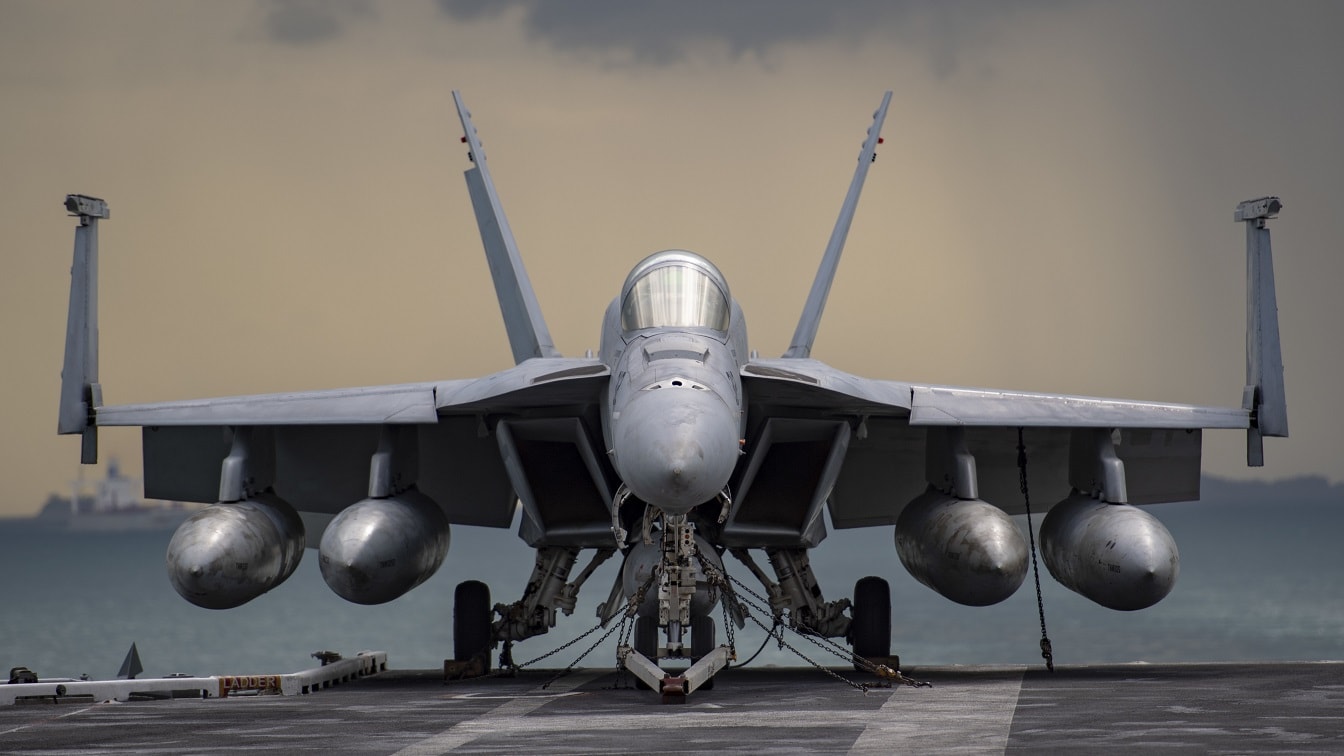
A (Feb. 5, 2021) An F/A-18E Super Hornet, from the “Kestrels” of Strike Fighter Squadron (VFA) 137, rests on the flight deck of the aircraft carrier USS Nimitz (CVN 68) during a strait transit. Nimitz is part of the Nimitz Carrier Strike Group and is deployed conducting maritime security operations and theater security cooperation efforts. (U.S. Navy photo by Mass Communication Specialist 3rd Class Elliot Schaudt/Released)
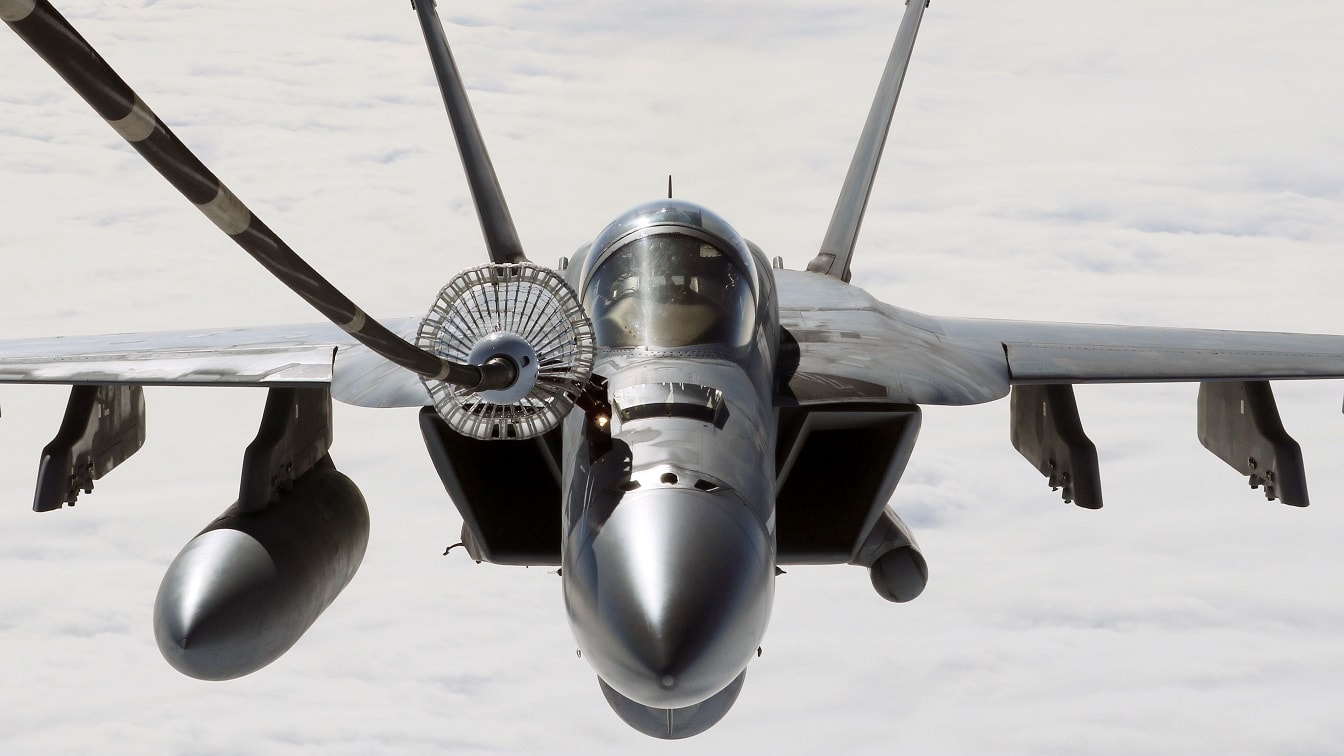
PACIFIC OCEAN (Feb. 26, 2017) An F/A-18E Super Hornet assigned to the “Eagles” of Strike Fighter Squadron (VFA) 115 conducts aerial refueling operations with a U.S. Air Force KC-10A Extender. VFA-115 is traveling from Naval Air Facility Atsugi, Japan, to Naval Air Station Fallon, Nevada, to complete the strike fighter advanced readiness program. (U.S. Navy photo by Lt. Chris Pagenkopf/Released)170226-N-CF980-006
-This report analyzes how this autonomy, intended to prevent U.S.-led regime change, has empowered mid-level officers to launch strikes as far as Turkey.
-Johnson concludes that the Guards are prioritizing “internal repression” to stifle the 2025 protest movements and secure a permanent military state.
The Vahidi Takeover: How the IRGC Seized Control of Iran’s Wartime Command and Policy
According to Reuters, the Islamic Revolutionary Guard Corps (IRGC) has further solidified its control over Iran’s wartime decision-making processes. The IRGC claims it is still able to maintain a chain of command despite the death of its top officers during last weekend’s air strikes.
The same sources also tell Reuters that the IRGC, more than senior government leaders, is coordinating waves of drone and missile strikes across the Gulf region.
Reportedly, the IRGC was preparing to assume command authority for the regular Iranian armed forces as well as its own, and making plans to continue that leadership even if officials fall victim to decapitation attacks. These plans were already in place when the Israeli Air Force (IAF) first struck the capital last Saturday.
In order to keep a command chain steady, the IRGC diversified and created redundancies within the ranks. In so doing, autonomy was pushed down to the lowest level, so that the elimination of one command element or one formation would not degrade the functionality of the IRGC as a whole.
Clamping Down
This reordering of the chain of command is permitting far more freedom of action for individual units, and it was put in place well before the U.S.-Israeli attack began last Saturday. But restructuring a force in such a manner is a combustible change.
One concern is that the latitude conferred on mid-ranking IRGC officers gives them the authority to attack Iran’s neighbors. This creates the danger of turning the region into an IRGC free-fire zone and thus widening the conflict, even beyond the Gulf region. For example, on Wednesday, Iran launched a strike on Turkey, a NATO member-state.
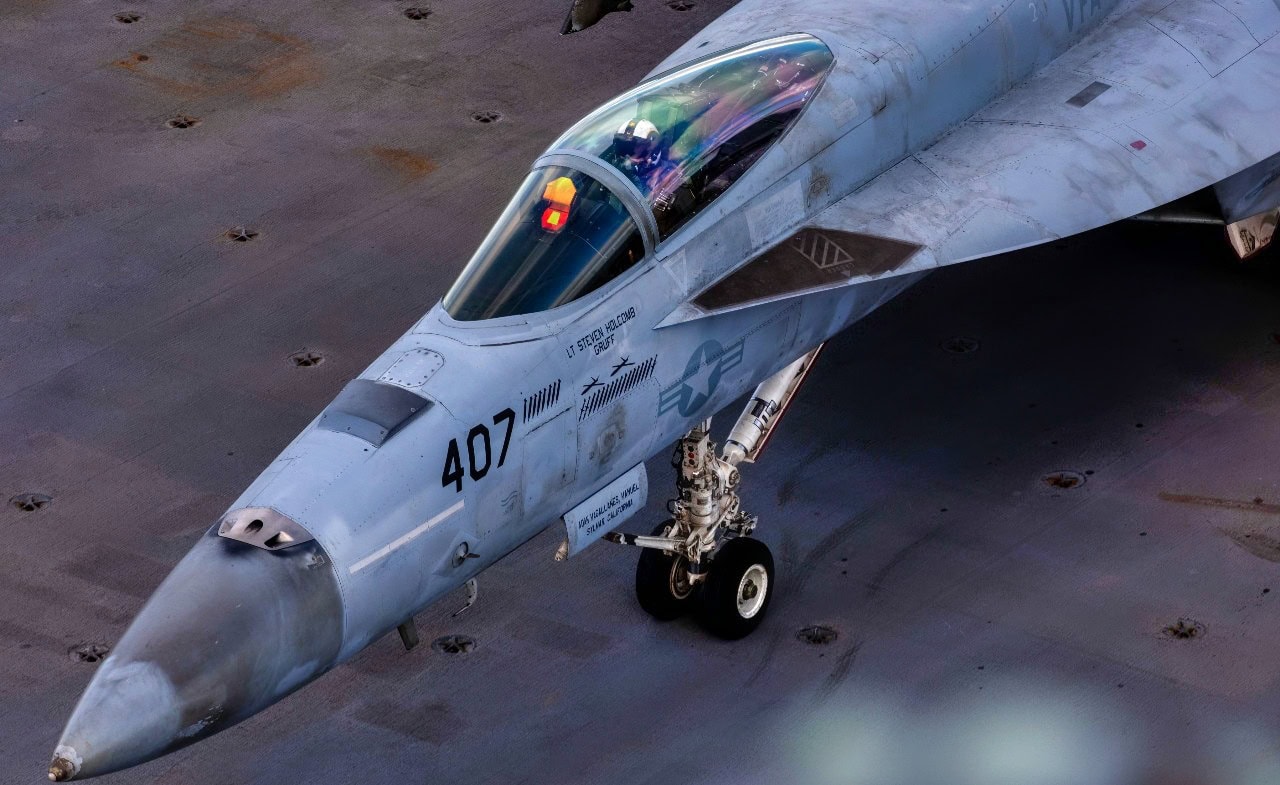
(Dec. 7, 2024) LT Steven Holcomb, attached to the Gunslingers of Strike Fighter Squadron (VFA) 105, operates a F/A-18E Super Hornet on the flight deck during flight operations, Dec. 7, 2024. USS George H.W. Bush is in the basic phase of the Optimized Fleet Response Plan conducting flight deck certification.(U.S. Navy photo by Mass Communication Specialist Seaman Jayden Brown)
But experienced observers of the IRGC conclude that the more immediate objective for the Guard Corps is to acquire more resources and freedom of action to carry out their primary function of internal security. Their real mission is more likely to make conditions such that it will be far more difficult for any of the street protests that began in December 2025 to resume.
“The reason that they have now been handed the reins for the twin functions of external military action and internal repression is that the regime now wants to prevent the U.S. and Israel from inspiring these wide-scale insurrections,” said a Middle East security expert. “Street protests are no longer just a threat to ‘public order’ – there is a real fear that the U.S. and its allies could use them as a cover for a program of regime change.”
The IRGC Stands To Gain a Great Deal
Reuters reported that it spoke to six Iranian and regional sources with detailed knowledge of how the IRGC’s fortunes have fared since the war began. Those sources confirmed that since the war began on Saturday, the IRGC’s authority within the regime grew significantly. It now reportedly plays an active role in almost every major policy formulation.
An Iranian security official close to the IRGC reported that the force’s new head, Ahmad Vahidi, has been present at every high-ranking meeting within the hierarchy. He is involved in the decision-making process, reportedly to ensure that Iran’s Islamic revolutionary system and its goals for the future survive.
The IRGC even showed its work. Deputy Defense Minister and Guardsman Reza Talaeinik provided a new “pecking order”—showing the force’s efforts to develop multiple levels of redundancy—during a television interview on Tuesday.
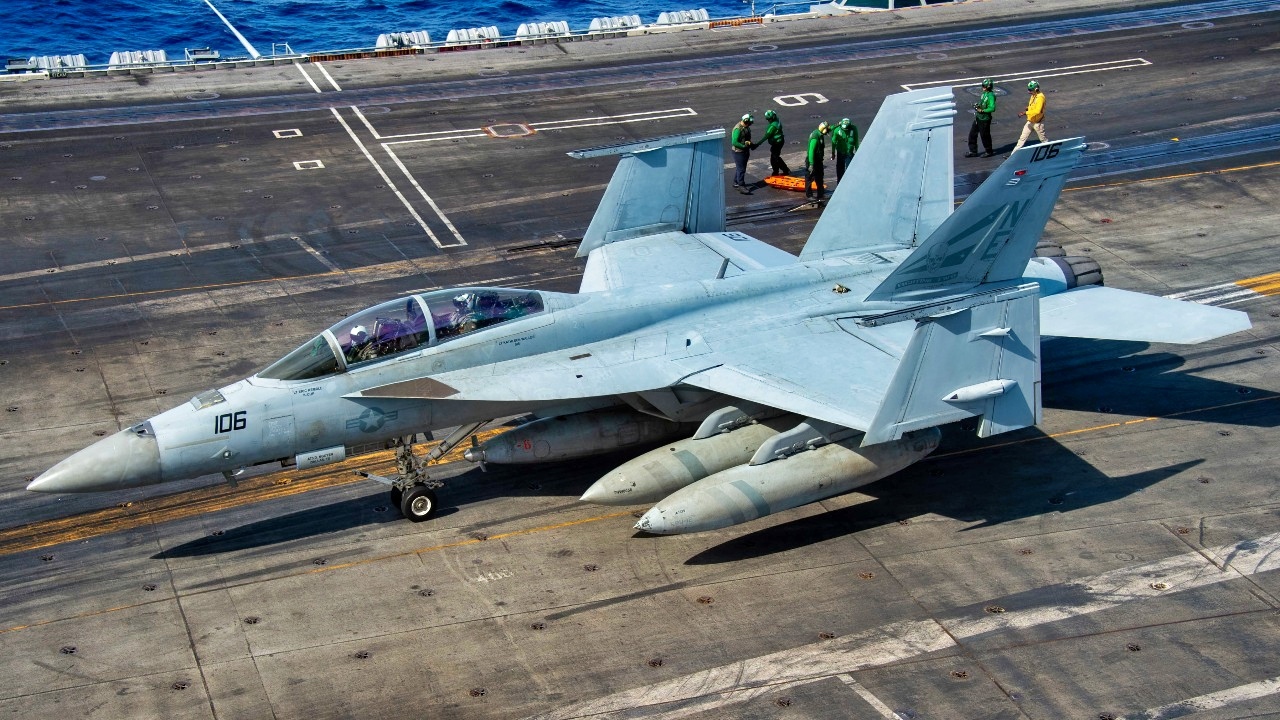
(Dec. 30, 2021) An F/A-18F Super Hornet, assigned to the “Bounty Hunters” of Strike Fighter Squadron (VFA) 2, taxis on the flight deck of Nimitz-class aircraft carrier USS Carl Vinson (CVN 70), Dec. 30, 2021. Carl Vinson Carrier Strike Group is on a scheduled deployment in the U.S. 7th Fleet area of operations to enhance interoperability through alliances and partnerships while serving as a ready-response force in support of a free and open Indo-Pacific region. (U.S. Navy photo by Mass Communication Specialist 3rd Class Jeff D. Kempton)
According to his description, each officer in the IRGC command structure now has designated successors extending three ranks below them. Those designated are ordered to step in if superiors are eliminated.
“The role of each unit and section has been organized in such a way that if any commander is killed, a successor immediately takes their place,” he said.
Kasra Aarabi, the head of research on the IRGC at United Against Nuclear Iran, described the unhappy scenario of a failed effort at regime change. He assessed that the elite shock troops of the Islamic Revolution could become much more powerful if the clerical regime survives.
“If the conflict suddenly stops and the regime survives, we can be certain the Guards will have an even more important role,” he said.
About the Author: Reuben F. Johnson
Reuben F. Johnson has thirty-six years of experience analyzing and reporting on foreign weapons systems, defense technologies, and international arms export policy. Johnson is the Director of Research at the Casimir Pulaski Foundation. He is also a survivor of the Russian invasion of Ukraine in February 2022. He worked for years in the American defense industry as a foreign technology analyst and later as a consultant for the U.S. Department of Defense, the Departments of the Navy and Air Force, and the governments of the United Kingdom and Australia. In 2022-2023, he won two awards in a row for his defense reporting. He holds a bachelor’s degree from DePauw University and a master’s degree from Miami University in Ohio, specializing in Soviet and Russian studies. He lives in Warsaw.