
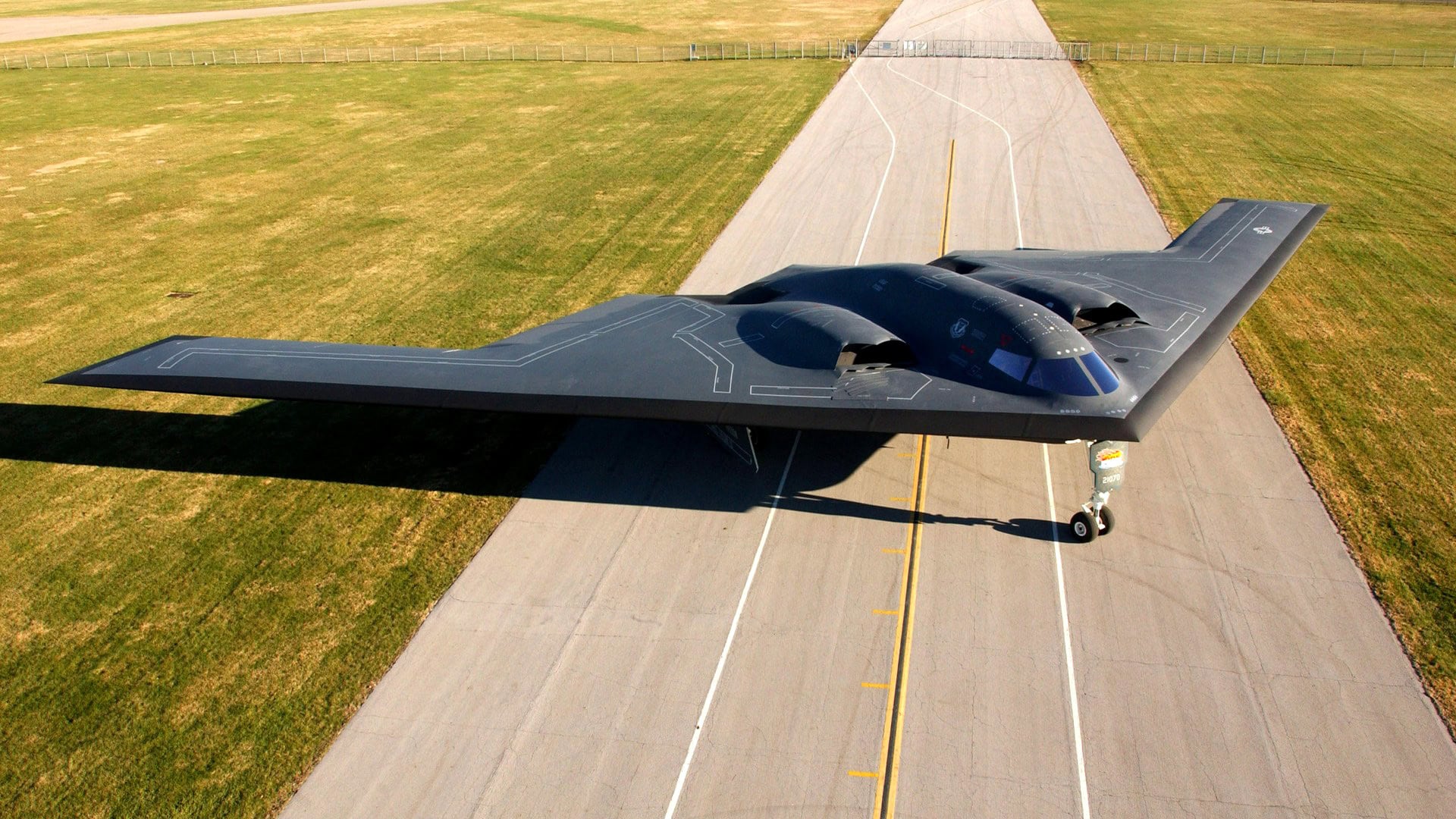
Summary and Key Points: National Security Columnist Steve Balestrieri evaluates the development of China’s JH-XX (J-36) stealth fighter-bomber at the Chengdu Aircraft Corporation (CAC).
-Designed with a tailless delta-wing and three engines, the JH-XX aims to fill the gap between the J-20 fighter and the H-20 strategic bomber.
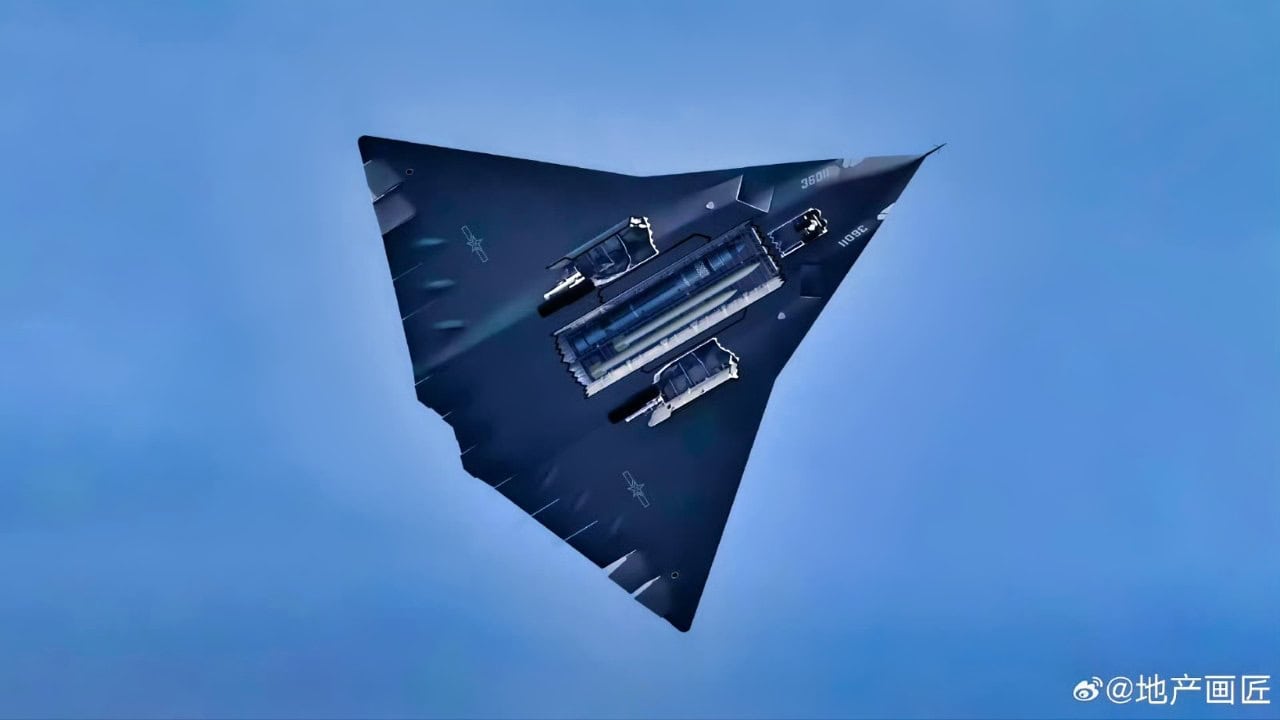
J-36 or JH-XX from China. Screenshot for Chinese Social Media.
-This report analyzes the aircraft’s 2,000 km combat radius and its potential as a “sixth-generation” asset for contesting the Second Island Chain.
-Balestrieri explores the technical hurdles of matching U.S. Adaptive Engine Technology (AETP), concluding that the JH-XX represents a specialized supersonic threat to Allied airbases and naval forces.
Beyond the H-20: Analyzing the Role of the Supersonic JH-XX in China’s Regional Deep-Strike Strategy
The Chinese continue to develop medium and long-range bombers to complement the H-20. The latest aircraft have been spotted at the Chengdu Aircraft Corporation (CAC) facilities.
China’s JH-XX (often referred to as J-36) is a developing medium-range stealth bomber/fighter-bomber, with prototypes reportedly conducting flights in late 2024 and 2025.
Designed as a tailless, three-engine, delta-wing aircraft, it aims to fill a niche between the J-20 fighter and H-20 strategic bomber, with an estimated 2,000 km combat radius to threaten U.S. interests in Guam and Japan.
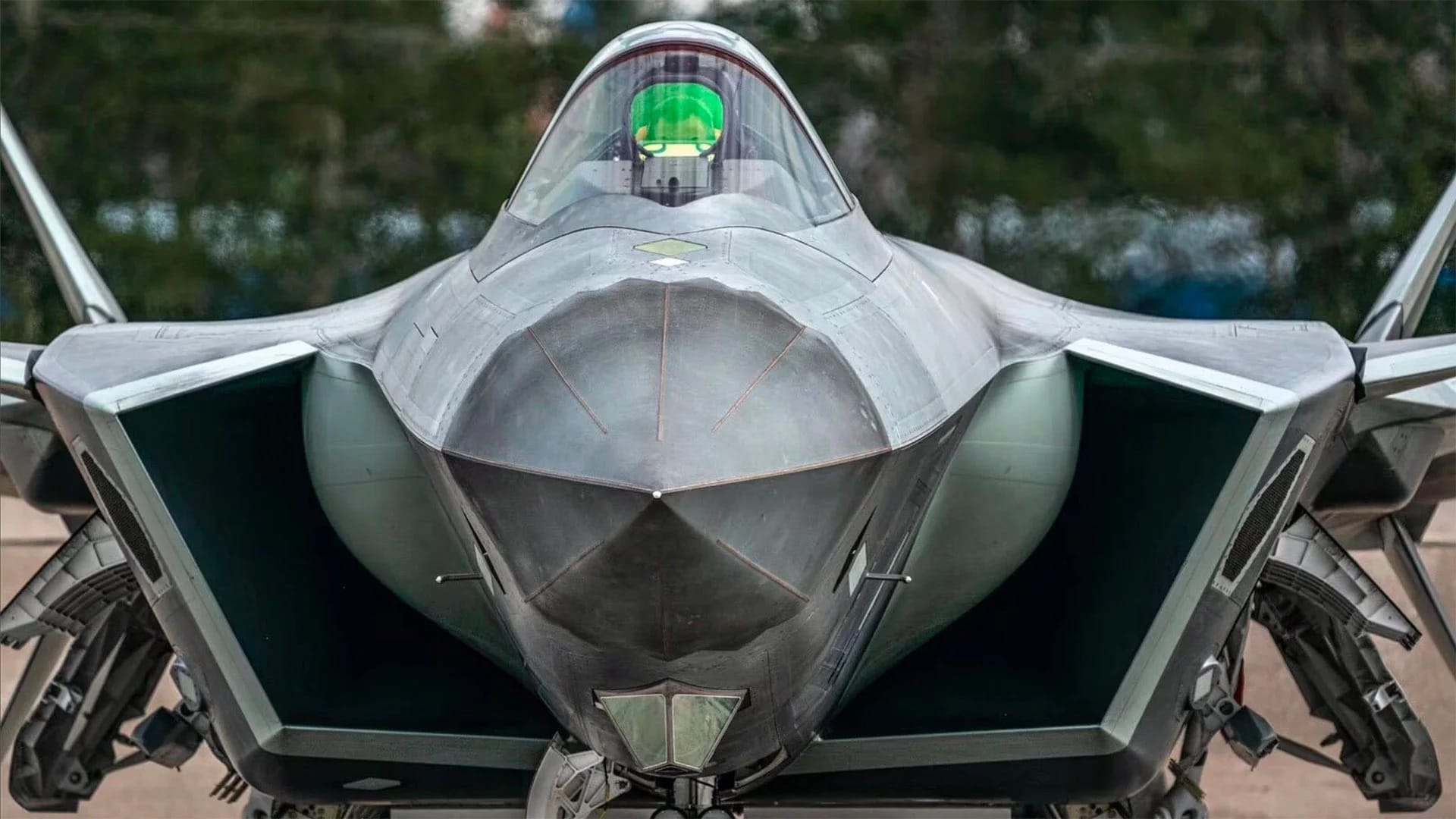
J-20 Stealth Fighter. Image Credit: Industry Handout.
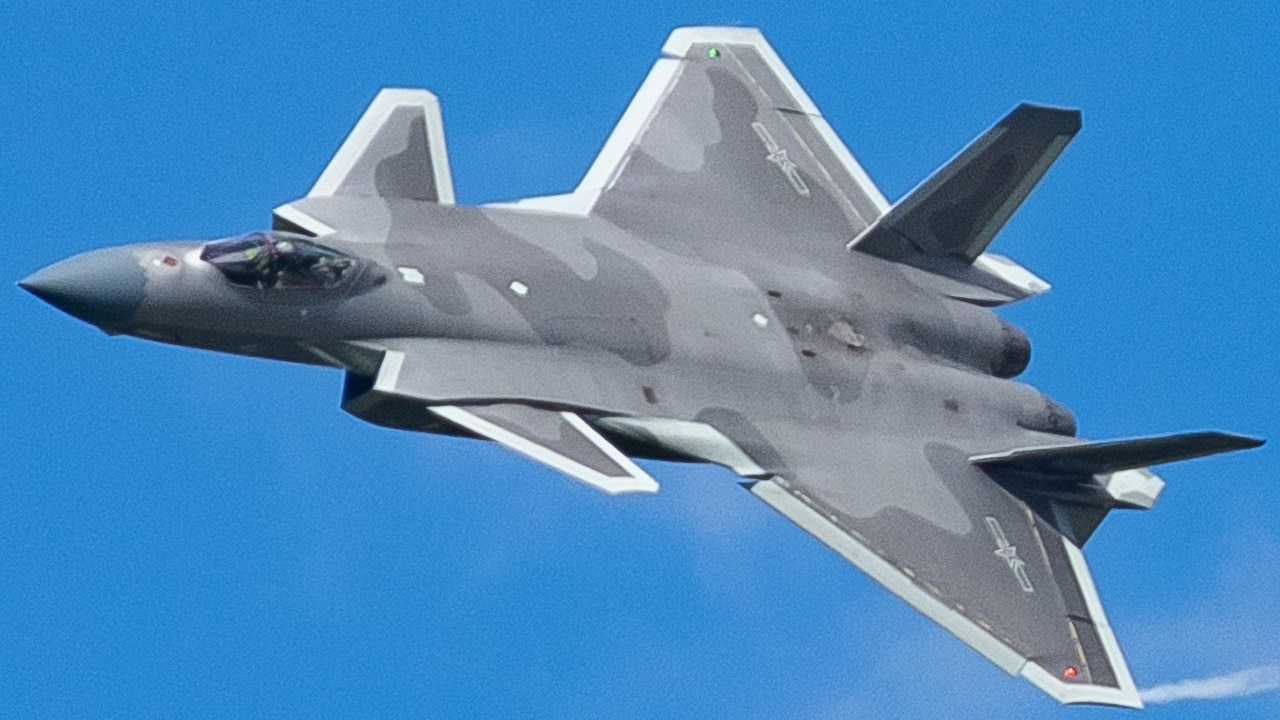
J-20 Fighter. Image Credit: Creative Commons.
While the H-20 is a large, strategic bomber aimed at long-range nuclear delivery, the JH-XX is a faster, smaller tactical or regional bomber designed for survivability in contested environments.
Some analysts speculate the JH-XX program might be a more immediate, specialized project focused on replacing older strike aircraft, whereas the H-20 is a long-term strategic bomber.
Is The JH-XX A Chinese Sixth-Generation Aircraft?
Many worldwide heralded the latest test flights as the next leap in Chinese aviation technology, describing them as a “sixth-generation fighter” thanks to their tailless design, stealthy features, modified delta wing, and angular features.
Many experts believe the JH-XX, also known as the JH-36, is a medium-range fighter bomber. The Pentagon mentioned it in the annual report on China’s military power.
Since 2019, the annual report has mentioned a “JH-XX” medium bomber under development.
One aircraft that the Chinese may have borrowed inspiration from was the failed American A-12 Avenger project of the 1980s, which the US couldn’t make work.
“The [People’s Liberation Army Air Force] is developing new medium- and long-range bombers to strike regional and global targets,” the report stated, adding the bombers are likely to have extremely low observable characteristics.
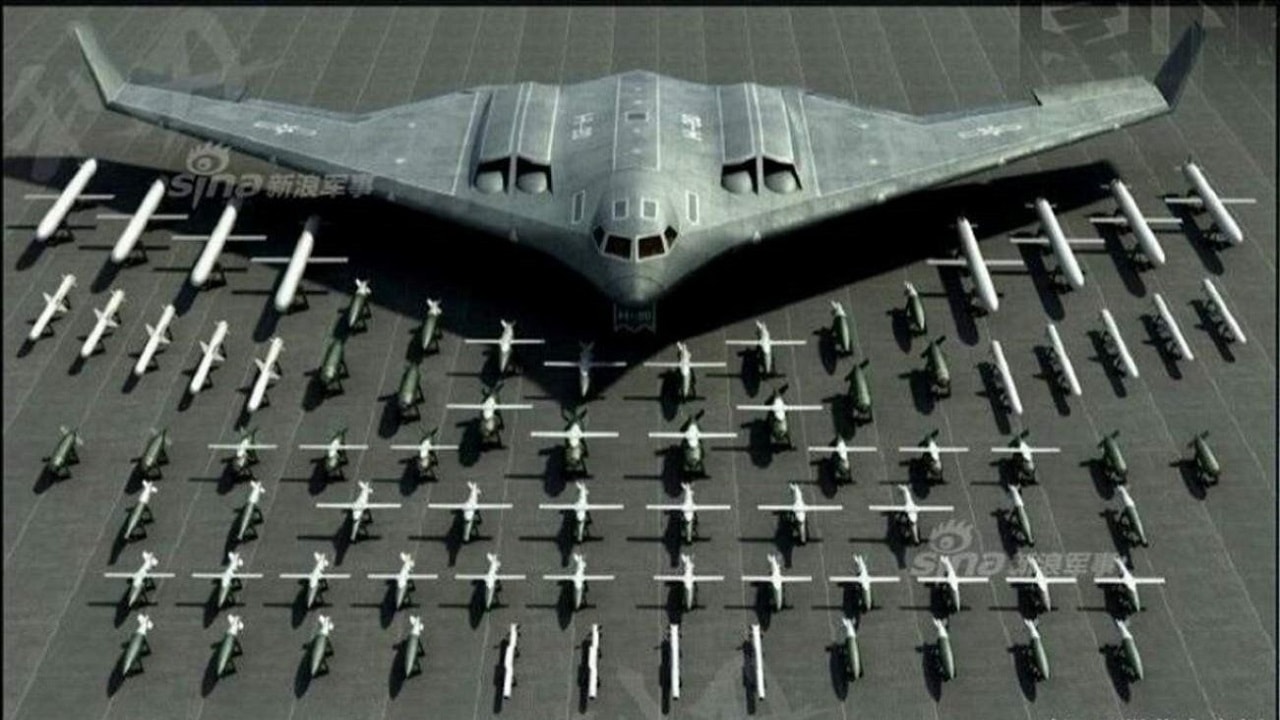
JH-XX artist rendering. Image Credit: Chinese Internet.
But it was interesting that China has been strangely silent on the developments of the aircraft, which is against their typical M.O., crowing about their latest technological marvel.
And yet others scoffed at the test flights as nothing more than China’s well-known propensity for espionage, stealing others’ designs and then reverse engineering them.
But there are always two sides to a story, and the truth, as so often happens, lies somewhere in the middle.
What Is Known About The JH-XX
Since its test flights, there has been much speculation about the aircraft’s design and construction. Little is known about its capabilities. Aircraft experts are examining the design features and are forced to interpret them as best they can. However, it is unlike any other current Chinese aircraft.
In the video, the new aircraft is seen flying as a chase plane with China’s J-20 stealth fighter. It seems that the aircraft is about 30 percent larger than the J-20, which is about 70 feet long. Twin landing wheels on each side indicate the aircraft’s weight. The weapon storage bays must carry a substantial missile component. The modified delta wing and tailless design stand out.
The tailless feature enables better performance and reduced aerodynamic drag. It also adds stealth by reducing the aircraft’s radar signature. The USAF is also working on a tailless design for the NGAD (Next Generation Air Dominance) fighter.
However, the drawback is that maneuverability is reduced with the tailless design. The design is probably manufactured by Chengdu, since Chengdu also produces the J-20.
The aircraft’s three intakes and three exhausts suggest it has three engines, which make it very heavy and reduce its range and payload. This would also help explain the twin landing gear.
However, a second J-36 prototype revealed significant changes from the original leak: revised air intakes, new landing gear, and, most strikingly, exhaust nozzles that looked more like those seen on the U.S. F-22 Raptor.
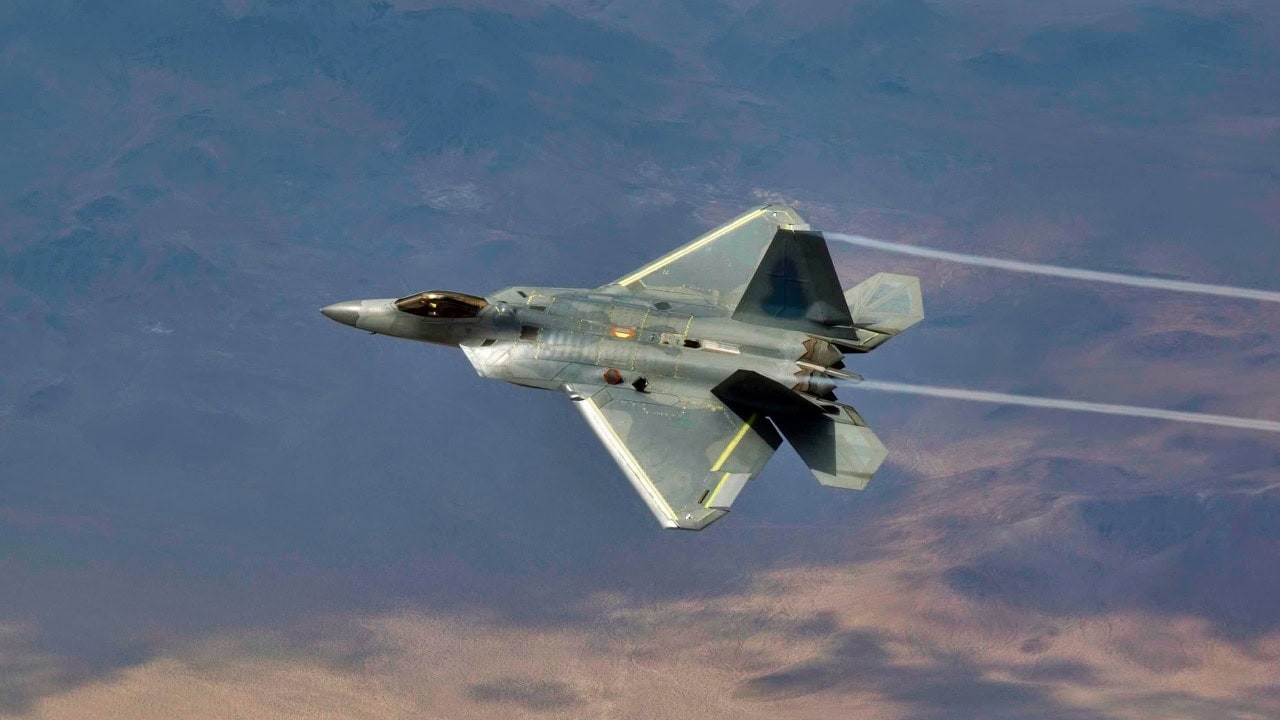
F-22 Raptor 4006 makes its second flight July 18 following an extensive refurbishment to get it back in the air. (Courtesy photo by Christopher Higgins/Lockheed Martin)
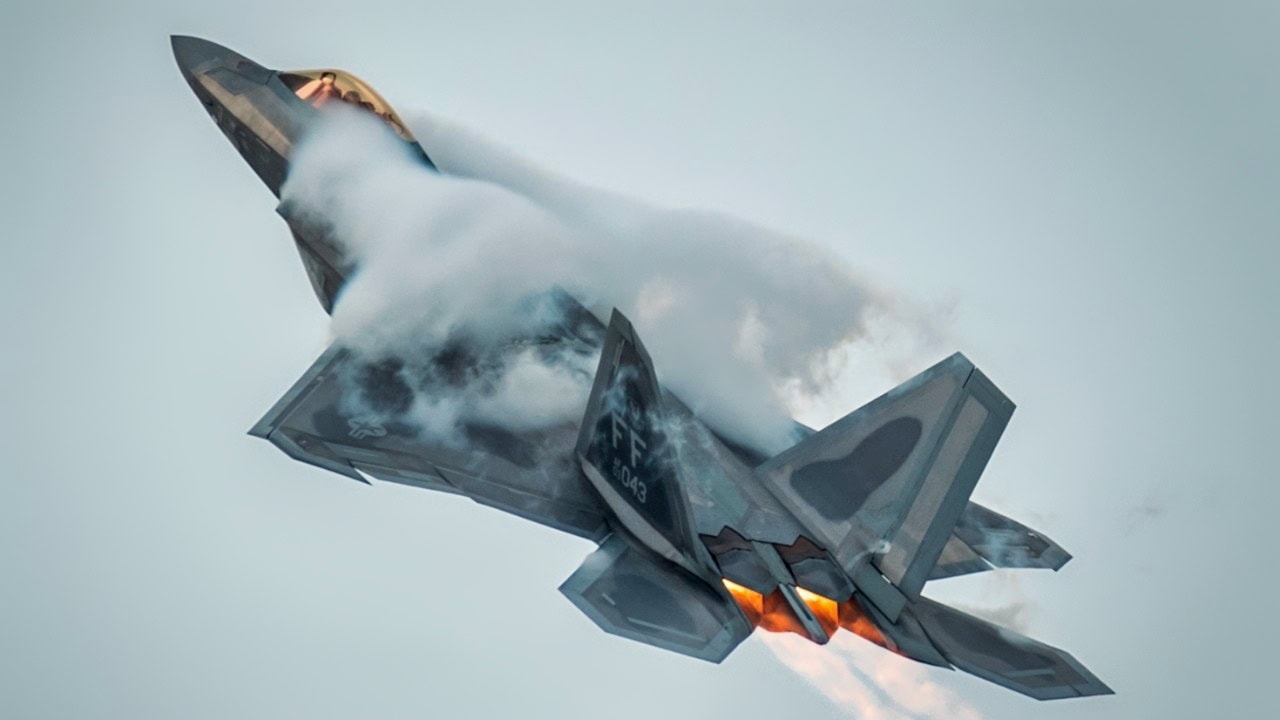
U.S. Air Force Capt. Samuel “RaZZ” Larson, F-22 Raptor Demonstration Team commander, performs an aerial maneuver in preparation for the ongoing airshow season at Joint Base Langley-Eustis, Virginia, July 9, 2024. Airshows play a crucial role in highlighting the importance of air power in modern warfare and help reinforce the deterrence capabilities of advanced fighter aircraft like the F-22 Raptor. (U.S. Air Force photo by Senior Airman Mikaela Smith)
“According to the Pentagon report, China’s indigenous engine industry is unlikely to have matched the technology in the American Adaptive Engine Technology Program (AETP), which produced prototype engines using bypass technology that could be optimized for specific thrust or loitering, with additional stealthiness as a byproduct.
“An expected competition between those engines—one built by GE Aerospace and one by Pratt & Whitney—was meant to upgrade the F-35 but was abandoned because they could not fit all variants of that fighter.”
One aerospace technologist said the third engine is “either a brilliant solution to have both power and stealthiness” or “dumb, flying around with the dead weight of unused propulsion mass.”
The cockpit is wide enough for two pilots to fly side by side or in tandem. One aviation expert thinks the aircraft could be unmanned, and the dark cockpit window was just painted on. The J-20 chase plane was there in case he needed to take over the flight in an emergency.
The amount of weapon storage space and range will be important to monitor. The JH-36 may have the range to strike Taiwan, Guam, and Japan. The aircraft could be China’s next asset to contest the “Second Island Chain.” It would be China’s answer to the US B-2 and B-21 Raider bombers.
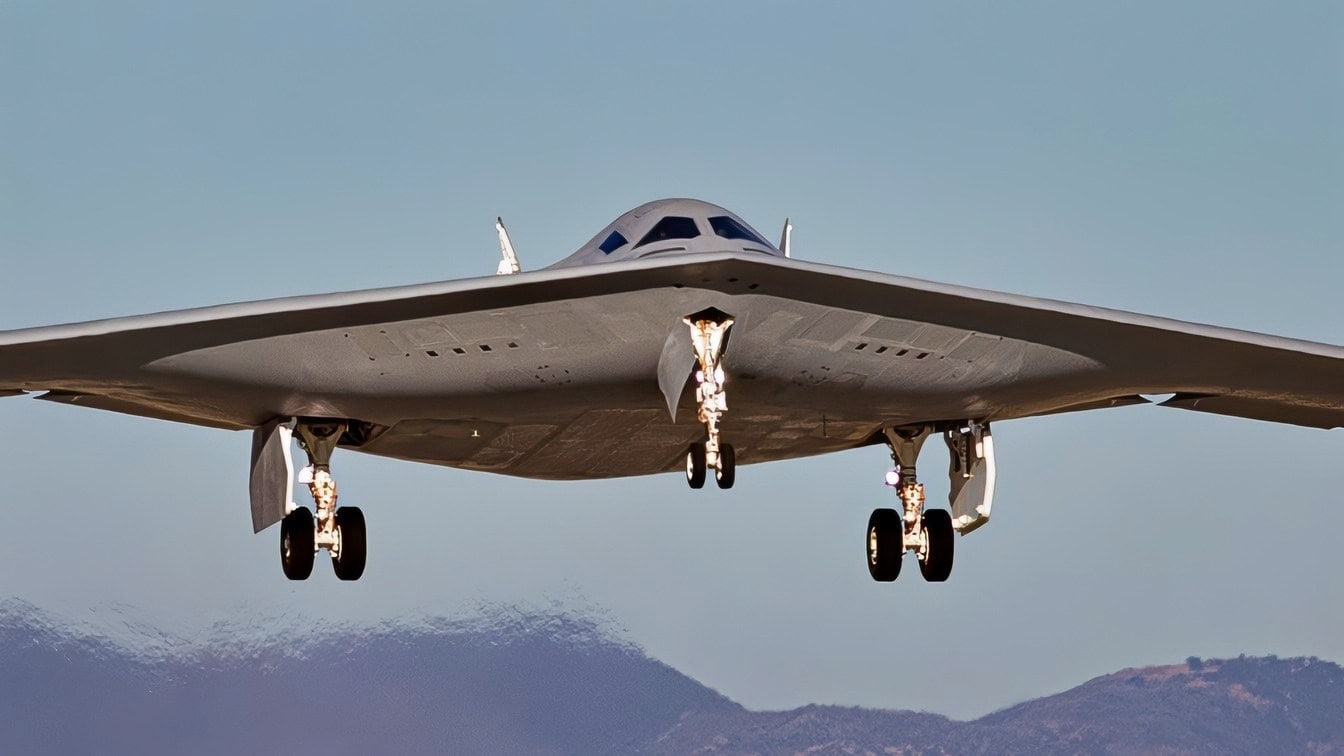
A second B-21 Raider test aircraft takes off, Sept. 11, from Palmdale, Calif., to join the Air Force’s flight test campaign at Edwards Air Force Base, Calif. The addition of the second test aircraft expands mission systems and weapons integration testing, advancing the program toward operational readiness. (Courtesy photo)
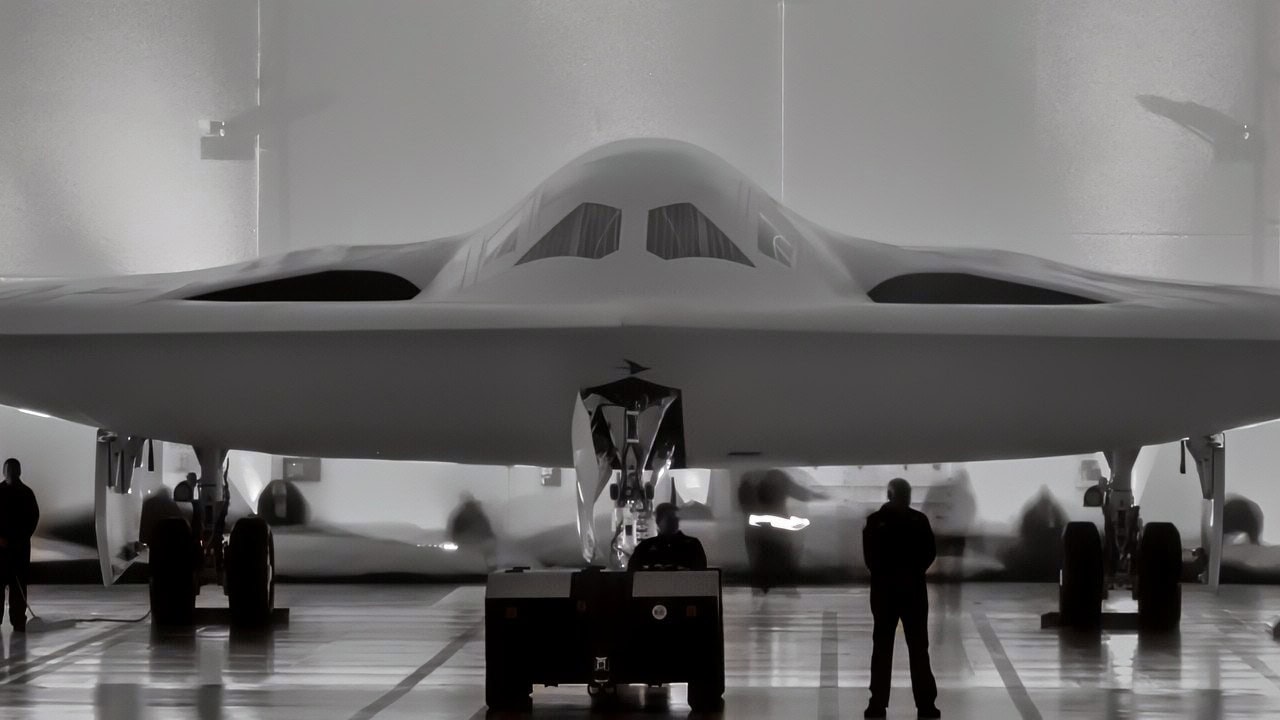
A B-21 Raider is unveiled at Northrop Grumman’s manufacturing facility on Air Force Plant 42 in Palmdale, California, Dec. 2, 2022. The B-21 will be a long-range, highly survivable, penetrating strike stealth bomber capable of delivering both conventional and nuclear munitions. (U.S. Air Force photo by Airman 1st Class Joshua M. Carroll)
At such an early stage, there are more questions than answers. Aviation expert Alex Hollings of Sandboxx and Airpower commented, “We currently don’t know whether these aircraft are the equivalent of American X-Planes, or experimental aircraft never meant to go straight into service at all, but rather serve as testbeds for emerging technologies to be integrated into later designs.
“They could also be technology demonstrators, which are meant to demonstrate and mature technologies. Of course, they could be prototypes of new fighters meant to enter service in a similar form to how they look today, but even prototypes often see significant design revisions before making their way into service, particularly when bringing new technologies to bear.”
Replacing The H-6 Bomber And Serving Alongside The H-20
China’s aging H-6 bomber is expected to be replaced by the JH-XX at some point in the future. The H6 has served the PLAAF fleet for more than half a century and is in need of replacement.
The twin-engine heavy bomber was a license-built copy of the Soviet Tupolev Tu-16 that first flew in 1959 and was introduced in the 1960s by Xi’an Aircraft Industrial Corporation. The H6 has been continuously upgraded since the 1980s; the H6B is a nuclear-capable bomber.
The latest version is the H-6N, a heavily redesigned version capable of aerial refueling and carrying air-launched cruise missiles, giving it a long-range standoff capability.
Is The JH-XX Just a Concept Bomber Or The Real Thing?
EurAsia Naval Insight believes that the JH-XX is only a concept aircraft and not yet a credible reality for the PLAAF.
“The JH-XX is best understood as a conceptual stealth fighter-bomber: a large, supersonic, low-observable strike aircraft that is different from a true strategic bomber like the H-20.
“In theory, the JH-XX fighter-bomber would give the PLAAF a regional deep-strike tool in the Western Pacific. With an estimated combat radius of ~2,000 km, internal carriage of large air-to-surface weapons, and limited air-to-air capability, it could penetrate heavily defended airspace to hit high-value targets: airbases, radar nodes, air-defence sites, or naval forces.
“Speed matters here. A supersonic stealth bomber could reach moving maritime targets faster, reduce the enemy’s reaction window, and launch anti-ship missiles with higher initial energy. Conceptually, it complements the slower, larger H-20 rather than replacing it.=
“The problem is evidence. Unlike the J-20, J-35, or H-20, there are no credible signs that the JH-XX is actually being developed. For now, it remains an elegant idea—useful on paper, non-existent in reality, and not yet a PLA priority.”
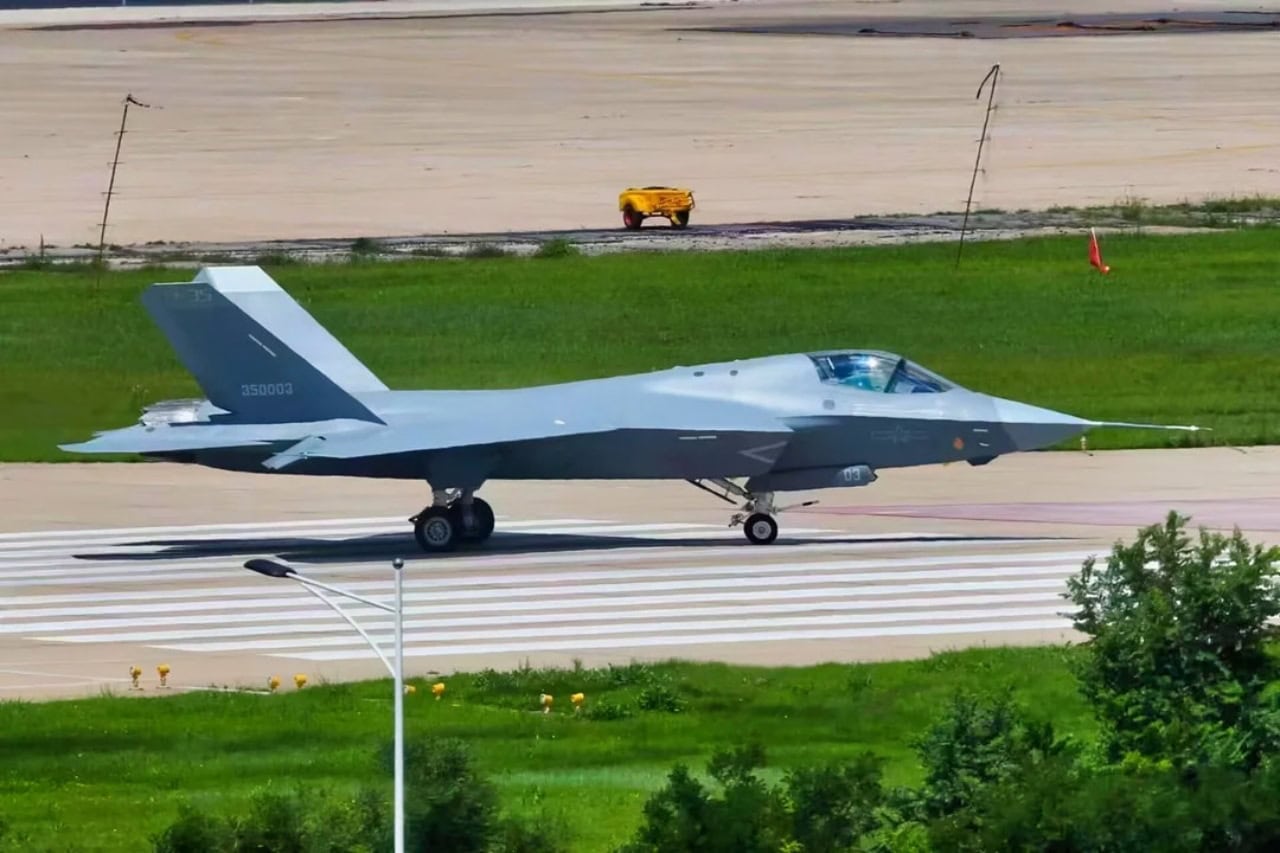
J-35 Fighter. Image Credit: Chinese Internet.
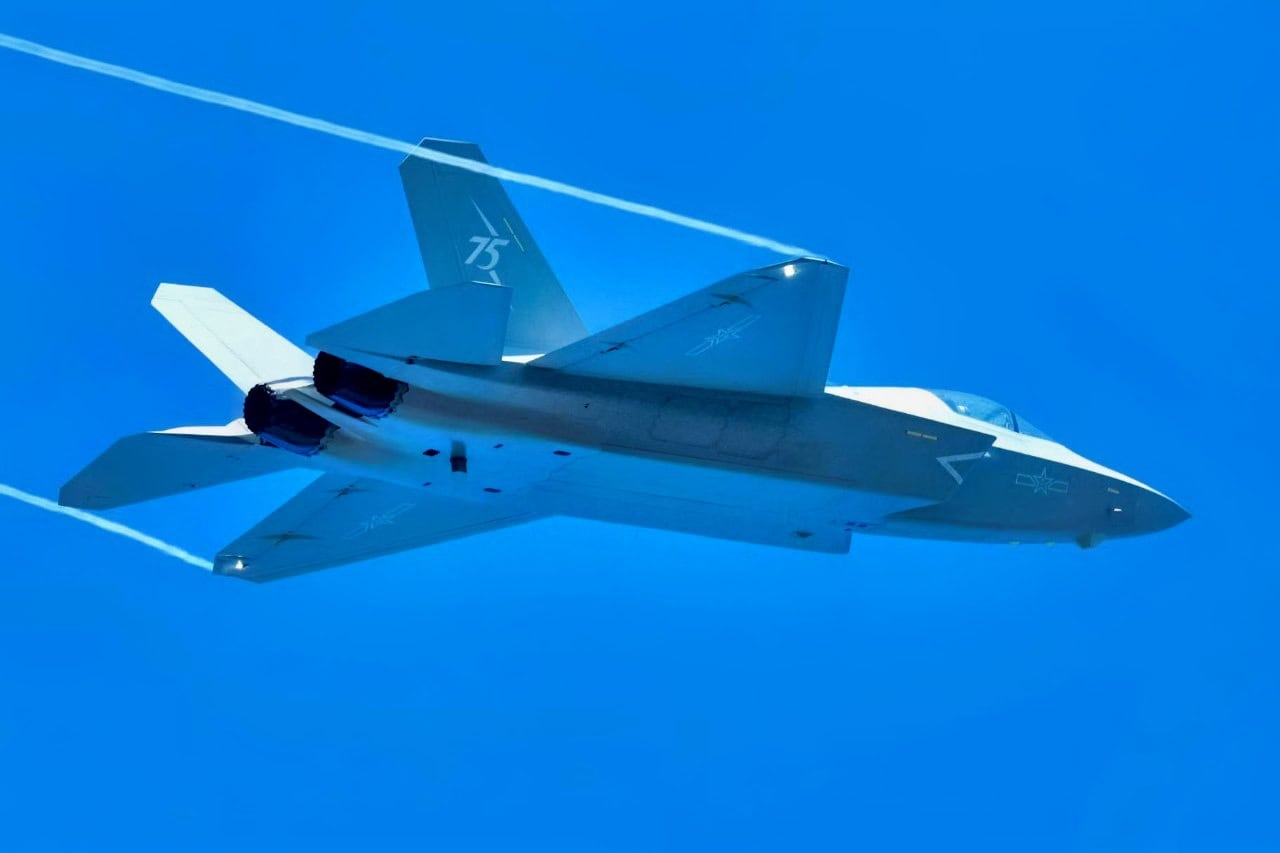
J-35 Fighter. Image Credit: Chinese State Media.
The Chinese continue to develop advanced aircraft, intent on building a next-generation aircraft to challenge US air defenses, deliver diverse and heavier payloads, and support their expansionist plans for the future.
The JH-XX bomber, in one way or another, continues to advance in development.
About the Author: Steve Balestrieri
Steve Balestrieri is a National Security Columnist. He served as a US Army Special Forces NCO and Warrant Officer. In addition to writing on defense, he covers the NFL for PatsFans.com and is a member of the Pro Football Writers of America (PFWA). His work was regularly featured in many military publications