
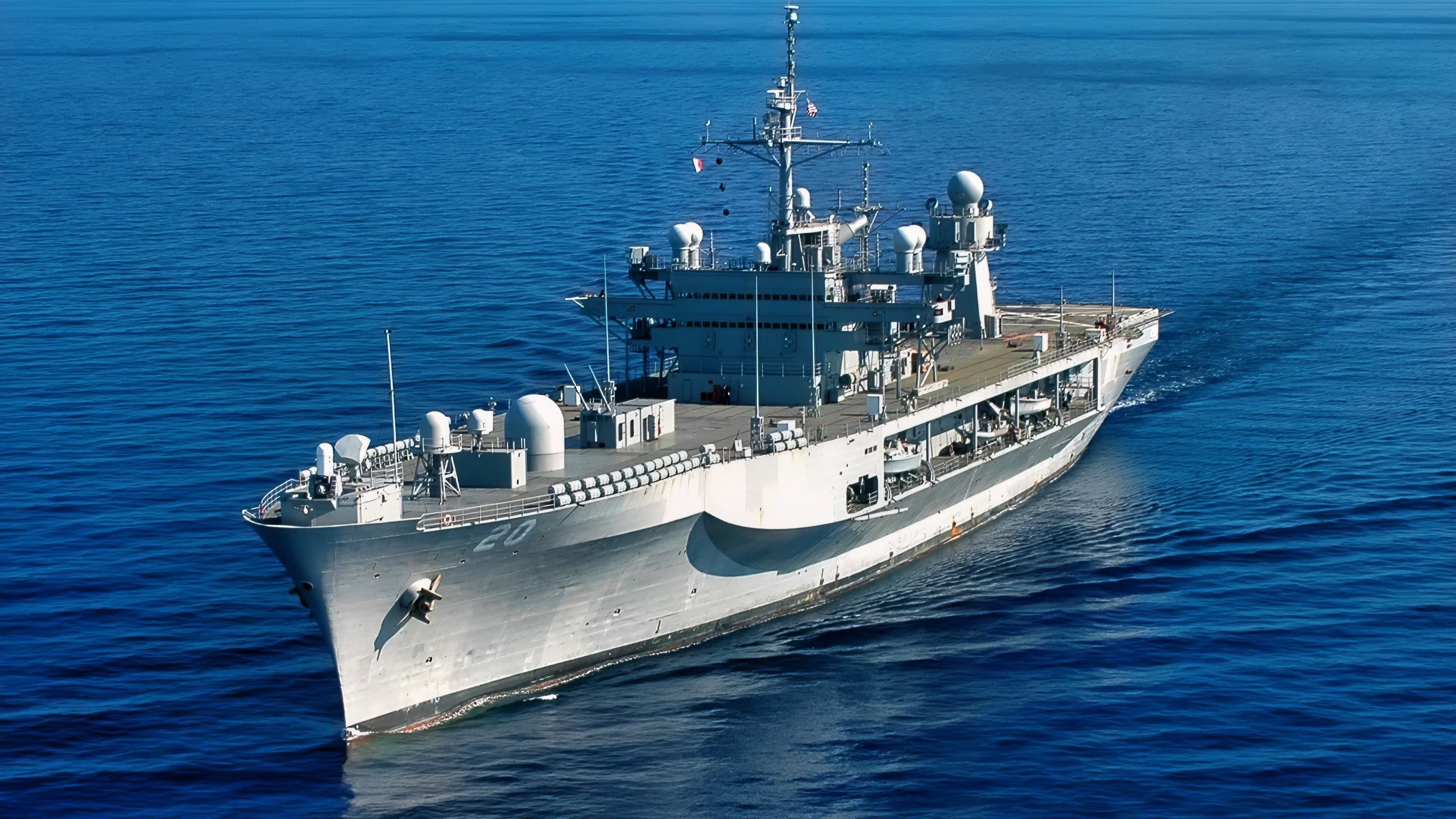
Summary and Key Points: Defense expert Christian D. Orr evaluates the Blue Ridge-class (LCC-19/20), the U.S. Navy’s only purpose-built amphibious command ships.
-These vessels serve as the critical flagships for the Sixth Fleet in Italy and the Seventh Fleet in Japan.
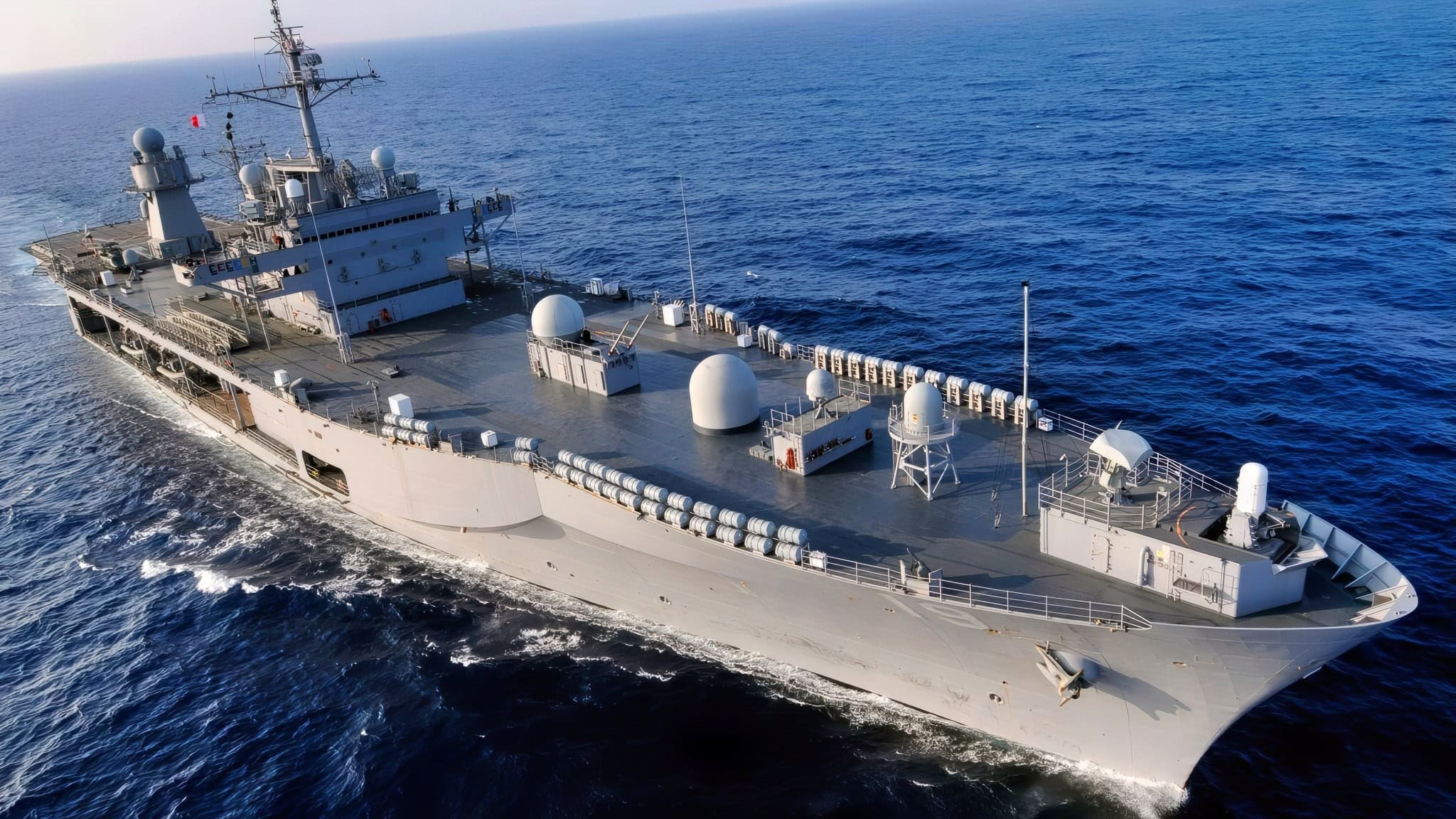
Blue Ridge-Class U.S. Navy. Image Credit: Creative Commons.
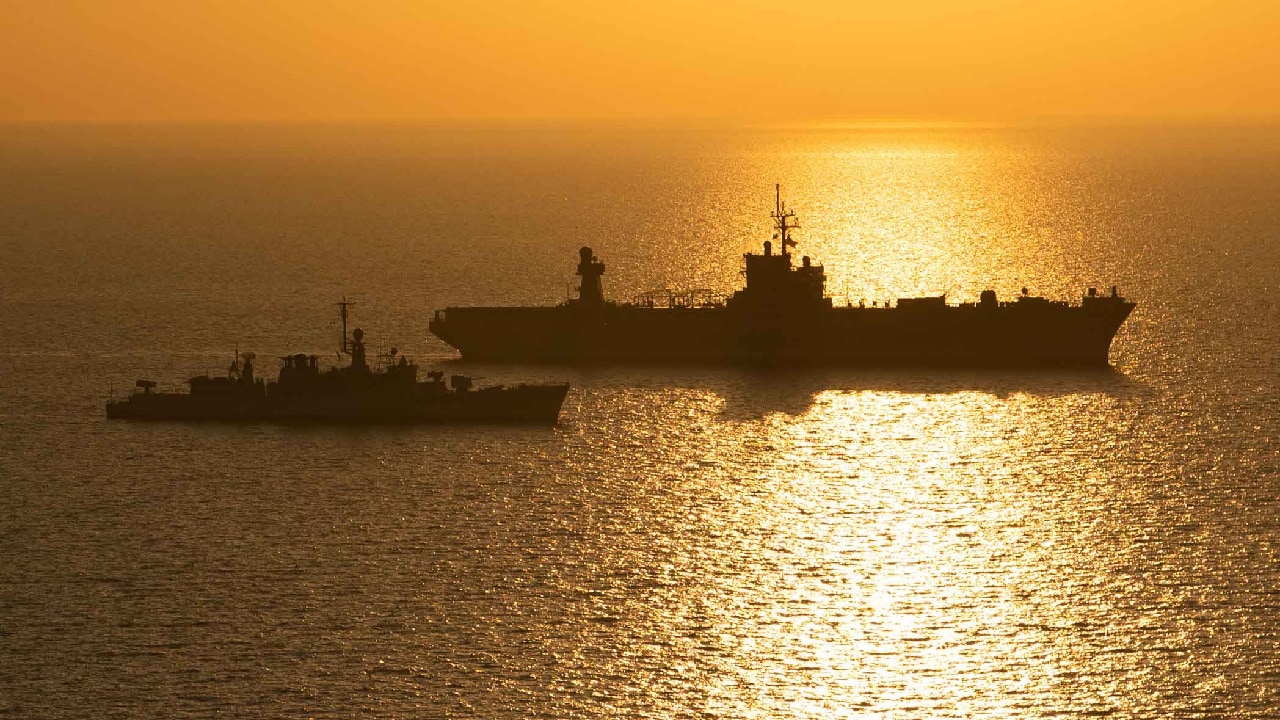
BLACK SEA (Nov 4, 2021) The Blue Ridge-class command and control ship USS Mount Whitney (LCC 20), the Arliegh Burke-class guided-missile destroyer USS Porter (DDG-78), and the Bulgarian navy frigate Gordi (BGS 43) perform ship maneuvering exercises in the Black Sea, Nov 4, 2021. Mount Whitney, forward deployed to Gaeta, Italy operates with a combined crew of Sailors and Military Sealift Command civil service mariners in the U.S. 6th Fleet area of operations in support of U.S. national security interests in Europe and Africa. (U.S. Navy photo by Mass Communication Specialist 3rd Class Andrew Eder) 211104-N-NO067-2261
-This report analyzes their sophisticated Command and Control (C2) suites, 13,000-nautical-mile range, and 2025 operational milestones in Libya and New Zealand.
-Orr explores the Navy’s decision to extend their service lives to 2039, concluding that their role as “Ambassador-level” diplomatic platforms and tactical nerve centers makes them the most technologically vital relics in the fleet.
The Brains of the Fleet: Why the 55-Year-Old Blue Ridge-Class Remains Irreplaceable in 2026
“Almost heaven, West Virginia/Blue Ridge Mountains, Shenandoah River…”
Those are the opening two lines from the classic 1971 song “Take Me Home, Country Roads” by the late great John Denver The Shenandoah River is obviously a body of freshwater, and West Virginia doesn’t have a coastline. However, that didn’t stop the U.S. Navy from naming a class of warships in honor of the Blue Ridge Mountains.
The Blue Ridge-class is the first and only class of amphibious command-and-control (C2) ships to be specifically designed for that role from the keel up.
Blue Ridge-Class Initial History
Out of the six vessels in the class originally requested, and three formally planned, only two were completed. The lead ship of the class, the USS Blue Ridge (LCC-19), was built at the Philadelphia Naval Shipyard. She was laid down on February 27, 1967, launched on January 4, 1969, and commissioned on November 14, 1970.
Her motto is “Finest in the Fleet.”
The class’ second ship, the USS Mount Whitney (LCC-20), was built by Newport News Shipbuilding & Drydock Company, Newport News, Virginia.
She was laid down on January 8, 1969, launched on January 8, 1970, and commissioned on January 16, 1971. Her motto is “The Voice of The Sea.”
Tech Specs and Vital Stats
–Displacement: 18,874 long tons fully laden
–Hull Length: 634 feet
–Beam Width: 108 feet
–Draught: 26 ft 9 in
–Propulsion: Two boilers, one geared turbine, one shaft; 22,000 hp
–Max Speed: 23 knots
–Range/Endurance: 13,000 nautical miles
–Crew Complement: 34 commissioned officers, 564 enlisted seamen
–Aircraft Carrying Capacity: 2 helicopters of any make & model (except for the CH-53 Sea Stallion)
–Armament: 2 × Phalanx close in weapon system; 2 × Mark 38 25-mm machine gun system
Built by BAE Systems, the Mark 38 Mod 3 gun has an effective range of 15.5 miles and a maximum rate of fire of 180 rounds per minute. In addition, this weapons system “is unique from other naval weapons because its surveillance system moves separately from the gun system, preventing adversaries from easily knowing they have been detected.”
As the Blue Ridge’s official website proudly proclaims, “The BLUE RIDGE is the most capable command ship ever built, with an extremely sophisticated Command and Control system. … With a state of the art commercial and military satellite capability, coupled with the ability to track land, sea, and air movements throughout the region, BLUE RIDGE is among the most technologically advanced ships in the world.”
Operational History In Brief
The Blue Ridges do not generate headlines or inspire cinematic scripts like, say, the Nimitz-class supercarriers and the Ohio-class ballistic missiles submarines do.
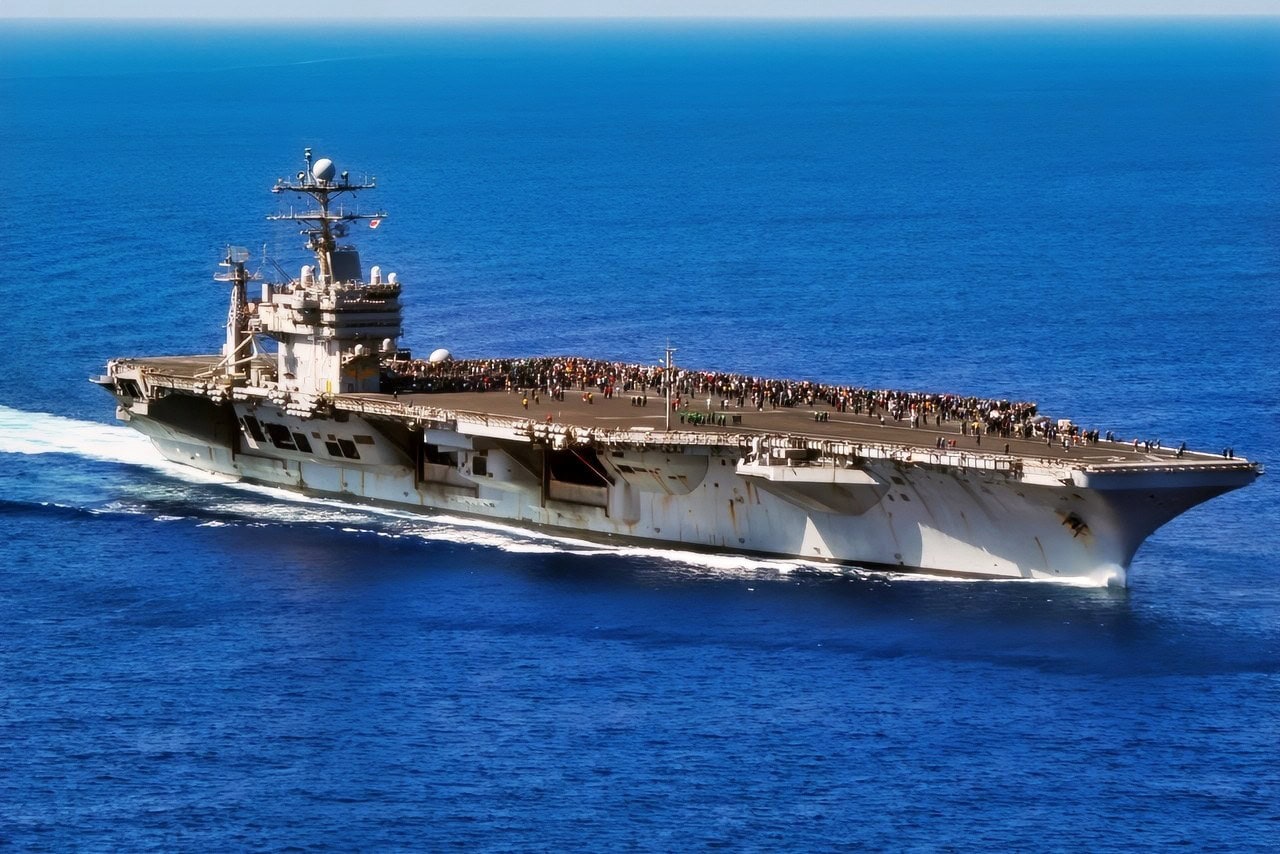
ATLANTIC OCEAN (Aug. 6, 2012) F/A-18 Hornets and Super Hornets from Carrier Air Wing (CVW) 2 fly in formation as MH-60S Seahawk helicopters assigned to the Golden Falcons of Helicopter Sea Combat Squadron (HSC) 12 fire flares during an air power demonstration above the Nimitz-class aircraft carrier USS Abraham Lincoln (CVN 72). Lincoln is returning to the United States after the completion of an eight-month change-of-homeport deployment during which she operated in the U.S. 5th, 6th and 7th Fleet areas of responsibility. (U.S. Navy photo by Mass Communication Specialist Seaman Zachary A. Anderson/Released)

USS Nimitz in November 2025. Image Credit: Creative Commons.
Yet LCC-19 and LCC-20 both have a more prestigious position than any carrier or sub. They are the respective flagships of the Seventh Fleet (the Navy’s largest forward-deployed fleet) and Sixth Fleet. The Blue Ridge has led the Seventh Fleet since 1979, and Mount Whitney has headed the Sixth Fleet since 2005.
Some of the noteworthy historical achievements of the USS Blue Ridge include:
–During the Vietnam War, exchanged fire with Communist coastal artillery batteries on Tiger Island during the Lam Son Counter-Offensive of 27–29 June 1972, earning a Combat Action Ribbon
–Nine Battle Efficiency “E” Awards
—Visited Wellington in mid-May 2025 to reaffirm America’s bilateral relations with New Zealand, thus marking the first visit to that port by a U.S. Navy warship since 2021, and reaffirming the ship’s status as a linchpin in the U.S. Indo Pacific Command area of responsibility (AOR).
Some of the noteworthy historical achievements of USS Mount Whitney include:
–Deployed to the Central Command AOR in support of Operation Enduring Freedom in November 2002. She acted as the initial command post for Combined Joint Task Force – Horn of Africa
–Deployed to the Black Sea in support of Operation Assured Delivery to deliver humanitarian aid to those affected by the Russo-Georgian War in August 2008. She became the first NATO ship to deliver aid to the port of Poti, Georgia
–11 Battle Efficiency “E” Awards
—Visits to the Libyan cities of Tripoli and Benghazi in April 2025, the first by a Navy ship to that country in 56 years
Where Are They Now?
Both Blue Ridge-class ships remain on active service.
The USS Blue Ridge has been the oldest deployed warship of the U.S. Navy since the 2014 decommissioning of the 1968-vintage USS Denver III (LPD-9).
The Blue Ridge is currently skippered by Captain Louis F. Catalina IV, while the Mount Whitney is commanded by Captain Colin “Farva” Price.
LCC-19 is homeported in Yokosuka, Japan, while LCC-20 is homeported in Gaeta, Italy. “Homeported” should perhaps rest in quotes, because, as noted by the latter vessel’s official website, the “USS Mount Whitney area of operation does not include any U.S military bases. Serving on USS Mount Whitney means operating in a permanent deployed status…Home port operation is the same as any ship in a foreign port.”
The USS Blue Ridge also provides secondary functions as command ship for the Amphibious Task Force and Landing Force Commanders during all phases of fleetwide operations.
It also performs as a Commander Joint Task Force flagship when national interests require. Not to be outdone, “USS Mount Whitney reinforces alliances and partnerships by providing distinguished, Ambassador-level receptions and tours of the impressive flagship to strengthen the image of the United States, build our alliances with regional military powers and provide leverage to the diplomatic efforts of our State Department.”
Back in 2011, the service lives of both vessels were extended to 2039 by the Chief of Naval Operations.
As far as this writer can ascertain, there is no specific ship class being proposed to replace them.
About the Author: Christian D. Orr, Defense Expert
Christian D. Orr is a Senior Defense Editor. He is a former Air Force Security Forces officer, Federal law enforcement officer, and private military contractor (with assignments worked in Iraq, the United Arab Emirates, Kosovo, Japan, Germany, and the Pentagon). Chris holds a B.A. in International Relations from the University of Southern California (USC) and an M.A. in Intelligence Studies (concentration in Terrorism Studies) from American Military University (AMU). He is also the author of the newly published book “Five Decades of a Fabulous Firearm: Celebrating the 50th Anniversary of the Beretta 92 Pistol Series.”