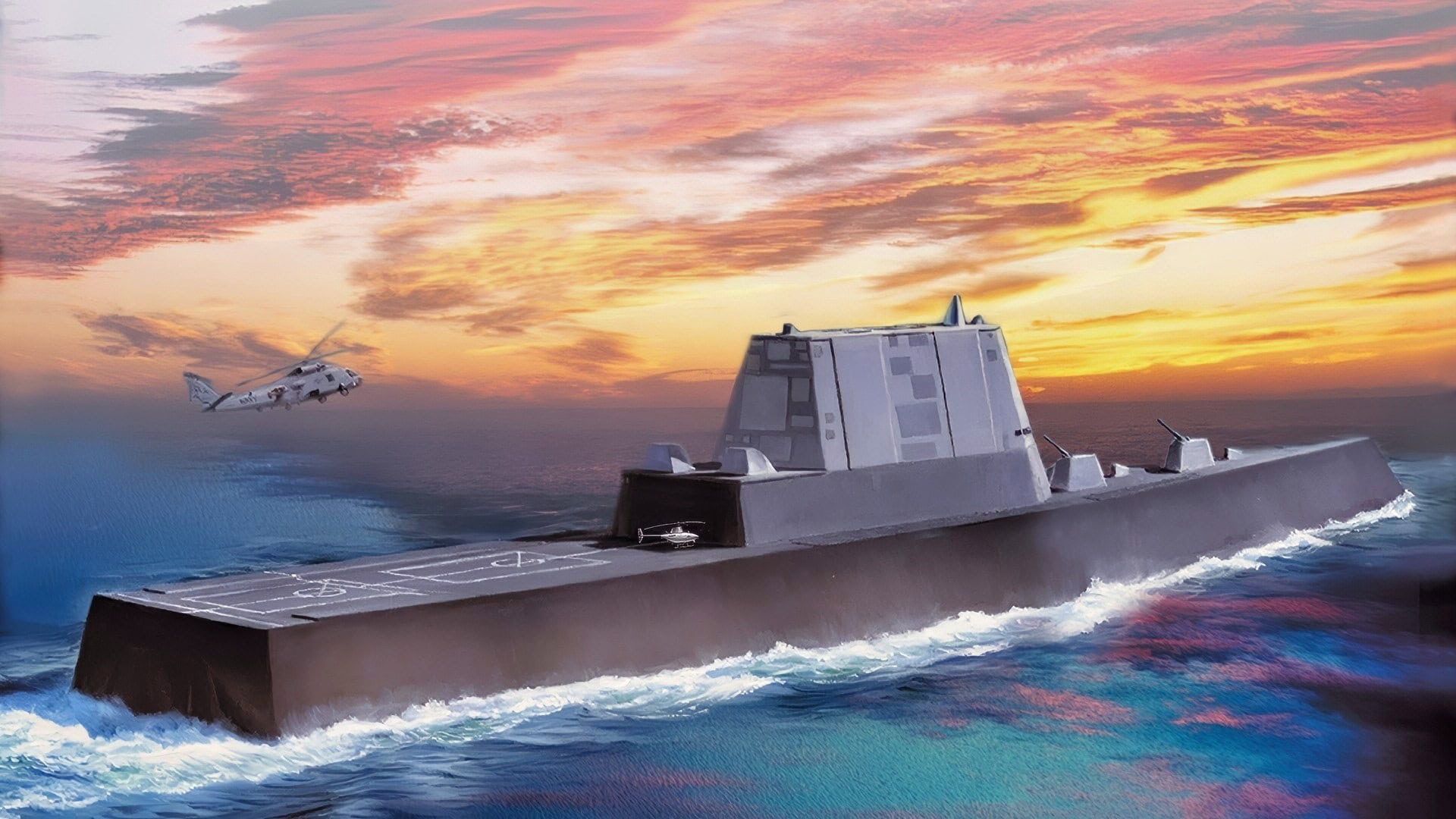
Summary and Key Points: National security editor Brandon J. Weichert evaluates the Zumwalt-class destroyers, originally designed for land-attack missions that became obsolete.
-As of March 14, 2026, the USS Zumwalt (DDG-1000) has completed its January sea trials following a radical overhaul at Ingalls Shipbuilding.
-This report analyzes the removal of the failed Advanced Gun System in favor of a 12-round Conventional Prompt Strike (CPS) hypersonic battery.
-Weichert explores the $24.5 billion program’s cost-to-capability ratio, concluding that while the class remains a controversial “sunk cost,” its 2026 rebirth as a stealthy hypersonic launcher offers a new 1,700-mile deterrent against near-peer adversaries.
Zumwalt-Class Redemption: Why the Navy’s $8 Billion “White Elephant” is Now a Hypersonic Powerhouse
The U.S. Navy, like so many elements of American culture, started to believe the hype at the end of the Cold War: that it was the end of history as we knew it.
The “End of History” Navy Built the Wrong Fleet
All major questions and arguments had been settled. America was the unipolar power now—forever—and the U.S. military need not be as large or operate in the same way it had.
Instead, the U.S. military could become the equivalent of a constabulary force policing the global commons.
This all occurred alongside the high-tech revolution of the late 1980s and early 1990s. You had some truly strange ideas percolating in the Pentagon during this time. And one of the strangest ideas was the Zumwalt-class stealth destroyer.
A Stealth Warship Built for the Wrong Kind of War
The ship was designed to employ the same ideas that undergirded the U.S. Air Force’s stealth plane capabilities and put them onto a major warship class.
The Zumwalt was meant to be the destroyer of the 21st century. It certainly had a science-fiction appearance—and the exorbitant price tag to go along with it.
Because the strategic threats the Americans faced in the 1990s and early 2000s were decentralized networks of terrorists, rogue state actors, and criminal cartels—and the assumption was that the United States would only fight such relatively weak groups for the foreseeable future—the Zumwalt-class destroyers were really meant for land-attack missions first.
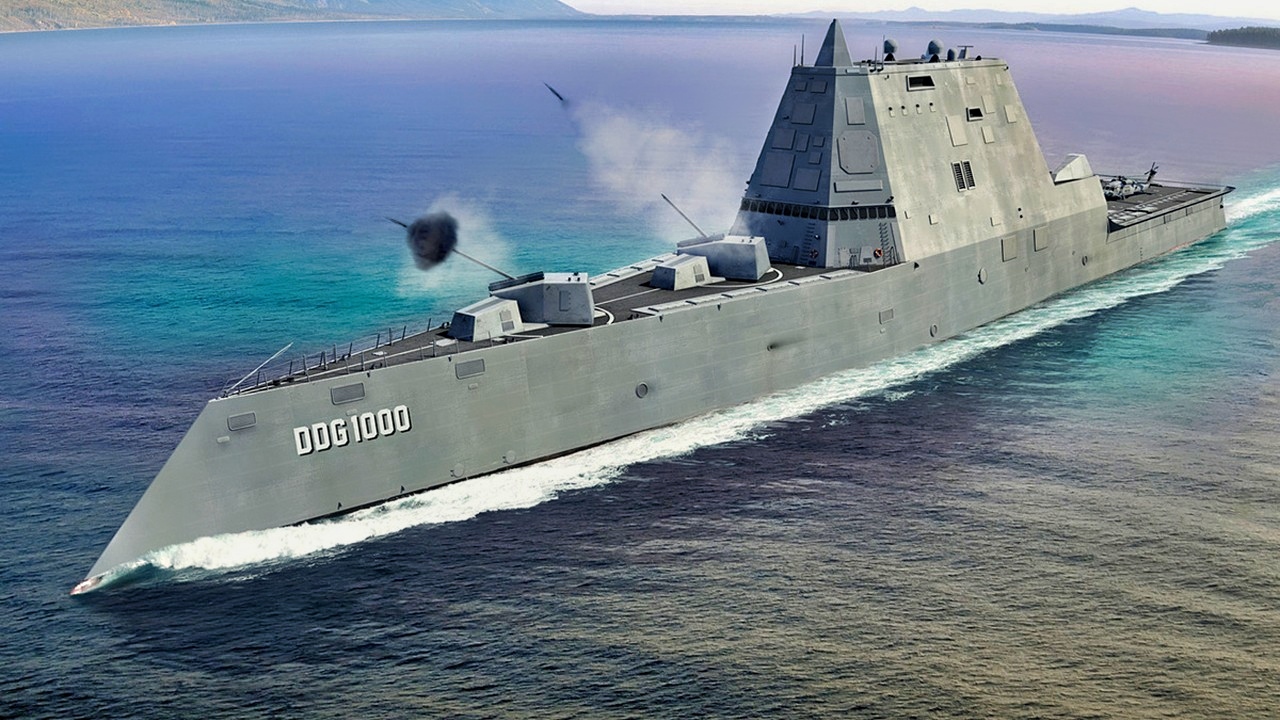
Zumwalt-Class U.S. Navy Destroyer. Image Credit: Creative Commons.
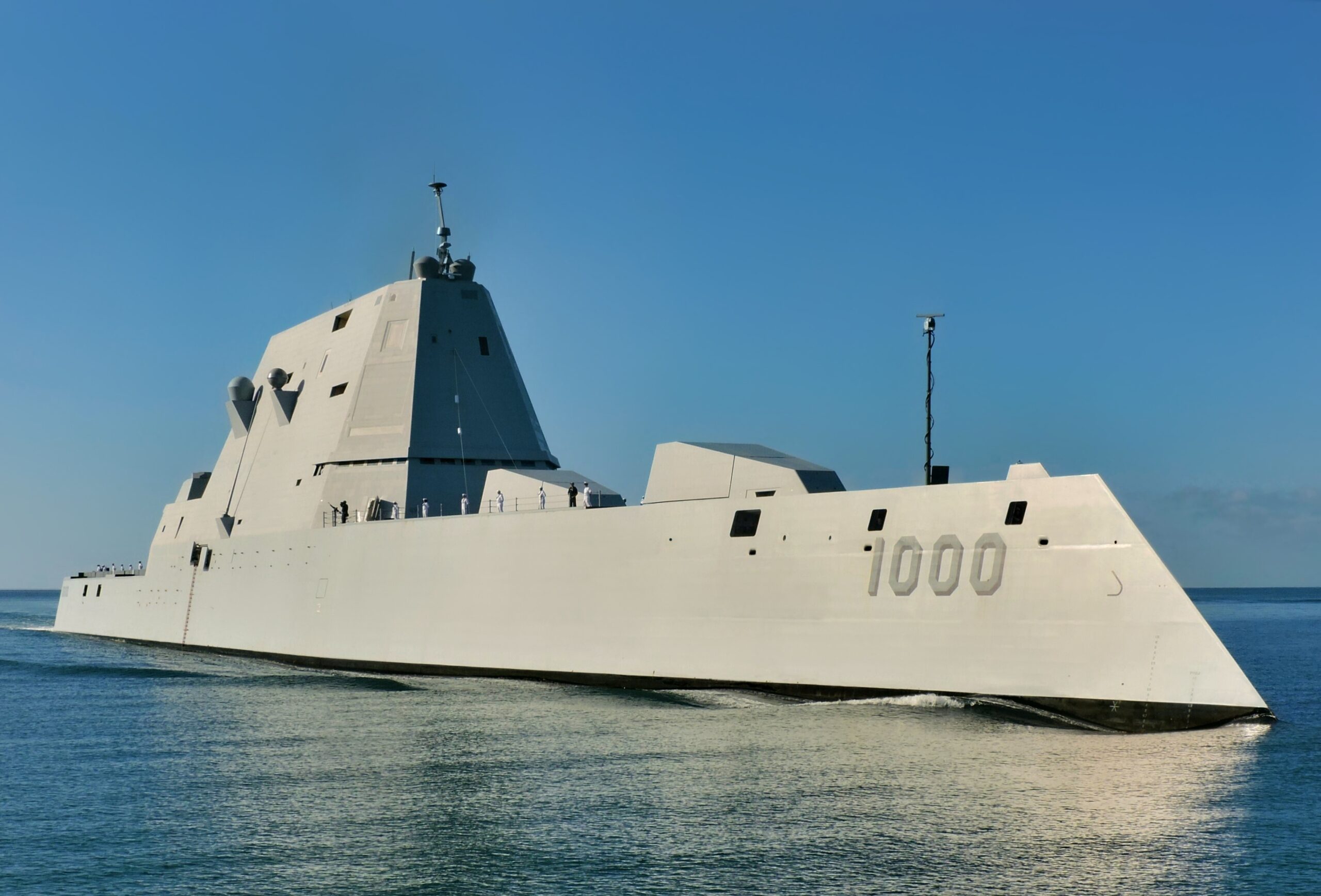
Zumwalt-Class Destroyer U.S. Navy. Image Credit: Creative Commons.
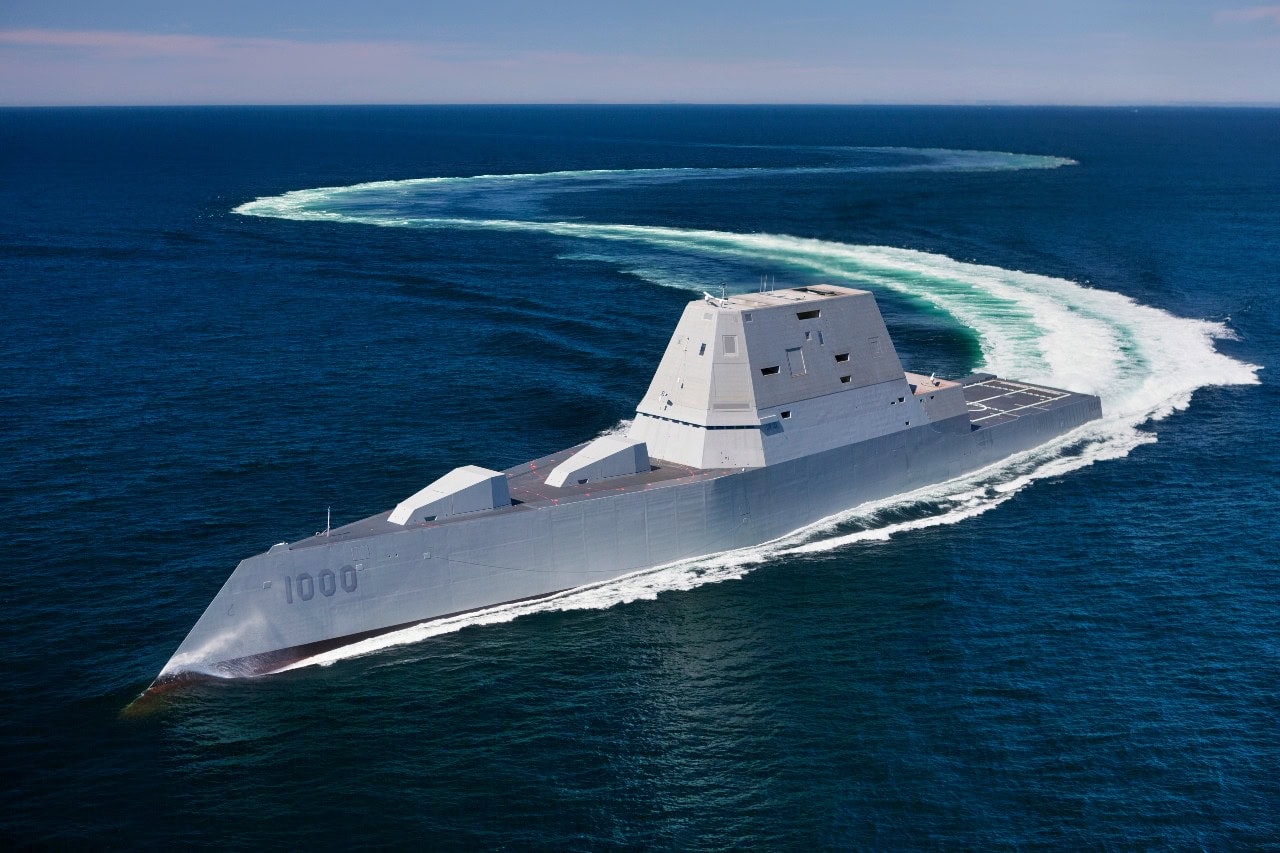
Zumwalt-Class Destroyer U.S. Navy.
But the world changed almost as quickly as the Soviet Union had collapsed. And the technology of the Zumwalt-class was not as advanced as the Navy had assumed it would be.
The Advanced Gun System That Had No Ammunition
For starters, the 155-mm Advanced Gun System turned out to be an expensive dud. The shells required for the 155-mm guns did not exist, and the Navy could not mass-produce these systems because the specialized munitions cost anywhere between $800,000-$1 million per round.
The Zumwalt project itself was an expensive affair.
A $24 Billion Program That Produced Only Three Ships
According to 19FortyFive writer Isaac Seitz, individual Zumwalt-class destroyers cost around $8 billion per ship, and the program ran the Navy about $24.5 billion total. The development of these warships also ran over their original budget and over schedule.
And with the loss of its main gun, these ships floated in an unknown state. It looked as though the Zumwalt-class destroyers were dead in the water. There were, of course, numerous other technical problems with these expensive warships. But the most important issue was the fact that it was declawed at the outset.
The Hypersonic Gamble to Save a Failed Ship
The Zumwalts were a developmental dead-end, and a costly one. Yet, the Pentagon, never one to acknowledge the realities of the sunk cost fallacy, is trying to revive these ships. Essentially, Washington wants to turn the Zumwalts into hypersonic-weapon launchers. By installing the Conventional Prompt Strike (CPS) missiles.
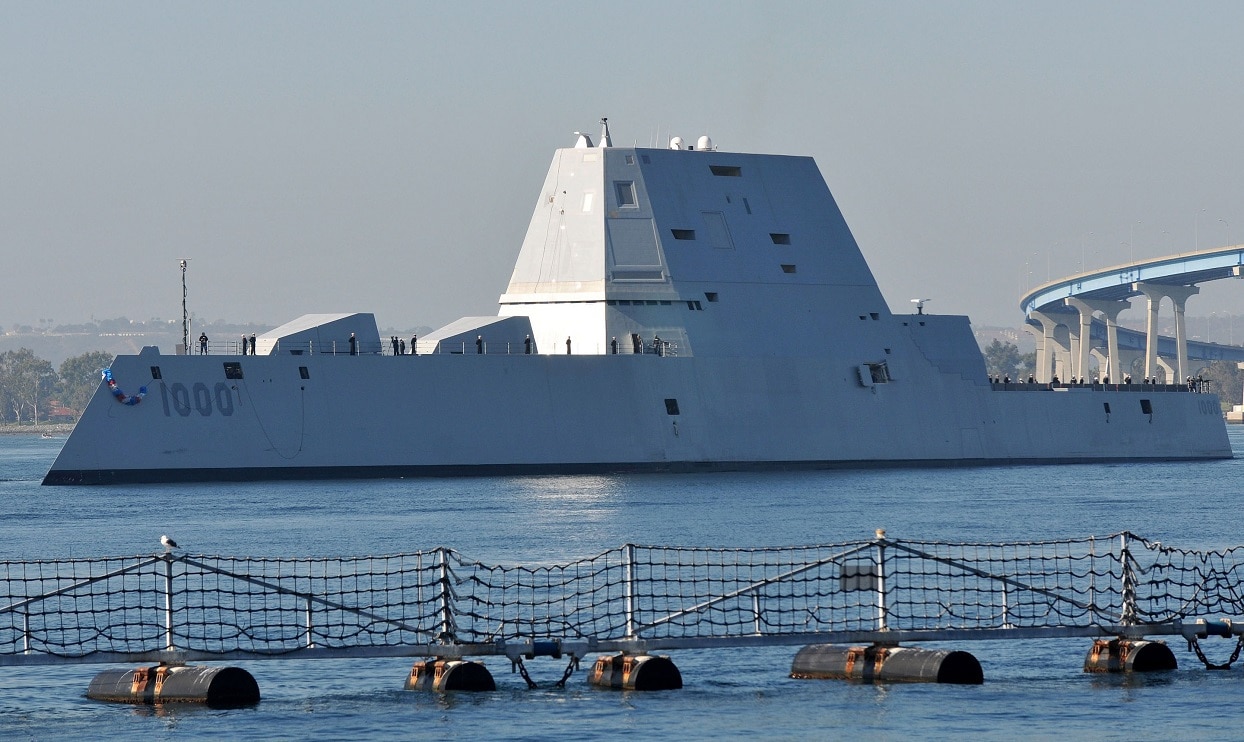
FROM 2016: The U.S. Navy’s newest warship, USS Zumwalt (DDG 1000) passes Coronado bridge on its way to Naval Base San Diego. Zumwalt is the lead ship of a class of next-generation multi-mission destroyers, now homeported in San Diego. (U.S. Navy photo by Petty Officer 3rd Class Anthony N. Hilkowski/Released)

USS Zumwalt. Image Credit: Creative Commons.
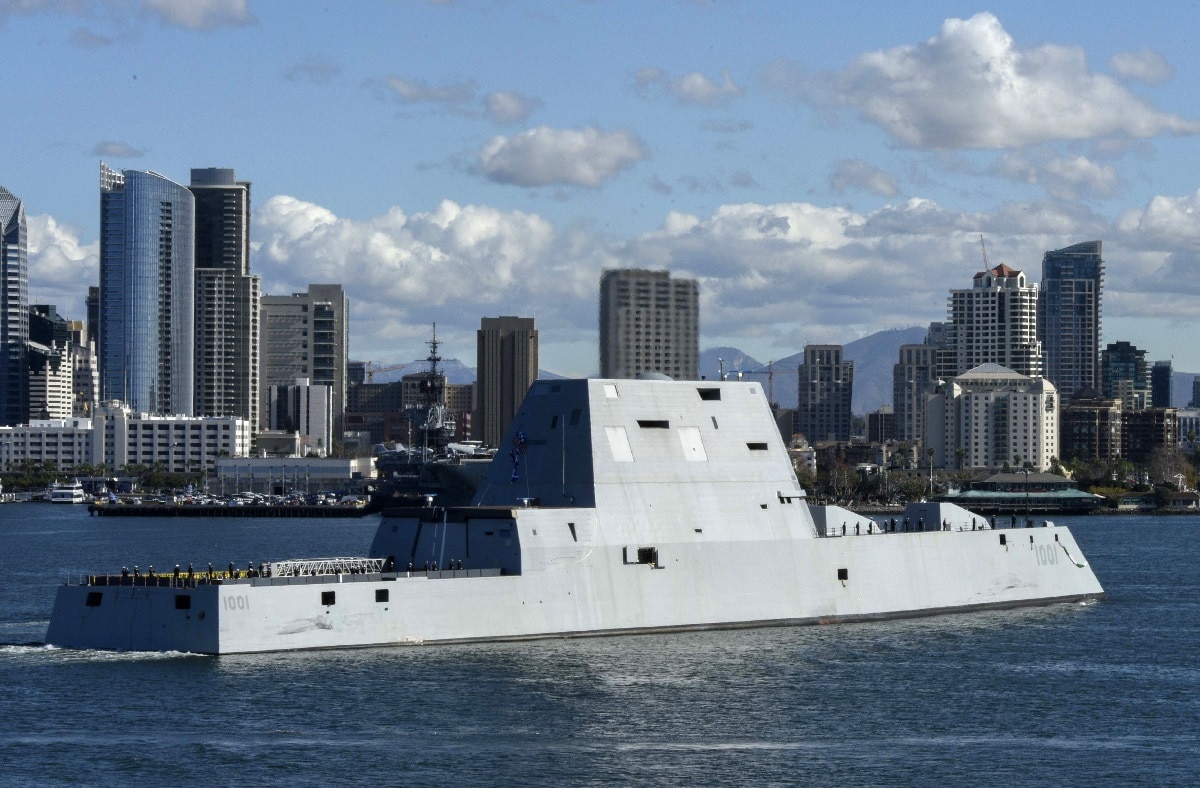
SAN DIEGO (Dec. 7, 2018) The Pre-Commissioning Unit (PCU) Michael Monsoor (DDG 1001) arrives in homeport of San Diego. The future USS Michael Monsoor is the second ship in the Zumwalt-class of guided- missile destroyers and will undergo a combat availability and test period. The ship is scheduled to be commissioned into the U.S. Navy Jan 26, 2019 in Coronado, Cailf. (U.S. Navy photo by Mass Communication Specialist Seaman Apprentice Nicholas Huynh/Released)
If it works, this plan would extend the weapons range of the destroyers to more than 1,700 miles. It was originally just 60 miles.
Nevertheless, this is going to be a costly and time-consuming endeavor. The CPS is not operational, but it is being designed to hit high-value targets anywhere in the world in less than an hour employing non-nuclear, hypersonic glide vehicles.
The Real Lesson of the Zumwalt
While the CPS has achieved some important milestones in its testing phases, including cold-gas launch methodologies that eject the missile from the ship before booster ignition, the technology is still in its earliest design phases. In fact, according to a 2024 report, there is no current timeline for the system reliably demonstrating even initial operational capability. It is classified as a work in progress by the Navy.
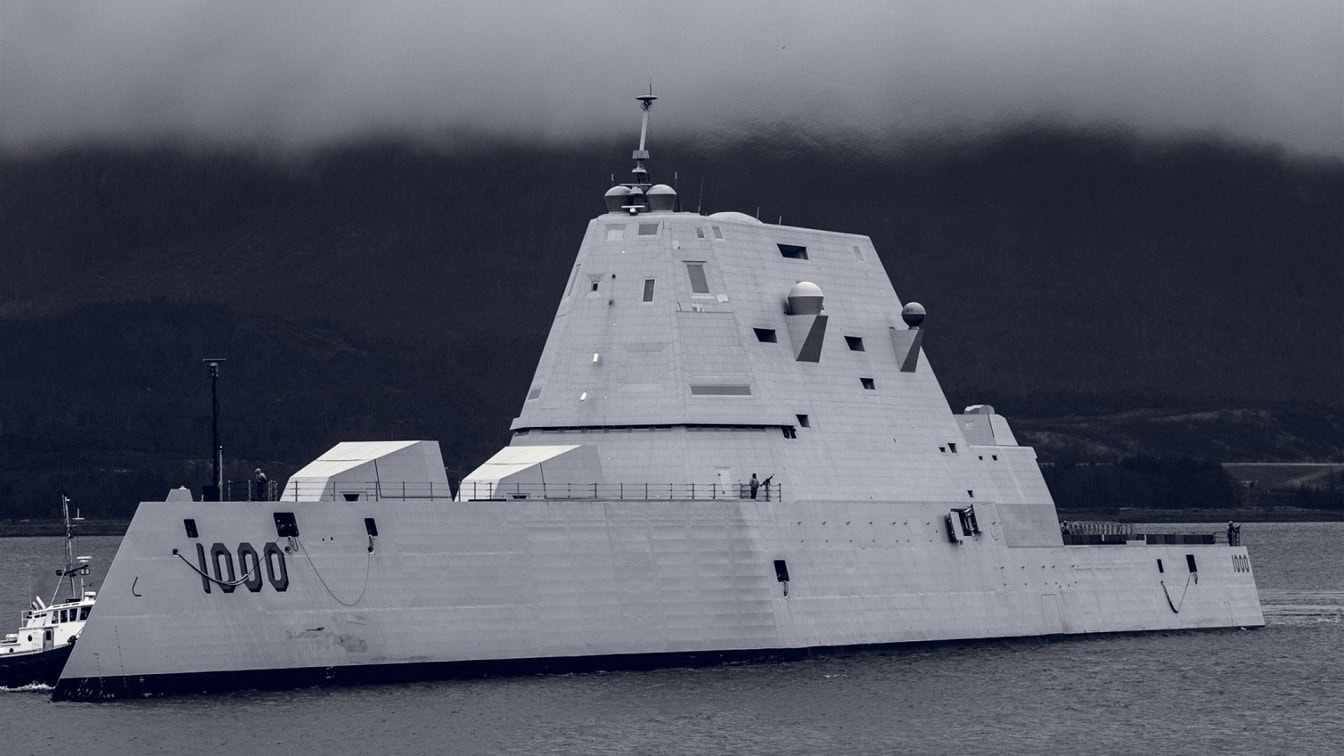
Zumwalt-Class. Image Credit: Creative Commons.
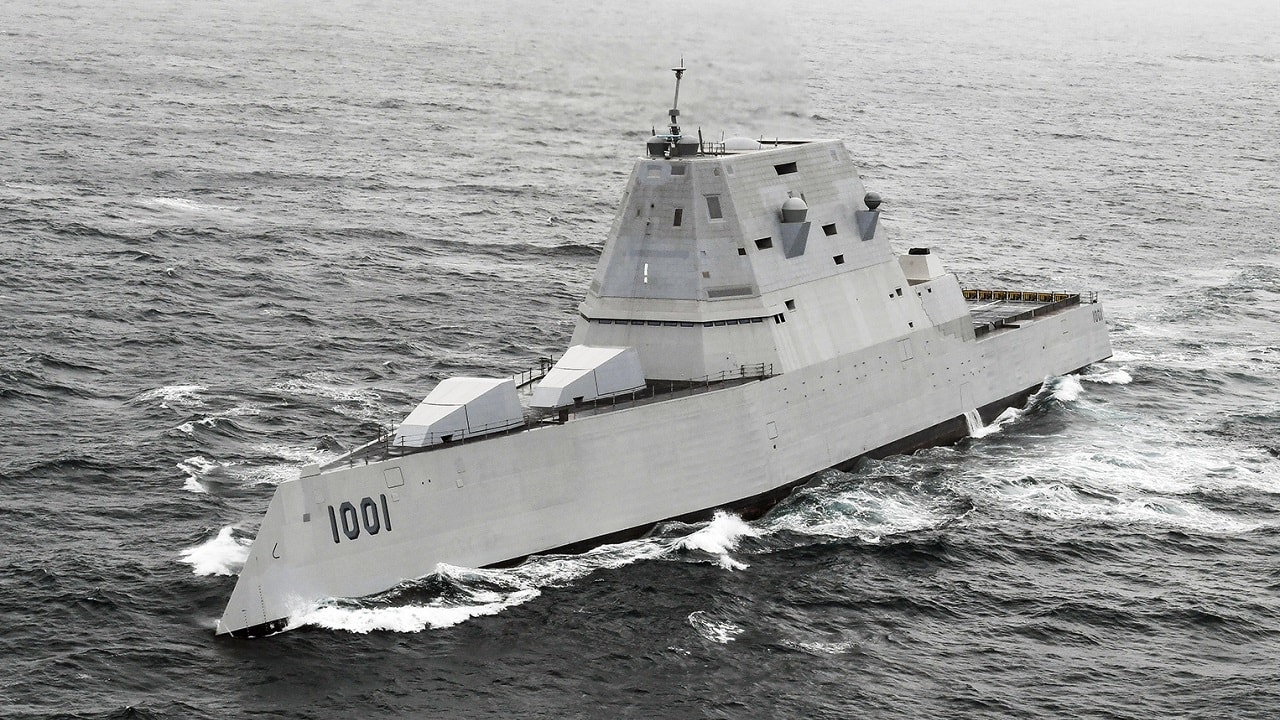
210421-N-FC670-1062 PACIFIC OCEAN (April 21, 2021) Zumwalt-class guided-missile destroyer USS Michael Monsoor (DDG 1001) participates in U.S. Pacific Fleet’s Unmanned Systems Integrated Battle Problem (UxS IBP) 21, April 21. UxS IBP 21 integrates manned and unmanned capabilities into challenging operational scenarios to generate warfighting advantages. (U.S. Navy photo by Chief Mass Communication Specialist Shannon Renfroe)
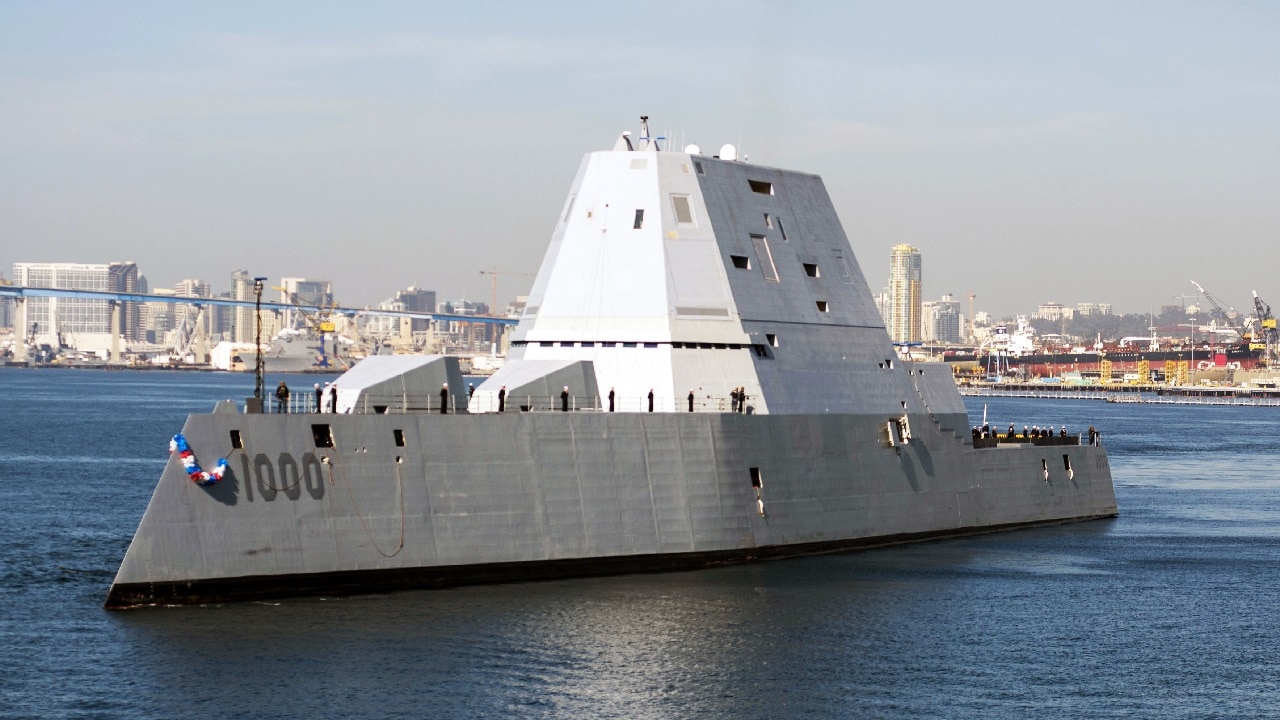
SAN DIEGO (Dec. 8, 2016) The guided-missile destroyer USS Zumwalt (DDG 1000) arrives at its new homeport in San Diego. Zumwalt, the Navy’s most technologically advanced surface ship, will now begin installation of combat systems, testing and evaluation and operation integration with the fleet. (U.S. Navy photo by Petty Officer 3rd Class Emiline L. M. Senn/Released)
So, again, the Zumwalts are being brought out to push forward yet another experimental weapons system that is unlikely to work anytime soon.
Would not the money spent on the Zumwalts have been better spent on developing unmanned systems? Or simply invested in building reliable hypersonic weapons before trying to integrate them into a failed warship design such as the Zumwalt-class?
About the Author: Brandon J. Weichert
Brandon J. Weichert is the Senior National Security Editor at 19FortyFive.com. Recently, Weichert became the editor of the “NatSec Guy” section at Emerald.TV. He was previously the senior national security editor at The National Interest. Weichert is the host of The National Security Hour on iHeartRadio, where he discusses national security policy every Wednesday at 8pm Eastern. He hosts a companion show on Rumble entitled “National Security Talk.” Weichert consults regularly with various government institutions and private organizations on geopolitical issues. His writings have appeared in numerous publications, among them Popular Mechanics, National Review, MSN, and The American Spectator. And his books include Winning Space: How America Remains a Superpower, Biohacked: China’s Race to Control Life, and The Shadow War: Iran’s Quest for Supremacy. Weichert’s newest book, A Disaster of Our Own Making: How the West Lost Ukraine, is available for purchase wherever books are sold. He can be followed via Twitter/X @WeTheBrandon.