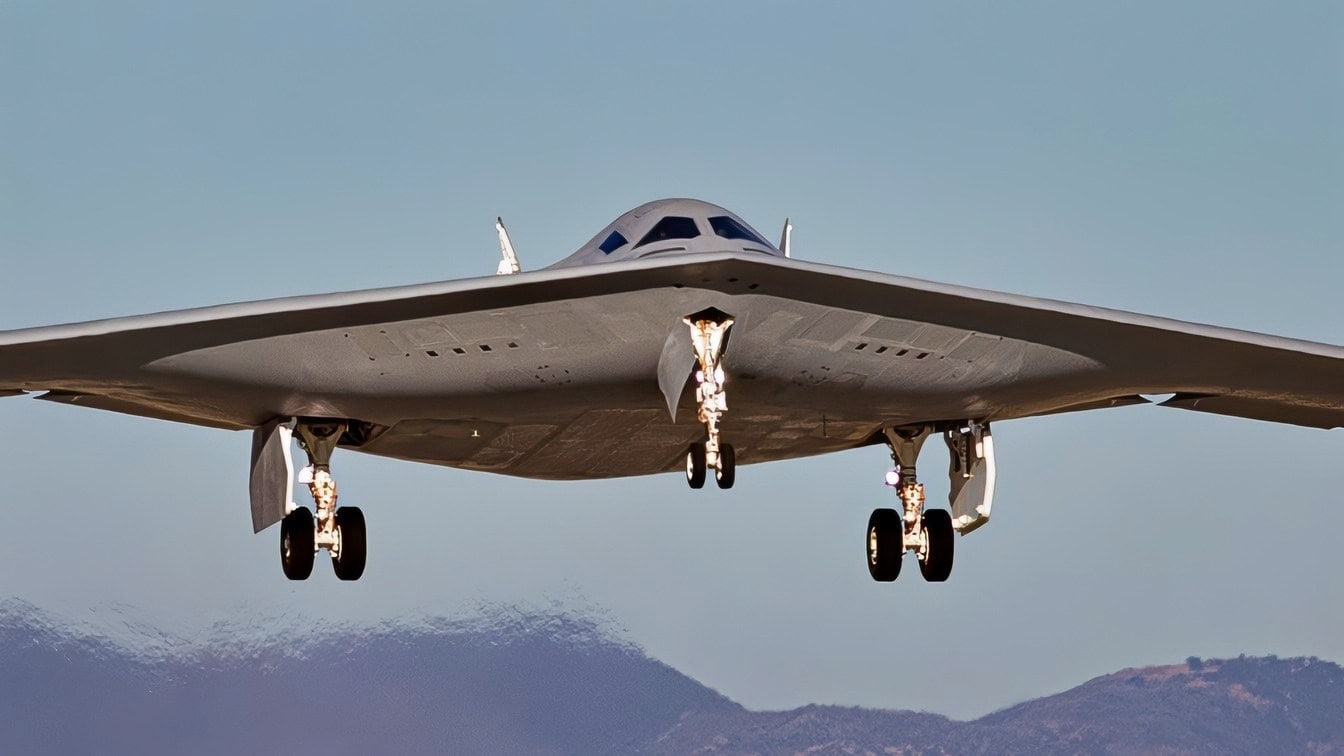
The B-21 Raider’s Stealth Advantage: Why Smaller is Deadlier in 2026
As photographs of the first “two” U.S. Air Force B-21 bombers blast onto the public scene, most observers can only speculate about the mysterious, yet paradigm-changing suite of technologies said to be woven into the platform.
There is, by design, very little information available about the platform’s critical technical elements that are less visible to the observer’s eyes.
Its weapons interfaces, computing, coating materials, stealth components, thermal management, and networking technologies are expected to introduce new, game-changing capabilities into the realm of high-altitude stealth bombing.
Is the B-21 Stealthier Than the B-2?
What is visible to the eye, when one compares available B-21 images to those of the existing B-2, does seem to indicate interesting advances in the realm of stealth.
When compared with the B-2, the B-21 has a smoother, more wing-body blended horizontal fuselage with smaller, more conformal inlets on top of each wing.
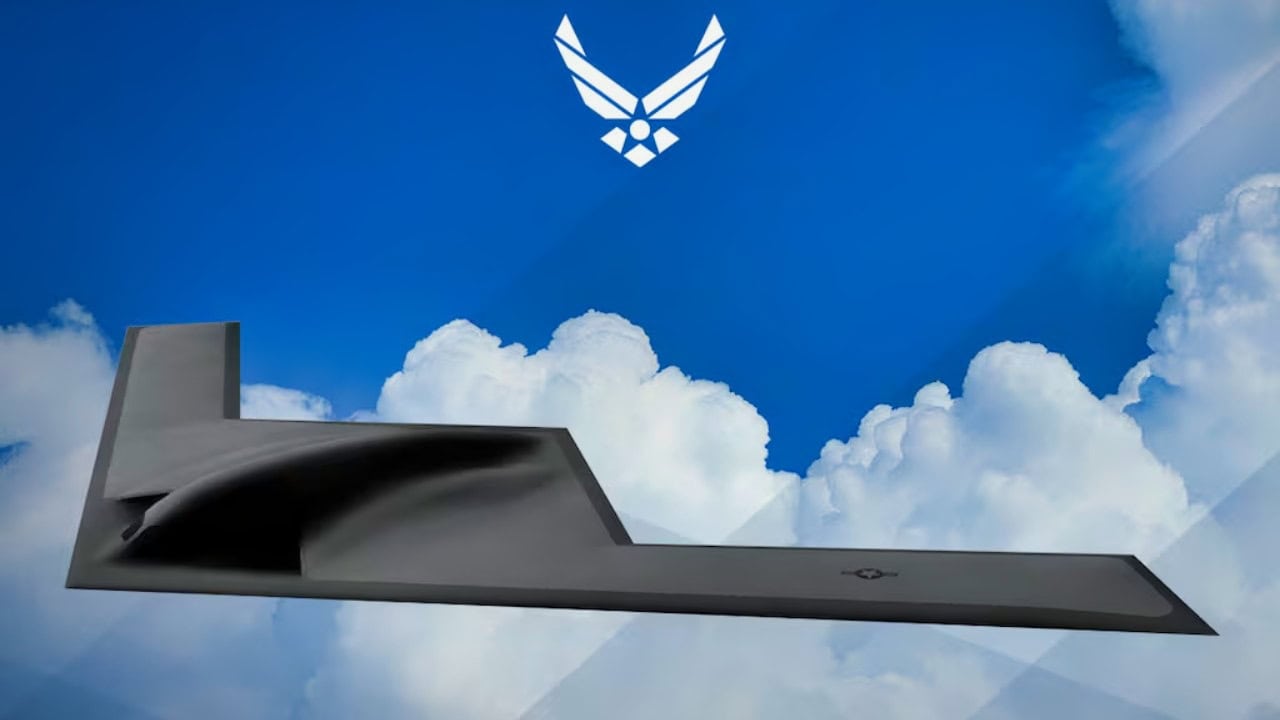
B-21 Raider Bomber.
Perhaps of even greater significance, the aircraft itself is considerably smaller and lighter than its B-2 predecessor.
Specifically, the wingspan of the B-2 is 172 feet, considerably longer than the 140-foot wingspan of the B-21.
There is a huge difference in take-off weight as well; the B-2 is cited with a maximum take-off weight of 336,500 pounds, much more than the cited 260,000-pound take-off weight of the B-21.
Smaller size and technological sophistication are by no means incompatible but rather somewhat aligned, given technological advances in recent years.
Why is the B-21 so much smaller? Many of the reasons likely pertain to weight, speed, and drag, as a lighter-weight aircraft would be capable of sustaining advanced speeds with less fuel and drag, and a smaller airframe would also better enable aerial agility.
Certainly, a high altitude bomber would not need to dogfight and “vector” like a fighter jet, yet there is definitely a tactical advantage to a bomber having improved aerial agility.
Speed alone is a survivability-enhancing attribute for a high-altitude stealth bomber, as it makes the aircraft even less “detectable” to ground-based radar systems.
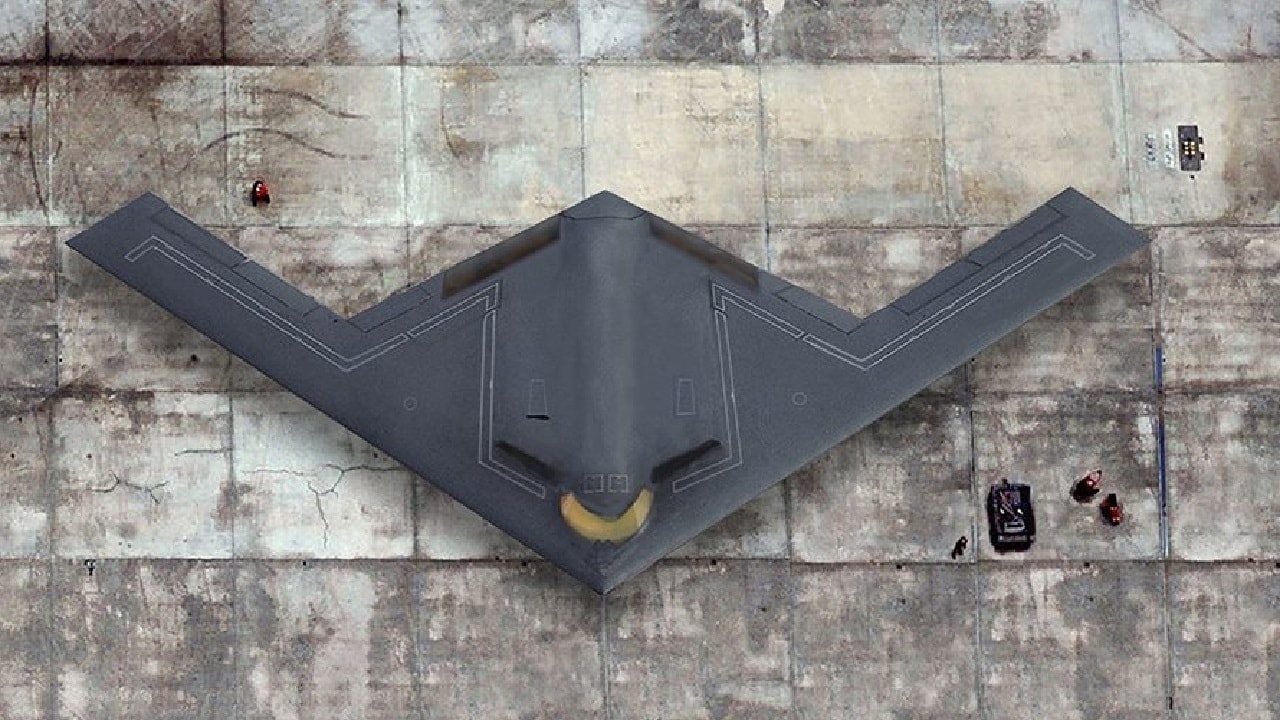
B-21 Raider artist rendering. Image Credit: Creative Commons.
Additionally, a high-altitude bomber would also benefit greatly from an increased ability to maneuver in a hostile, high-threat environment as targets and combat circumstances change quickly.
It is also entirely conceivable that a smaller aircraft would, quite simply, be stealthier as well. Not only is there less “airframe” or “metal” for ground-based radar to bounce electromagnetic “pings” off of and generate a return signal, but a smaller aircraft might generate less of a heat signature.
It seems technologically sensible that a smaller airframe, such as the B-21, might leverage a new generation of thermal management technology. The closer an airframe is to the temperature of the surrounding atmosphere, the less detectable it is to infrared “heat” sensors.
B-21 Computing Advances
The largest reason why the B-21 is smaller than the B-2 may pertain to critical advances in software, AI-enabled computer processing, and hardware configurations. “Lowering the hardware footprint,” as it is called, is a term to explain how advances in software, virtualization, information storage, and processing capacity enable a smaller hardware “form factor.”
This increases efficiency and allows a smaller platform to accomplish as much or more sensing, computing, networking, and data processing as a larger one.
This form-factor dynamic is not only relevant to computing but also to sensing technologies and weaponry.
Fewer pieces of hardware are needed when smaller components can combine the functionality of a group of otherwise disconnected sensors into a single integrated system.
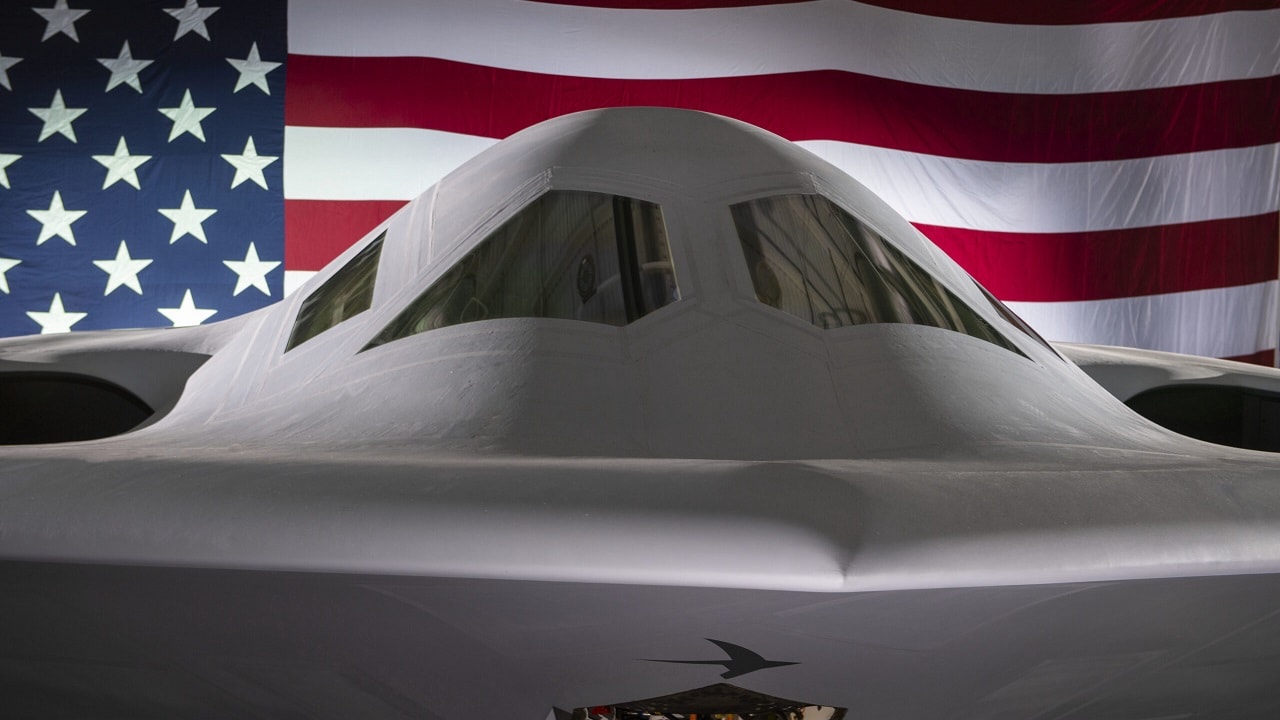
The B-21 Raider was unveiled to the public at a ceremony December 2, 2022 in
Palmdale, Calif. Designed to operate in tomorrow’s high-end threat environment, the B-21 will play a critical role in ensuring America’s enduring airpower capability. (U.S. Air Force photo)
Essentially, technological progress can enable superior sensing, computing, and weapons interfaces in a smaller airframe.
This kind of streamlined sensing and computing aligns closely with stated concepts of operation associated with the aircraft.
The B-21 has been described by senior Pentagon weapons developers as a “sensing” node and flying command and control platform capable of operating groups of drones and sharing information across land, air, sea, and space domains.
The bomber will not only conduct bombing missions but also function as a sensing and targeting aircraft capable of exchanging and organizing time-sensitive information from satellites, drones, manned aircraft, ground vehicles, and even surface ships.
About the Author: Kris Osborn, President of Warrior Maven
Kris Osborn is the President of Warrior Maven – Center for Military Modernization. Osborn previously served at the Pentagon as a highly qualified expert in the Office of the Assistant Secretary of the Army—Acquisition, Logistics & Technology. Osborn has also worked as an anchor and on-air military specialist at national TV networks. He has appeared as a guest military expert on Fox News, MSNBC, The Military Channel, and The History Channel. He also has a Masters Degree in Comparative Literature from Columbia University.